Vessel & Vehicle Announcements
ACUA, Bedrock to Deploy and Recover Swarms of AUVs from Surface Vessels

ACUA Ocean and Bedrock Ocean Exploration have announced the signing of a memorandum of understanding (MoU) to accelerate the launch and recovery of swarms of autonomous underwater vehicles from ACUA’s Pioneer-class surface vessel.
Bedrock is a vertically integrated ocean-mapping company that uses compact, fully electric fleets of Autonomous Underwater Vehicles (AUVs) and automated insight generation to deliver fast, cost-effective, high-resolution seafloor data. By operating underwater with stable, closely coupled sensor platforms, Bedrock overcomes the limitations of traditional ship-based surveys and long layback to provide better data quality, rapid mobilization, and lower operational risk.
The partnership agreement seeks to design and develop novel launch and capture mechanisms for the deployment of an initial swarm of three Bedrock AUVs. Utilizing ACUA’s Pioneer Mk2 vessel as a mothership from which to remotely deploy the AUV’s will accelerate transit to and from the operational site and reduce the need for costly crewed vessels. Additionally, moving to “nested robotic” systems reduces weather challenges, enabling year-round operations from ACUA’s stable SWATH platform.
MBARI ROV Completes First Mission from New Research Vessel
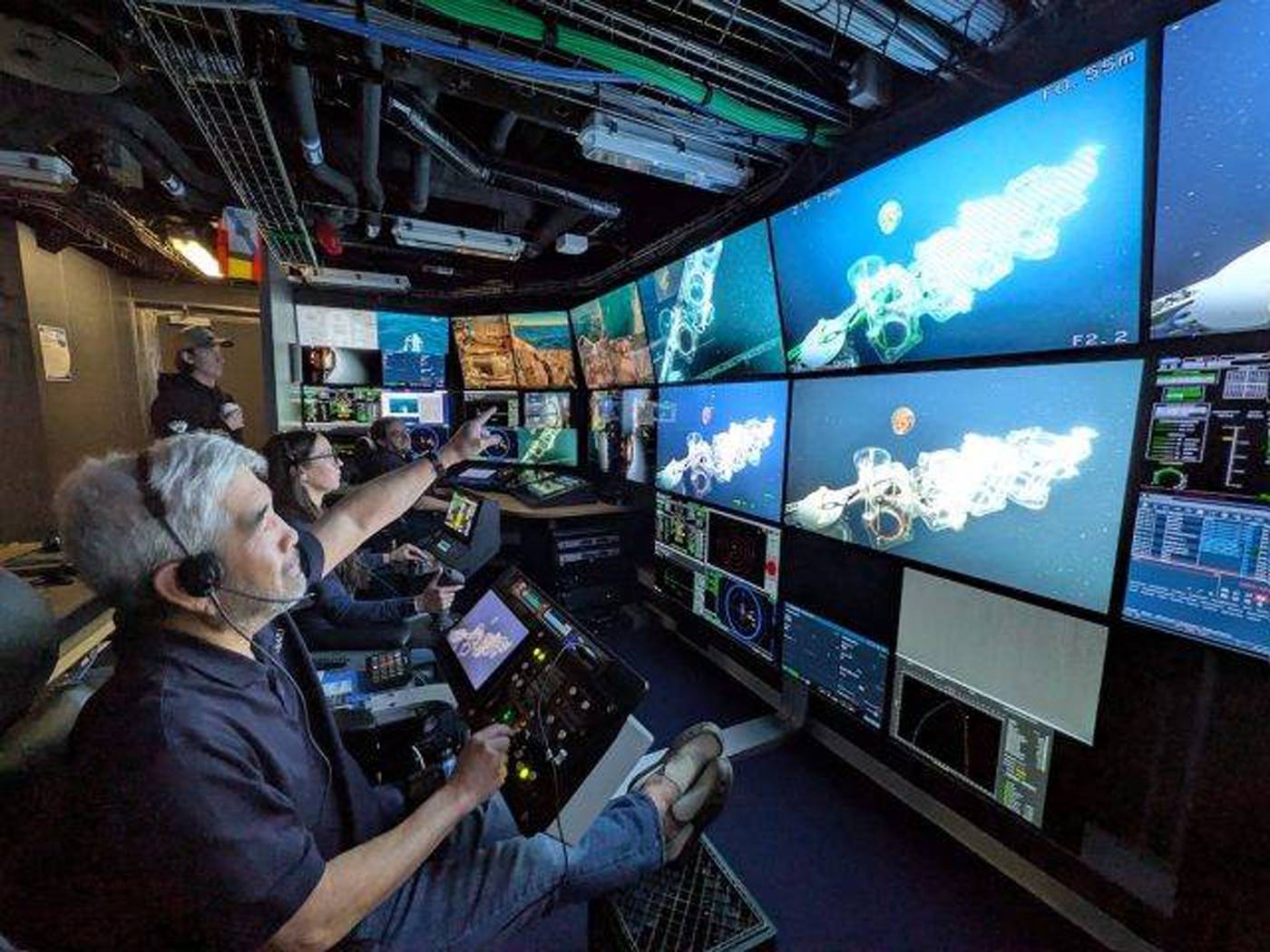
The ROV Doc Ricketts has completed its first science mission from the new Monterey Bay Aquarium Research Institute (MBARI) research vessel David Packard.
The three-day expedition last month involved collecting animals for MBARI’s Into the Deep / En lo Profundo exhibition – its newest exhibit and the largest collection of deep-sea animals in North America.
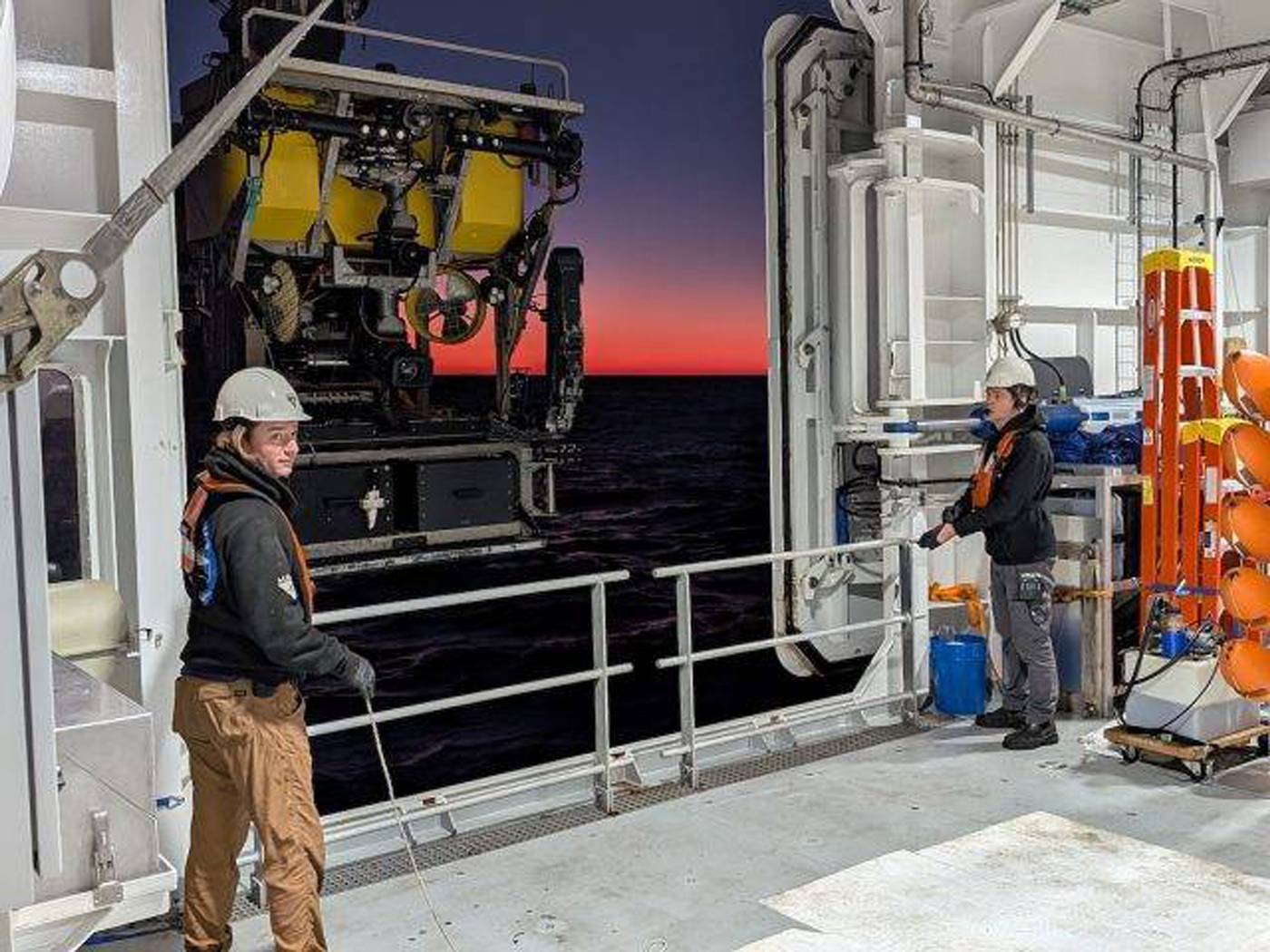
The ROV can dive up to 4,000 meters (approximately 2.5 miles) underwater, and aquarium biologists were able to take advantage of the expanded capabilities of the David Packard to explore waters farther offshore at Sur Ridge, a deep-sea coral garden teeming with life. The longer dives—up to 12 hours underwater—allowed the team to collect more animals, critical for a new Aquarium research project aiming to better understand the diet and growth of deep-sea comb jellies.
The expedition also provided an opportunity to deploy an “elevator” developed by MBARI engineers that allows Aquarium biologists to safely stow deep-sea animals for transport to the surface.
Vard to Build Four New Multi-Purpose Robotic Vessels for Ocean Infinity
Vard, the Norwegian subsidiary of the Fincantieri Group, has signed a new contract with existing customer Ocean Infinity for the design and construction of four Multi-Purpose Robotic Vessels (MPVs).
The contract, whose value exceeds $230 million, also includes a comprehensive scope of supply from Vard Electro, which will deliver the full suite of SeaQ systems for remote operations.
Vard Interiors, responsible for the complete interior solutions, will combine design with energy-efficient systems to ensure crew comfort and operational excellence.
Seaonics will provide the Launch and Recovery System (LARS), enabling advanced handling of ROVs and geotechnical units.
Two vessels will be delivered from Vard’s Norwegian shipyards in the first and second quarter of 2028, while the other two will be built at Vard Vung Tau in Vietnam, with delivery scheduled for the third and fourth quarter of 2028.
Saab’s Seaeye Lynx Surveys San José Shipwreck

Saab UK’s Seaeye Lynx subsea vehicle played a critical role in the survey and documentation of the 18th-century galleon San José, a Colombian cultural heritage asset.
Often referred to as the “Holy Grail of shipwrecks,” San José sank in 1708 off the coast of Colombia during the War of the Spanish Succession, taking with it a substantial part of the maritime, commercial and cultural history of one of the last galleons of the Spanish Indies trade.

Operated by the Colombian Navy, the Lynx was used in multiple deep-sea survey missions. These missions captured high-resolution imagery and three-dimensional photogrammetry of the wreck at approximately 600 meters depth. They also included recovering and documenting artifacts such as a cannon, three gold coins, Chinese porcelain cups and sediment samples for further analysis and laboratory studies to support their research and protection.
Seaeye Lynx is used internationally for subsea survey and inspection tasks. Its role at the San José site forms part of a wider effort by Colombian authorities to document and preserve underwater cultural heritage.
Saipem Supplies Hydrone-W ROV for ISPRA's Arcadia Vessel

Saipem has been awarded a contract with the T. Mariotti shipyard in Genoa to supply the Hydrone-W remotely operated underwater vehicle (ROV), which will be deployed on ISPRA's (Higher Institute for Environmental Protection and Research) new oceanographic vessel, Arcadia.
Hydrone-W will support ISPRA in advanced oceanographic activities, contributing to the observation, monitoring and study of ecosystems, geomorphology, and strategic infrastructures located in deep-sea and offshore environments.
Hydrone-W, a full-electric Work Class ROV, was developed as part of Saipem's “Hydrone” underwater robotics program, an initiative for the design and industrialization of a fleet of underwater drones capable of working autonomously at sea at depths of up to 3,000 meters.
The project is part of the initiatives funded by the NRRP (National Recovery and Resilience Plan), specifically within the MER (Marine Ecosystem Restoration) program, which also includes the acquisition of a new oceanographic vessel, the Arcadia, equipped with high-tech technologies dedicated to the study and monitoring of marine ecosystems and to geophysical surveys of deep seabeds.
Fincantieri Launches Italian Navy’s Hydro-Oceanographic Ship

Fincantieri has launched Italian Navy’s newly built hydro-oceanographic ship (N.I.O.M.) Quirinale at its integrated shipyard in Riva Trigoso, marking a milestone in Italy’s maritime research and monitoring capabilities.
The vessel, designated N.I.O.M. Quirinale, has been designed to support scientific mapping and monitoring activities and will operate in support of the Italian Navy Hydrographic Institute, the state authority responsible for producing official national nautical documentation.
Measuring approximately 110 meters in length with a displacement of around 6,000 tons, Quirinale can accommodate up to 140 personnel, including crew and scientific staff.
The ship is equipped with a low-emission electric propulsion system suitable for operations in environmentally sensitive areas and is designed to operate in extreme climatic conditions down to temperatures of minus 16 degrees Celsius.
The vessel features advanced scientific instrumentation for hydrographic, oceanographic and geophysical surveys, and is equipped with an autonomous underwater vehicle and an unmanned surface vehicle. Its technical configuration also includes lifting systems dedicated to scientific operations and a DP2 dynamic positioning system to ensure precision and stability during research activities.
The ship was designed with a focus on environmental sustainability, incorporating emission-reduction technologies, diesel-electric propulsion, optimized hull forms and low-impact materials, consistent with the group’s ISO 14001-certified environmental management standards across its Italian sites.
FET to Deliver Super Mohawk ROV to European Navy

Forum Energy Technologies (FET) has agreed to a contract with a major shipbuilding group to supply a European navy with a remotely operated vehicle (ROV) system.
Under the agreement, FET will deliver its Super Mohawk ROV, selected for its compact footprint and high payload capacity, allowing the system to be fitted with advanced equipment required for naval operations. The system will be built at the company’s Kirkbymoorside facility in the United Kingdom to meet customer specifications.
The Super Mohawk is a general-purpose ROV suitable for observation, survey, pipelay support, light to medium work and non-destructive testing inspections. When delivered, the system will be equipped with multiple skids fitted with sensors specified by the client for its operational requirements.
Teledyne Gavia Delivers Four GAVIA AUV Systems to the Swedish Defense Materiel Administration

Teledyne Gavia, a leader in modular autonomous underwater vehicles (AUVs), announced the successful delivery of the first four GAVIA AUV systems to the Swedish Defence Materiel Administration (FMV).
The newly delivered GAVIA Autonomous Underwater Vehicle (AUV) system forms part of a multi-year framework agreement between Teledyne Marine and FMV, under which GAVIA AUVs will support fleet modernization initiatives for the Swedish Armed Forces by enhancing underwater surveillance capabilities and improving operational efficiency.
The vehicles delivered under this agreement incorporate Teledyne’s modular architecture, enabling rapid reconfiguration for missions including mine countermeasures, hydrography, intelligence collection, seabed mapping, and surveillance.
As of January 2026, Teledyne Marine has delivered over 12,000 APEX floats, 1,275 Slocum gliders (with over 600 to NATO naval users), and GAVIA AUV systems have been purchased by 18 navies. Teledyne unmanned systems are operational with numerous NATO and AUKUS navies.