Products Roundup
DOLGO Launches AI Platform to Document, Share Workforce Knowledge
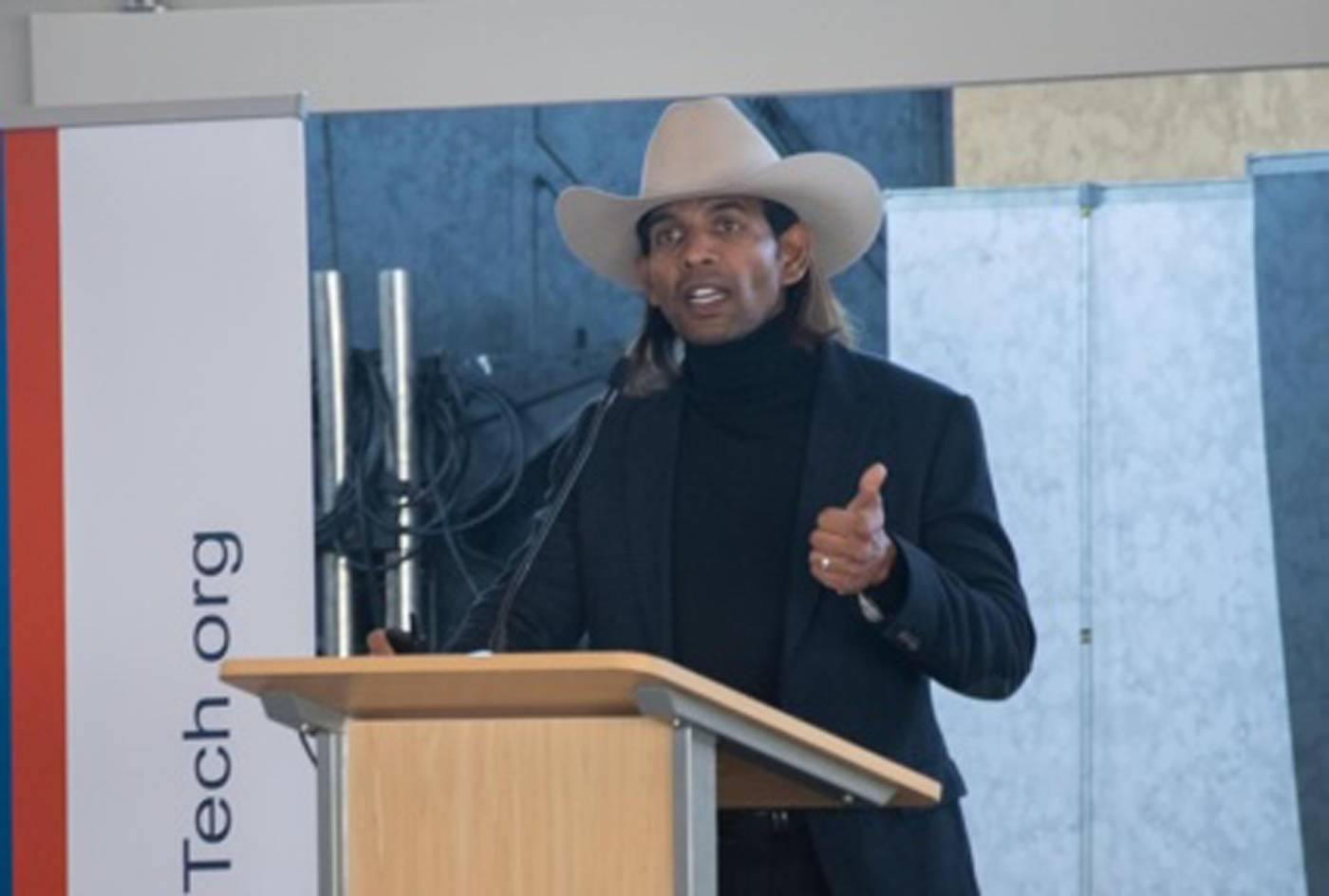
DOLGO, a Florida-based maritime tech start-up, has launched its new AI platform to help combat the maritime skills crisis at the recent Blue Innovation Symposium in Rhode Island.
DOLGO founder Nithesh Wazenn explained that the platform, which can be uploaded to a phone or computer like ChatGPT, will tackle one of the biggest challenges facing maritime—the vanishing aging workforce. As a measure of the scale of the problem in the United States today, the average age of shipyard workers is 55-years-old. This is against a backdrop of shipbuilding demand being set to double over the next decade.
DOLGO has been spun out of the National Oceanic and Atmospheric Administration (NOAA) Ocean Enterprise Accelerator and has built its AI platform and undertaken testing with the University of South Florida’s marine science lab. The software enables workers to share knowledge, allowing companies to retain skills for new and existing engineers.
Wazenn described how the platform gives shipyards a private AI system that continuously updates with proprietary knowledge from their workforce. Workers will be able to call each other on the platform to seek advice on engineering problems while the AI learns on the job.
He added that the DOLGO software further tackles the long-standing issue of "ownership" of know-how. He also noted that shipyards are reporting how older workers can be reluctant to share valuable knowledge with younger colleagues who are being paid the same wage as them, leading to a "race to the bottom" as new workers' skills cannot replace those who are retiring.
Wazenn emphasized that AI will incentivize workers to share their expertise. On DOLGO, the engineer is equitably rewarded with bonuses or benefits each time their knowledge is downloaded from the platform, using a similar concept to a Spotify download.
He further outlined that the platform can be deployed across a variety of maritime jobs, from equipment manufacturers and seafarers to flag states, class and even ship broking and vessel operating.
DOLGO is one of seven ocean startups to be chosen by the Seaworthy Collective, a Miami-based non-profit that supports blue tech entrepreneurs. With only 10% of startups accepted onto the program, the companies are able to participate on full scholarships with no equity or fees as a result of Seaworthy’s $14M National Oceanic and Atmospheric Administration (NOAA) Ocean Enterprise Accelerators partnership, The Continuum.
New TrustLinkTM Coax Connector Engineered for Secure Connectivity Solutions
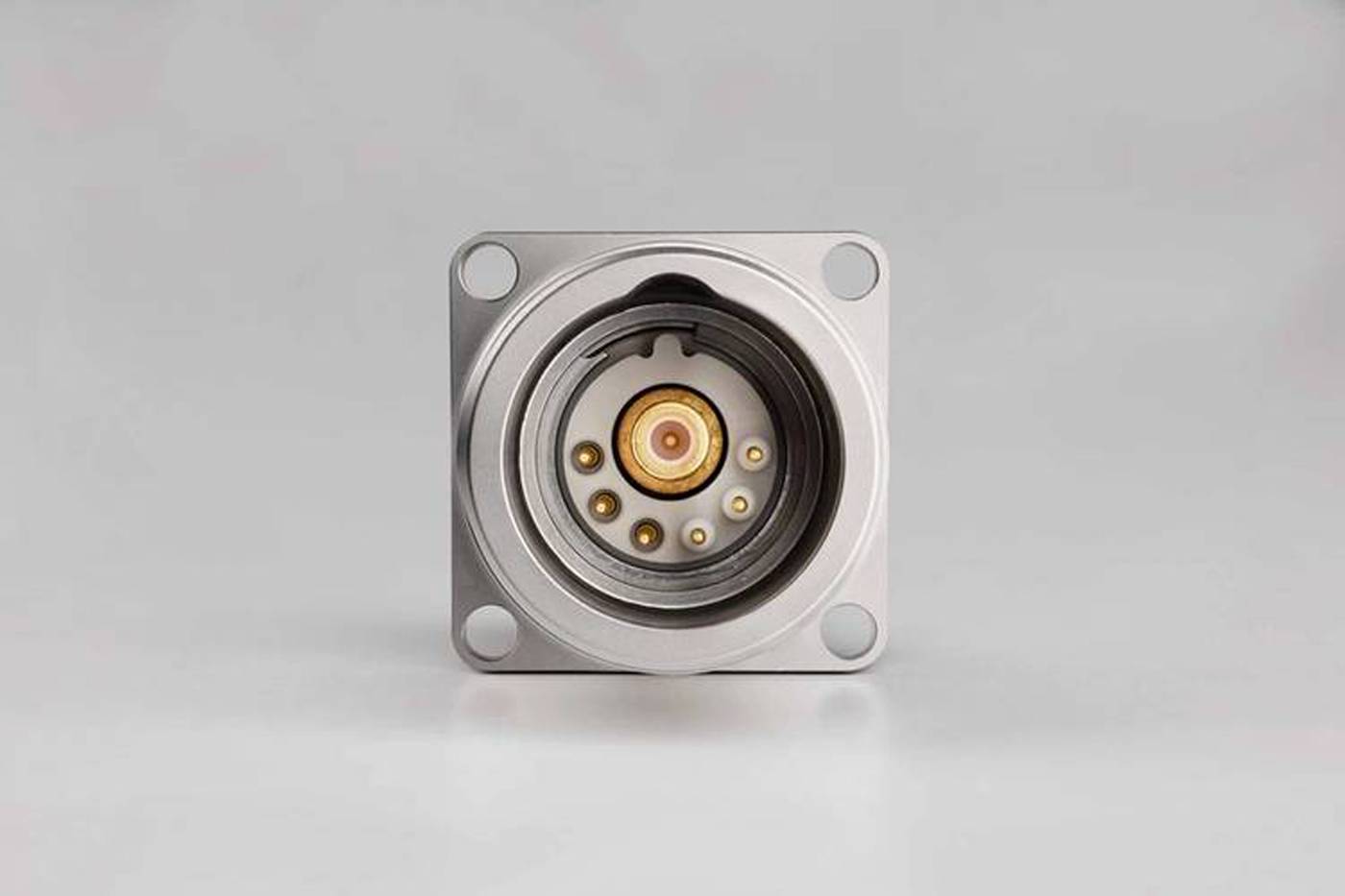
High-integrity signal transmission is mission-critical in subsea operations, whether for HD video, radar, or telemetry. MacArtney’s new TrustLink Coax connector delivers this capability through precision impedance matching in a compact design that ensures stable, low-loss connections for demanding environments.
The TrustLink Coax connector combines low-attenuation signal transfer up to 4 GHz with a pressure-rated shell tested to 600 bar for long-term reliability. Available in stainless steel or titanium, it offers a service life of up to 25 years. Titanium provides inherent corrosion resistance, while stainless steel can be paired with cathodic protection, giving operators flexibility to match material choice to operational demands.

Beyond performance, TrustLink Coax simplifies system integration by combining coaxial signal and power in a single terminated assembly. This reduces penetrators and interfaces, saving space and easing the system designers' work with tight configurations.
TrustLink Coax builds on the original TrustLink Metal Shell design, complementing the SubConn Coax range and working alongside TrustLink, SubConn, and OptoLink solutions.
Boskalis Subsea Services Launches Collective-Based Model for North Sea Decommissioning

Boskalis Subsea Services, a subsea provider of decommissioning, IRM and construction solutions, has launched a new collaborative delivery model, "The Decommissioning Collective," designed to change how subsea infrastructure decommissioning is planned and executed in the North Sea.
The new model marks a shift away from fragmented, project-by-project contracting, enabling operators to plan and deliver decommissioning activity within a shared framework. Developed by Boskalis Subsea Services and shaped through engagement with operators, the approach is focused on improved alignment, efficiency and value across sustained programs of work.
Drawing on more than two decades of subsea decommissioning experience, Boskalis Subsea Services created "The Decommissioning Collective" to address a persistent challenge: inefficiencies driven by isolated schedules, differing standards and short-term decision-making. Through "The Decommissioning Collective," participating operators align around common ways of working, standardized procedures and coordinated planning.
“The scale and complexity of decommissioning in the North Sea means the traditional, project-by-project approach no longer delivers the best outcomes," said Stuart Cameron, Managing Director of Boskalis Subsea Services. "'The Decommissioning Collective' responds to that challenge by aligning operators around common ways of working and a program-based delivery model, improving efficiency, cost certainty and predictability across decommissioning activity.”
"The Decommissioning Collective" has been established with the participation of three companies including Harbour Energy, which has worked closely with Boskalis Subsea Services on decommissioning programs in the North Sea.
The model is supported by Boskalis Subsea Services’ investment in UK subsea capability, including diving, remote operations and decommissioning resources, alongside the continued development of its Remote Operations Centre, strengthening offshore support and operational assurance.
TDK’s Tronics Launches High-Temp MEMS Sensor for Drilling Applications

TDK Corporation has expanded Tronics’ MEMS inertial sensor portfolio with the launch of the AXO315T1, a high-temperature digital accelerometer designed for energy sector drilling applications.
The AXO315T1 MEMS accelerometer operates at temperatures of up to 175 degrees Celsius and is aimed primarily at measurement while drilling (MWD) applications.
The device is also suited for logging while drilling (LWD), directional drilling and wireline operations, where reliable downhole navigation and inclination measurement are required in harsh temperature and vibration environments.
The new sensor builds on Tronics’ earlier AXO315T0 release in June 2025, which was qualified for oil and gas applications at temperatures of up to 150 degrees Celsius.
The AXO315T1 uses Tronics’ closed-loop MEMS architecture, delivering a ten-fold reduction in vibration rectification error compared with traditional open-loop accelerometers and offering a digital, low size-weight-and-power alternative to quartz-based solutions.
Key features of the AXO315T1 include a ±14 g input range on a single axis, an operating temperature range of -30 degrees to +175 degrees Celsius, a bias residual error of 1.7 mg units across the full temperature range, and a noise density of 10 µg/√Hz.
The device has a powered lifetime exceeding 1,000 hours at 175 degrees Celsius, enabling the development of next-generation drilling tools for complex and unconventional well environments.
CSignum Launches Through-Ice Wireless Monitoring System
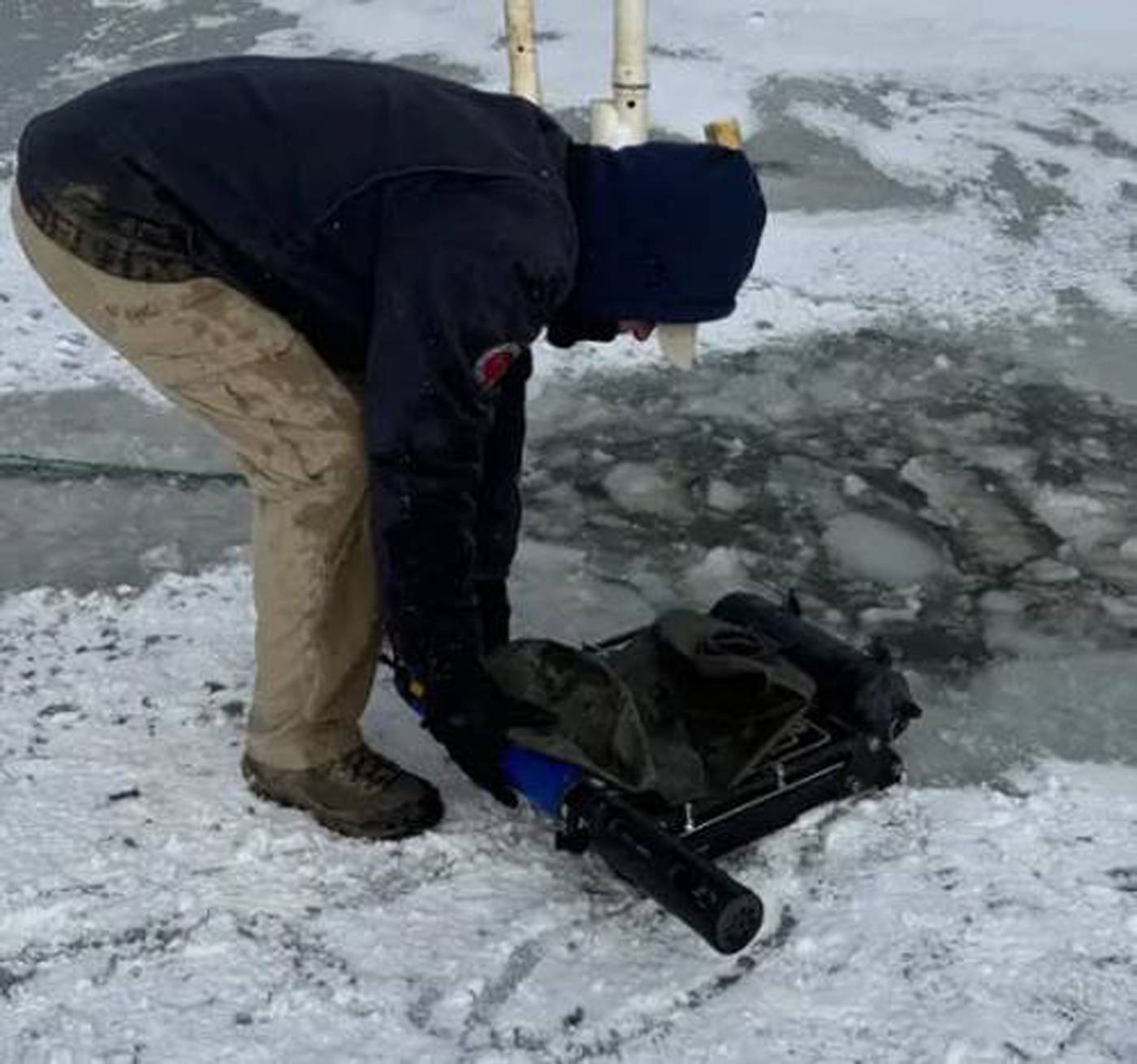
CSignum has launched its through-ice wireless monitoring technology with the EM-2Q electromagnetic field signaling (EMFS) system.
Critical monitoring is often suspended for several months annually, leaving a blind spot during a period of biological and chemical change in lakes, reservoirs, and inland water bodies, as ice formation typically forces monitoring equipment to be removed or disabled. Surface cables are prone to damage and failure as ice forms and shifts, creating safety risks, equipment loss, and significant gaps in environmental data.
CSignum’s EM-2Q system addresses this challenge by enabling wireless data transmission through water, ice, and surface barriers, eliminating the need for exposed cables that are vulnerable to winter conditions.
The ability to maintain monitoring under ice is critical for understanding water system health across seasonal cycles. Under-ice conditions drive key processes that influence water quality through spring and summer, yet these processes are poorly characterized due to winter data gaps.
Oxygen depletion beneath ice cover can impact fish populations and overall ecosystem health but often goes undetected until adverse effects appear. Phosphorus release from sediments occurs more frequently under ice, contributing to nutrient loading and increasing the risk of harmful algal blooms later in the year. Ice thickness and duration influence summer algae growth, yet the lack of winter measurements limits the ability to understand and manage these outcomes.
EM-2Q uses low-frequency electromagnetic fields to transmit data wirelessly from submerged sensors to above-surface EM-2 gateways, providing real-time, on-line monitoring. The gateway uploads measurements to the cloud for real-time remote monitoring.
The system is well suited to long-term deployments in harsh and seasonally variable environments and can be integrated with a variety of industry sensors to monitor environmental and other parameters.
Coda Octopus Introduces ECHOSCOPE PIPE NANO Gen Series
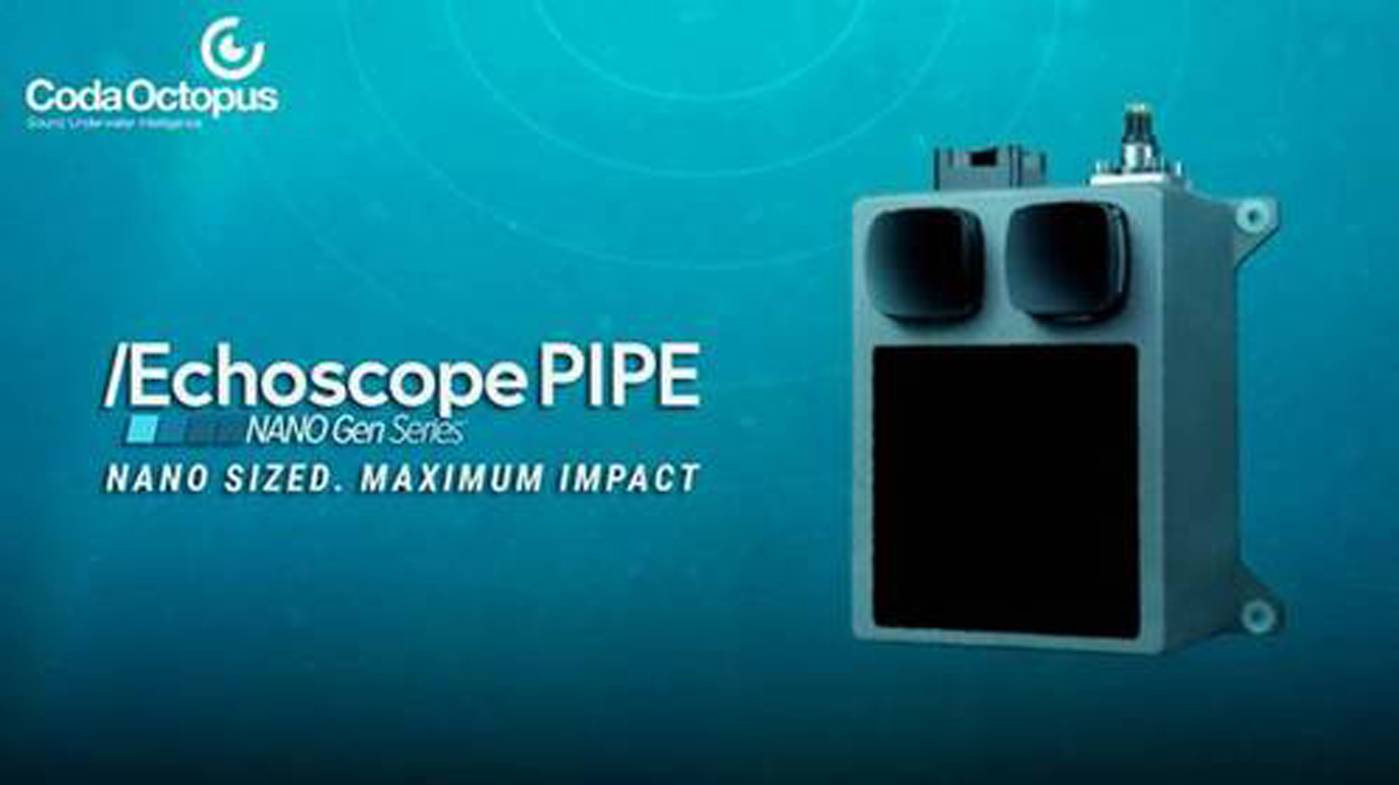
Coda Octopus has introduced Echoscope PIPE NANO Gen Series, the AI-ready, ultra-compact family of real-time 3D volumetric imaging and perception sonars, purpose-built for underwater vehicles and robotic systems.
To further accelerate program adoption and integration, Coda Octopus has also introduced 4G USE Headless, their robotic integration software platform. With cross-platform support for Windows, Linux, and embedded ARM systems, it provides a real-time API and high-performance headless operation for rapid deployment across virtually any subsea vehicle.
NANO Gen Series is available globally for evaluation and production programs.