DORI: Just Keep Swimming
By Celia Konowe
A dry polymetallic nodule releasing air bubbles after being dropped into water
Credit: Geiger Laboratories/Northwestern UniversityDeep in the ocean, scientists have found evidence that the seafloor is able to generate its own oxygen. While the source and cause of this oxygen is still unknown, these findings could hold significant implications, especially as deep sea mining is considered by some as necessary to meet growing electric vehicle battery demands. The Dark Oxygen Research Initiative (DORI), a collaboration between the Scottish Association for Marine Science (SAMS), Nippon Foundation, Boston University (BU) and Northwestern University, is setting off with two ultra deep seafloor landers, swimming further to uncover the mystery know as dark oxygen.
Dark oxygen, unsurprisingly, is the production of oxygen in the dark, explained Andrew Sweetman, professor of seafloor ecology and biogeochemistry at SAMS and leader of the DORI project. "There's nothing deep or sinister about it," he added. "It's just normally the way we think oxygen is produced on the planet is through photosynthesis—the synthesis of biological material using photons or light energy. And the thing is that we're seeing this process taking place at the sea floor in complete darkness."
Dark oxygen is especially interesting within the context of polymetallic nodules, which are rich in resources like lithium, cobalt, nickel, copper and manganese, and are prominent in areas like the Clarion-Clipperton Zone (CCZ). "What we were seeing was that when you have these manganese oxide deposits at the seafloor, whatever form they're in, whether it's coffee granules of manganese oxide in the sediments, or the actual nodules, you're seeing oxygen being produced," explained Sweetman. "And we go to other areas with the same equipment, for example, the Arctic or the Atlantic, where there's none of these deposits at the seafloor, and we don't see this."
His team ran several experiments back on the boat where they incubated some nodules by themselves and saw oxygen production increase in the dark. "It makes us think that there's something about either what's living within the nodules or the chemistry of the manganese oxides that's generating this oxygen. There are researchers around the world that have been contacting me, saying that our understanding of manganese oxide and its role in oxygen production is starting to become a lot clearer…people are seeing that when you have manganese oxide in some sort of electrolyte, like seawater, you do have the potential for oxygen to be produced. It could be water oxidation. It could be another electrochemical reaction. We just don't know and that's why we're trying to figure it out."
Partners Across the Pond
In addition to SAMS, Northwestern University and Boston University are searching for an answer. Franz Geiger, chemistry professor at Northwestern, is investigating the electrochemical angle. "In 2023, Andrew contacted me, regarding a paper that we had published on electrical power generation by flowing saltwater droplets across very thin layers of metal," Geiger said. "I didn't think there would be an electrochemical connection because at most, we would measure 10 or 100 millivolts, but you need close to a volt to do this." Sweetman sent over samples, and to Geiger's surprise, the readings were off the chart. One hypothesis is that the nodules, which are clustered together on the seafloor, can act as one big battery, multiplying the voltage across the number of nodules.
Geiger also wants to look at how pressure might be affecting oxygen production and what can be learned from handling the nodules. "Some of them are quite hard, but many of them are fragile and brittle. If you push too hard on them, they fall apart," he added.
Fifteen hours away, BU Assistant Professor of Biology Jeffrey Marlow is looking into the microbiology side. He met Sweetman on an environmental survey cruise conducting research on the biological life of the CCZ and potential mining mitigation strategies. "He told me about the unexpected trends in oxygen dynamics that his landers detected and we tried to think about what could explain it. I naturally thought about the microbes," Marlow said.

The Landers
To further understand dark oxygen—where it’s coming from, what’s causing it and how important it is—DORI has built two ultra-deep seafloor landers, one in Germany and one in Denmark. The landers are rated for the deepest parts of the ocean, where pressure is more than a ton per square centimeter and they will host a variety of sensors, including those for oxygen, hydrogen, pH, pressure and conductivity, turbidity and depth (CTD).
The landers also have a benthic chamber system, which can push into the sediment and incubate an area of the sea floor. From there, scientists can inject and withdraw samples from the chamber. “If we inject water with an isotope in the oxygen atom, and if there's sea water is being split electrically or water oxidation, we should see that isotope signal in the water samples,” Sweetman explained.
In addition to deploying the landers, the team will recover seafloor sediments to test in the lab. They're also aiming to deploy an aquatic eddy covariance lander, which measures the flux of oxygen in a non-invasive way (as opposed to the benthic chambers).
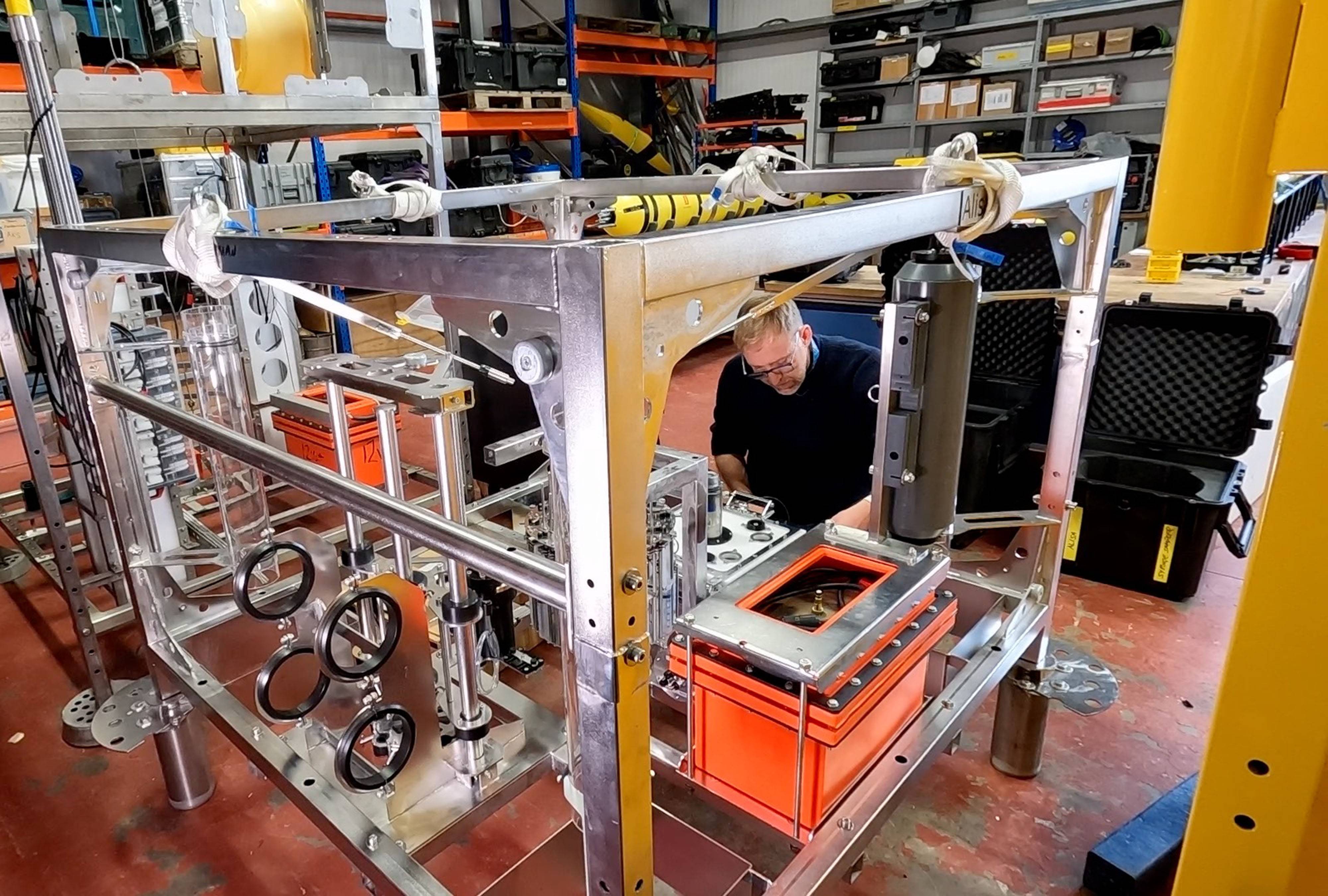
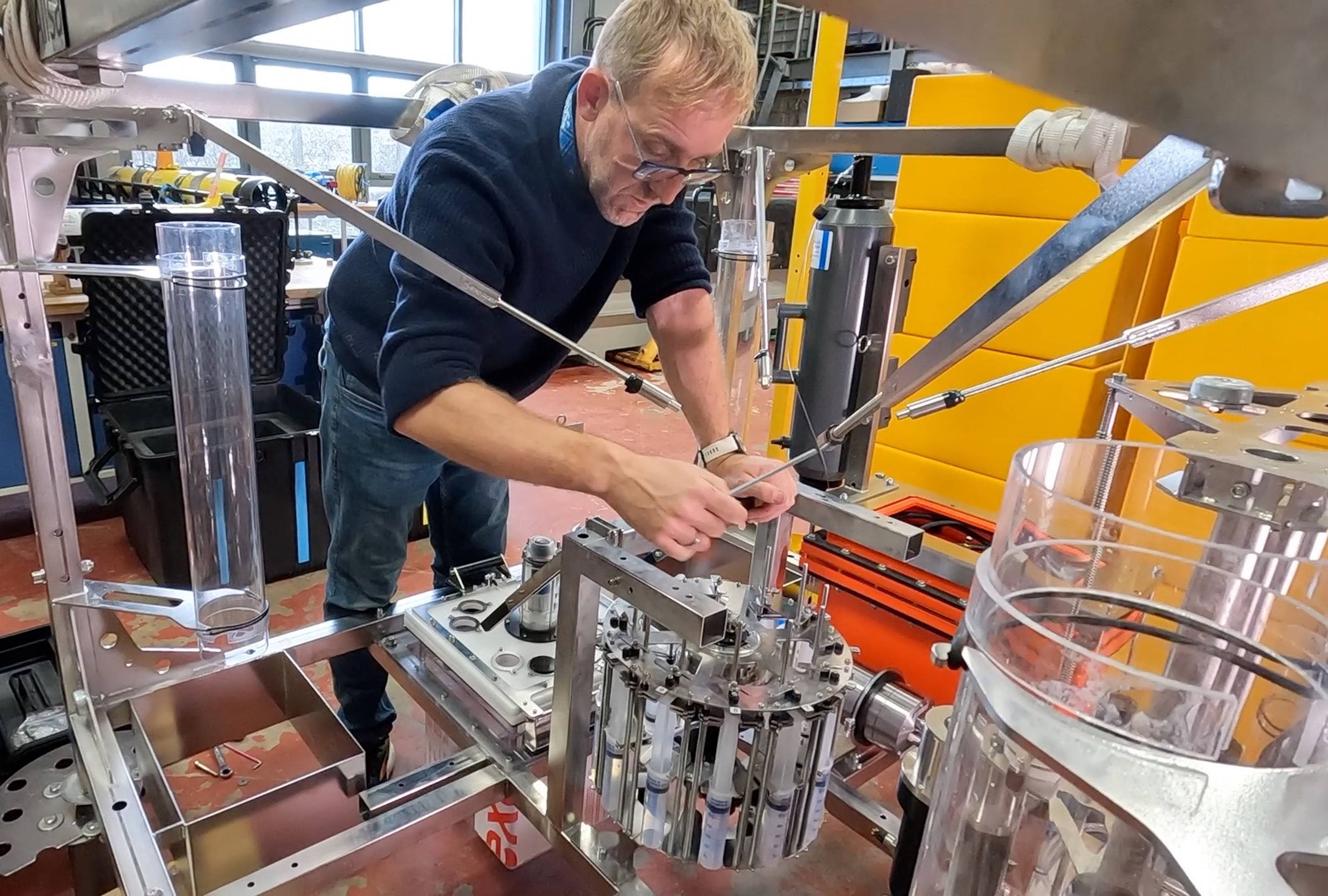
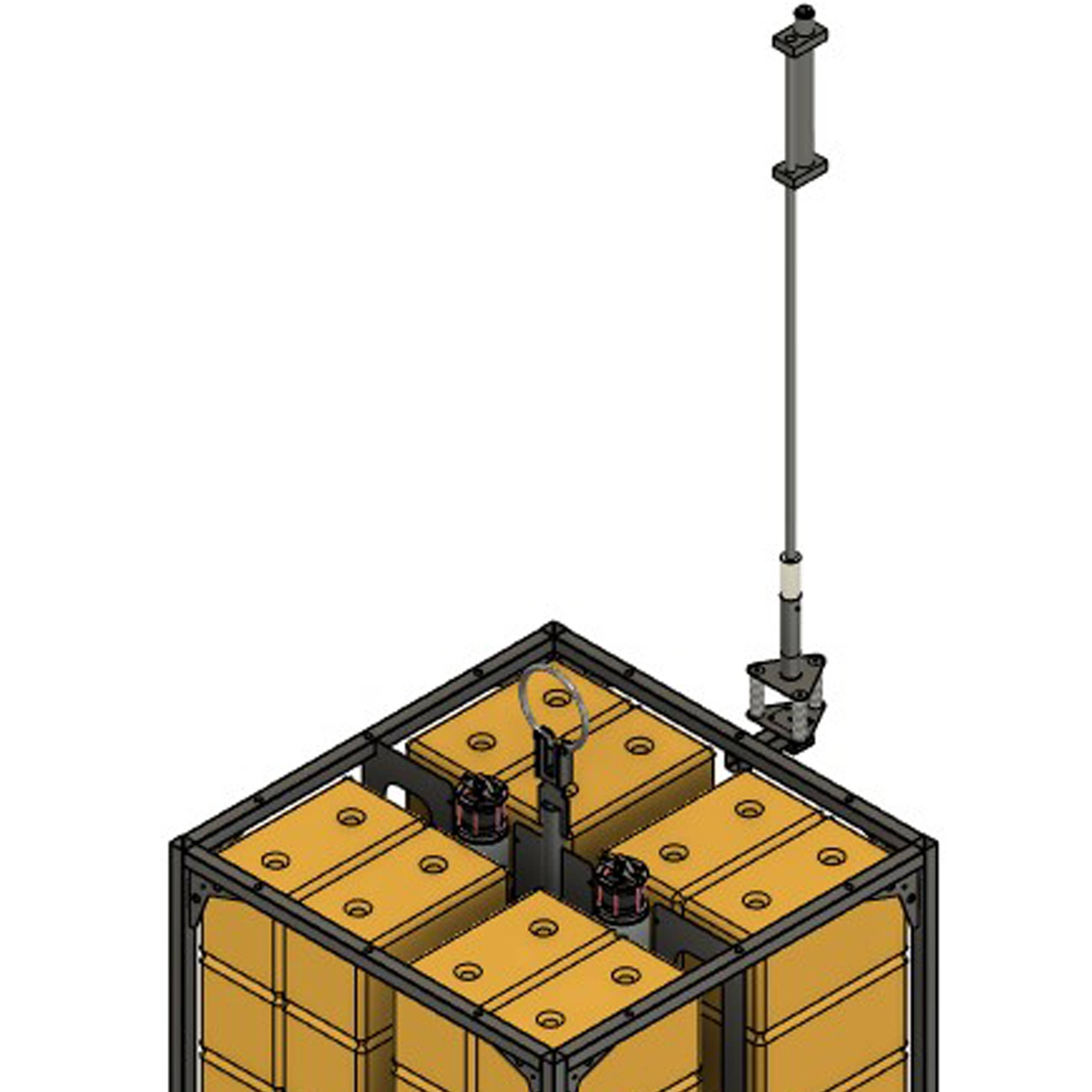
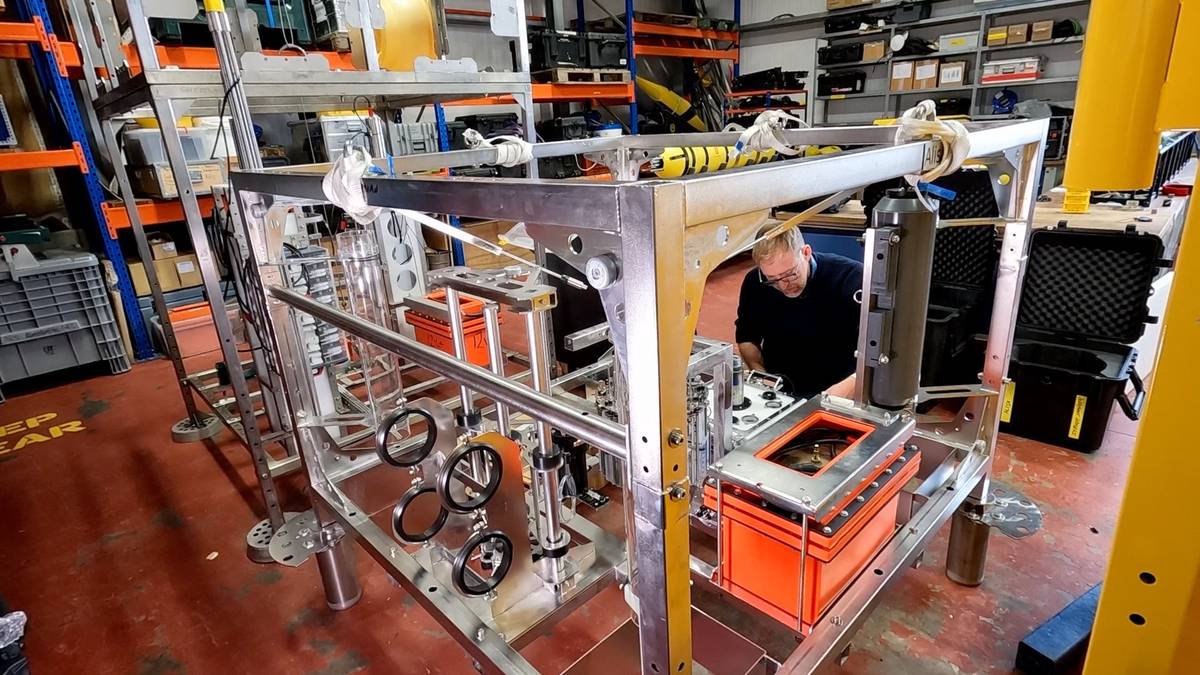
DORI’s deep sea landers.
Credit: SAMS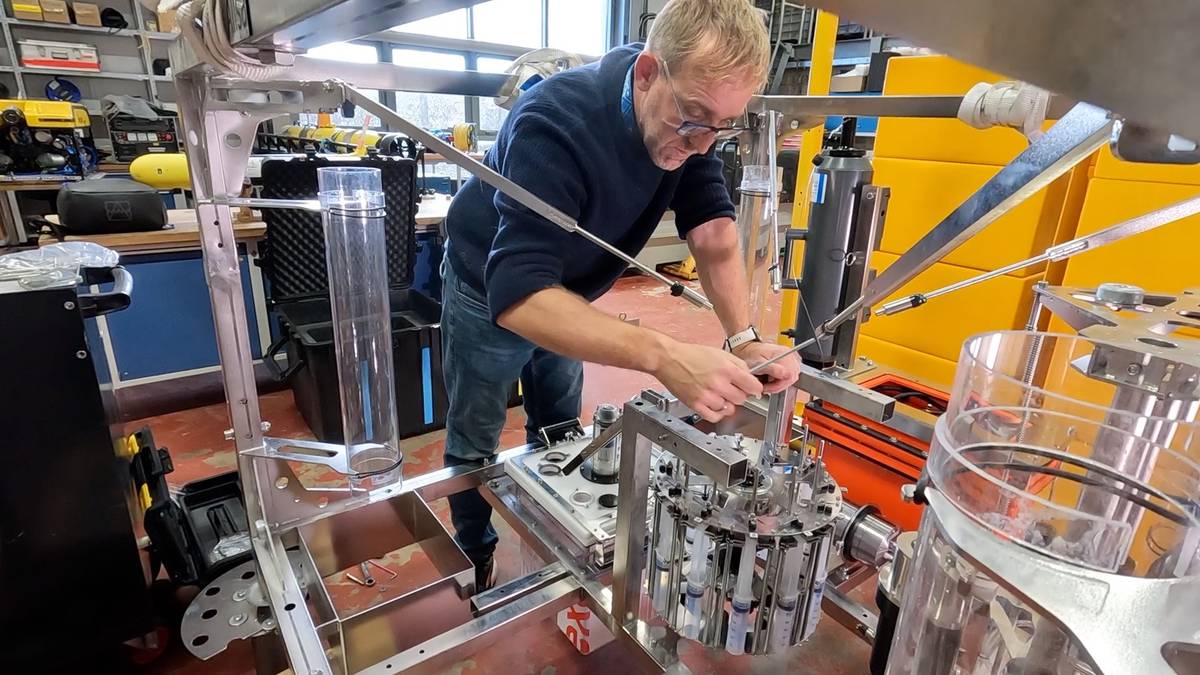
DORI’s deep sea landers.
Credit: SAMS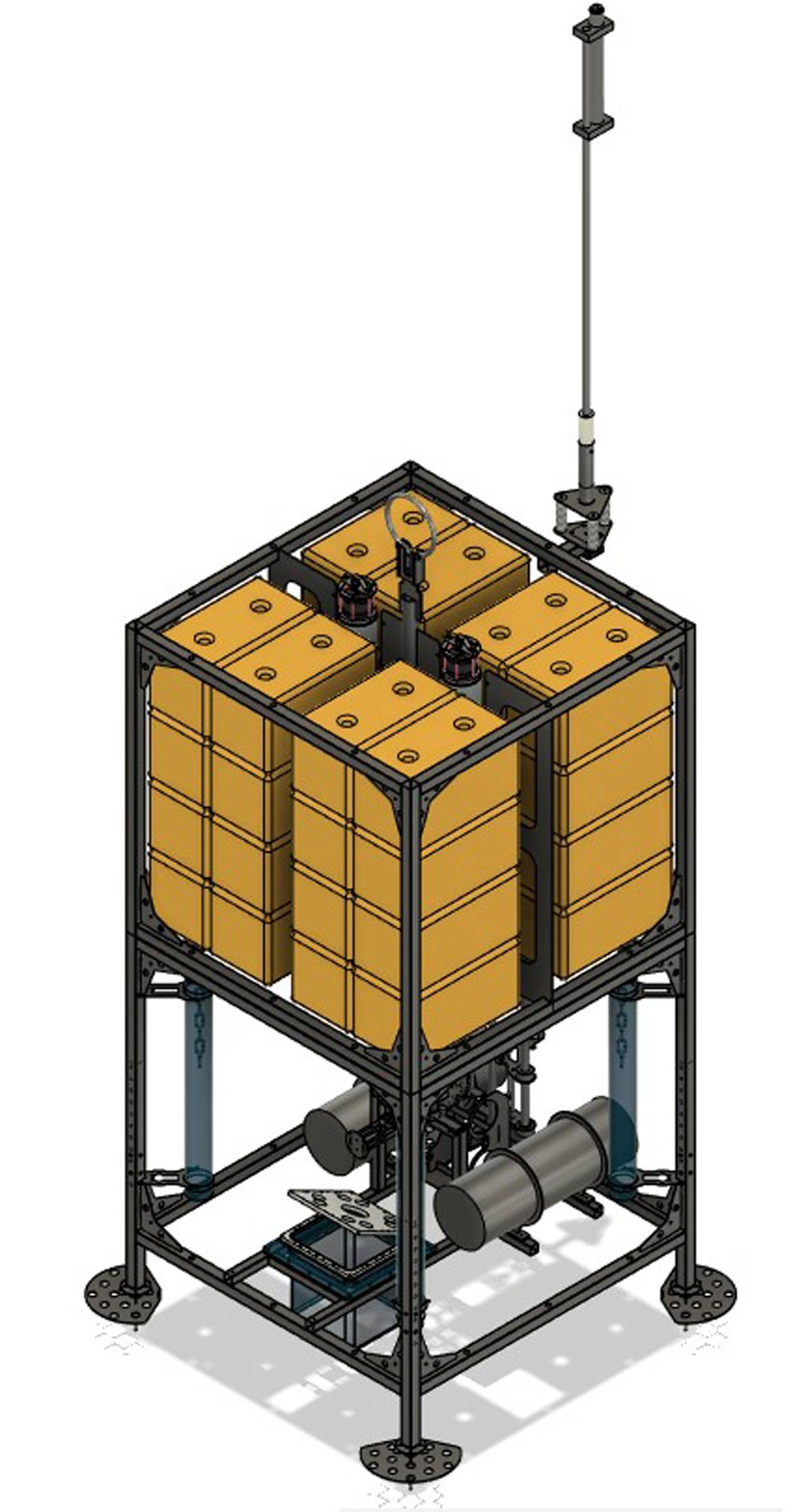
DORI’s deep sea landers.
Credit: SAMSSearching Deeper
Looking forward, the DORI team is preparing for a cruise to the CCZ in the fall. What they discover may have significant implications, regardless of what the answer is.
In Marlow's eyes, the findings of this research could indicate something significant about oxygen production without sunlight. "We know of several types of metabolisms and types of microbes that do this. However, they have not so far been thought to be sort of environmentally relevant at scale. That would really change how we think of oxygen dynamics more broadly around the world. That's what I'm particularly excited about, really rethinking biogeochemical cycling from the perspective of interesting microbial metabolisms."
"Anything new we learn about these nodules is interesting because they're just from a part of the world where we generally cannot get to," Geiger said. "Once you have them in your lab, it's kind of like going to the moon. Once you're on the moon, the moon rocks are everywhere, but it takes amazing effort to get there. Now we have them in our lab, and we have all these wonderful instruments that can go to the atomic scale. That's something that I'm super excited about."
He added, "Once we have the rate of how many millimoles or moles of oxygen are produced per year, per area of seafloor, we can contribute to answering questions that are totally outstanding right now, like is that oxygen necessary for life? Or is it way too little to make a difference?"
"We've been pretty honest all the way through,” said Sweetman. “This process has been found in an area that has abundant metallic resources that commercial mining companies want to extract. If the oxygen production is happening naturally and all the time, there's potentially going to be an ecological effect when you remove those nodules. Once we figure that out, we can go to organizations like the International Seabed Authority and work to adopt or adjust the mining regulations so that we try and protect this process as much as possible."
He added, "We've never said that this discovery is the final nail in the coffin for deep sea mining. That's not our role. But, if we do find that it's important, it's happening all the time and the nodules are relevant in this process, then we need to use that information to make the mining more environmentally friendly."
Sweetman concluded, "And you know, it's quite possible that at the end of the three years, we know it's not electrochemical or microbial, but something else entirely."
DORI will have to just keep swimming to find out.