Tech File
LCO₂ Bow Transfer System
MacGregor LCO₂ Bow Transfer System
A new liquid carbon dioxide (LCO2) transfer solution built on proven technology from MacGregor enables the flexible, direct ship-to-well injection needed to support the EU’s carbon capture and storage goals.
If the European Union is to meet its objective of net-zero emissions by 2050, carbon capture and storage (CCS) will have a significant part to play. The EU-funded CCS research and innovation project, COREu, targets a 6.8- and 36-megatonne reduction in annual carbon dioxide emissions by 2035 and mid-century, respectively.
With industrial manufacturing projected to represent 41% of annual captured CO2 by mid-century, new technology will be needed to connect land-based sources to offshore storage sites. Current standards often rely on costly onshore buffer and conditioning facilities. To enable efficient, large-scale CO2 transport, the industry requires flexible, direct ship-to-well injection solutions.
MacGregor, as a COREu consortium partner, has pioneered a liquefied CO2 (LCO2) Bow Transfer System (BTS) that combines cutting-edge research and development with tried-and-tested technology. The new system enables safe and reliable LCO2 transfer in a range of operational windows, ensuring high uptime for LCO2 carriers. More broadly, it supports economic viability across the CCS value chain by connecting capture plants directly to offshore injection sites.
To minimize technical risk and accelerate delivery to market, 79% of MacGregor’s BTS leverages existing technology, building on the company’s market-leading Bow Loading System (BLS).
“Our proven BLS has reliably served the oil and gas sector since the 1970s and provided a basis for many relevant standards, so our intention was to make only the changes necessary to account for the increased complexity of handling LCO2 compared to crude oil or natural gas,” says Øyvind Solli, Technical Development Manager, BTS, MacGregor. “In this way, we not only simplify our design and verification processes but also ensure that personnel on board LCO2 carriers find it easier to adapt to the new system.”

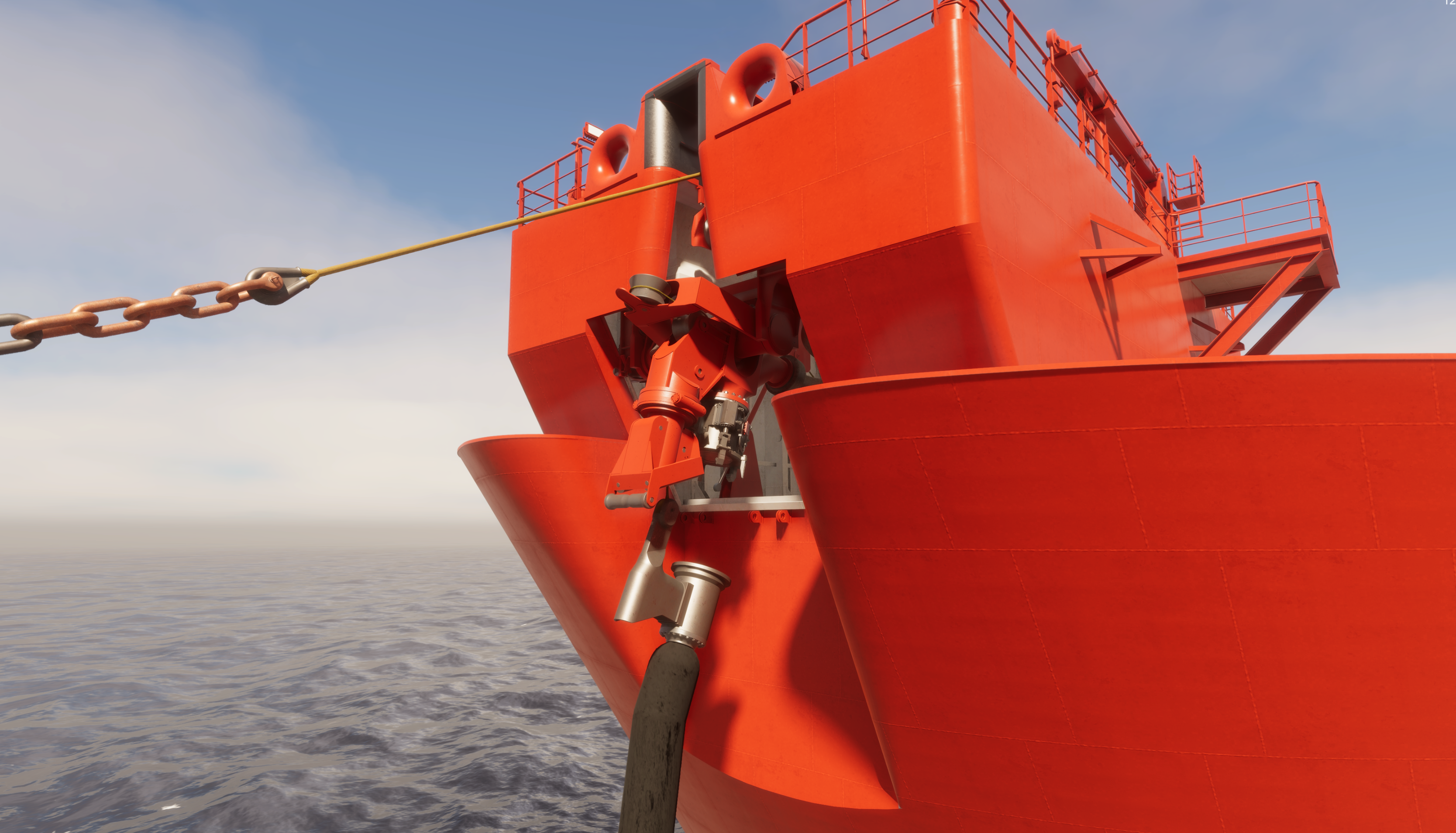
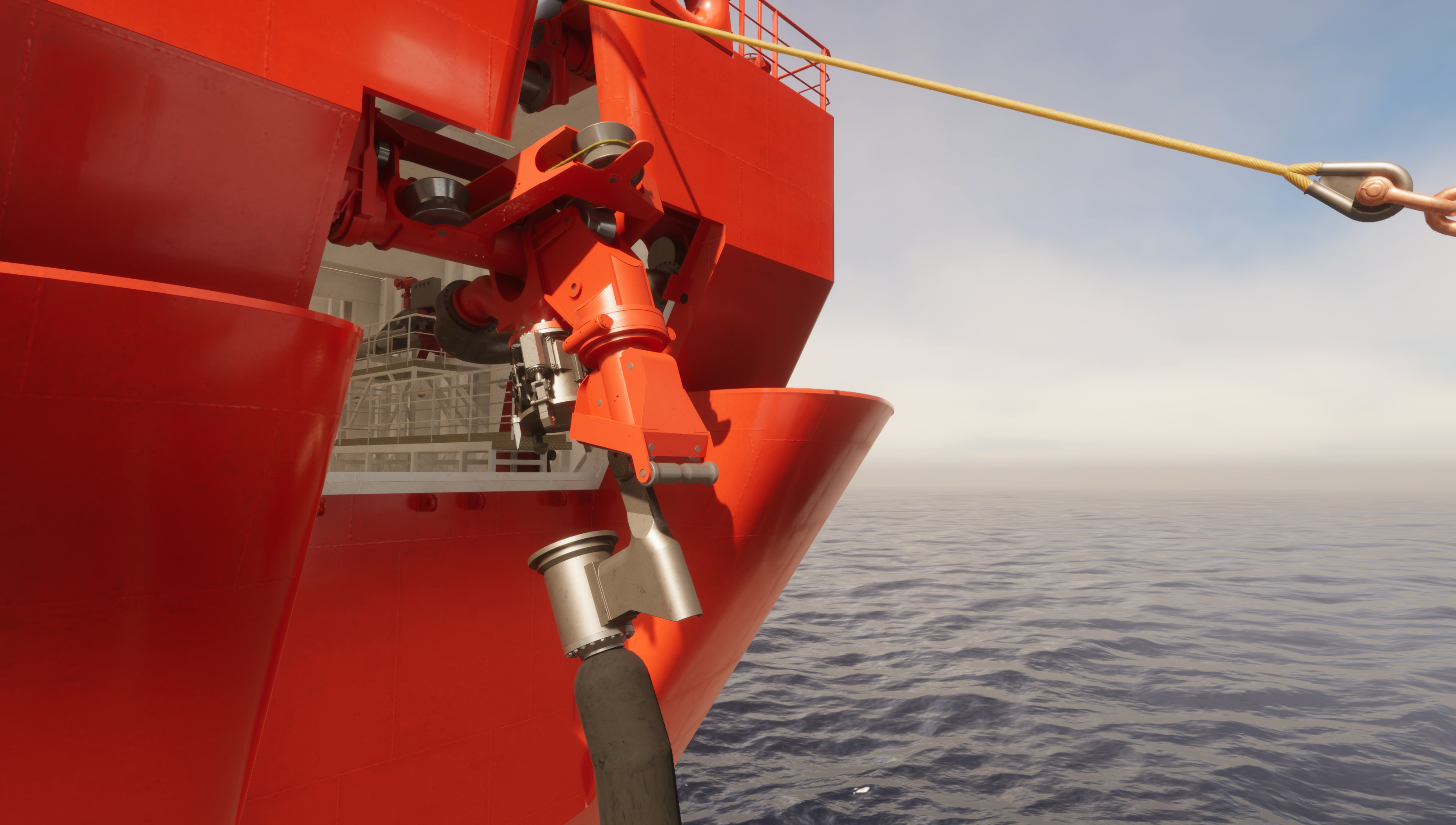


A further 13% of the BTS, Solli explains, consists of essential modifications that align the hardware’s established capabilities with the specific demands of its new application: these comprise an updated human-machine interface and a cold-adapted hydraulic system.
The final eight per cent of the system comprises entirely new designs specially developed to handle the highly volatile properties of LCO2. This includes a unique LCO2 coupler valve featuring moment-free Cardan suspension and a dedicated guiding pin. Together, these technologies facilitate a secure connection between the LCO2 carrier and the offshore injection unit’s hose-end valve, supporting safe and efficient offloading even in heavy sea states.
To meet the varying requirements of the emerging CCS market, MacGregor has designed its new hardware to serve as the foundation for four distinct system architectures. These cover low- and medium-pressure (30–60 bar) to high-pressure (300 bar) direct reservoir injection, executed via seabed swivels or disconnectable turrets, providing the flexibility to help the industry bypass its landside bottleneck.
Testing, qualification, and next steps
MacGregor has conducted testing alongside research organization and fellow COREu member, SINTEF, to identify seal materials capable of withstanding the high pressure and extreme cold needed to maintain CO2 in a liquefied state during transfer.
The tests evaluate materials performance during rapid gas decompression (RGD) and under LCO2 conditions. Even when subjected to repeated pressure cycles and temperatures as low as -57⁰C (the threshold below which CO2 can no longer exist in a liquid state) the seal maintained its RGD integrity, exhibiting no evidence of gas entrapment or internal cracking.
In parallel with the seal tests, MacGregor is engaged in an ongoing technological qualification (TQ) process with leading classification society DNV. The company recently achieved a significant milestone in completing the planning phase, which comprises a qualification basis, technology assessment, threat assessment, and qualification plan.
“At this stage, we have successfully identified all risks associated with our equipment and its application for LCO2 transfer,” said Solli. “DNV has formally acknowledged these findings, and together, we have established a framework for managing and mitigating the identified risks, including the specific methods required to provide the evidence for final verification.”
According to Solli, MacGregor’s next task is to produce a prototype of the BTS prior to its testing and demonstration, which are expected to take place in mid-2027. Performance validation, a critical final phase in the DNV TQ process, will also provide the foundation for a report due for submission to the COREu consortium ahead of the project’s 2028 conclusion.