Virtually Prepared: API WorkSafe Offshore Safety Orientation
How immersive technology lets offshore personnel prepare for the job before they ever reach a facility.
Hot work throwing sparks near pressurized equipment and combustible materials. A confined space that narrows to black. A scaffold platform, its grating revealing nothing underneath but open water far below. These are not classroom problems. They are offshore working conditions, where a worker must recognize hazards amid machinery, changing weather and active work with limited room for error.
For experienced personnel, that environment is familiar. But for someone stepping onto a platform for the first time, it can be a lot to internalize at once. The language, the pace, the sequence of work and the risk of missing a cue all carry weight. And while a worker can memorize a rule in advance, what’s harder to gain from a distance is the feel for applying it in context while equipment is running around them.
Classrooms, slide decks and procedures manuals are well-known teaching tools, but they can only describe field conditions secondhand. And even if a worker passes the written test on confined-space entry, they are still facing the unknown the first time they're actually looking into one.
Too often, the learning process has been a binary choice with each option less desirable than the other: the safe way to learn has been the one that least resembles the job. And the realistic way to learn has been the one with the most at stake.
That is the gap API set out to close.
Using virtual reality and interactive computer-based training, the API WorkSafe Offshore Safety Orientation (WorkSafe) program gives new personnel a way to move through realistic work conditions in a controlled environment rather than only read about them. Mentorship and hands-on training still provide necessary support, but they now begin with a worker who has already encountered the environment, not one meeting it for the first time on a live facility.
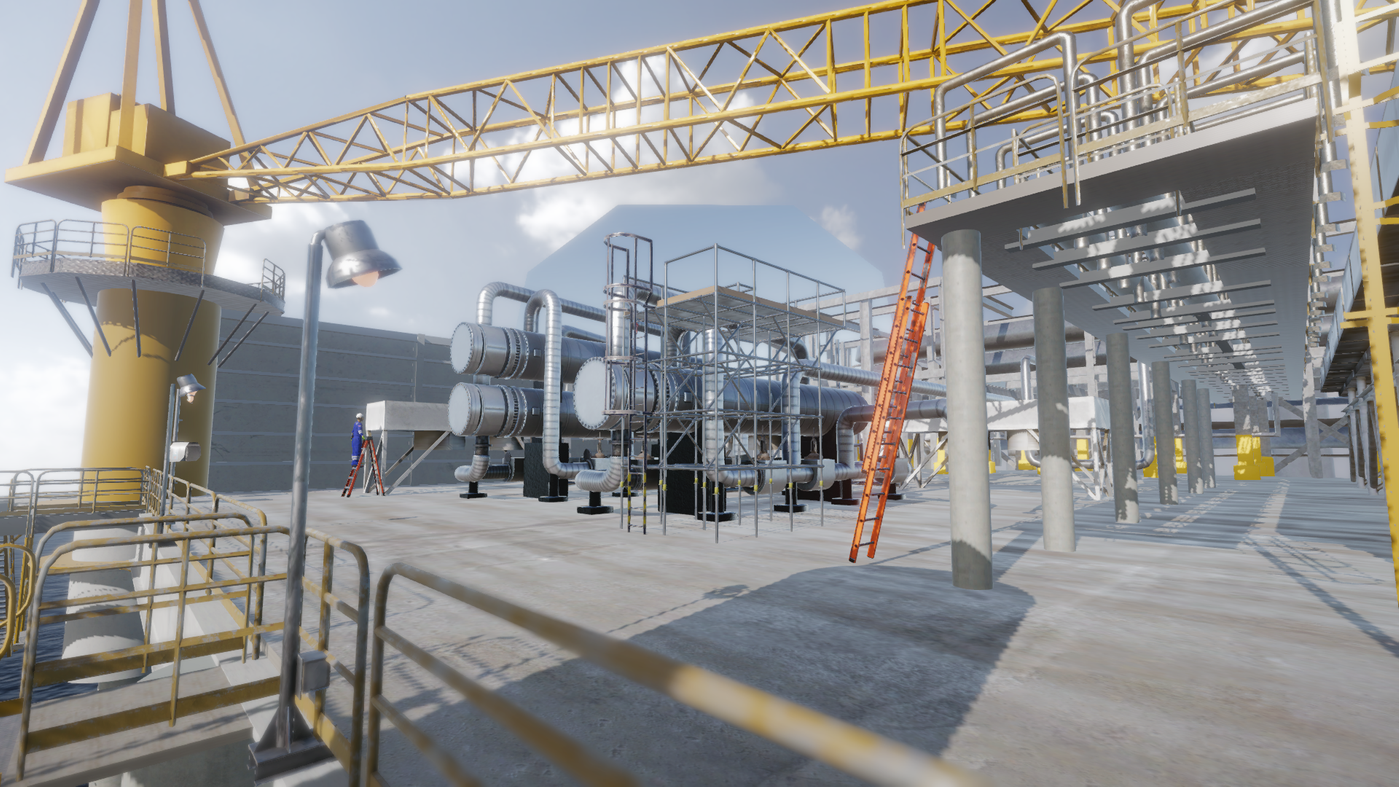
Launched in mid-2026, WorkSafe Offshore is an API awareness-level orientation program built around API Recommended Practice T-1, Creating Orientation Programs for Personnel Going Offshore, which provides guidance for orienting personnel before they head offshore.
To be clear, WorkSafe does not replace discipline-specific instruction or an employer's site-specific training; it comes before them. It gives operators consistency when bringing new workers up to baseline knowledge. Everyone completes the same structured orientation before the stakes are real.
Learning in stages, not all at once
WorkSafe’s virtual reality scenarios are fully interactive, with the trainee moving through the space and handling equipment directly, advancing in stages to reinforce the material.
A trainee begins in an orientation mode that introduces the controls and how to move through a scene. From there, they move through a procedure reacting to narration and on-screen cues, the way a mentor might talk them through it the first time.

In a practice stage, the trainee has to recall the steps unaided. A wrong move doesn't end the scenario but returns them to the previous step to try again. In this way, a mistake is not “game over” but another repetition that builds procedural familiarity.
A final assessment asks trainees to carry the full procedure through on their own. While working through a confined-space entry, for instance, a trainee must clear the same checks the real procedure demands, in the same order, before the scenario will let them proceed.
Meeting workers where they are
Recognizing that one size does not fit all in effective learning, WorkSafe adapts to a trainee’s preferences and practical constraints. It is offered as both instructor-led and self-paced training, with instructor-led options available for in-person and live-virtual, and self-paced training available through online courses.
The immersive component is available across formats through a VR headset or, where a headset is unavailable, a trainee can use a gaming device or a keyboard and mouse. In instructor-led formats, an instructor teaches the course and can guide the session, as well as administer the knowledge check at the end of the course.
What the research shows
WorkSafe’s immersive approach draws on a growing body of research into the effectiveness of using VR for safety training. A 2023 meta-analysis by Scorigie et al in Safety Science, which references more than 50 studies across industrial settings, found that VR safety training "outperformed traditional methods in terms of knowledge acquisition and knowledge retention.”
And a 2024 review from the International Journal of Integrated Engineering focusing on the oil and gas industry adds even more targeted weight. Analyzing studies from across the industry, it reports that immersive simulations improved workers' hazard awareness, helping them recognize trip hazards, obstructions and inadequate safety barriers more readily than conventional methods. Additionally, it found that VR-based operational and emergency-response training was associated with sharper situational awareness and decision-making.
With these near-term gains in knowledge and engagement well documented, researchers are now working to measure how durably they hold over time, the kind of long-term analysis that will inform and strengthen future iterations of API’s WorkSafe curriculum.

Facing the known
Even as that work continues, the operational value is clear. API WorkSafe Offshore Orientation gives operators a practical way to bring new workers to a shared starting point.
So that amid a live offshore environment, with massive equipment, unpredictable weather and frenetic activity all converging at once, when that worker reaches the facility and looks into the confined space for the first time … well, it really isn't the first time. They've seen it before.