Quiet Energy Powerhouses
Finland’s Vaasa Industry Cluster
Powering Happiness - How Vaasa’s Energy Cluster Drives Finland’s Global Reach
Finland’s status as the world’s happiest country has become almost routine. The nation once again ranked first in the 2026 World Happiness Report, extending a streak that dates back to 2018. Yet in Vaasa, on Finland’s west coast, that title feels less like a branding exercise and more like a by-product of something deeper - a tightly integrated industrial ecosystem built around energy innovation.
Amir Garanovic, Managing Editor at Offshore Engineer Magazine
City of Vaasa, Finland
©raland / Adobe Stock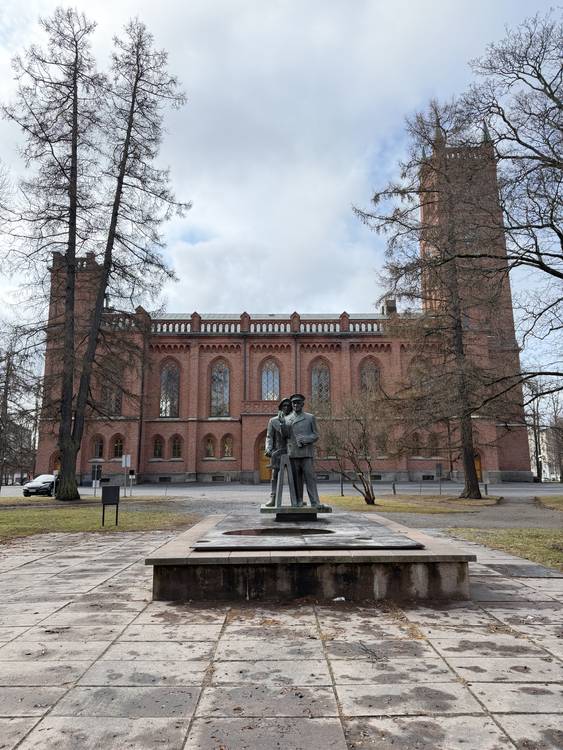
Vaasa is not a capital city, nor is it large by European standards. But it is one of the most concentrated energy technology hubs in the Nordics. The EnergyVaasa cluster comprises more than 180 companies, employs around 13,000 people, generates over $7 billion (€ 6 billion) in annual turnover and exports roughly 80% of its output. Annual R&D spending in the cluster stands at around $295 million (€ 250 million), with further infrastructure investments expected to reach $2.23 billion (€1.9 billion) by 2030.
That industrial base shapes the city’s identity, explaining also why EnergyWeek, held in Vaasa in mid-March, has become more than a conference. The event reflects the breadth of the city’s industrial ecosystem, bringing together stakeholders across wind, renewables, energy storage, clean gas, and system-level innovation.
EnergyWeek was structured around thematic days - including wind and renewable energy, energy storage, and clean gas energy - mirroring the key pillars of the energy transition. This year’s edition drew more than 11,000 participants from 50 countries, underlining Vaasa’s position as a meeting point for the global energy sector.
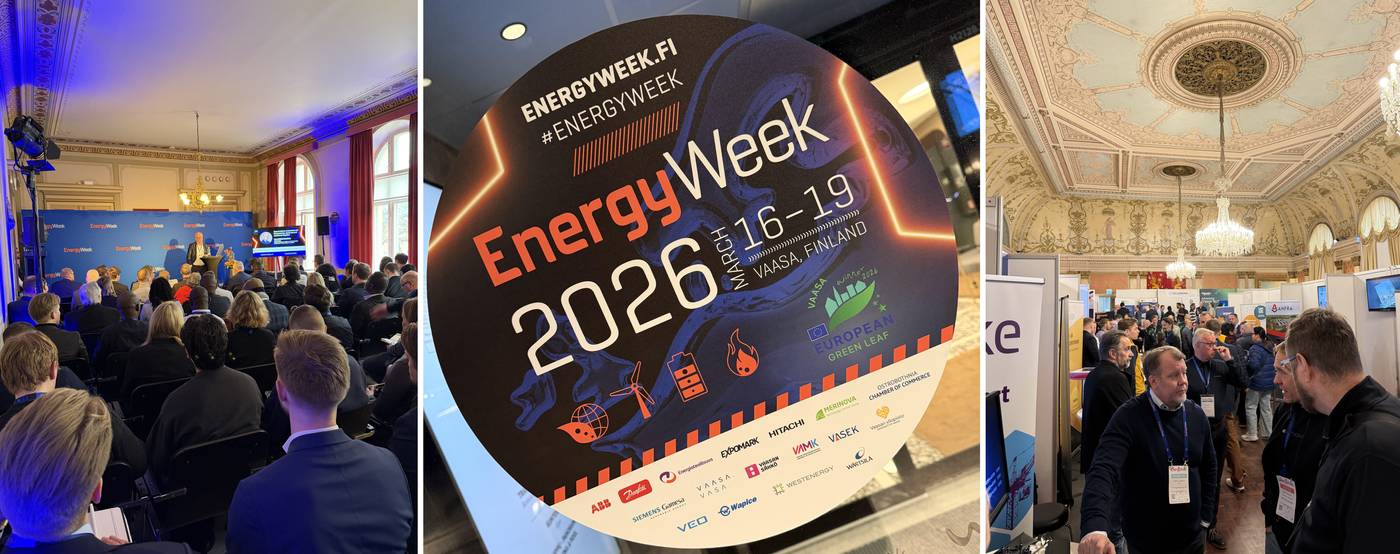
The opening sessions also highlighted the international dimension of the event, with keynote contributions from multiple ambassador delegations, reinforcing how Vaasa’s energy cluster connects not only to European markets but to a broader global dialogue on energy security, resilience and decarbonization.
Vaasa - Where the Energy Transition is Industrial, Not Abstract
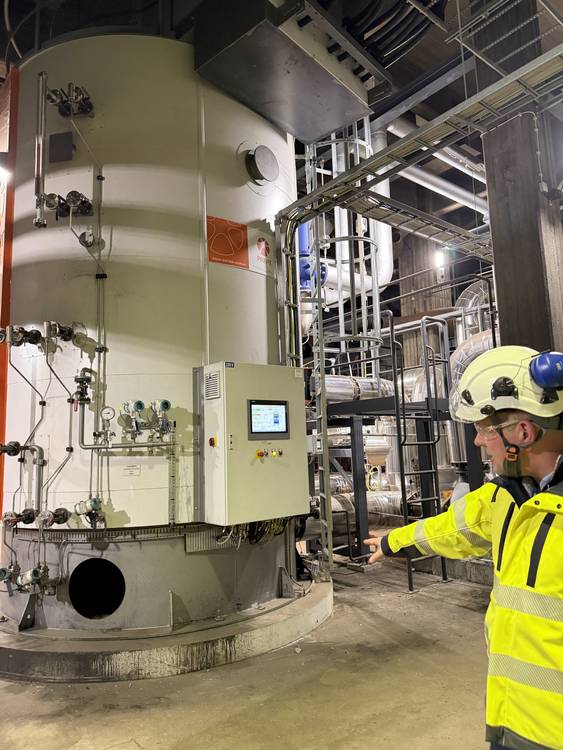
What stands out in Vaasa is how seamlessly industry, research and policy intersect. Within a short distance, it is possible to move from conference discussions on grid resilience, circular economy and hydrogen markets to large-scale industrial facilities where those ideas are being tested and deployed.
At Wärtsilä’s Sustainable Technology Hub, considered a ‘crown jewel’ of the industrial area, the focus is firmly on decarbonization of both marine and energy systems. The facility operates as a collaborative platform, bringing together engineers, customers, partners and researchers to develop and test solutions, including engines designed for sustainable fuels. It is a reminder that the transition is not only about new technologies, but also about adapting existing industrial capabilities to new energy realities.
Elsewhere in the city, Vaasan Voima’s Vaskiluoto site offers a striking example of how legacy infrastructure can be repurposed. What was once a combined heat and power and oil-storage site has been transformed into a high-temperature thermal energy storage system, designed to integrate renewable electricity into district heating. With a planned capacity of 17 GWh and supported by electric boilers totaling 220 MW, the system demonstrates how surplus renewable power can be converted into long-duration heat, reducing reliance on combustion even during peak Nordic winter demand.
The approach reflects a broader mindset visible across the region - rather than discarding existing assets, Vaasa’s energy companies are finding ways to adapt them into flexible, low-carbon systems. It is a pragmatic path that may resonate with other industrial regions facing similar challenges.
The same system-wide thinking is evident at companies such as Danfoss Drives and VEO. In Vaasa, Danfoss develops and manufactures high-power AC drives and power conversion modules used across energy, marine and industrial applications, helping customers improve efficiency and reduce emissions. VEO, meanwhile, delivers electrification and automation solutions across renewable energy, power generation and industrial processes, with more than three-quarters of its projects directly tied to the energy transition.
Alongside industrial visits, the discussions at EnergyWeek reinforced how these technologies fit into a broader systems shift. Sessions covered not only generation and storage, but also energy system flexibility, resilience, digitalization and the integration of renewables into existing grids - areas increasingly critical for offshore wind expansion and electrification of industry.
A Happier Country - Built to Endure, Adapt and Overcome
What makes Vaasa distinct is not just the scale of its energy industry, but how deeply it is embedded in everyday life. The link between technology, education and society is visible from an early stage. In Vaasa, energy-related learning begins as early as preschool and continues through all levels of education, creating a steady pipeline of future engineers, researchers and industry professionals.
At the University of Vaasa, this connection becomes more explicit. The institution works closely with the surrounding energy cluster, combining expertise in energy technology with business, investment and societal transformation. The joint ‘Energy Transition Valley’ initiative aims to strengthen research infrastructure and deepen collaboration between academia and industry, reinforcing the region’s role as a hub for innovation.

At the same time, Vaasa is positioning itself as a model for sustainable urban development. The city has been named a European Green Leaf City for 2026, recognizing its progress in climate action and environmental policy. The city’s theme for the year - ‘Making a Difference Makes Us Happy in Vaasa’ - may sound light, but it is attached to a very practical idea - that climate policy, industrial competitiveness and quality of life should reinforce one another rather than compete.
EnergyWeek discussions also reflected this urban dimension, with dedicated sessions on ‘Leading Urban Energy Transition’ and the role of cities in bridging competitiveness and climate action - highlighting how local policy frameworks are becoming increasingly central to delivering large-scale energy transformation.
There is also a human dimension that is harder to quantify but difficult to ignore. Outside the conference halls and industrial sites, life in Vaasa moves at a measured pace. The nearby Kvarken Archipelago, a UNESCO World Heritage site shaped by post-glacial land uplift, offers a stark contrast to the high-tech facilities just a short drive away. Sauna, cold-water swimming and time spent in nature are not treated as luxuries, but as part of a balanced routine.

That balance may help explain why Finland consistently ranks at the top of global happiness indices. In Vaasa, the drivers of that outcome appear closely tied to the same factors underpinning its energy success - long-term thinking, trust in institutions, investment in education, and a willingness to adapt rather than disrupt for its own sake.
For the energy industry, the lesson is not that happiness can be engineered. It is that resilient, future-oriented systems - whether in energy, infrastructure or society - tend to produce more stable and sustainable outcomes.
Finland may once again be the world’s happiest country. In Vaasa, that result seems less like a coincidence and more like a consequence of how the energy transition is being built - methodically, collaboratively, and with a clear sense of purpose.
About the Author
Amir Garanovic
Amir Garanovic is managing editor of Offshore Engineer. He has covered offshore energy and maritime industry since 2014, with a special focus on renewable energy sector and emerging clean energy technologies.