Markets
Rigs
Middle East Conflict Jolts Offshore Drilling Market
Conflict between Iran, The United States, Israel and allies throughout the Gulf region has had an immediate effect on the oil and gas industry, both upstream and downstream. Drone and missile attacks have damaged refineries and as of mid-April 2026, blockades in the Strait of Hormuz have severely restricted the flow of oil into the global market.
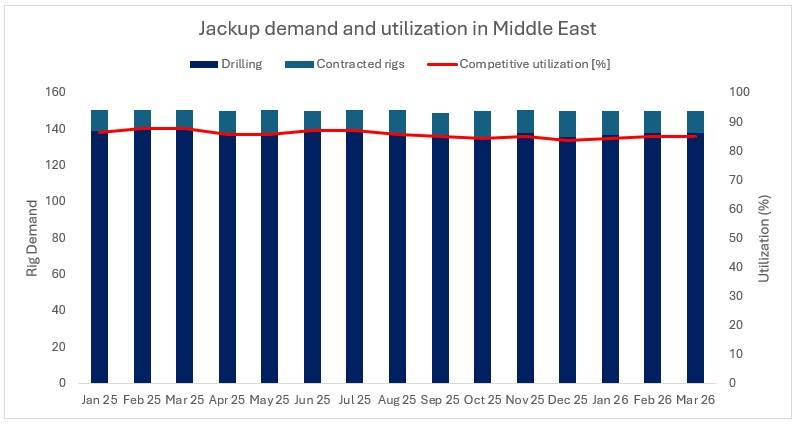
The war has also affected drilling in the area. The Middle East houses 177 of the world’s 495 jack-ups and drilling by national oil companies in Saudi Arabia, the UAE and other countries in the areas makes it the largest market for these rigs.
Jack-up Suspensions Weigh on Near-Term Activity
After Iran was hit with missiles in late February and Iran began responding with strikes in the UAE, Qatar and Saudi Arabia, a number of jack-ups were manned down and some drilling activity was halted due to safety concerns, particularly in Qatar.
As of mid-April, a significant number of these rigs have returned to work. However, Saudi Aramco, the largest operator in terms of jack-ups under contract, has been issuing notices of temporary suspension, affecting jack-ups managed by ADES, Arabian Drilling and other contractors.
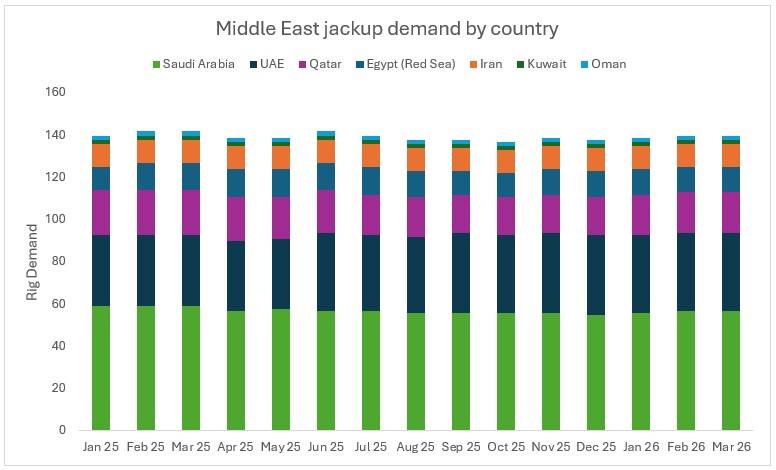
Market sources suggest that around 20 jack-ups could be affected. The length of suspensions is undetermined; in previous rounds of suspensions some rigs have remained suspended by Aramco for over a year but drilling contractors have stressed the temporary nature of the suspensions this time. Regional rig demand in the near term is also expected to be curtailed by delays in the start of previously fixed contracts.
Jack-Up Market Faces Short-Term Pressure
Despite these setbacks, tendering processes have continued for new jackup contracts in the region; albeit with some delays in the deadlines for ongoing tenders.
Jack-up demand in the Middle East is expected to trend downwards slightly over the next several months due to a combination of the suspensions, jack-ups rolling off contracts, and delays to contract start dates. However, in contrast with Aramco’s previous suspensions, jack-ups are not expected to leave the Middle East in large numbers.
Regional jack-up demand is currently projected to trend back upwards to previous levels after the near-term lull as rigs return to work and operators work to reestablish normal operations. However, this return is predicated on open hostilities in the region resolving over the next few months. Extended fighting and blockades would likely result in a further decline in activity due to safety concerns and issues with selling and transporting produced hydrocarbons. However in the longer term, high oil prices stemming from the war could boost rig demand globally.
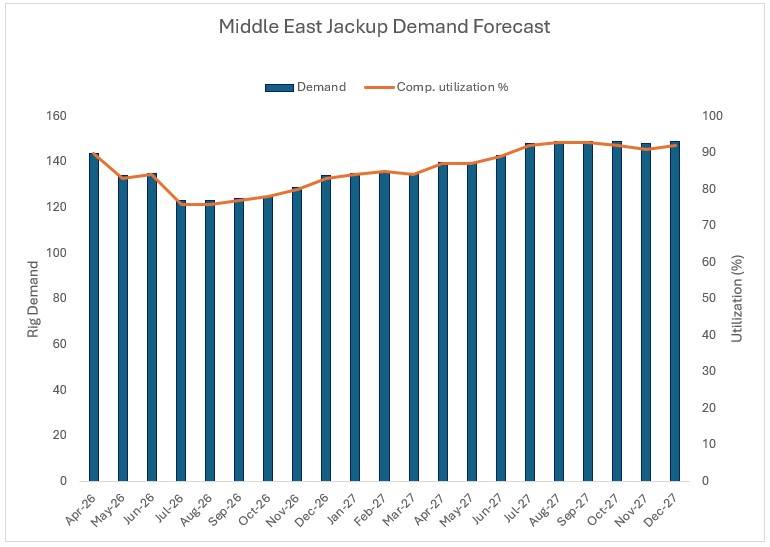
Even before the recent outbreak of hostilities in the Middle East, global offshore rig demand was already expected to trend upwards from 2026 to 2027.
Floating rig activity worldwide had been showing signs of increased activity in 2027 following the relative lull of 2025, with drillships securing new contracts beginning in late 2026 and beyond. Demand that was previously delayed due to supply chain bottlenecks or fiscal discipline has been firming and new tenders have been released, pointing to increased demand for floating rigs in the Indian Ocean, Southeast Asia and West Africa, alongside stable demand in South America and the US Gulf. For the jack-up market, demand was forecast to rise over 2026, with rigs returning to work in the Middle East and Mexico as contract suspensions came to an end and new tenders were issued globally.
Price Surge Lifts Outlook for Rig Demand
Looking forward now, high commodity prices in the near term caused by the conflict support continued activity on floating rig and jack-up projects that were commissioned under lower oil price scenarios.
While operators remain cautious about high oil prices linked to a regional conflict, the longer oil prices remain high and supply disruptions to the global market are evident, the more impetus there will be for increased rig demand ahead. Even if the Middle East situation is resolved in the near term, interest may remain in boosting drilling and production in areas like Asia Pacific that have seen their energy supplies disrupted as a hedge against future issues.
Evidence of this is already beginning. In a recent statement, Borr Drilling CEO Bruno Morand said that recent discussions with customers had confirmed “the early signs” of a trend towards accelerated rig activity, noting “an increased sense of urgency in awarding existing tenders and bringing forward certain drilling programs.”
On the operator side, Valeura Energy, which has offshore operations centered in Thailand, said that it is pursuing options to accelerate projects “in light of the substantially higher recent oil prices” and looking to increase the amount of drilling activity it can do in 2026. This has resulted in “advanced discussions with drilling rig contractors.”
About the Author
Matthew Donovan
Matthew Donovan is Head of Rig Market Research at Esgian. He has over a decade of experience covering offshore oil and gas activity, with a focus on the global drilling rig market.
 ©Esgian