Pioneer Profile
Per Sævik
Maritime Industry Pioneer Per Sævik: "I Hope to Be Remembered as a Decent Man"
Per Sævik has steered his business empire through deep crises and spectacular triumphs. Now he is preparing for perhaps his greatest challenge yet. Retirement.
By Josefine Spiro
Per Sævik: “In the financial world, it can be tempting to take the easy way out—to invest smartly and let the money work for you. But you don't build a country on capital gains alone”.
Photo credit: Josefine SpiroIf you were invited to lunch at the home of 85-year-old Per Sævik without knowing his history, your first impression would likely be shaped by three things. First, his modest house — a traditional Norwegian home on a small, weather-beaten island on the northwest coast — has remained largely unchanged since he and his wife built it in 1971. Second, his simple taste in food; Per prefers a basic lunch of sliced bread with butter and jam. Finally, his conversation. He enjoys discussing sports, culture, and community development, showing little interest in personal status. As he puts it: “I grew up as one of nine children in a time that was rich in most things, except money. That shaped my life, and I have a very grounded relationship with material wealth.”
Knowing this, it might come as a surprise to learn that this man — who has never been a bon vivant, but rather a dedicated community builder — is one of the most successful figures in the Norwegian maritime industry. Through Havila Holding, which he owns with his children, he has built an empire spanning fisheries, offshore energy, ship technology, real estate, and tourism.
The latest addition, Havila Voyages, operates four coastal cruise ships on the historic Norwegian Coastal Route between Bergen and Kirkenes. This venture stands as perhaps the greatest achievement of his career—and undoubtedly the most challenging.
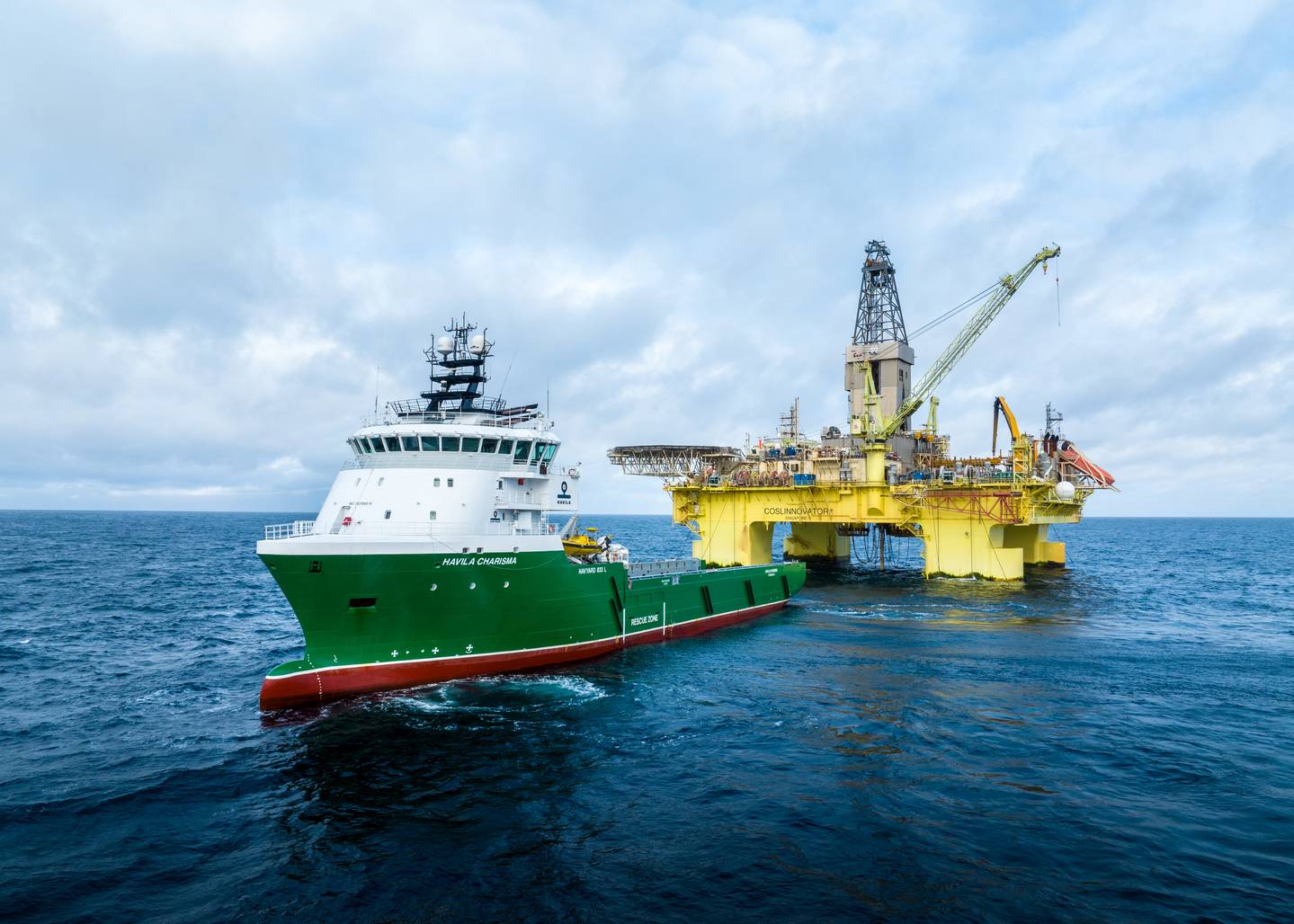
Representing Norway's largest tourism initiative in 30 years, Havila Voyages faced a highly turbulent launch. First, the Spanish shipyard contracted to build two of the vessels went bankrupt, forcing the order to be moved to the Tersan Shipyard in Turkey. Subsequently, the COVID-19 pandemic caused severe delays throughout 2020 and 2021. As if that weren't enough, the project's financial backer was Russian-owned; when the war in Ukraine broke out in 2022, the ships were hit by international sanctions. Under immense time pressure, the company had to execute a massive rescue operation to secure new solutions.
"It culminated on a day we were docked in Bergen at four in the afternoon, scheduled to sail at eight that evening with a nearly full ship—only to receive a message that our insurance coverage had been canceled," Per recalls. "At that point, I had just about had enough. But we knew that if we just gritted our teeth and kept pushing, things would eventually work out. And they did. Today, Havila Voyages doesn’t look half bad."
(For the record: In Per’s world of humble understatement, "not half bad" translates to "very promising.")
Photo credit: Josefine Spiro
Fewer hours, new priorities: "I have to be honest—since my illness, I don’t have the same drive I once had," says Per.
"I just wanted to see if I could do it"
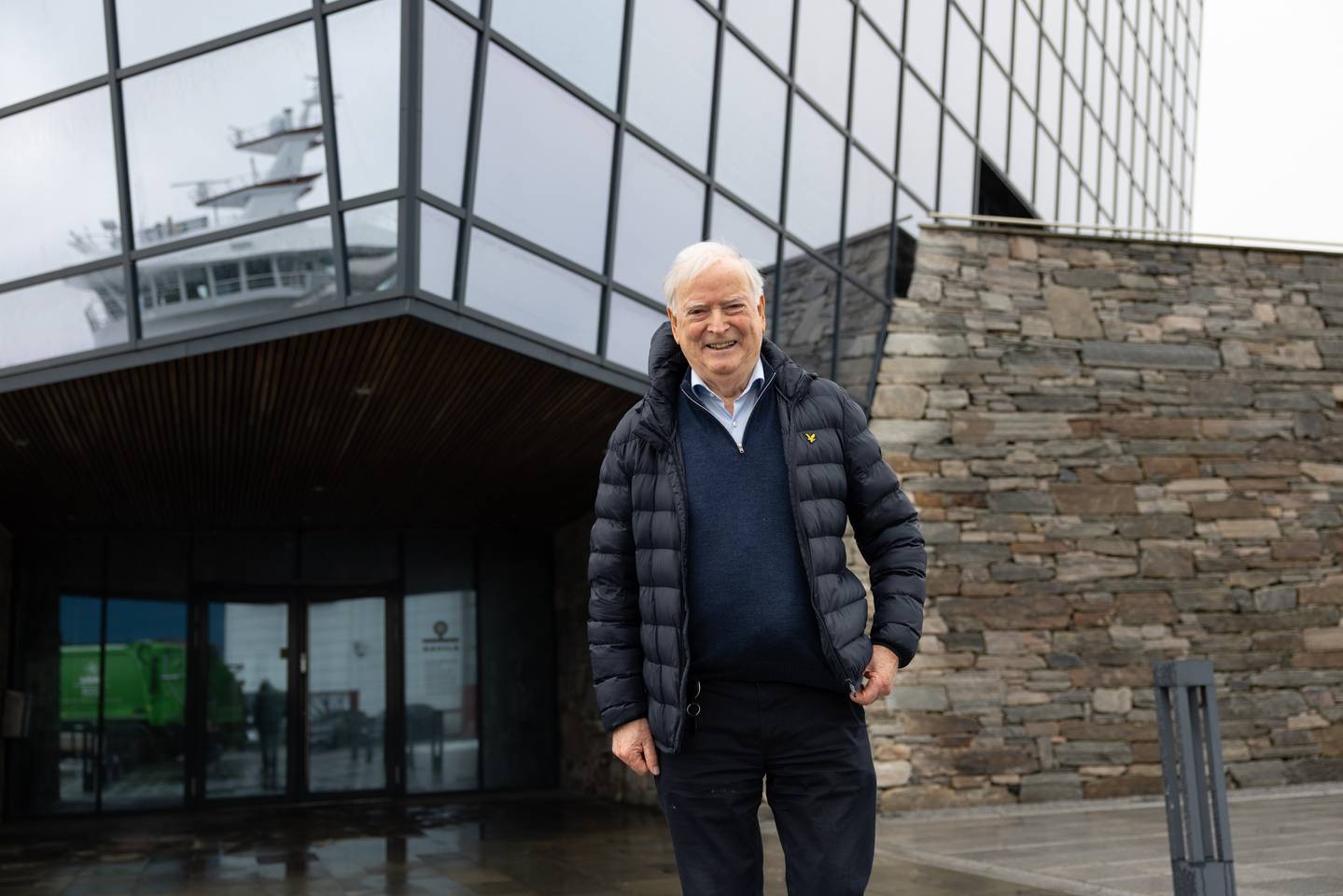
I meet him in the polar opposite of his home residence: a spacious corner office on the fourth floor of an architectural landmark. Constructed of glass and stone with panoramic views of the fjord, the Havila building is known locally as "The Diamond."
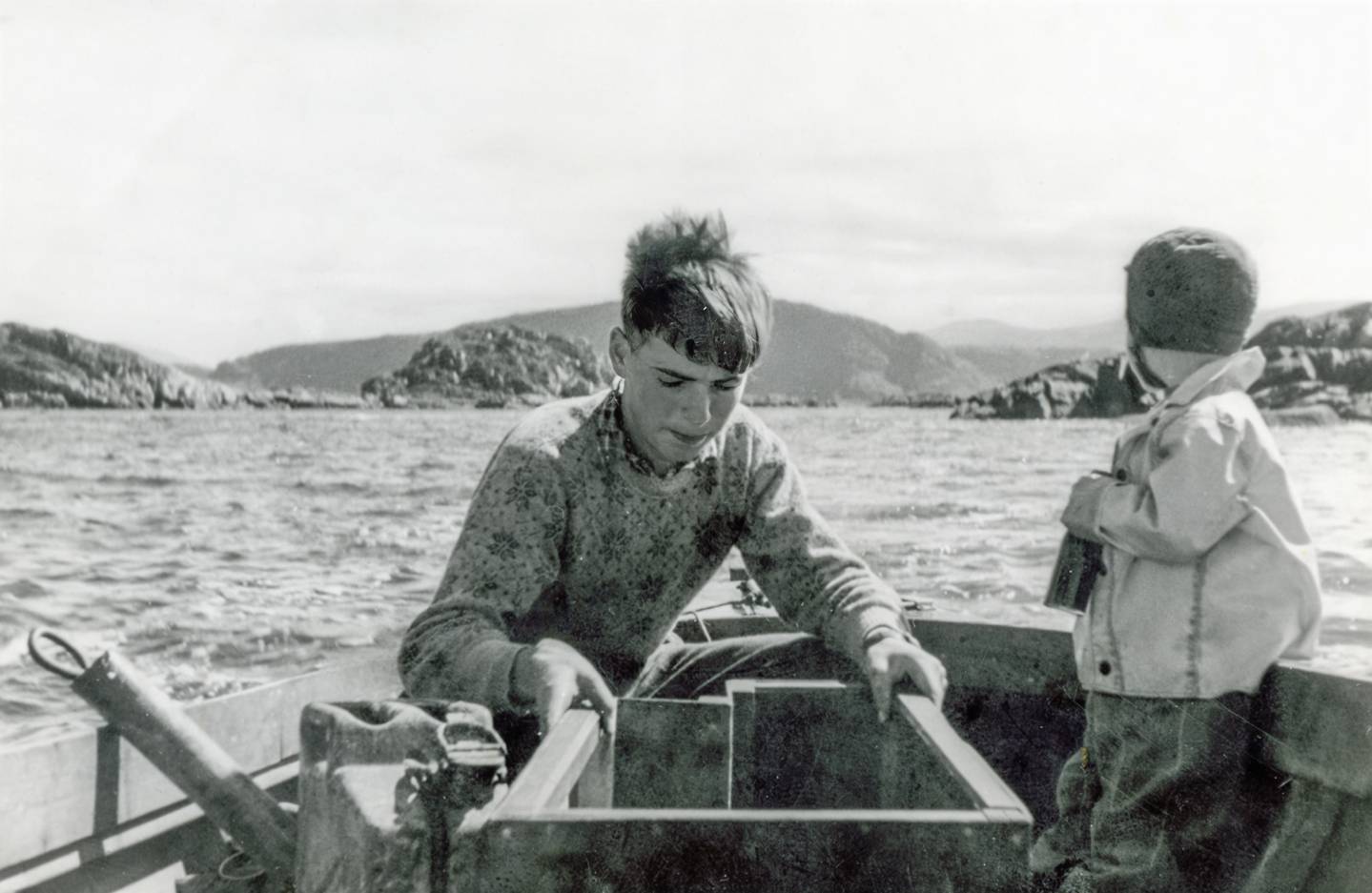
If you bypass the elevator and take the stairs from the ground floor up to Havila Holding—climbing past the headquarters of Havila Voyages and Havila Shipping—you are met at the very first step by a wall adorned with an old photograph of a young fisherman in a rowboat. Beside it is the famous quote: "I just wanted to see if I could do it."

That was six-year-old Per’s answer when his horrified mother asked what on earth he had been thinking, taking the rowboat out alone and rowing a full nautical mile from home, straight across the fjord to the town of Fosnavåg.
Since then, it has become something of a life rule: the more challenging a task, the more exciting it is to attempt.
"Now that I’ve turned 85, I reflect on the fact that I really have initiated a lot of things I perhaps lacked the prerequisites for," Per admits. "If I had made fewer ill-considered investments, we would certainly be sitting quite comfortably today."
He has spoken before about the times the family business teetered on the brink of bankruptcy during the oil crisis, entangled in debt negotiations with eleven different banks, shareholders, and bondholders.
"But all in all," Per continues with a smile, "the good decisions have outnumbered the bad."
Building a Community
When Per speaks of "good decisions," he doesn’t primarily measure the return by the bottom line. His driving force is the joy of creation; it is the belief that one should be of "use and benefit" to others. Per views business leaders as community builders with a responsibility that extends far beyond the workplace.
“In the financial world, it can be tempting to take the easy way out—to invest smartly and let the money work for you," Per says. "But you don't build a country on capital gains alone. If anything is to happen in a small coastal community like ours, it is our responsibility as business leaders to ensure that employees have a meaningful life outside of working hours. We want to help build a community so attractive that it draws in the best talent."
Today, the coastal town of Fosnavåg boasts a world-class concert hall, a four-star hotel with modern conference facilities, a water park, and a vibrant sports and cultural scene. All of this was made possible by Per and other civic-minded business leaders who have injected significant capital—and a burning dedication—into the community.


"Like driving a screw into cardboard," the doctor said
Per is in his usual spot behind the desk, a fixture of his daily life since the Havila Group moved into "The Diamond" in 2011. Today, however, the computer monitor in front of him sits dark and disconnected. His hours here are a fraction of what they were only a few years ago. In 2023, he underwent surgery for colon cancer, but a post-operative complication forced him back onto the operating table.
"The cancer itself was successfully treated, I think. But because it took too long to catch the complication, a secondary back injury set in that I still struggle with today. The doctors won't operate; they say it would be like trying to drive a screw into cardboard," Per says bluntly. "I have to be honest—since my illness, I don’t have the same drive I once had. It is only fitting that I 'sign out' now."
This realization led him to hand over the reins of his life’s work to the next generation in December 2025. By the spring of 2026, he will have stepped back completely. When asked if it will be easy to refrain from interfering in operations, Per replies: "The risk is definitely there. At the same time, I am well aware that I must try to live up to the expectation that I’ll let my children make the decisions from now on."
"But I’d still like to know what’s going on," he adds wryly.
On People and Principles
Per has no hobbies; for as long as he can remember, his work has been all-consuming. His course was set at the age of twelve when he took his first job as a small-boat fisherman, spending his youth alternating daily between the classroom and the sea. With his earnings, he bought his first boat—and create further value.
Today, the empire he has built is worth billions. How did he actually achieve it—beyond a willpower like few others, a relentless drive, and an exceptional resilience in the face of adversity?
"With my limited formal education, I have always relied on having people around me who are smarter and more capable than myself. That is a prerequisite for the success of the team," Per says. "A leader who is afraid of having more skilled people in the system will always be a poor leader."
He adds: "Beyond that, you must have a moral standard that ensures people can trust your word. You must never fall for the temptation of shortcuts for quick gains."
And most importantly: Being a fellow human
"It is a law of life that the people you meet on the way up are the same ones you meet on the way down," Per says. He falls silent for a moment, his gaze fixed on the pale morning light beyond the panoramic window. “Being human is perhaps the most important foundation for leadership, but it is also one of the greatest challenges in the rush of daily life. When my time is up, I hope people are left with the impression that I behaved decently and with integrity. I hope they know I appreciated my employees and that there was no hierarchy—that we were all on the same level."
One last thing...
The interview is winding down. Per will soon be heading home to his wife and his traditional lunch of butter and jam sandwiches, but before we say our goodbyes, we ask: "Is there anything else you would like to share?"
He thinks for a moment, smiles, and says: "No, I think you’ve covered the essentials of my working life”
"What about your personal life?" we venture.
"No, not really, because..." He catches himself. "It is, of course, a great joy to have become a great-grandfather."
He smiles broadly. "To a little girl named Lydia. They are in New Zealand at the moment. We just got a picture of her—she’s already got two teeth and everything."
Per laughs now—he is the type of person who laughs out of pure joy—before proudly adding that he is also blessed with eight grandchildren, most of whom live nearby.
As I leave his office, it strikes us that we now know exactly how Per intends to spend his retirement.