Tech Feature
Intervention
Intervention, Not Exploration: How Jack-ups Help Unlock Value
Ben Cannell, Innovation Director at Aquaterra Energy
Talking about untapped value in offshore energy typically brings exploration, new wells and new developments to mind. But in today’s mature basins, the greatest source of opportunity is often neither new nor undiscovered.
Many offshore regions are defined less by exploration potential and more by declining production and ageing infrastructure. APAC is one clear example where, according to Offshore Network, the region is experiencing annual recovery declines of around 10%, with approximately 80% of basin fields now in the brownfield phase and an estimated 40–50% of well stock currently shut in, representing a striking degree of unrealised potential.
This picture has many similarities with the UK North Sea, where ageing infrastructure, rising operating costs and complex late-life economics have steadily pushed more wells into shut in status. The proportion of non-producing wells now exceeds the North Sea Transition Authority’s (NSTA) 10% target, while Wood Mackenzie estimates that around £10 billion of pre-tax value remains locked within existing wells.

Staging an Intervention
Against this backdrop, well intervention offers the fastest and lowest-cost route to restoring production from existing wells. Where production cannot be recovered, intervention also provides the only practical means of delivering permanent abandonment and removing long-term liability from the balance sheet.
In the UK, the NSTA has reported that well interventions can return hydrocarbons to production at operational costs as low as $16 per barrel of oil equivalent. Compared with new greenfield developments or complex drilling campaigns, this represents a fraction of the cost, giving operators an efficient route to value.
While this opportunity applies globally, the level of intervention activity currently being seen does not reflect its scale. For example, in the UK Continental Shelf, reported well intervention activity declined from 443 operations in 2023 to 425 in 2024, and in APAC, intervention activity and market growth remain modest relative to the scale of shut-in well inventories and basin maturity.
Offshore operators are rarely slow to pursue economically attractive opportunities, so the fact that intervention has not scaled in line with its apparent value points to deeper technical and execution challenges that merit closer examination.
Why Intervention Uptake Remains Low
The good news is that many of the technical factors constraining well intervention uptake are understood and eminently addressable with the right application of intelligent engineering. In APAC, for example, intervention has historically relied on light well intervention vessels (LWIVs) equipped with riserless, wire-through-water systems. The convenience of these LWIVs, where available, should not be underestimated. Their popularity stems from the integrated support they provide, including intervention engineering, project planning and a complete well-access solution that allows operators to focus on the downhole work. However, these vessels are generally suited to basic diagnostics and light intervention work, with limitations on the complexity of downhole operations they can support, applicable water depths and regional availability.

This mismatch is most visible in shallow, mature basins across the region. In China’s Bohai Bay, Malaysia’s Malay Basin, and areas such as the Gulf of Thailand, Bass Strait and the Natuna Sea, many mature wells in shallow water settings share common characteristics. Downhole conditions are often uncertain, wellheads have limited load capacity and older subsea trees were not designed to support modern intervention packages, particularly riser-based well access systems, which offer the broadest range of intervention services and contingencies.
These challenges are compounded in shallow water by the limits of dynamically positioned vessels, where the allowable operating window reduces rapidly as water depth decreases. Mobilising a light well intervention vessel involves significant cost, yet there remains a real risk that the vessel will not be capable of completing the work if more complex or riser-based intervention is required. Faced with that uncertainty, many wells with recoverable reserves remain shut in.
Fixed-to-Bottom Platforms as the Intervention Solution
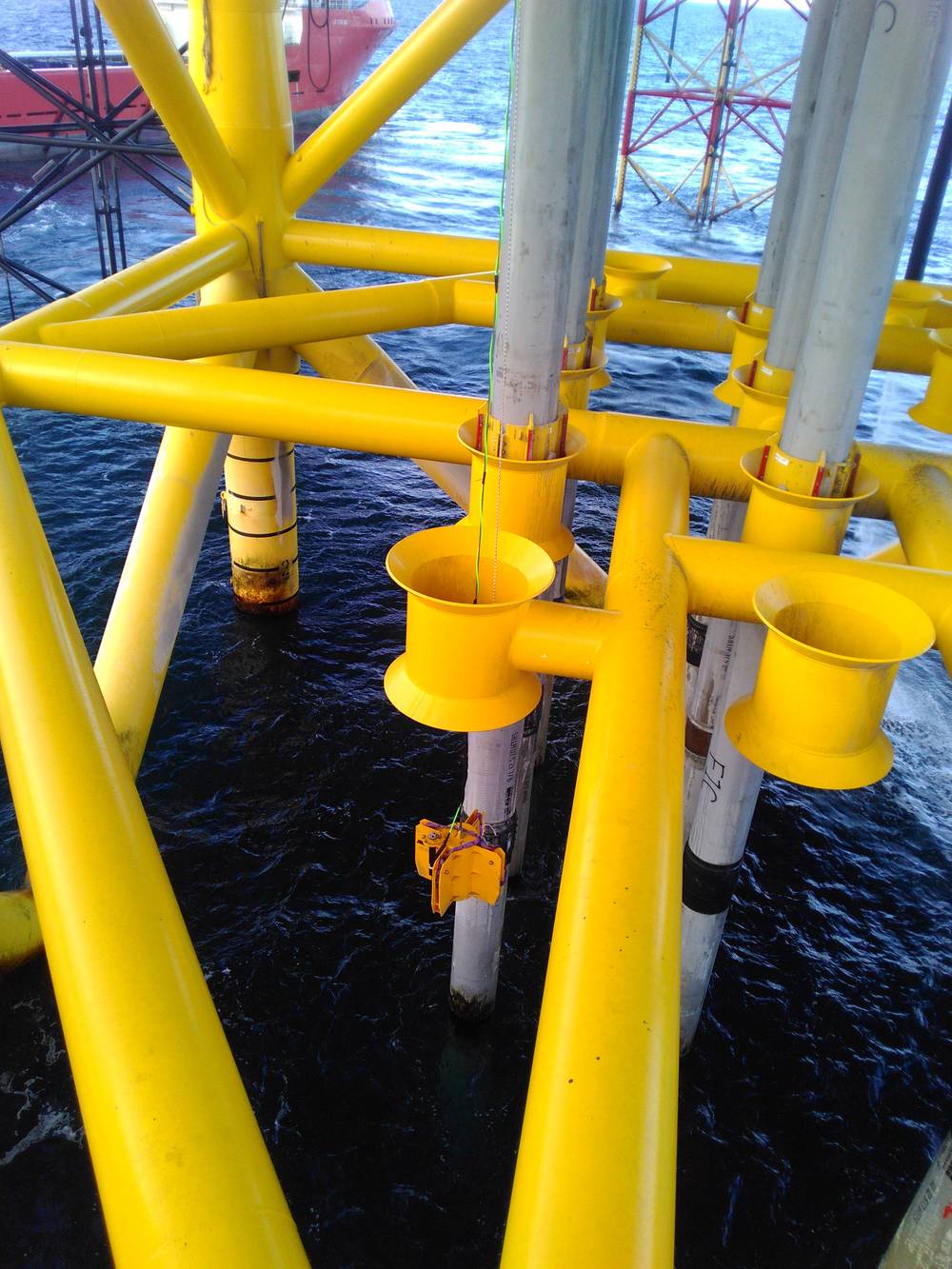
The offshore industry does not need to look far for a solution to this challenge as the tools required are already in daily use at another stage in the well lifecycle. In APAC, jack-up rigs remain the dominant platform for shallow water drilling across the region, while lift boats are similarly in demand in support of offshore construction, maintenance and well servicing.

Fixed to the seabed, jack-ups and lift boats remove reliance on dynamic positioning and allow operations to be planned around a fixed geometry, removing one of the most significant execution risks associated with intervention. A riser-based well-access setup can be vastly simplified, as it does not require an emergency disconnection package or complex subsea pressure-control equipment. This, in turn, reduces loading on the tree and wellhead through the use of a top-tensioned lightweight riser system.
The practical outcome is a wider intervention window and the ability to execute more demanding work reliably, as the well access solution between seabed and surface is riser-based, supporting a complete range of light and heavy intervention services. Modern riser systems incorporating quick-connection technology, offline handling, and compatibility with a range of wellhead and BOP configurations now provide effective well access for intervention and abandonment campaigns. When deployed from fixed-to-bottom platforms, these systems directly address the stability and access constraints that have historically limited intervention in shallow water.
Putting it into Practice
Crucially, they are available today and already being deployed in live offshore operations. In West Africa, for example, we are working with Intrepid Energy Limited (IEL) offshore Nigeria to deploy a riser-based intervention system from jack-ups or lift boats to restore production from mature shallow water subsea wells. By providing a full seabed-to-surface riser-based well access solution without reliance on floating intervention vessels, the programme enables repeatable intervention across multiple wells and unlocks production that would otherwise remain stranded.
A different application of the same approach can be seen in the Middle East, where we are supporting a major offshore operator with riser-based well access to enable late-life well management and permanent abandonment of subsea wells. In this case, a turnkey well access solution was provided that allows a single rig to complete the intervention and removal of the subsea tree, followed by deployment of a subsea drilling riser onto the subsea wellhead to allow the complete abandonment and removal of the wellhead restoring cap rock integrity and a clean seabed. This demonstrates that the same fixed-to-bottom, riser-based delivery model applies whether the objective is production recovery or the removal of long-term liability from an operator’s balance sheet.
Jack-up deployed subsea intervention hardware is only one part of what is required to increase intervention activity in shallow water. As discussed, a key driver behind the success and appeal of LWIV campaigns is the convenience of a complete well access solution, with a fully subsea-ready setup delivered under one roof. The same principle underpins fixed-to-bottom, riser-based intervention delivered from jack-ups or lift boats, and applying this integrated approach more widely is essential to increasing intervention activity, allowing operators to shift their focus away from interface management and instead concentrate on the downhole objectives of the project.
Commercials Done Cleverly
There is also a clear commercial advantage to aligning intervention delivery with platforms already active in shallow water operations. Mobilising a LWIV can be difficult to justify for small or geographically dispersed opportunities, particularly where there is a risk that riser-based intervention will ultimately be required. Jack-ups and lift boats, by contrast, are already prevalent and often already under contract.
This creates opportunities to integrate intervention activity into existing offshore programmes. A jack-up engaged on a multi-well drilling campaign, for example, can complete a targeted intervention between wells before returning to drilling, improving asset utilisation and allowing operators to capture incremental value without committing to a standalone intervention campaign.
Early engineering and analysis play a critical role in realising these commercial benefits. Mature wells often present uncertainties around structural integrity, fatigue life and downhole condition. By undertaking upfront assessment of wellheads, riser loads and operational envelopes, operators can define intervention scopes with greater confidence and avoid costly escalation or mid-campaign changes. This reduces contingency spend, shortens offshore execution time and improves the overall predictability of intervention costs.
Taken together, the combination of fixed-to-bottom platforms and rigorous upfront analysis shifts intervention economics in favour of action rather than deferral. Instead of requiring a large, discrete investment, intervention can be planned as a lower-risk, incremental activity that fits within existing operational programmes. For operators managing late-life assets, this approach offers a practical route to unlocking stranded value while maintaining cost discipline.
Intelligent engineering, not divine intervention
The key takeaway is that maintaining cost discipline for shallow water intervention does not require new technology or new delivery models. A significant amount of value already sits in shut-in wells across mature offshore basins, and the tools needed to access it are already in routine use elsewhere in the well lifecycle.
Jack-ups, lift boats and modern riser-based well access are proven, available and well understood. With the right well access partner, these assets can be deployed confidently for intervention, driving production recovery and enhancing returns from existing developments. The opportunity now is not to invent something new, but to apply what already works more consistently, and unlock value that is already accessible and waiting.
About the Author
Ben Cannell
Ben Cannell serves as Innovation Director at Aquaterra Energy where he is responsible for driving innovation across Aquaterra’s oil & gas and energy transition service and product lines. He has spearheaded the development and launch of numerous riser/subsea related products to date, including their AQC-SR and CW connectors and legacy well re-entry and abandonment services for CCS and the digitalisation of services.