Pushing the limits of directional drilling with high-performance digital MEMS inertial sensors
Directional drilling goes unconventional
After decades of exploiting conventional oil reservoirs, complex and unconventional complex wells have become the new standard in the energy landscape, calling for downhole well intelligence and advanced drilling technologies that can meet the accuracy and productivity requirements of energy operators.
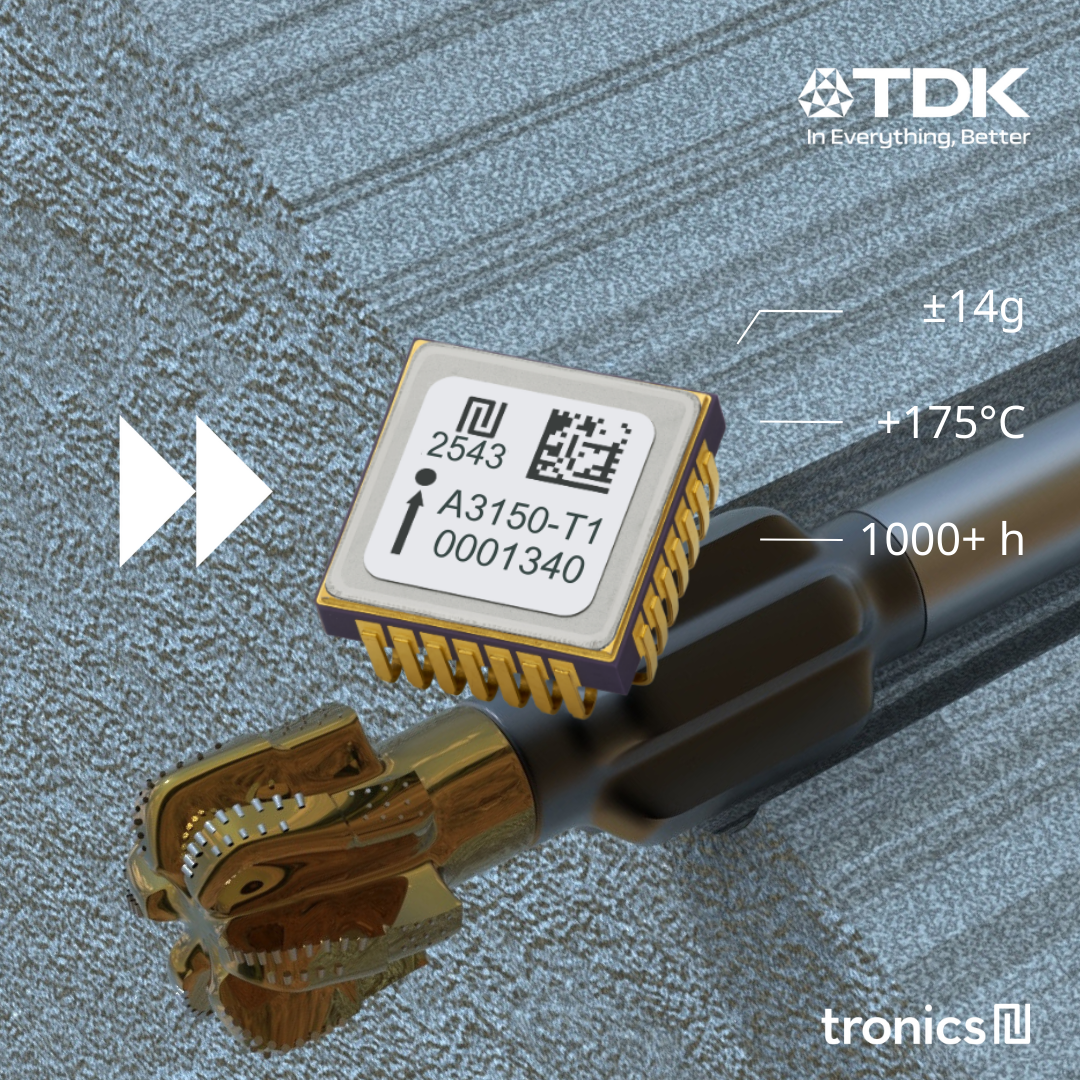
Deep oil reservoirs dispersed over large areas that had remained inaccessible can now be reached using techniques such as Measurement While Drilling (MWD) that provide extremely accurate real-time data to guarantee the borehole trajectory follows the predetermined path.
An MWD tool is made of a directional module, a telemetry system for data transmission, as well as a battery pack. It is located close to the drill bit to determine its position and attitude. The directional module embeds a set of electronics devices and sensors to measure the two key parameters needed for precision tool guidance: inclination, which is the angle formed between its sensitive axis and the vertical gravitational force, and azimuth, the angular distance with respect to the geographic or magnetic north pole.
Inertial sensors, the heart of downhole navigation
Analog quartz accelerometers have been considered as the gold standard for measuring inclination, as they are known to be very accurate with excellent thermal behavior. However, these bulky devices tend to be fragile and may cause field failures that negatively impact the equipment uptime and drastically increase the costs of maintenance.
In addition, their integration into modern digital-centric MWD tools can be a challenge in terms of electronics complexity, with a need to manage data acquisition and analog-to-digital conversion at system-level. Finally, their high price point limits their usage to premium solutions.
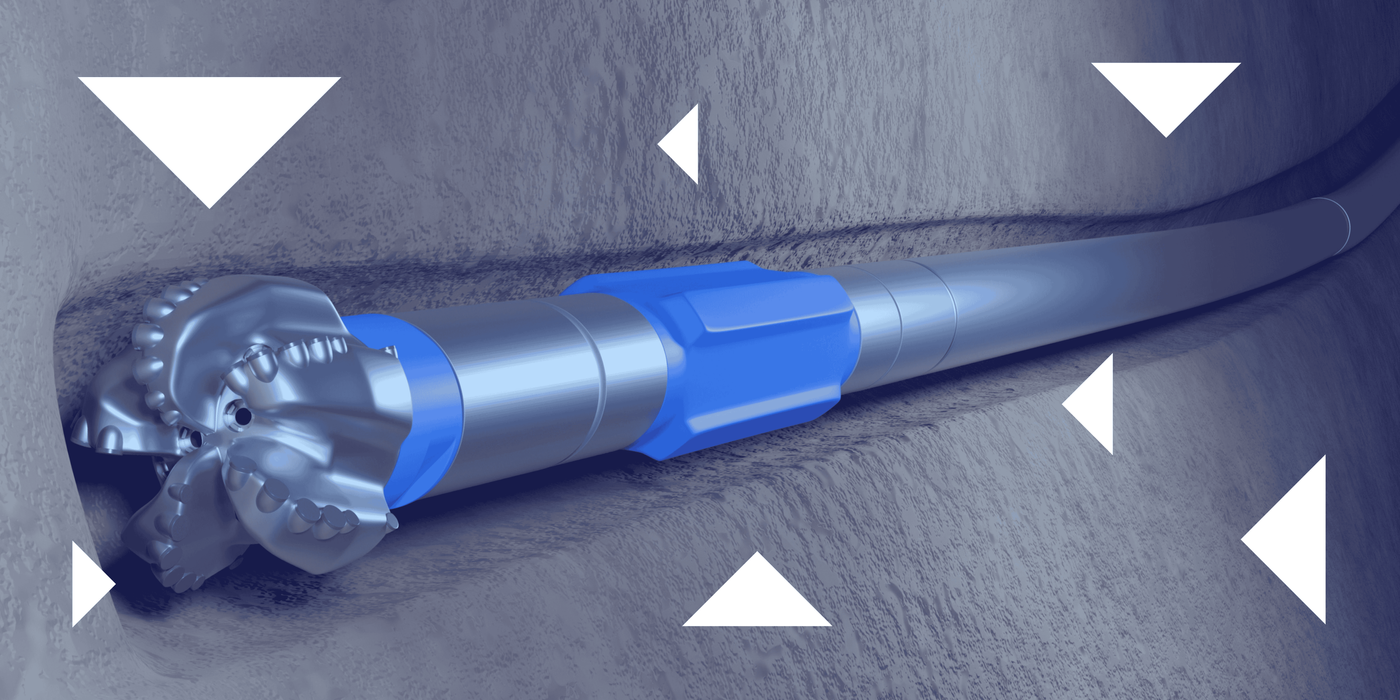
Azimuth can be measured with a magnetometer, or with a gyroscope using a technique called gyro-compassing. Magnetometers act as a compass to determine the heading of a system with respect to the magnetic north. They are currently widely used in directional modules, but their high sensitivity to metallic environments can degrade their performance when used in mineral-rich or magnetically disturbed soils.
Gyro-compassing can be used for azimuth determination with a gyroscope that is accurate enough to sense the rotation of the Earth (only 4 millidegrees per second) and determine the heading of the drilling tool with respect to North. This technique, known as Gyro-While-Drilling (GWD) is implemented with mechanical gyros (spinning wheels architecture) which are insensitive to magnetic environments, at the expense of a high price, high sensitivity to shocks and high failure rate due to their internal moving parts.
The emergence of MEMS inertial sensors for demanding applications
Micro-Electro-Mechanical Systems (MEMS) emerged in the 1980’s as a cost-effective approach to overcome the technical limitations and high cost of conventional inertial sensing technologies. MEMS manufacturing leverages large-scale production techniques inherited from the microelectronics industry, which drastically contributes to reducing their unit price. MEMS are known to demonstrate higher reliability, especially when it comes to shocks resistance, and their miniature size and power consumption allow them to get embedded in reduced spaces and battery-operated systems.
In the past decades, MEMS inertial sensors witnessed a tremendous growth in both consumer and industrial markets. Their performance improved year after year, minimizing drifts and improving their stability, to eventually find their way into high-performance Inertial Measurement Units (IMU) used for positioning, navigation, and heading systems in demanding aerial, terrestrial and maritime applications.
Directional drilling with MEMS
In the energy market, MEMS accelerometers have been envisioned as a miniature and cheaper alternative to legacy technologies such as quartz sensors. Providers of drilling equipment started to evaluate MEMS sensors initially qualified for the automotive market, but their performance was too limited to be used extensively in energy applications requiring extreme operating temperatures. The recent emergence of new MEMS sensors qualified for 150°C and even 175°C changed this paradigm and enabled the creation of MEMS-based directional modules able to operate at extreme temperatures for long period of time.
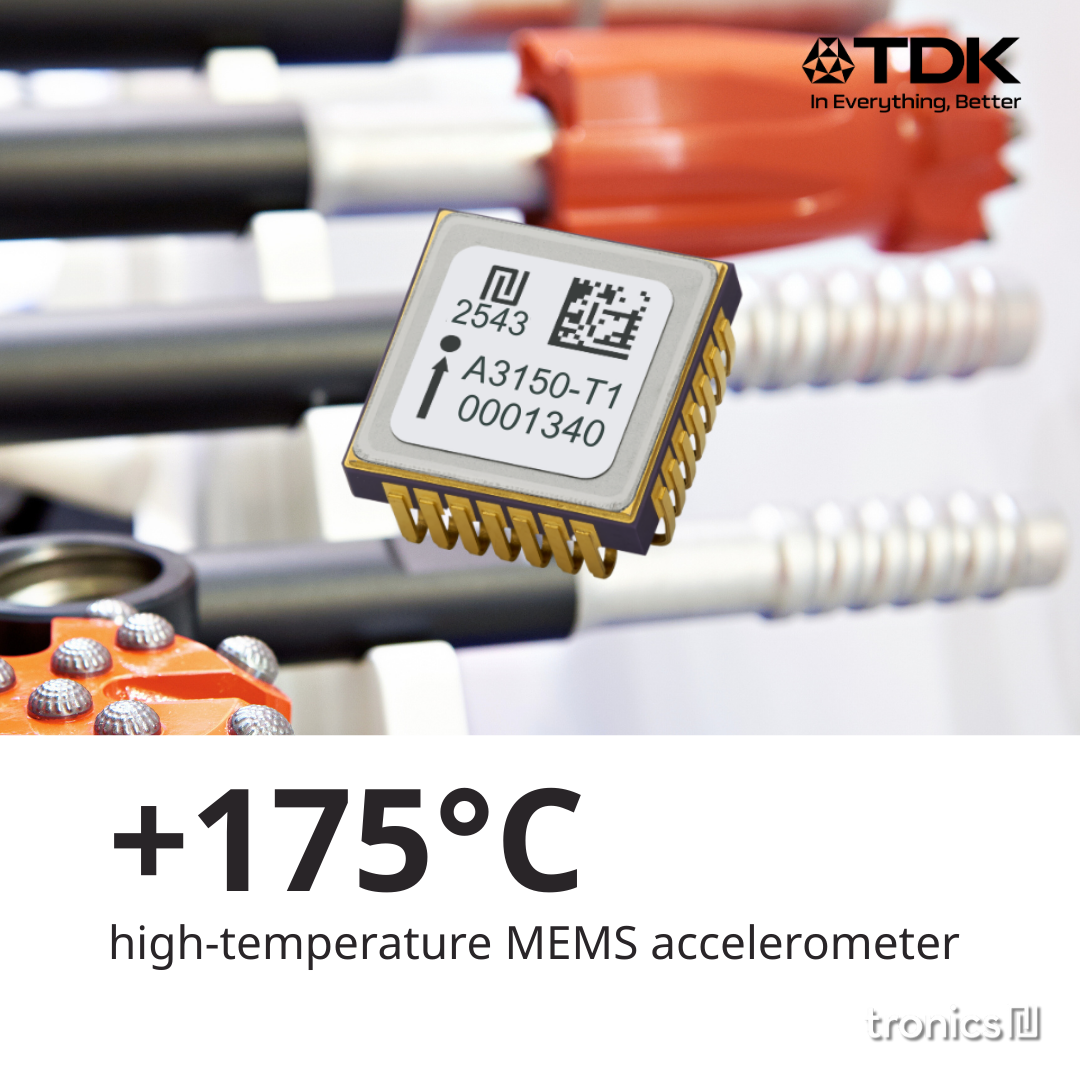
However, most of the high-temperature MEMS accelerometers available on the market tend to demonstrate a highly degraded accuracy under high vibrations and shocks, limiting their usage to static measurement with successive start-and-stop sequences of the drilling motor. In addition, these devices often rely on analog-centric electronics architectures, requiring electronics engineers to handle analog-to-digital conversion at system-level with additional discrete components.
A breakthrough in high-temperature MEMS accelerometers
Tronics Microsystems, a TDK Group company based in France, is recognized as a leading provider of MEMS inertial sensing technologies for precise motion sensing, positioning, navigation and condition monitoring of critical assets in transportation, energy and industrial markets.
The company recently launched AXO315T0 and AXO315T1, a series of high temperature digital MEMS accelerometers for oil and gas applications operating in extreme temperature and vibrations conditions.


Tronics leverages the ingredients that made the success of their AXO product line in demanding aerospace and railway applications: a hermetic ceramic package with excellent thermal and mechanical behavior, a high-stability MEMS sensing element manufactured in its clean room, and a digital electronics architecture.
More specifically, Tronics’ accelerometers leverage a unique closed-loop electronics architecture which guarantees a high level of accuracy and linearity, even in the presence of high vibrations and shocks. The bias error caused by operational vibrations is typically 10 times lower than conventional open-loop MEMS accelerometers available on the energy market, enabling true MWD with continuous inclination measurement.

Reliability and cost-effectiveness with no compromise on performance
Tronics ran extensive qualification campaigns on several hundreds of devices to make sure their performance remains stable in severe conditions. This includes aggressive thermal cycling, wide-spectrum vibration tests with amplitude of up to 20 g rms at high temperature, start-up tests in cold and hot conditions to ensure the sensors can be triggered at any time, as well as accelerated aging at high temperatures to guarantee an operating lifetime of more than 1000 hours up to +175°C.
The miniature ceramic package of AXO351T0 and AXO315T1 perfectly fits into applications with constrained form-factors, such as the ones encountered in downhole directional modules with small diameters (typically less than 2 inches). The built-in 24-bit SPI interface removes the need for additional components at system level and helps decrease the bill of materials.
With AXO351T0 and AXO315T1, Tronics Microsystems offer a digital, cost-effective and low-SWaP alternative to high-temperature quartz accelerometers for directional drilling applications, with no compromise on performance.

Towards a 100% MEMS-based directional module
Tronics is currently ramping up a new MEMS gyroscope with an extremely high level of resolution, able to sense the rotation of the Earth and determine azimuth with an accuracy of less than 1 degree in only one minute.
This new MEMS gyroscope will start pre-production by mid-2026 and is currently being used by key providers of drilling technologies for prototyping their next generation of directional modules.
Combining the recently announced high temperature MEMS accelerometers with this new ultra-low noise gyroscope into a single system will result in a 100% MEMS-based MWD module, able to eliminate field failures, decrease maintenance and calibration costs, and guarantee first-time drilling success even for the most complex borehole trajectories.
After decades of enabling land, air and sea applications with its MEMS products portfolio, Tronics Microsystems positions itself as a key provider of high-performance MEMS inertial sensors serving the ever-increasing productivity and reliability requirements of the energy market.
About the Author
Pierre Gazull
Pierre Gazull is Product Marketing Manager for High-Performance MEMS inertial sensors at Tronics Microsystems, a TDK Group Company. Since 2021, he oversees the implementation of Tronics’s product strategy towards key markets, customers and applications. Pierre started his career in the semiconductor industry at STMicroelectronics in 2006, where he held several positions in hardware IC design and technology R&D. He transitioned to product marketing and business development by joining Dolphin Design in 2018, where he managed a portfolio of semiconductor IP for ultra-low power chips designed in advanced silicon technology nodes. Pierre graduated in 2006 with a master’s degree in electronics and microelectronics from ESIEE Paris. In 2015, he received an executive master’s degree in management of technology and innovation from Grenoble Ecole de Management.