Tech Update
Remote Operations
The Shift Towards Remote Operations
Within the subsea industry, underwater vehicles are a critical solution for longer projects at deeper depths, mirroring market trends that dictate a shift towards deep and ultra deep work. ROVs act as safe, efficient, and cost-effective alternatives to human divers in dangerous environments, eliminating risks in deep and high-pressure waters. They can dive beyond the reach of humans, often staying below the water for longer periods of time.
by Celia Konowe, Managing Editor of Marine Technology Reporter
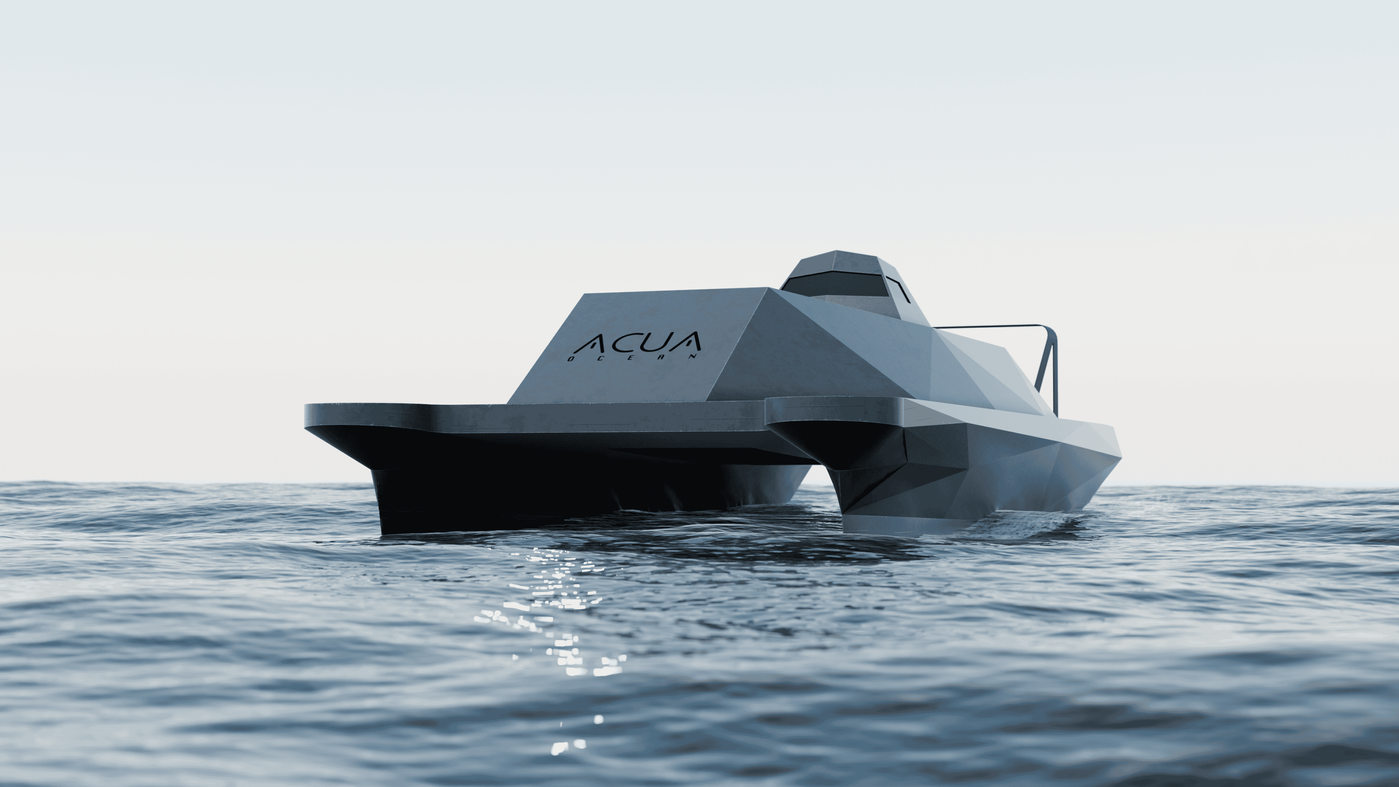
ACUA Ocean’s medium-sized uncrewed support vessel, which just received funding from the UK Government
©ACUA OceanAs such, they can complete work faster and collect a variety of data depending on assembly of cameras, sonar, and sensors.
In the offshore industry, this signals the growing role of remotely operated vehicles (ROVs) and other underwater vehicles, as well as the need for more ROV support vessels (RSVs), which are designed to launch, operate, maintain, and sometimes recover ROVs for a variety of offshore underwater tasks, including diving support, infrastructure maintenance and inspection, and surveys.
Offshore Contracts
In recent months, OceanPact, DOF Group, and AKOFS Offshore have all signed contracts with Petrobas to expand RSV services. OceanPact has signed four contracts, totaling $614 million for the chartering of RSVs Parcel do Bandolim, Parcel das Timbebas, Parcel das Paredes and Parcel dos Reis over the course of four years. The vessels will contribute to the inspection of subsea structures, preventive and corrective maintenance, installation and removal of subsea equipment, and other activities, across Petrobras’ offshore units. OceanPact will operate both the vessels and their ROVs, which can operate at depths of up to 3,000 meters.

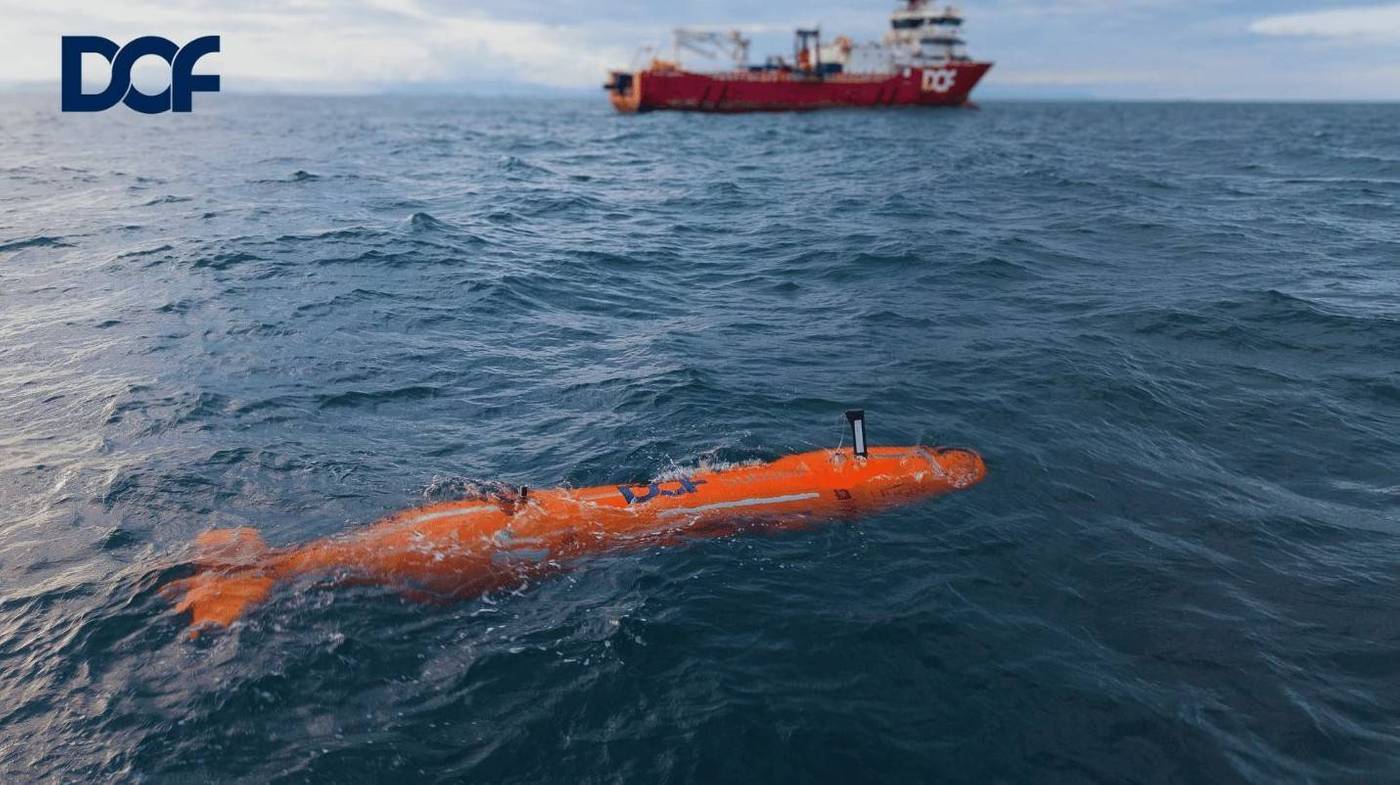
DOF Group has also secured a four-year contract, estimated at $150 million and set to start January 2027, with Petrobas for RSV Skandi Commander. The vessel is a MT 6009 design and joined the fleet in 2007 as a platform supply vessel. She has since been refitted to feature construction support capabilities and will be equipped with both an ROV and an Autonomous Underwater Vehicle (AUV).
AKOFS Offshore's contract with Petrobas is for AKOFS Santos, which will operate as a multi-purpose support vessel, covering both marine and ROV services, to be operated in partnership with Bramante and IKM Subsea, respectively. The contract is set for four years and to start in January 27, following the expiry of the current contract and preparations for the next. AKOFS Santos is 121 meters, of an STX OSCV 03L design and built by STX Europe at Aukra in 2009. It is designed to perform operations in up to 3,000 meters and is capable of installation, testing and maintenance of subsea modules, rapid module deployment, ROV launch, and subsea construction and maintenance work.

Project MROS
In the UK, Project MROS consortium, led by ACUA Ocean, has secured government support to develop a 43-meter uncrewed offshore support vessel, taking the industry one step further into autonomous solutions. The consortium, including Houlder, Ad Hoc Marine Designs, Trident Marine and the University of Southampton, received funding in 2025 through the UK Department for Transport’s Clean Maritime Demonstration Competition.
The vessel will feature hybrid-electric propulsion and can operate autonomously, remotely, or with a small crew onboard. Designers are currently assessing methanol fuel for efficiency and emissions reduction, alongside hydrogen, ammonia, and diesel options.
Building on ACUA's 14-meter pioneer-class Unscrewed Surface Vessel (USV), the new platform will incorporate a Small Waterplane Area Twin Hull (SWATH) design to reduce motions in high sea states. It will also offer DP1 station keeping, a 2,500-nautical-mile range, endurance of more than 20 days and sprint speeds above 20 knots. It is designed for roles across offshore logistics, surveillance, subsea inspection, intervention and offshore commissioning and decommissioning. Payload capacity will reach 80 tons, including space for ISO-standard containers and a moonpool configured for twin launch and recovery systems for ROVs and Unmanned Underwater Vehicles (UUVs).
In the meantime, partners are progressing with resistance and seakeeping tank tests and will announce system-integration partners in the coming months.
RSVs fill a unique role in the offshore industry, often times completing a variety of tasks while operating ROVs and other underwater vehicles. As companies across offshore energy, oil and gas, and defense shift more towards deep water environment and look for speed, efficiency, and reliability in their projects, RSVs may represent the next horizon.
About the Author
Celia Konowe
Celia Konowe is the Managing Editor of Marine Technology Reporter. She is originally from Reston, VA and earned her bachelor's degree in environmental studies from the University of Rochester. She currently lives in Halifax, N.S., where she recently completed her master of environmental studies at Dalhousie University.