Digital Transformation
Diode Lasers
Bright Prospect: Blue Lasers for the Deep Sea
How Diode Lasers Are Revolutionizing Underwater Material Processing
From cutting and drilling to paint stripping and removing maritime fouling, underwater tasks in the maritime environment are as numerous as the grains of sand on the beach. Some of these applications are carried out at depths of several thousand meters. A new laser system based on blue diode lasers now promises a contact-free, low-maintenance, and cost-efficient solution for a wide range of underwater operations.
By Dr. Simon Britten, Senior Technology Manager at Laserline
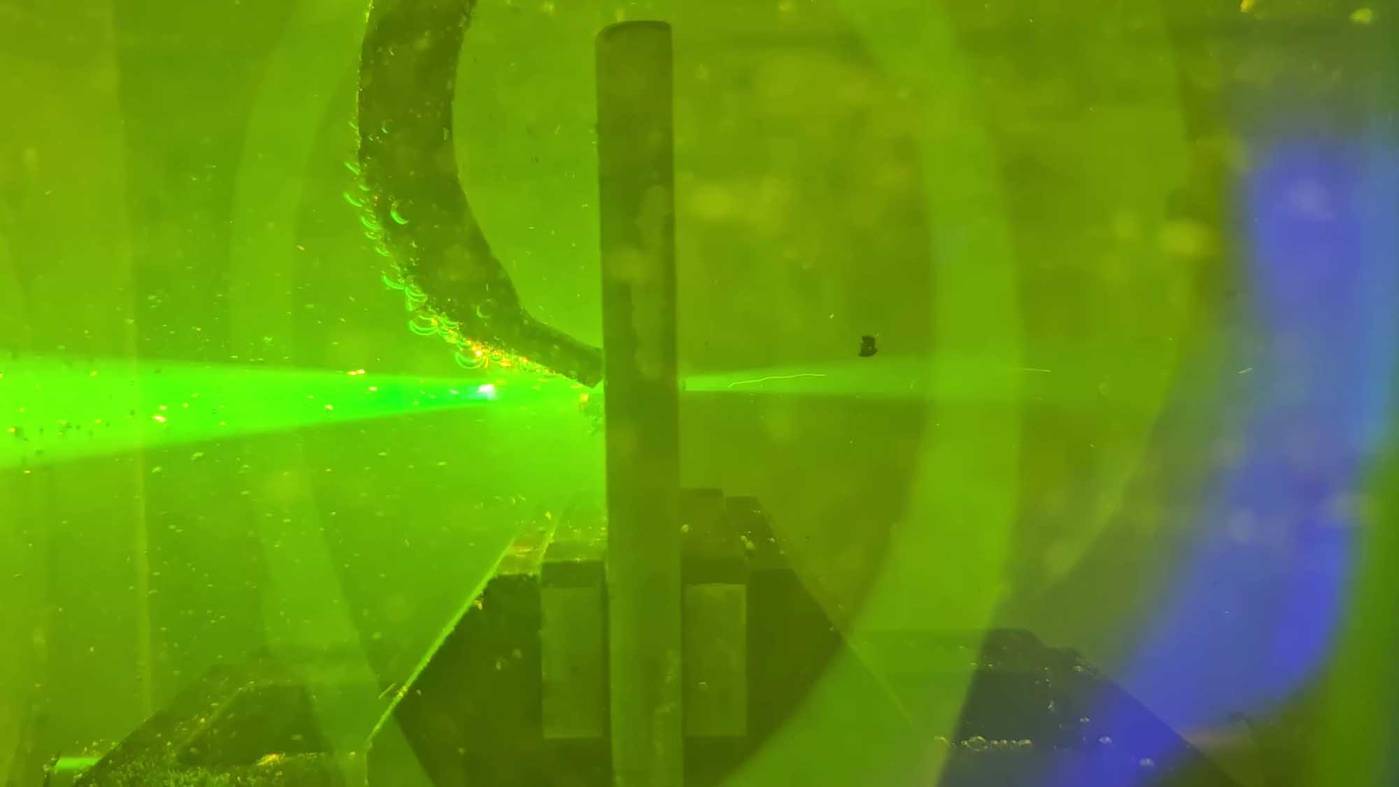
Underwater processing with blue diode laser – Perforation / Penetration through 8 mm steel plate.
©LaserlineWhether in the maintenance of offshore platforms, the decommissioning of old oil rigs, or the inspection of underwater structures, the demands for precision, efficiency, and environmental compatibility in subsea operations continue to increase. At the same time, conventional methods quickly reach their limits here. Common pressure-based processing methods, such as high-pressure water jets used to remove algae growth, lose their effectiveness with increasing depth due to the high counterpressure of the water. Additionally, many of these systems require intensive maintenance and are prone to wear. Mechanical tools such as circular saws, in turn, generate recoil forces upon contact with components, which destabilize remotely operated underwater vehicles (ROVs) and often cause them to drift away.
Consequently, the industry shows great interest in contact- and force-free, low-wear, low-maintenance alternatives – possibilities that laser technology in particular can offer. Initial attempts, however, were not very successful. Early efforts to use conventional infrared (IR) lasers to cut structures during oil platform decommissioning proved only partially practical. The primary reason: infrared radiation (wavelength 1000 nm) is completely absorbed by water within just a few centimeters, resulting in significant energy loss. For subsea applications, IR laser cutting can therefore only be performed using an air nozzle or an air-filled chamber – a complex and cost-intensive process that also prevents use at greater depths.
Blue Lasers as Key Technology
A newly developed underwater laser system based on blue diode lasers from Laserline now promises a solution to this challenge. Unlike IR radiation, the blue light emitted by these lasers, with a wavelength of around 445 nanometers, is barely absorbed by water. The lasers thus offer excellent transmission, with the effect that (almost) the entire laser power is available – even when distances of up to one meter or more have to be bridged during processing. Combined with laser powers of up to 6 kilowatts, this physical advantage opens up numerous new possibilities for force- and contact-free material processing directly underwater – without an air chamber or other complex infrastructure.
Laserline diode laser systems also offer maximum precision: for example, the laser spot size can be adjusted with micrometer accuracy, and the power can be precisely controlled within milliseconds. This ability to quickly adjust the power makes the system particularly suitable for complex tasks at great depths.
Efficient, Flexible, Economical
The combination of high efficiency and precise controllability makes the new laser system both technologically and economically highly attractive. Contact-free processing underwater significantly reduces wear on tools and components, lowers energy requirements, and minimizes the release of potentially harmful particles or substances. Contact-free processing underwater significantly reduces wear on tools and components, lowers energy consumption, and minimizes the release of potentially harmful particles or substances. In terms of environmental protection and resource conservation, the diode-laser-based process clearly outperforms conventional mechanical or chemical methods—which often cause environmental damage and material degradation. This is especially relevant for removing marine fouling, which until now has often been treated with such methods, posing risks to both the environment and the components.
The system also offers new logistical advantages. While conventional heat treatment processes in the deep sea often require the use of large, specialized ships with daily costs in the five to six-figure range, the diode laser system can also be operated from smaller supply ships thanks to its simpler system architecture. This not only reduces maintenance and operating costs and significantly shortens travel times, but also significantly increases system availability and the responsiveness of operational teams. Especially for short-notice maintenance tasks or emergency repairs, companies gain a notable operational advantage.
From Cutting Processes to Algae Removal
The range of possible applications is diverse: cutting sheet metal and pipes during the decommissioning of oil rigs, removing coatings, paint, and marine fouling, inspecting and maintaining valves and load-bearing structures on pipelines or offshore platforms. The latter in particular are often completely overgrown with algae after a few years of service. Here, an ROV equipped with a laser and a camera can remove the growth and restore clear visibility to critical components in a single dive – a decisive advantage for maintenance companies and underwater integrators. Robot-assisted systems for pipeline inspections can also be equipped with a diode laser as a useful add-on.
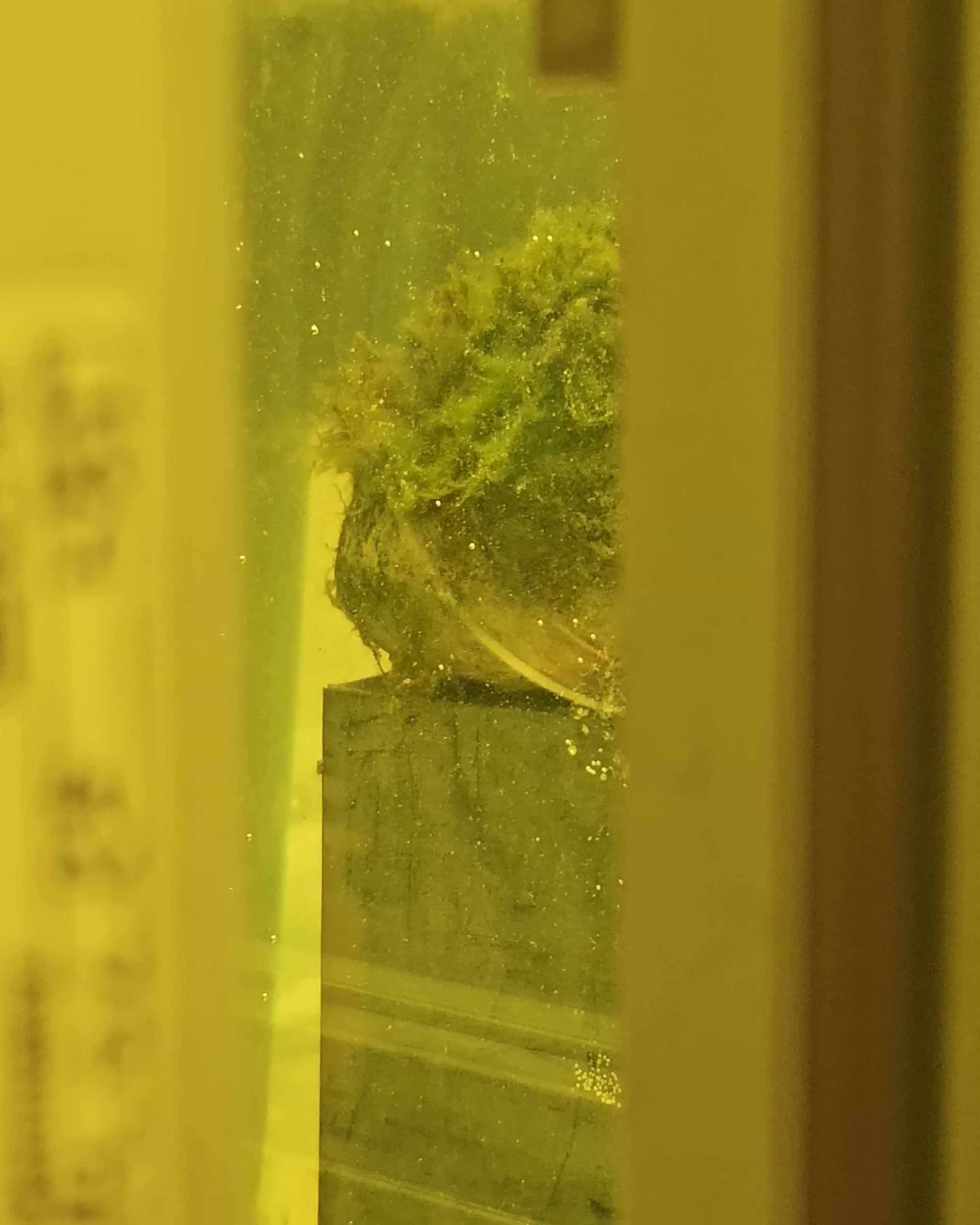
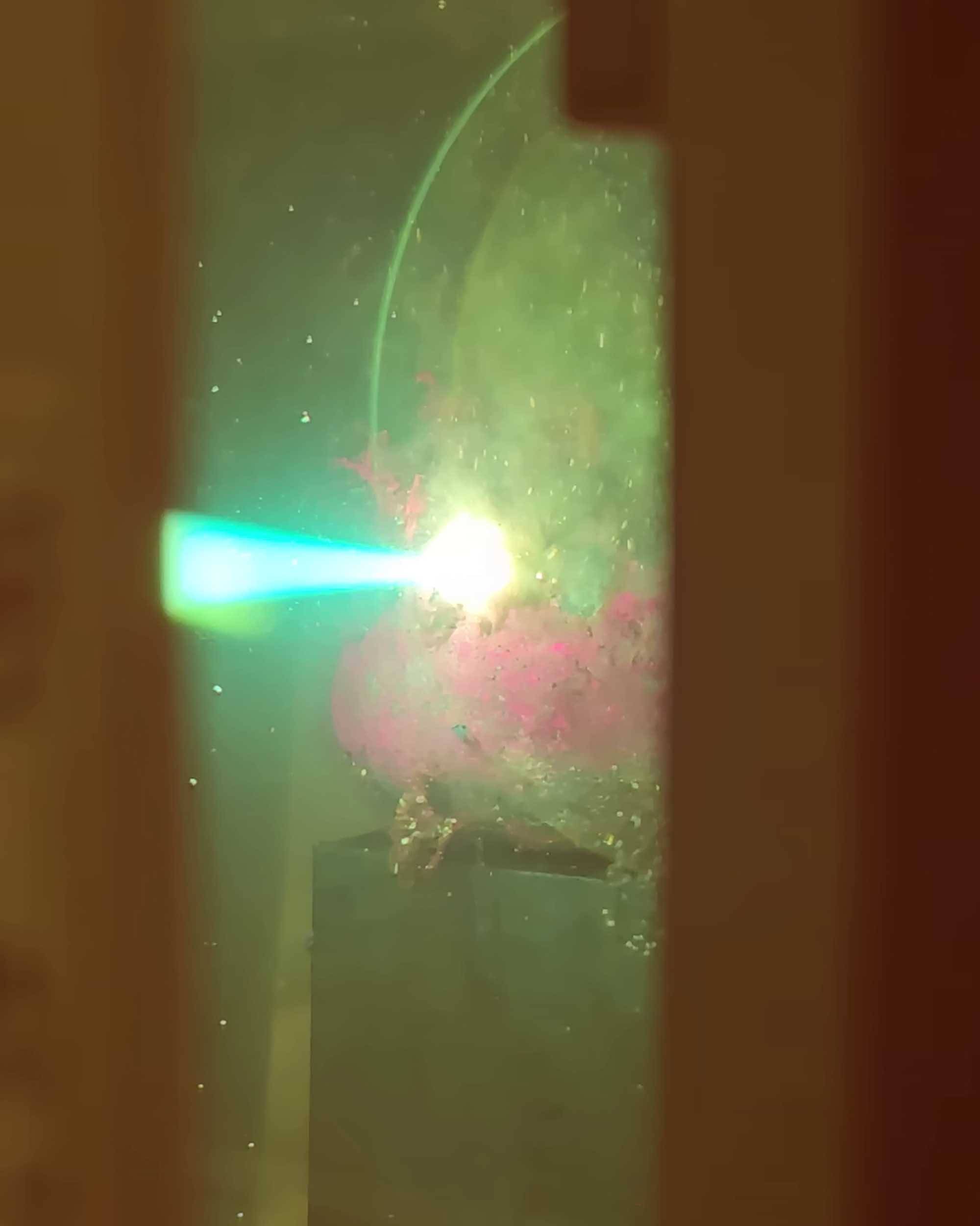
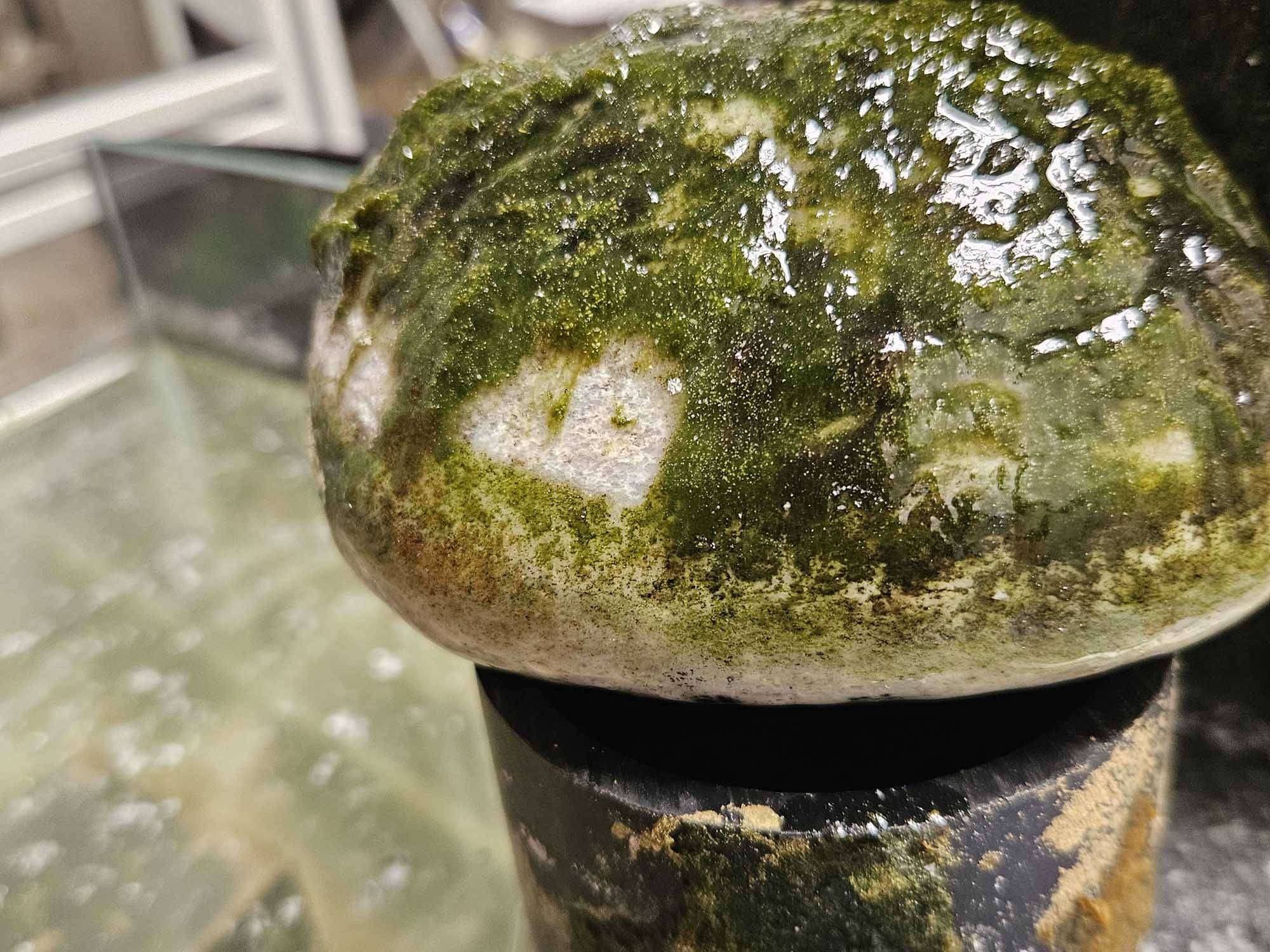

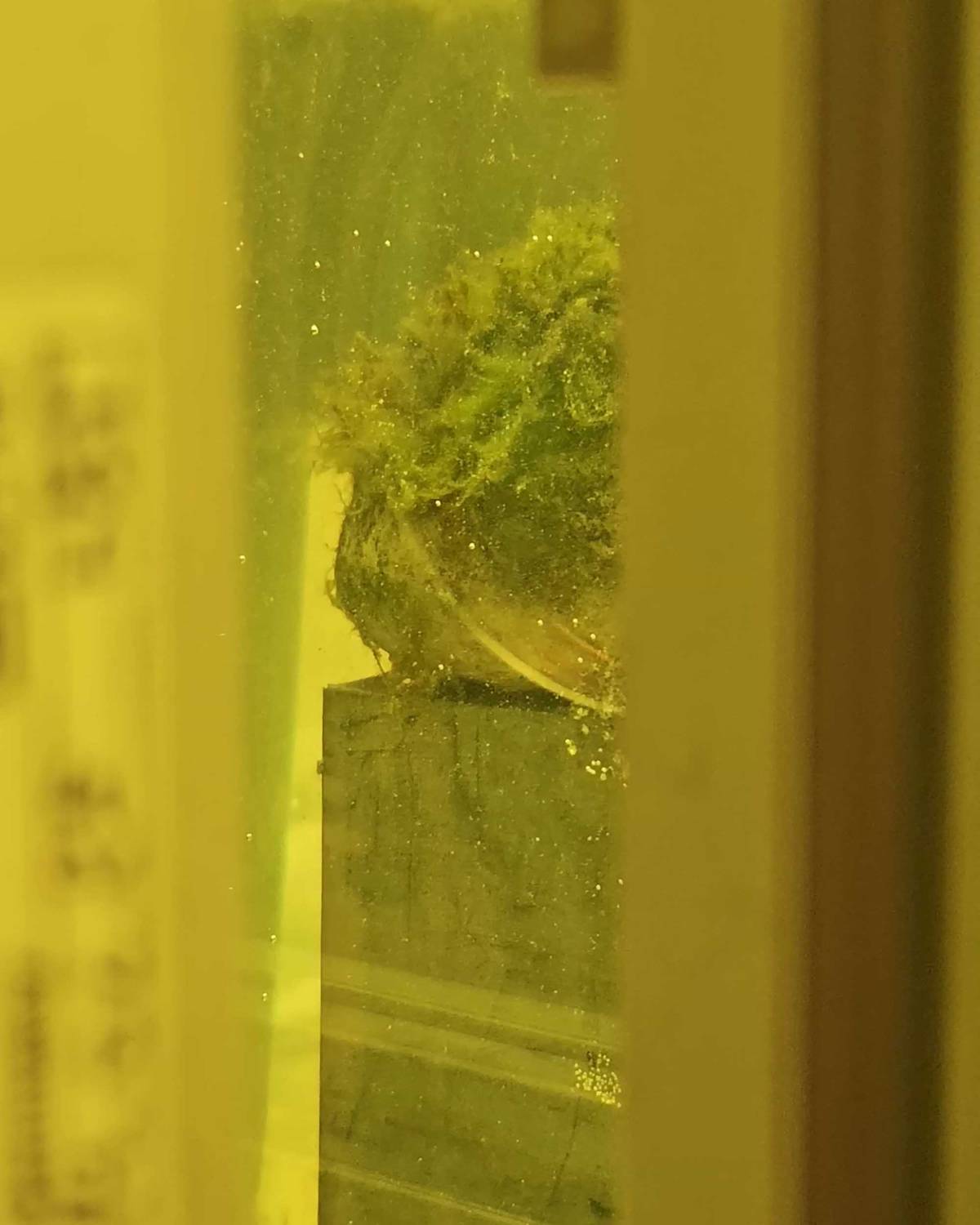
Underwater processing – Removal of algae growth on stone with blue diode laser (from left to right: before processing, during and after processing)
©Laserline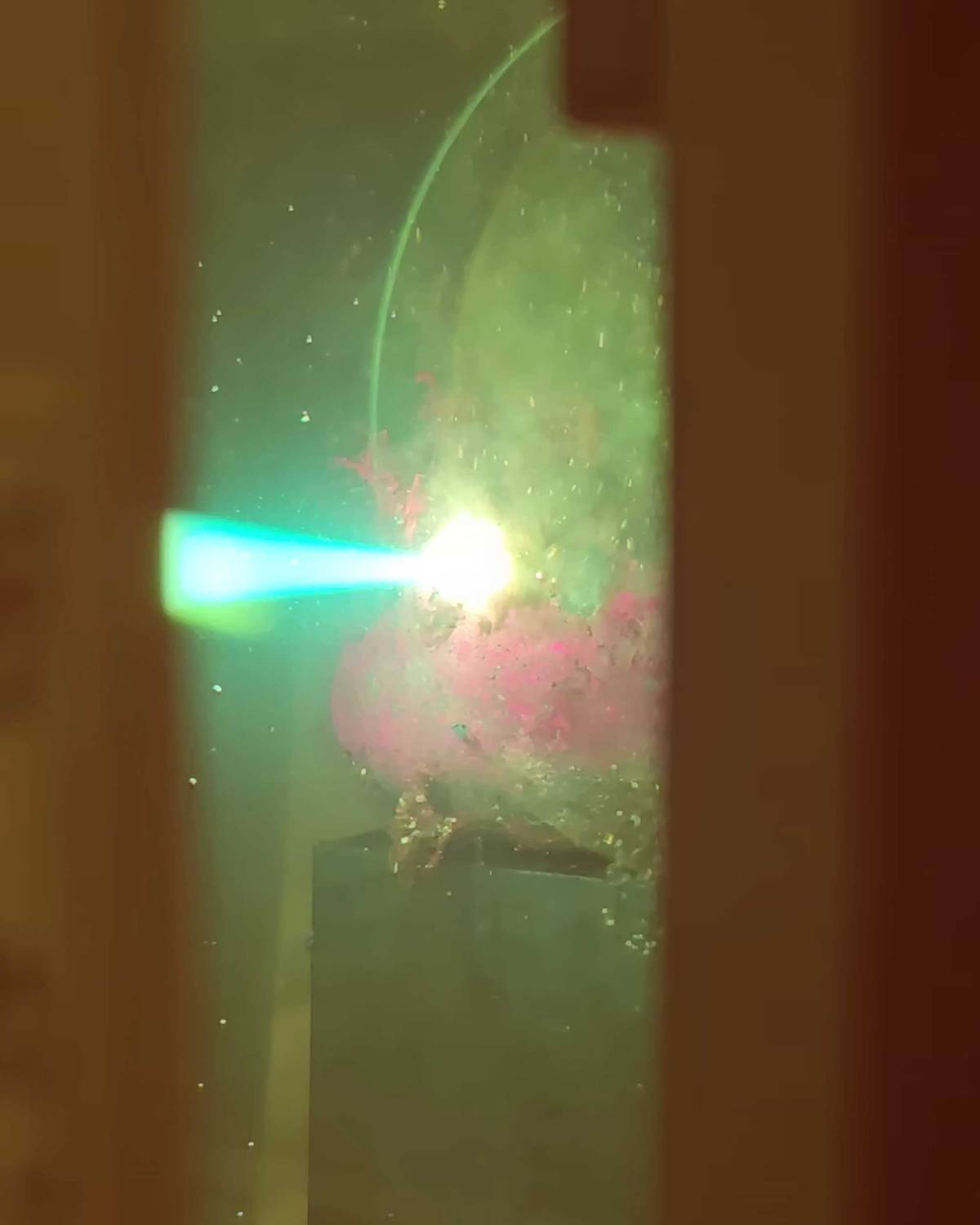
Underwater processing – Removal of algae growth on stone with blue diode laser (from left to right: before processing, during and after processing)
©Laserline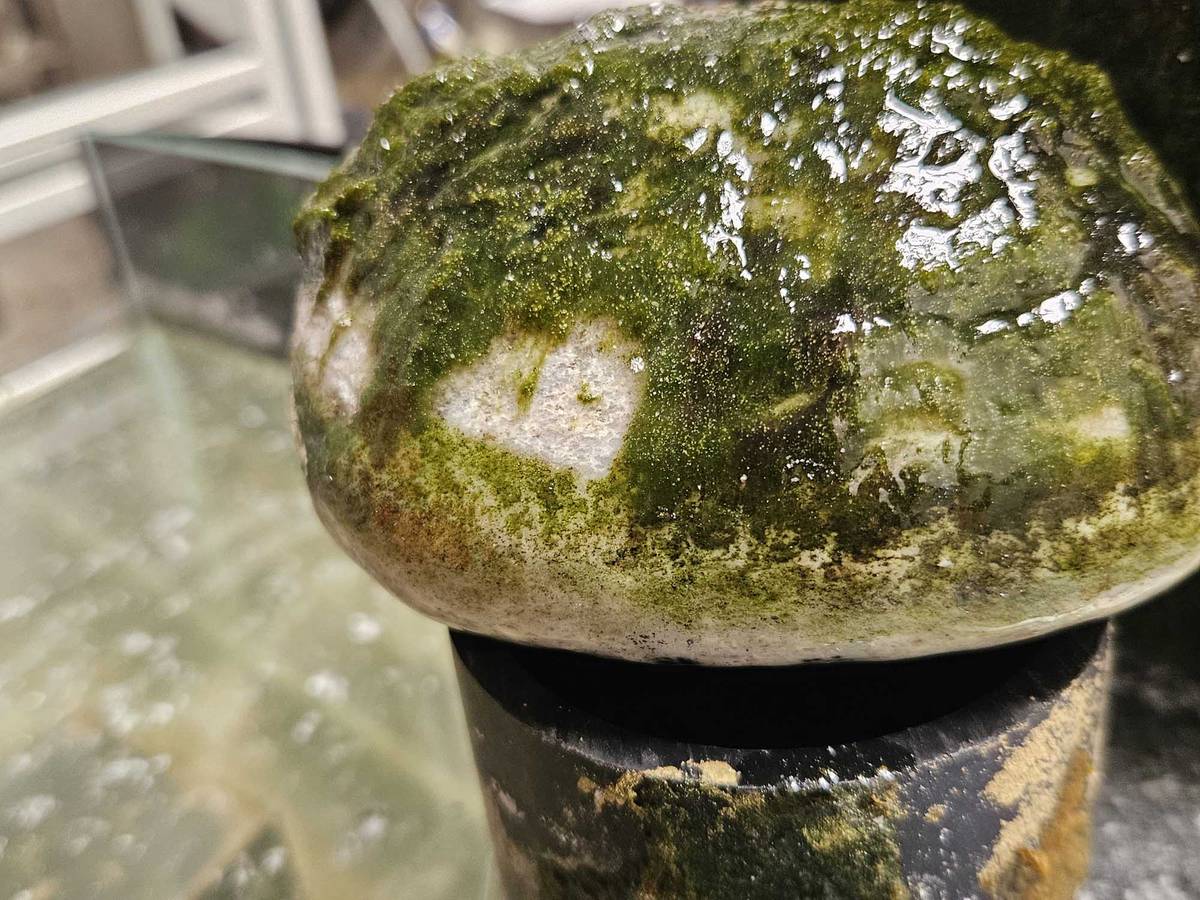
Underwater processing – Removal of algae growth on stone with blue diode laser (from left to right: before processing, during and after processing)
©Laserline
Linear cut of thin metal sheet
©LaserlineSystem Technology
Depending on the application, different integration approaches for diode lasers have been developed. One option is to mount the laser system onto a Workhorse ROV, remotely operated from a supply vessel via a traditional umbilical cable. The laser system, with an output power of up to 6 kW, is specially enclosed to permanently protect it against water, pressure, and dirt. The consistently low water temperatures between four and seven degrees Celsius that prevail in the deep sea make the integrated laser cooling system especially efficient.
Depending on the scenario, the laser systems can be customized to meet customer-specific requirements. The underwater vehicles can be equipped with laser scanners or fixed optics as well as diode lasers in different power classes, depending on the specific application. However, development in this area is far from complete: modular single components, for example, are expected to enable even more compact system designs – ultimately also reducing ROVs size. Further optimizations are anticipated: laser power and energy efficiency will continue to increase, and image recognition systems have the potential to be combined with AI in the future for the automatic identification of fouling or corrosion spots.
Case Study: Cleaning Ship Hulls with Blue Lasers
The outstanding transmission properties of blue wavelengths in water can also be leveraged to combat biofouling on ship hulls. In the research project “FoulLas,” funded by the project agency Jülich using resources from the German Federal Ministry for Economic Affairs and Climate Action (BMWK), the project partners Fraunhofer Institute for Manufacturing Technology and Applied Materials Research IFAM, Laserline GmbH, and Laser Zentrum Hannover e.V. (LZH) demonstrated for the first time that targeted underwater laser irradiation can lethally damage marine fouling such as algae, mussels, and barnacles without harming the protective coatings beneath. After treatment, the dead fouling naturally detaches during the vessel’s next voyage due to the shear water forces. The method is a promising alternative to mechanical processes, which often cause damage to coatings and release living organisms.
A follow-up project called “FoulLas2” is now transferring these laboratory results into practice: a semi-autonomous, magnetically adhering underwater crawler equipped with integrated laser optics will systematically sweep the ship's hull and irradiate the fouling directly.
Conclusion: Setting New Standards in Underwater Technology
Overall, the blue diode laser marks a technological milestone for the maritime industry. It combines efficiency, precision, and environmental friendliness in a compact system and opens new possibilities for underwater processing. Whether for the maintenance of offshore platforms, the inspection of pipelines, or the removal of marine fouling, the laser provides a powerful and sustainable solution for numerous application scenarios. For service, maintenance, and supply companies in the subsea sector, the system opens new technological horizons and may replace many established methods of underwater processing in the medium to long term.

About the Author
Simon Britten
Simon Britten has over 15 years of experience in applied laser technology. He earned his PhD in laser materials processing from RWTH Aachen University, Germany. Since 2018, he has been with Laserline GmbH, where he serves as Senior Technology Manager and focuses on high power blue diode lasers and their new applications in maritime environment.