Robotics
Patrolling Robots
Patrolling Robots Take Their Next Steps Offshore
Patrolling robots have proven their worth onshore, and confidence is growing in their performance offshore.
By Wendy Laursen
ANYmal meets the requirements of IP67, the industry standard for protection in inspection robots.
Image courtesy ANYboticsMarc Dassler has hundreds of pictures of people making goofy faces at the cameras on patrolling robots. It’s a good sign, he says, people are getting used to having them around.
Dassler is CEO of Energy Robotics, a producer of hardware-agnostic robotics software. Looking to the future, he says: “We have a couple of offshore deployments, and we see a positive trend, but we need to first build trust in the technology. People need to get used to having robots around and see they’re doing a great job. Then we can talk about them activating levers and pressing buttons. Technically it’s possible, but the change management needs to come first.”
Energy Robotics has built a software platform for operating all available oil and gas ATEX certified robots, including those of ExRobotics, Taurob, Mitsubishi Heavy Industries and others. It is used for planning, executing and monitoring fully autonomous operator rounds and inspection tasks with robots and drones. All data collected by the robots is integrated into one digital twin. Operators don’t have to worry about data silos created by different robots when they have one world view, says Dassler.
Robots are getting very good at understanding the environment around them. “You can already talk to them using ChatGPT-style large language models and say: ‘Look at all the pumps and motors and pipes. Do that three times a day and report back when something is wrong.’”
Now Energy Robotics is boosting human perceptions. “We have a lot of deployments in refineries where we have robots multiple times a day doing operator rounds and inspecting the equipment, and the data is completely integrated back into the asset management system or digital twin of the customer. But robots see the world different. They operate in point clouds – LIDAR scans of the environment. Not easy for humans to navigate and understand. That’s why we have created our Evergreen digital twin. It allows us to take all the data that we have generated and create a very immersive environment which looks like a 3D computer game.”
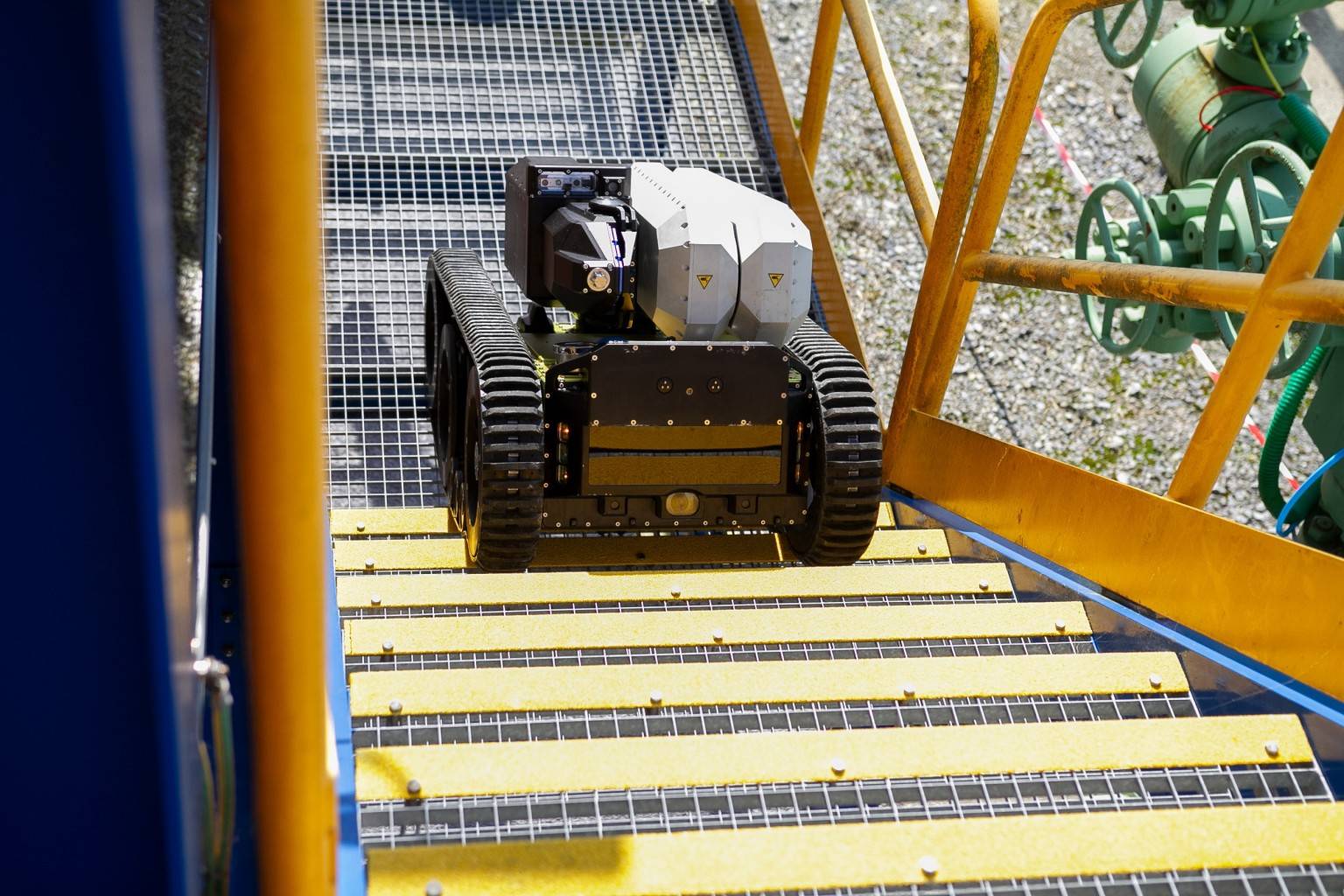
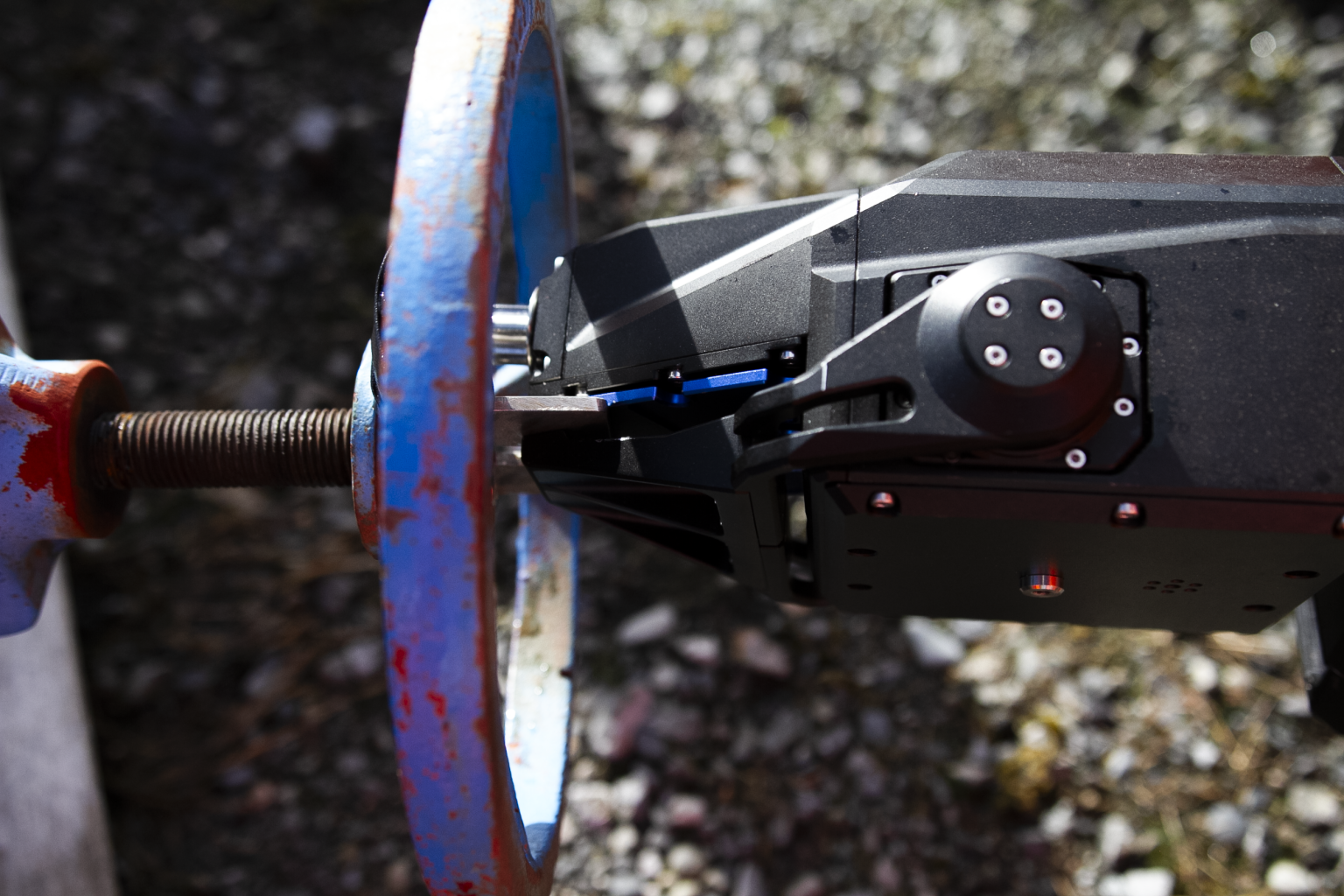
Taurob’s autonomous robot Operator is being designed for manipulation on offshore installations and in ATEX environments.
Image courtesy TAUROB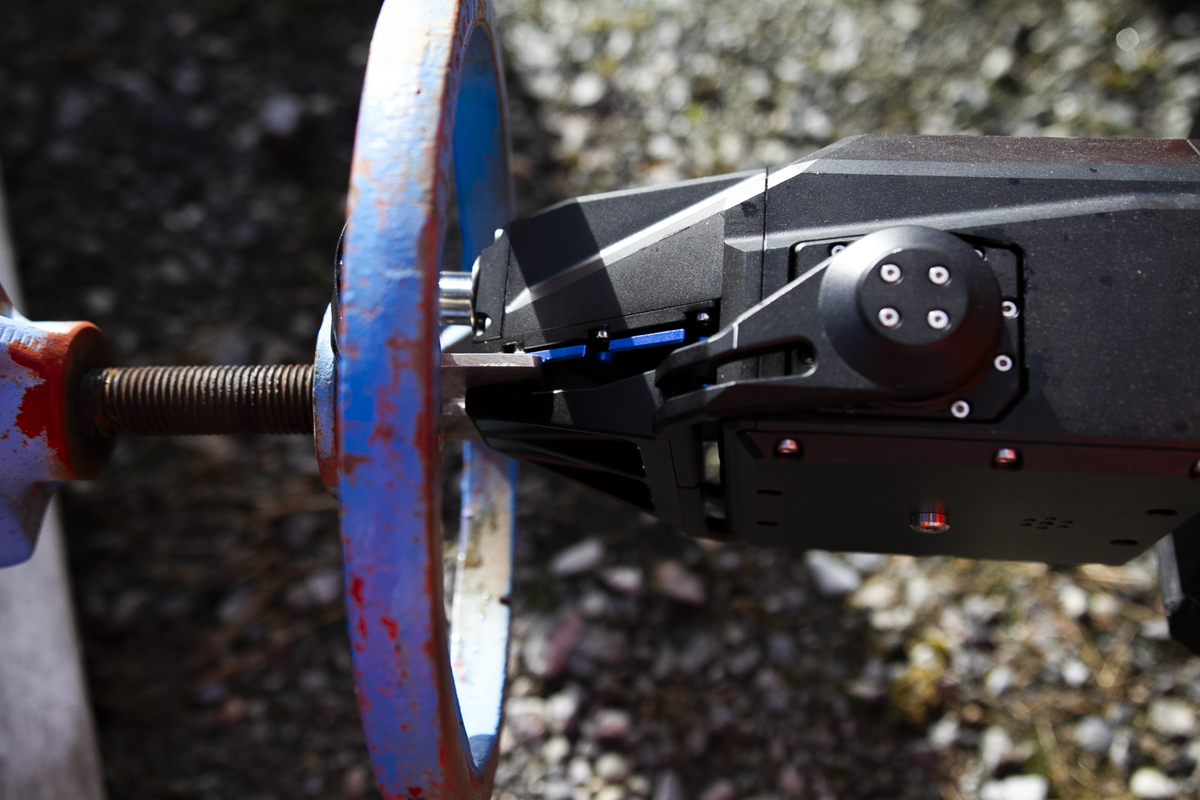
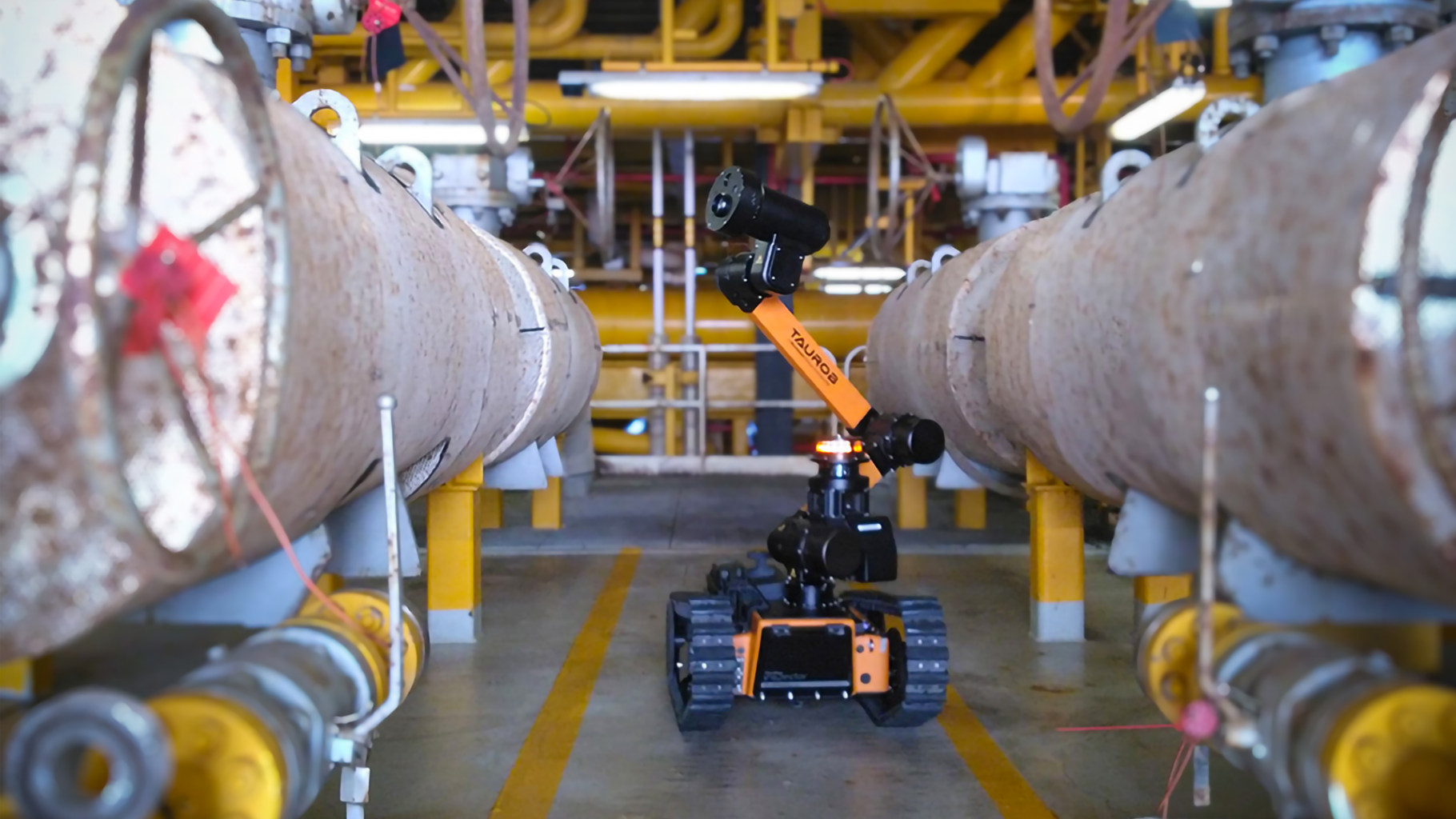
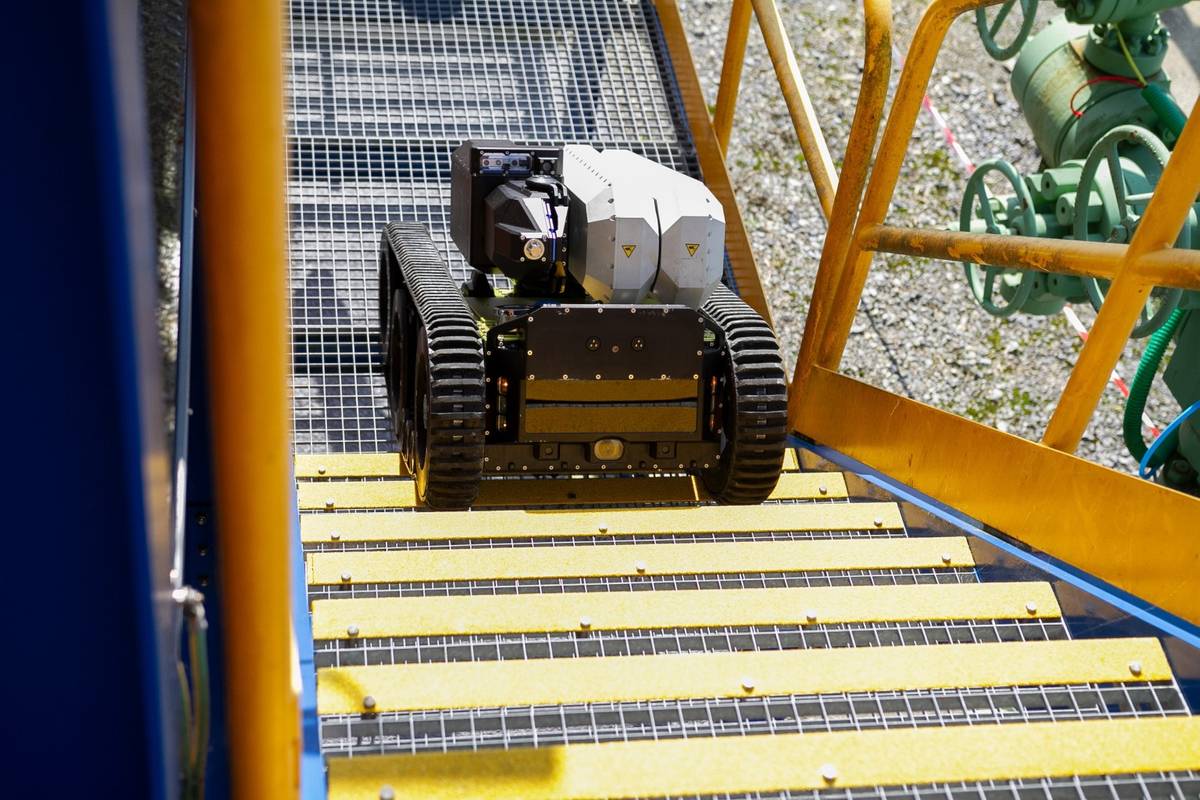
Taurob’s Inspector robot is purpose-built for visual and thermal inspections in hazardous environments.
Image courtesy TAUROB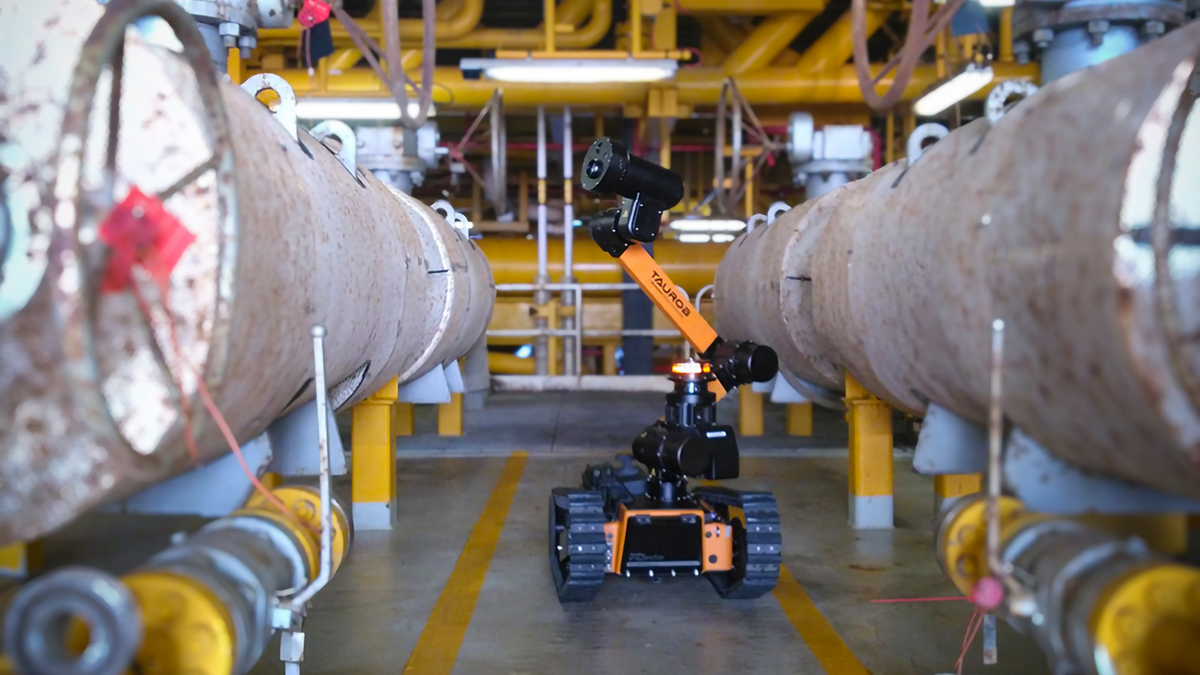
Taurob’s Inspector robot is ATEX certified.
Image courtesy TAUROBWith the Evergreen Digital Twin, the operator has an up-to-date representation of their offshore plant. “This was a revelation because we created it for the humans to operate robots safer, plan inspection mission and monitor the robots. And then the customers saw it and came up for another idea. They now have remote eyes and ears out there and can use the robot to provide a live feed of its environment. This is great for pre-planning maintenance, refitting and repair tasks.”
ANYbotics has launched Data Navigator, an asset management platform for its four-legged inspection robot, ANYmal. The platform centralizes asset condition data, such as thermal, acoustic, visual and gas readings, to simplify asset health assessments and provide trend monitoring for preventive maintenance. Data Navigator’s intuitive interface requires no specialized robotics expertise. It can integrate seamlessly with existing IT infrastructure and can integrate with enterprise systems like SAP and IBM.
Sustainable energy company Equans manufactures, installs and offers maintenance services for offshore wind substations, and the company is integrating ANYmal into its maintenance service solution. The aim is to avoid the need for dispatching a crew transfer vessel to conduct inspections. This can be a costly process often delayed by poor weather conditions, and typically over 70% of turbine alarms are false positives, unnecessarily triggering offshore interventions.
Permanently stationed on the platforms, ANYmal carries out autonomous inspections around the clock. Its inspection capabilities include temperature monitoring of key components to help prevent overheating; visual checks to identify structural issues like corrosion or cracks; gas and environmental readings to ensure compliance and leak detection and acoustic sensing to identify early signs of mechanical failure through subtle sound patterns. With ANYmal’s teleoperation functionality, onshore teams can remotely verify alarms in real-time.
ANYbotics has now launched a gas leak and presence detection solution that can be fitted on ANYmal. The system integrates advanced, modular gas detectors with 360° acoustic imaging to precisely pinpoint leak sources and simultaneously measure ambient gas concentrations. The acoustic imaging camera can detect a wide array of common industrial gas leaks, such as steam, compressed air, vacuum, toxic gases and hydrocarbons. It can also identify partial discharge events and mechanical anomalies. The system then quantifies the rate and cost of a detected loss and delivers the information directly into Data Navigator.
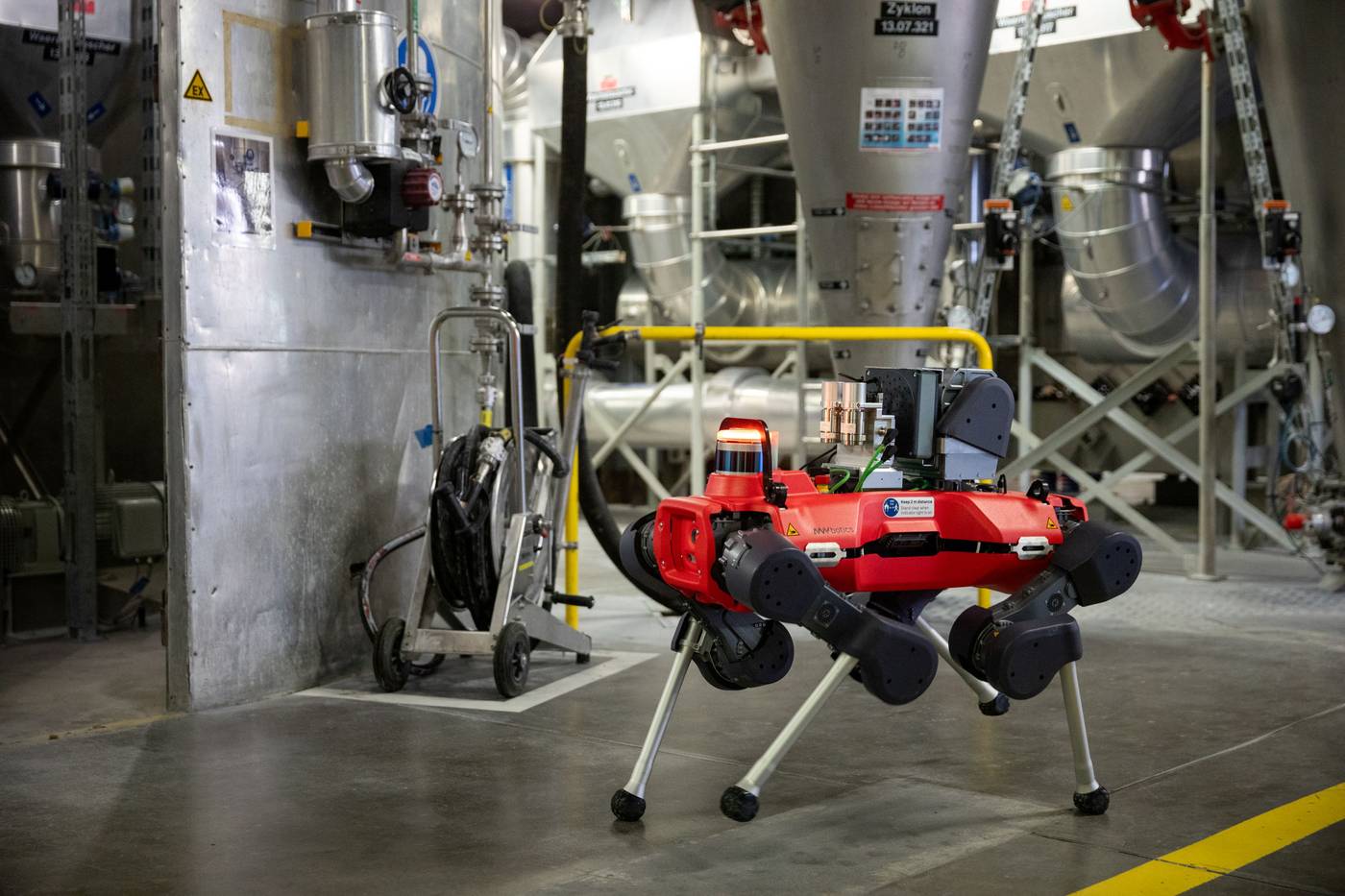
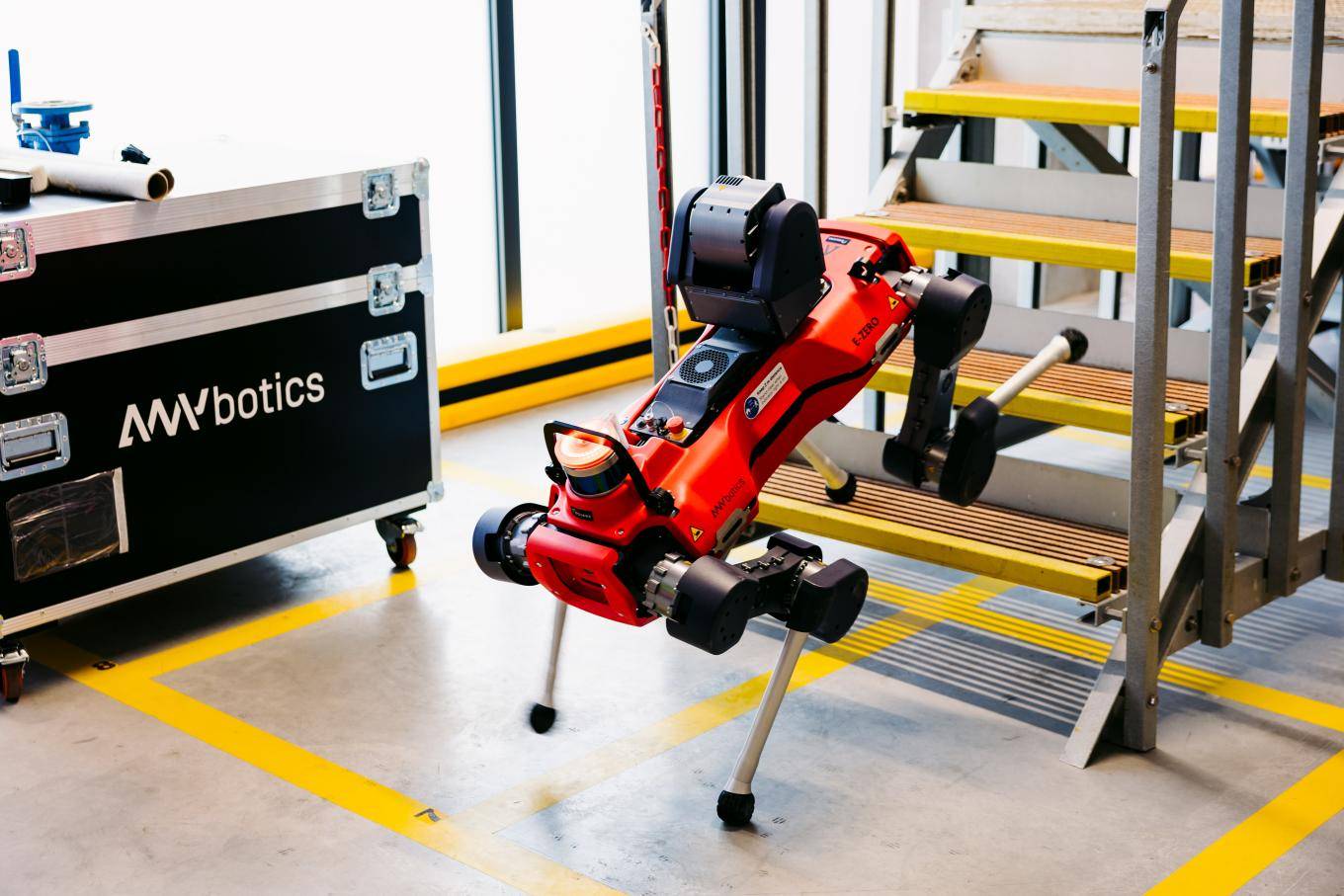
ANYmal meets the requirements of IP67, the industry standard for protection in inspection robots, which ensures it is fully dust-tight and can withstand temporary immersion in water up to one meter for 30 minutes. The certification demonstrates that sensitive components are protected from dust, moisture, corrosive substances and other contaminants, enabling reliable operation in harsh industrial environments.
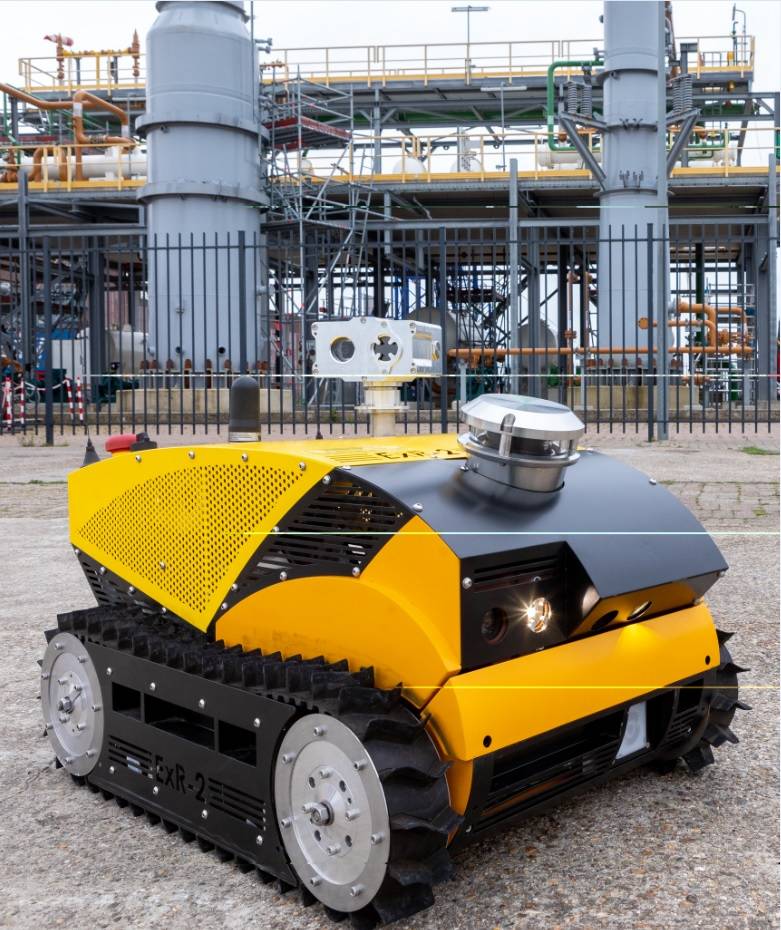
Reliability is a key necessity offshore, says Ian Peerless, Commercial Director at ExRobotics. The company has already deployed its robot on an unmanned offshore platform in South East Asia for over six months. “Once you go offshore, the cost of deployment is so much higher. Reliability is the number one hurdle, but we have got to the point where our robot has been proven to operate for six months offshore without human intervention. If you can’t achieve that, then the cost of robot maintenance and repair can be prohibitive.”
The robot’s mission wasn’t programmed by someone on the platform. “The robot was put on the platform, on its charger, and everyone left the platform when the accommodation barge left. The robot was then programmed from 1,000 kilometers away in an office in Kuala Lumpur.”
Together with industry partners Taurob has been working on an offshore work class robot – the Taurob Operator, a new robot that is capable of performing heavy-duty tasks offshore. “The overall idea is to have robots take over more tasks and reduce the footprint of oil and gas platforms, making them leaner, less complex and effectively reduce the number of people on-site,” says Matthias Biegl, Managing Director of Taurob.
“The plan for the future is to have platforms that are more robot friendly in order to allow robots to operate better in challenging marine environments.”