Smarter Navigation for Demanding Missions: The Latest SYNAPSIS Software Release
The development and integration of safe navigation systems never stands still. Increasing traffic density, more complex operational profiles and the growing demand for multi-mission capabilities are placing ever greater demands on bridge systems.
With its latest software release, Anschütz continues to evolve its SYNAPSIS integrated navigation platform, introducing new features and refinements that further strengthen situational awareness, streamline workflows and support confident decision-making on the bridge. At the same time, the update reinforces what SYNAPSIS fundamentally represents: a smart, integrated system designed for holistic, safe navigation in demanding environments.
A consistent picture for complex operations
Modern bridge teams must process a growing volume of information, often under time pressure and in challenging conditions. SYNAPSIS addresses this need by integrating radar, ECDIS and conning applications into one coherent system, built on a shared and continuously validated data backbone. This ensures that all workstations present the same clear and consistent operational picture, eliminating discrepancies between systems and reducing the cognitive burden on the crew.
By consolidating navigation data, sensor inputs and system information, SYNAPSIS allows crews to focus on decision-making rather than data interpretation. This integrated approach is particularly valuable for vessels engaged in mission-driven operations, where navigation is closely linked to operational tasks and safety requirements.

Enhancing the bridge with the latest software update
The latest SYNAPSIS software release builds on this foundation with targeted enhancements across radar, ECDIS and conning applications. Designed around real operational requirements, the update focuses on three key areas: improved situational awareness, reduced workload and more intuitive bridge operation.
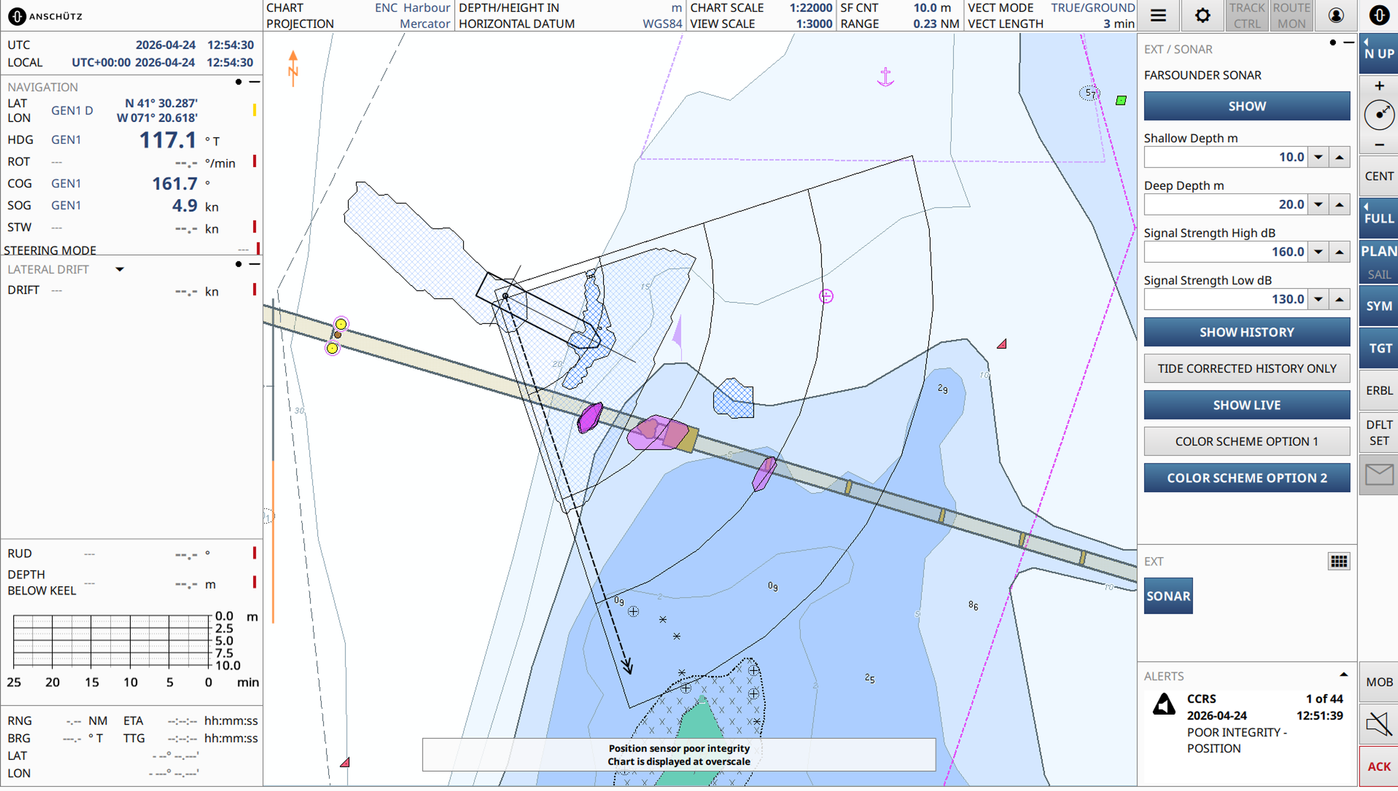
One of the most significant additions is the Generic Overlay function. This capability allows external data- such as sonar imagery, ice radar information or pollution detection results - to be integrated directly into the ECDIS display. Instead of distributing information across multiple systems, crews can work on a single, unified screen that combines all relevant data layers. Whether monitoring seabed conditions, tracking environmental hazards or supporting scientific missions, the ability to consolidate sensor data into one coherent view enhances both efficiency and safety.

The update also introduces an improved Conning user interface, designed according to open bridge principles. Clearer layouts, better visibility and optimised ergonomics ensure that essential navigation and ship data can be assessed at a glance.
A further enhancement with particular relevance to government and special-purpose vessels is the integration of Ship Helicopter Operating Limits (SHOL). The graphical visualisation of helicopter approach and landing limits supports safe and efficient coordination between ship and air assets, an increasingly common requirement for Coast Guard missions, offshore operations and surveillance activities.
Safety margins where they matter most
Operating in confined and shallow waters remains a daily challenge for many vessel types, from coastal patrol ships to research vessels working in remote regions. The new SYNAPSIS release introduces Asymmetric Cross Track Distance (XTD), enabling navigators to define different safety margins on port and starboard sides of a route.
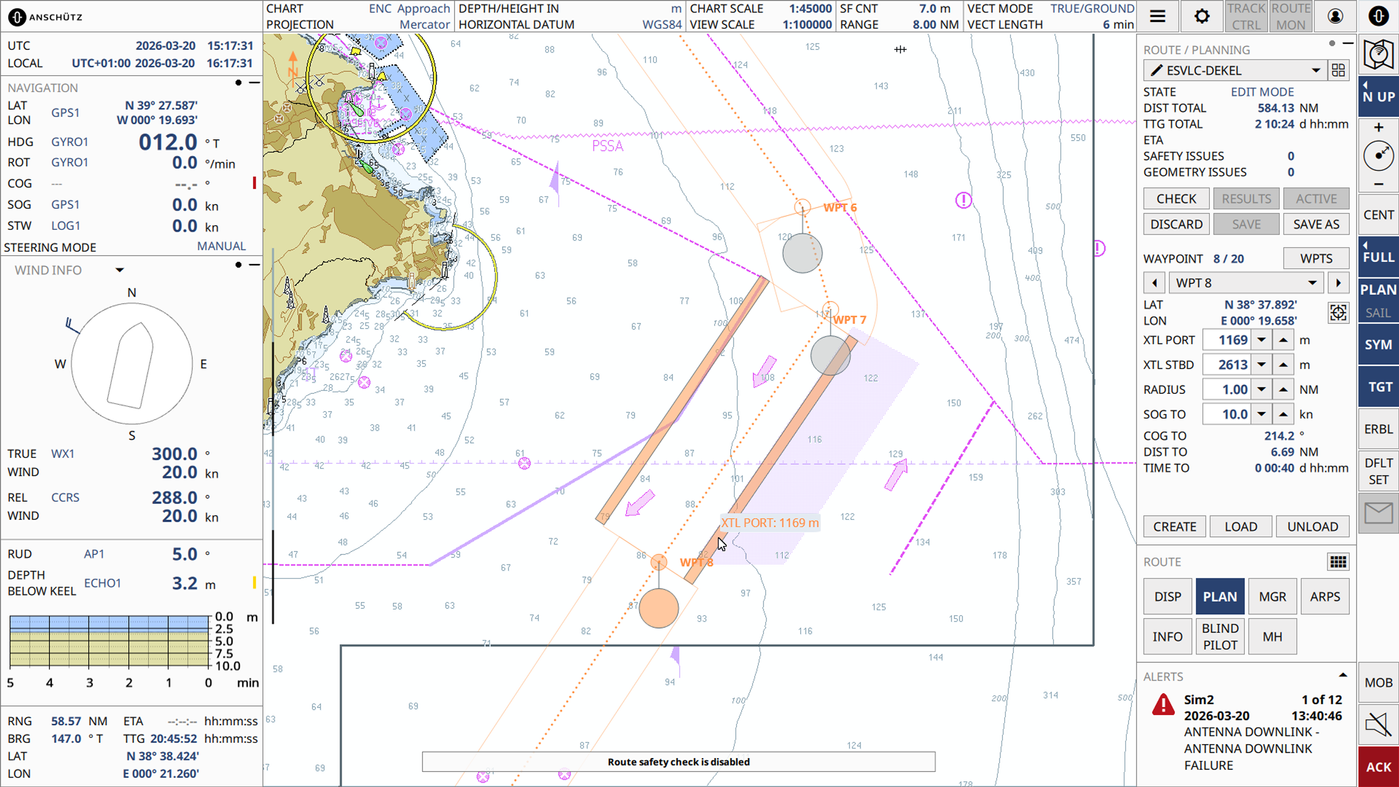
This is complemented by the Shallowest Leg Depth function, which highlights the minimum depth along each leg within the defined corridor. Together, these tools strengthen route planning and monitoring, providing precise awareness of under-keel clearance risks and supporting safer navigation in restricted environments.
Such capabilities are particularly valuable for vessels operating with tight safety margins, such as ice-capable research ships or vessels working in tidal waters.
Supporting real-world operational workflows
Beyond navigation itself, the update places strong emphasis on everyday operational workflows. Enhancements to Anchor Watch, including dual-anchor monitoring and simplified configuration, improve reliability during anchoring operations. Meanwhile, Harbour Mode and Blackout Mode help reduce unnecessary alerts in controlled situations, allowing crews to focus on what truly matters without compromising safety.
Additional refinements - such as improved task switching, better route planning tools and enhanced target visualisation - further streamline bridge operations. Taken together, these changes contribute to a smoother, more intuitive user experience across the entire system.
Designed for resilience and long-term evolution
A defining characteristic of SYNAPSIS is its software-defined architecture. Built on a modular platform with standardised interfaces and a robust data backbone, the system allows new functions to be introduced seamlessly without disrupting established workflows. This approach ensures that vessels can continuously evolve their navigation capabilities in response to changing requirements, whether driven by new mission profiles, regulatory developments or technological advancements. For government fleets in particular, this scalability and predictability are critical, enabling fleet-wide consistency and reducing lifecycle complexity.
At the same time, SYNAPSIS is designed for resilience. Continuous data validation, intelligent redundancy management and integrated system health monitoring provide a stable and reliable foundation, even in degraded conditions such as GNSS interference. In addition, an integrated toolbox within Radar and ECDIS applications supports navigators in maintaining situational awareness and operational control in contested or disrupted environments. Functions such as manual position fixing, radar-based navigation and systematic plausibility checks enable crews to verify sensor inputs independently and assess uncertainties when satellite positioning cannot be relied upon. This combination allows bridge teams to remain effective, maintain a trusted situational picture and continue safe navigation even under GNSS denial scenarios.
Proven performance in demanding applications
The strengths of SYNAPSIS are reflected in its growing adoption across a wide range of demanding vessel types. Recent projects include installations on merchant vessels as well as naval support vessels, multi-purpose Coast Guard ships and advanced research vessels operating in extreme environments.
For example, the integration of SYNAPSIS on modern polar research vessels highlights its capability to support navigation in ice-infested waters, where reliable situational awareness and sensor integration are essential. Similarly, deployments on multi-role government vessels demonstrate the flexibility of the platform to adapt to diverse mission requirements - from patrol and enforcement to environmental monitoring.
Across these applications, a common theme emerges: the need for a navigation system that not only meets regulatory standards, but actively supports mission success.

A holistic approach to navigation
With its latest software release, Anschütz reinforces SYNAPSIS as more than just a collection of navigation tools. It is a holistic platform that brings together data, applications and user experience into one coherent environment.
By delivering a consistent operational picture, integrating external data seamlessly and continuously refining usability, SYNAPSIS enables bridge teams to operate with clarity, confidence and efficiency.
Thanks to ongoing software development, SYNAPSIS is well positioned to support the evolving needs of maritime operations, helping operators to navigate safer and smarter.