Rise of the Hull Robots: Maritime’s Quiet Efficiency Revolution
Late last year, the U.S. Army put Greensea IQ’s Everclean to the test. What did it find? A hull cleaning operation that would have taken a week with diver’s in the water was reduced to six hours.
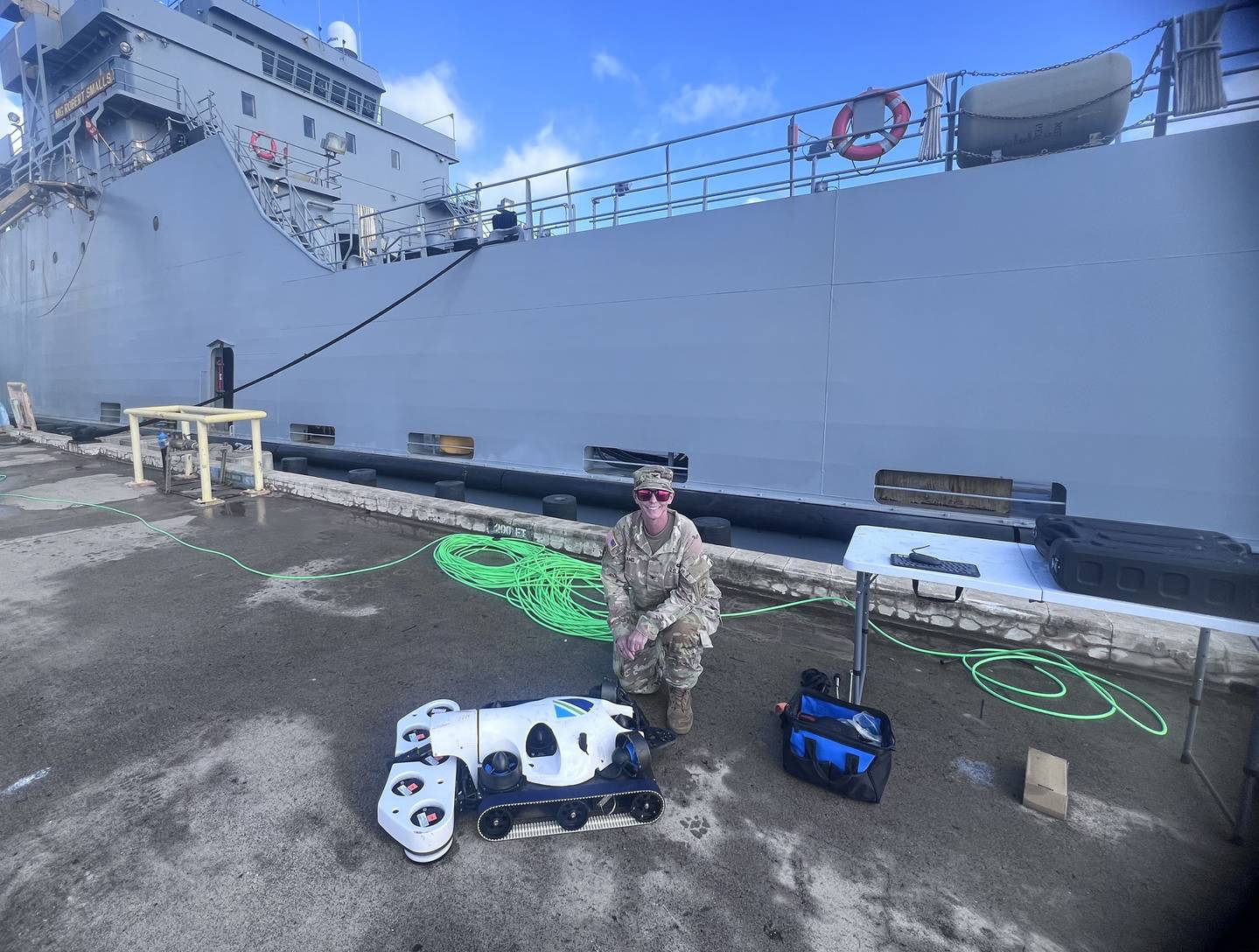
Image courtesy U.S. Army Colonel Rachael HoaglandFor centuries, shipowners have fought a persistent enemy beneath the waterline: biofouling. Barnacles, algae, slime and other marine organisms attach themselves to hull surfaces, increasing hydrodynamic drag and reducing vessel efficiency. Traditionally, the fight against fouling relied on antifouling coatings, diver cleaning teams, and periodic drydock maintenance. But in the last decade, a new class of underwater robotics has begun to change that equation.
Robotic hull-cleaning systems, once viewed primarily as a niche environmental compliance tool, are quickly becoming an operational necessity for shipowners seeking greater efficiency, lower emissions and more flexible maintenance regimes.
The premise is straightforward.
A clean hull reduces resistance through the water, improving vessel performance and lowering fuel consumption. Even moderate fouling can significantly degrade efficiency. Removing that growth can increase vessel speed, improve maneuverability and reduce engine load. Studies suggest that a fouled hull can increase fuel consumption by as much as 10–30%, while cleaning can restore lost performance and extend coating life.
With fuel costs still representing one of shipping’s largest operating expenses, and international regulatory pressure mounting to reduce greenhouse gas emissions, the commercial case for robotic hull maintenance has never been stronger.
The earliest push for in-water hull-cleaning technologies was largely driven by environmental regulation. A short but growing list of countries are expected require visiting vessels to demonstrate that their hulls are free of invasive marine species before entering sensitive waters. Biofouling has long been recognized as a major vector for transporting non-indigenous species between ecosystems, where they can devastate local biodiversity.
Systems like HullWiper were designed specifically to address this environmental concern. Instead of simply scrubbing fouling away into surrounding waters, HullWiper captures and filters removed material before disposing of it onshore through approved waste-management channels.
Similarly, Australia-based CleanSubSea developed its Envirocart system to capture and contain removed biofouling to prevent the spread of invasive organisms.
While environmental compliance remains an important driver, the sector has evolved well beyond that original mission. Today, hull robotics is increasingly framed as part of a vessel’s operational efficiency strategy.
As ships spend more time operating at reduced speeds, waiting at anchorages, or idling near congested ports, biofouling can accumulate rapidly. New robotic cleaning systems are designed to address these real-world operating conditions, allowing maintenance to take place in ports, at anchor or even during voyages.
Among the early pioneers in the robotic hull-cleaning market are Greensea IQ and Jotun – the former a robotics and maritime intelligence pioneer, the latter a long-established coatings company – whose solutions helped define the modern approach to proactive hull management.
Army v Navy
Greensea IQ’s EverClean system is designed as an always-available robotic maintenance platform, enabling routine grooming to prevent biofouling from taking hold in the first place. The company’s technology has also attracted attention beyond commercial shipping, including demonstrations supporting military vessel maintenance.
Late last year the U.S. Army was exploring robotic hull-cleaning technology from Greensea IQ as a way to improve the operational readiness and efficiency of its watercraft fleet.
In a demonstration at Pearl Harbor, Greensea IQ’s EverClean robotic system was deployed on an Army Logistics Support Vessel (LSV) to remove marine growth from the hull. The trial brought together Army boat crews, Army and Navy maintenance teams, dive units and engineers to evaluate the system’s effectiveness as part of a broader push to integrate commercial technologies into military operations.
Biofouling creates drag that increases fuel consumption and reduces vessel performance. Removing that buildup can restore efficiency while reducing strain on propulsion systems and extending the life of antifouling coatings.
During the demonstration, the robotic system cleaned the vessel’s hull in approximately six hours. By comparison, a traditional diver-based cleaning operation can take up to a week. The robotic approach also requires fewer personnel, allowing dive teams to focus on higher-priority missions.
The Army is evaluating the technology through its innovation and acquisition initiatives, which aim to accelerate the adoption of commercially available solutions. If implemented fleetwide, robotic hull-cleaning systems could enable routine maintenance while vessels remain operational, reducing downtime while improving fuel efficiency and readiness across the Army’s maritime logistics fleet.

Norwegian coatings specialist Jotun has taken a different approach by integrating robotics with hull coatings. Its HullSkater system works in combination with the company’s SeaQuantum Skate antifouling coating to create a coordinated cleaning and coating regime.
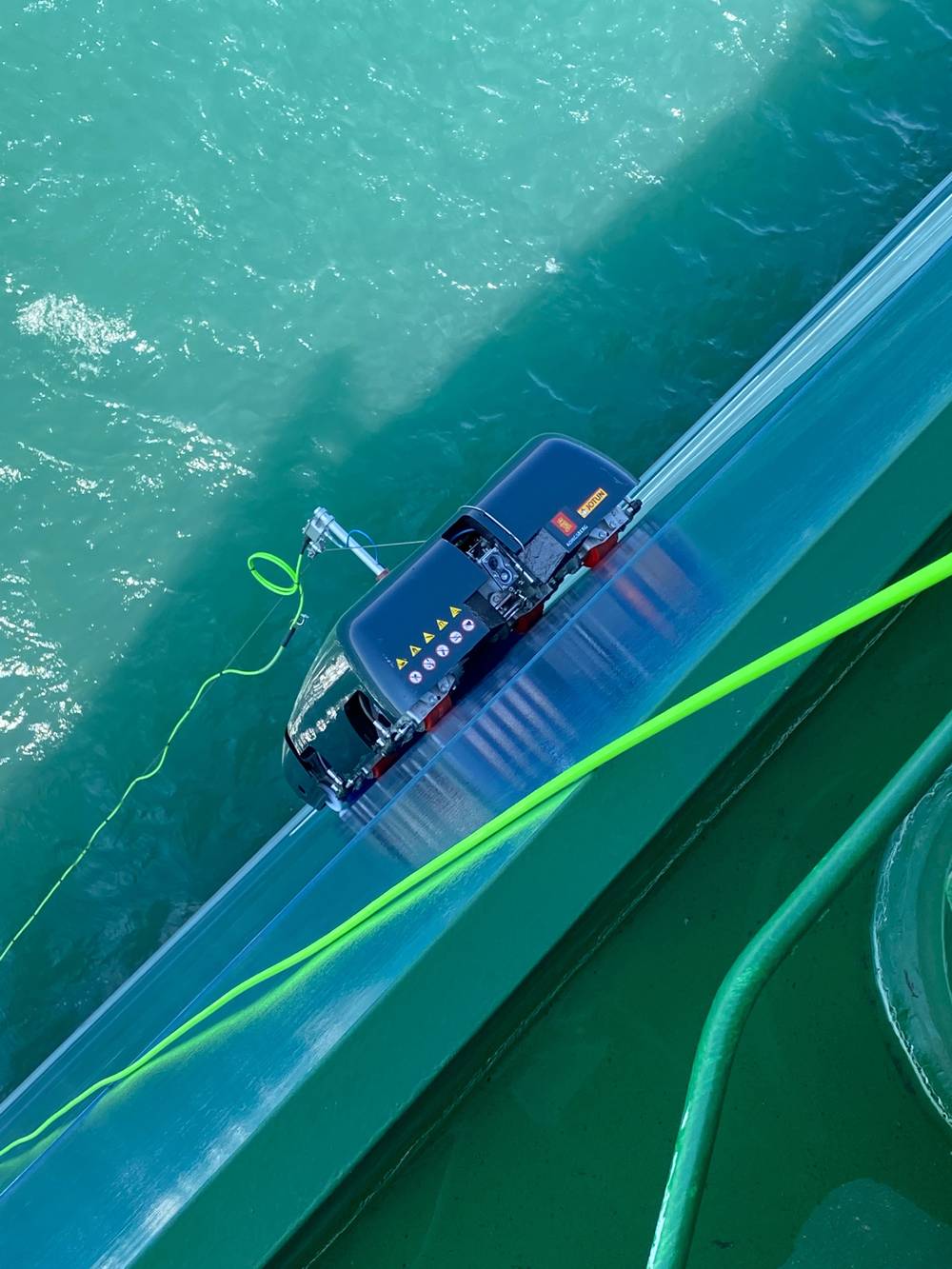
Recently, classification society Lloyd’s Register granted the system a Recognized Enhanced Antifouling Type Approval—the first certification covering both a robotic cleaning system and a compatible coating solution. This type of integrated solution reflects a broader industry shift toward proactive hull management, where coatings, monitoring and cleaning technologies work together as part of a lifecycle strategy.
While Greensea IQ and Jotun remain among the most recognized players in the field, a growing ecosystem of robotics companies is bringing new approaches to hull maintenance.
Singapore-based Neptune Robotics is focusing on operational flexibility. Its robotic systems can operate in turbid water, at night and in constrained port environments—conditions that often challenge traditional diver-based cleaning operations. The company’s cavitation-jet technology removes fouling while minimizing damage to hull coatings. Its robots can also clean sections of the hull above the waterline, addressing areas exposed during prolonged port stays that are often overlooked by conventional cleaning methods.
Meanwhile, Fleet Robotics is exploring a swarm-based model, deploying small autonomous robots capable of continuous hull grooming and inspection. The company’s untethered robots operate with strong adhesion to hull surfaces and integrate inspection sensors that allow operators to monitor structural conditions while cleaning.
This convergence of cleaning and inspection capabilities is becoming a recurring theme across the sector.
Companies such as AliciaBots are designing robotic hull crawlers that combine cleaning, inspection and sensor-based analysis. Its RoverClean system can capture visual inspection imagery, conduct thickness measurements and inspect sea chests and hull openings while simultaneously performing grooming operations.
Other innovators are pushing toward continuous cleaning. CRABI Robotics is developing a fully autonomous system capable of conducting cleaning and inspection while a vessel is in transit. By maintaining a constantly clean hull, the system aims to preserve optimal fuel efficiency without requiring off-hire time or extended port stays.
Similarly, the SR-HullBUG system from SeaRobotics focuses on “hull grooming”—light, frequent cleaning designed to remove early-stage biofouling before it becomes severe.
The grooming concept represents a fundamental shift in maintenance philosophy. Rather than waiting until fouling becomes heavy enough to require aggressive cleaning, operators can maintain a smooth hull continuously with minimal impact on coatings.
While environmental regulations helped launch the hull-cleaning robotics sector, the most powerful driver today may be economics.
Fuel remains the single largest operating cost for most vessels. Even modest improvements in hull efficiency can translate into substantial savings over a ship’s lifetime. By reducing drag and maintaining optimal hydrodynamic performance, robotic hull cleaning can help operators reduce fuel consumption, lower emissions and maintain compliance with emerging carbon-intensity regulations such as the IMO’s Carbon Intensity Indicator.
The benefits extend beyond fuel savings. Reduced drag improves maneuverability and vessel speed, lowers engine strain and can extend the life of expensive antifouling coatings by avoiding aggressive mechanical cleaning methods. For operators managing large fleets, the cumulative impact can be significant.
Despite the rapid pace of innovation, robotic hull cleaning still faces several challenges. Regulatory acceptance varies widely between ports and jurisdictions. Some ports remain cautious about in-water cleaning due to concerns about releasing biofouling material or coating particles into the water.
Technologies that capture or filter removed organisms, such as those developed by HullWiper and CleanSubSea, may help address those concerns.
Another challenge lies in scaling deployment. Many robotic systems still rely on specialized service teams or shore-based infrastructure. Fully autonomous, always-on systems capable of operating without external support remain an emerging concept.
But the trajectory is clear.
As robotics become more autonomous, sensors more capable and data integration more sophisticated, hull-cleaning robots are evolving from niche maintenance tools into integrated vessel-performance platforms.
For an industry that often measures innovation in megawatts, megaships and massive infrastructure, the robotic hull-cleaning sector represents a quieter but potentially transformative development.
Operating unseen beneath the waterline, these small robotic systems may deliver some of the shipping industry’s most immediate gains in efficiency, emissions reduction and operational flexibility.
And as the technology matures, the future of hull maintenance may look very different from the diver-and-drydock model that has defined shipping for generations. Instead, fleets of autonomous robots may soon patrol the world’s shipping lanes, quietly ensuring that vessels glide through the water as efficiently as possible.

EverClean in Action – Robotic Hull Grooming Put to the Test
Greensea IQ’s EverClean robotic hull-cleaning system has emerged as one of the most widely deployed technologies in the growing robotic hull-grooming sector. Designed to maintain vessels in an “always clean” condition through proactive maintenance, the system uses small robotic crawlers equipped with soft nylon brushes that gently remove biofilm and early-stage fouling without damaging antifouling coatings.
The robots move across the hull using negative-pressure adhesion and follow programmed cleaning routes, covering large areas efficiently while collecting continuous video and positional data that can be stitched into georeferenced images of hull condition. Each robot operates with a cleaning swath of about 0.7 meters and typically achieves production rates of roughly 540 square meters per hour, allowing large cruise ships with wetted surface areas of 8,000–10,000 square meters to be groomed over several port calls.
A recent study examined EverClean’s impact on two cruise vessels operating in the Gulf of America and the Caribbean, regions known for high fouling pressure. The vessels were serviced through their home ports in Galveston, Texas, and Miami, Florida. Each round of cleaning covered roughly 90% of the vessels’ wetted hull surface area, demonstrating the system’s ability to maintain large commercial ships with consistent coverage.
The first vessel—a larger cruise ship carrying about 4,000 passengers and 1,500 crew — had accumulated significant fouling before the initial cleaning. After service, powering performance improved, with propulsion power requirements dropping by an average of 2 megawatts, resulting in fuel savings of roughly 80 metric tons over a 90-day period and an estimated 256 metric tons reduction in CO₂ emissions.
The second vessel, a slightly smaller cruise ship carrying about 3,000 passengers, was maintained through a proactive grooming schedule over seven months and 19 port calls, typically two to three cleanings per month. Over that period, hull condition steadily improved as the robots prevented heavy fouling from developing. By month seven, propulsion performance had improved by nearly 20%, delivering cumulative fuel savings of 320 metric tons and reducing emissions by more than 1,000 metric tons of CO₂.
Together, the trials demonstrate the core principle behind robotic hull grooming: frequent, low-impact cleaning that prevents fouling from developing in the first place. By maintaining hull performance continuously rather than reacting to heavy fouling events, EverClean offers ship operators a practical pathway to lower fuel consumption, reduced emissions and improved vessel efficiency.