New Tech
Latest Products, Systems and Concepts
First Ammonia Fuel Supply Systems for Marine Use
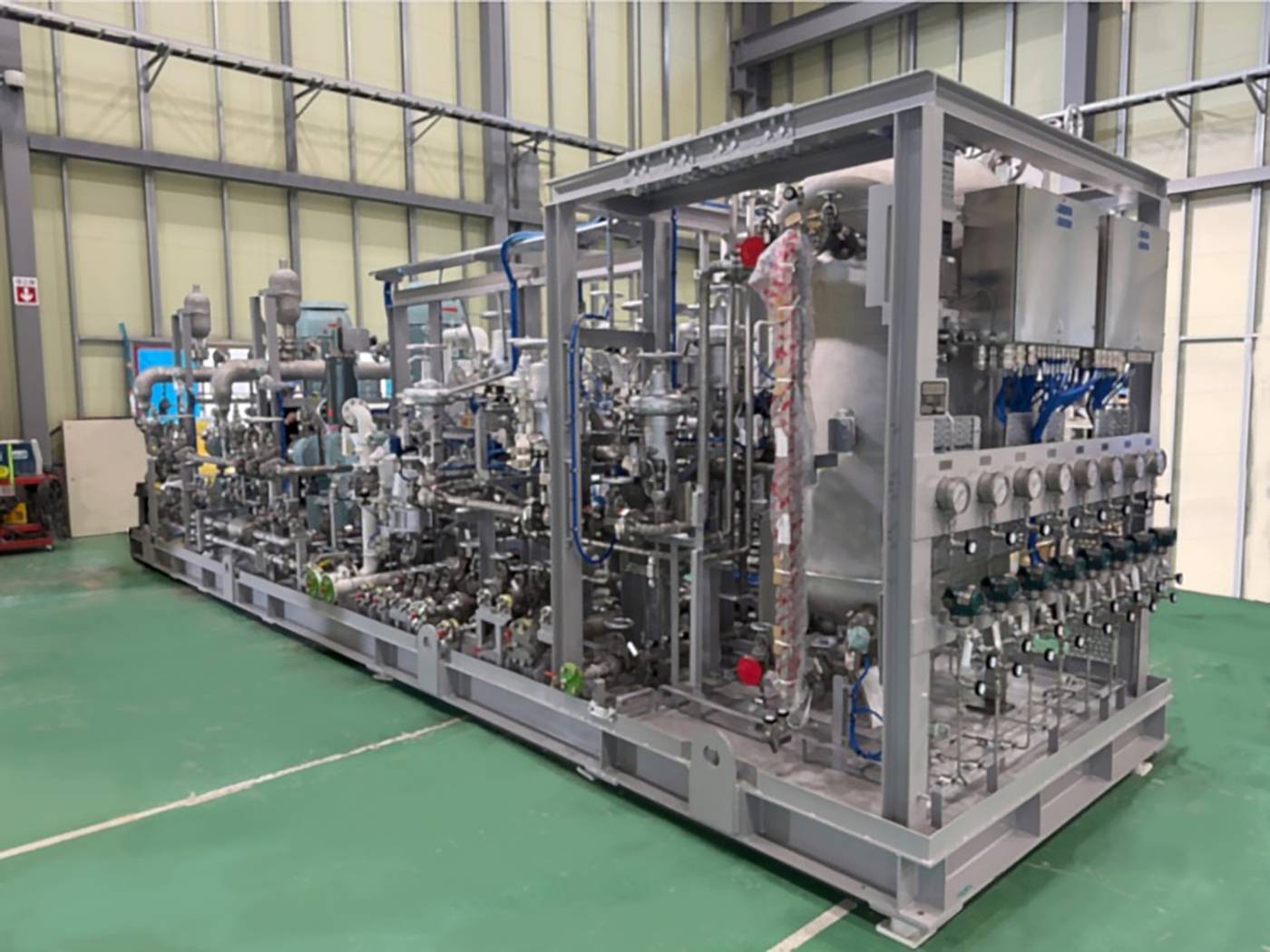
Mitsubishi Shipbuilding shipped the first ammonia fuel supply system (AFSS) and ammonia gas abatement system (AGAS) for Japan Engine Corporation. The systems are designed for J-ENG’s first ammonia-fueled marine engine model 7UEC50LSJA-HPSCR and represent the first units produced by Mitsubishi Shipbuilding. Commissioning work for the systems will begin in due course. The AFSS is designed to supply ammonia fuel to the engine in a stable and safe manner, while the AGAS processes surplus ammonia generated during fuel switching from ammonia to conventional fuel oil. Both systems support remote operation and automatic control through an integrated control system, aimed at enhancing operational efficiency and safety.
Tamandaré-class Frigate Sails with SYNAPSIS
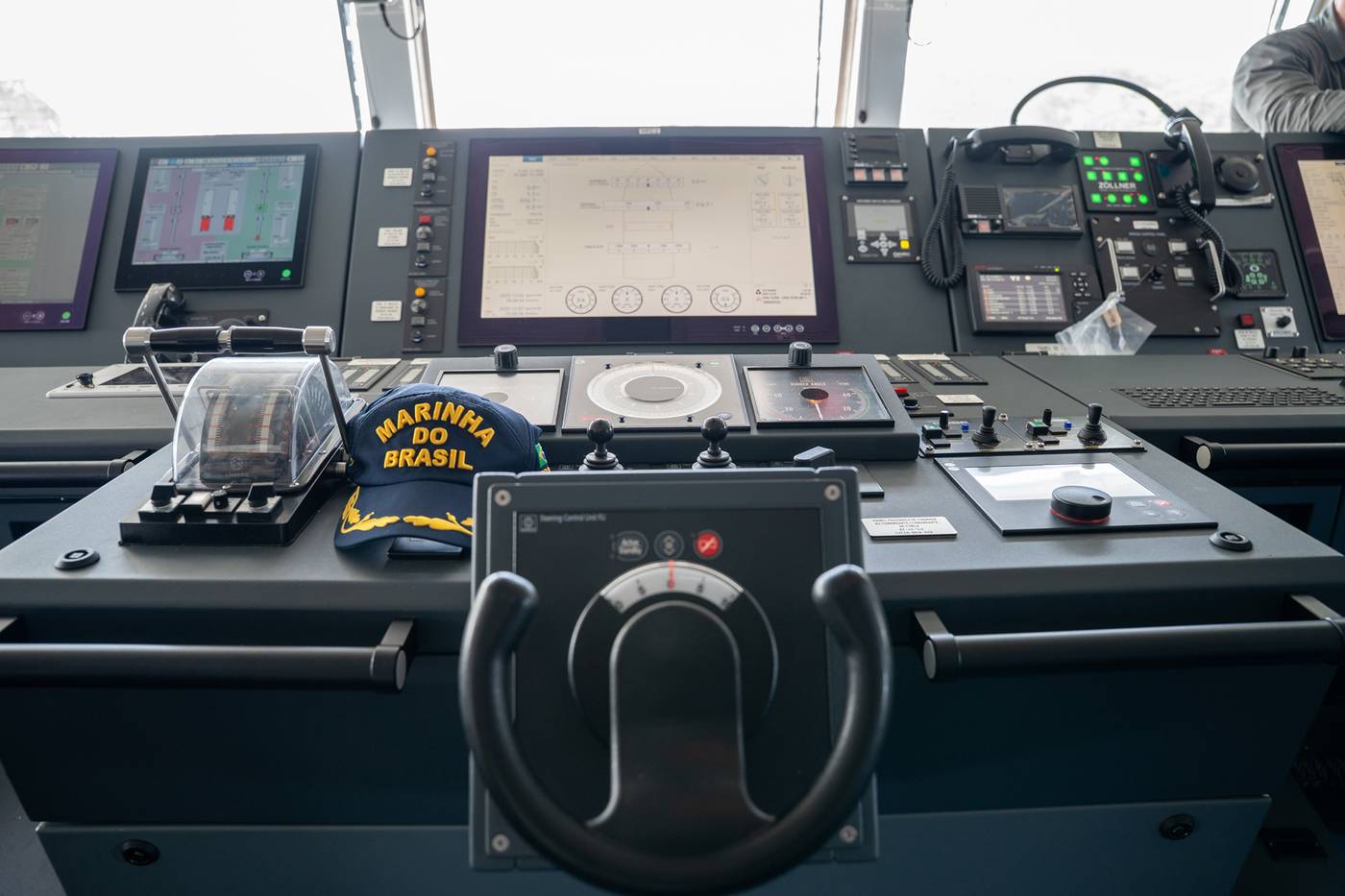
Anschütz delivered and commissioned its SYNAPSIS Integrated Navigation and Bridge System (INBS) for the first vessel of the Brazilian Navy’s new Tamandaré-class frigate program. Tamandaré, the first of four ships built by SPE Águas Azuis at TKMS Estaleiro Brasil Sul in Itajaí.
Designed as a modern multi role frigate, the first Tamandaré-class vessel provides broad operational capability, ranging from maritime security and patrol duties to support for joint and international missions. The SYNAPSIS INBS includes multifunctional workstations hosting radar, electronic chart display and information systems (ECDIS), conning and other navigational functions, CCTV integration, a complete steering control system with autopilot, and the GMDSS (Global Maritime Distress and Safety System). At its core, the SYNAPSIS integration platform ensures consistent data processing, a uniform human–machine interface and centralized monitoring across the bridge. This provides the crew with a clear operational picture and supports safe navigation during transit, maneuvering and mission specific operations.
A key advantage of the SYNAPSIS architecture is its modularity and software defined capabilities. The scalable design allows the Brazilian Navy to adapt and extend the INBS throughout the frigate’s service life through functional updates, additional sensor integration or evolving operational requirements. This ensures long term flexibility and helps maintain operational effectiveness over decades of service.
Humanoid Welding Robot for Shipyards

Fincantieri launched an industrial partnership with Generative Bionics aimed at developing a humanoid welding robot designed to operate alongside human workers in shipyard environments. The initiative aligns with Fincantieri’s broader strategy around advanced robotics, physical AI and innovation, core pillars of the Group’s new Industrial Plan. As a first application, the partners will focus on a humanoid robot specifically engineered to support selected naval welding tasks. The system will incorporate artificial intelligence, advanced manipulation and perception capabilities, and vision systems dedicated to monitoring weld seams. Optimized locomotion will allow the robot to function in complex shipyard environments. A key design requirement is safe, direct collaboration with human workers, in full compliance with applicable safety regulations and without restricting work areas.
The four-year program is structured to accelerate industrial deployment. Initial shipyard trials are planned by the end of 2026, with operational functionalities expected to be introduced within the first two years. Subsequent phases will focus on refinement, expansion and industrial certification. Development and testing will take place at Fincantieri’s Sestri Ponente shipyard in Genoa, which will serve as the reference site for validation and certification.
WiseTech Global, Hapag-Lloyd launch IoT Container Tracking Pilot
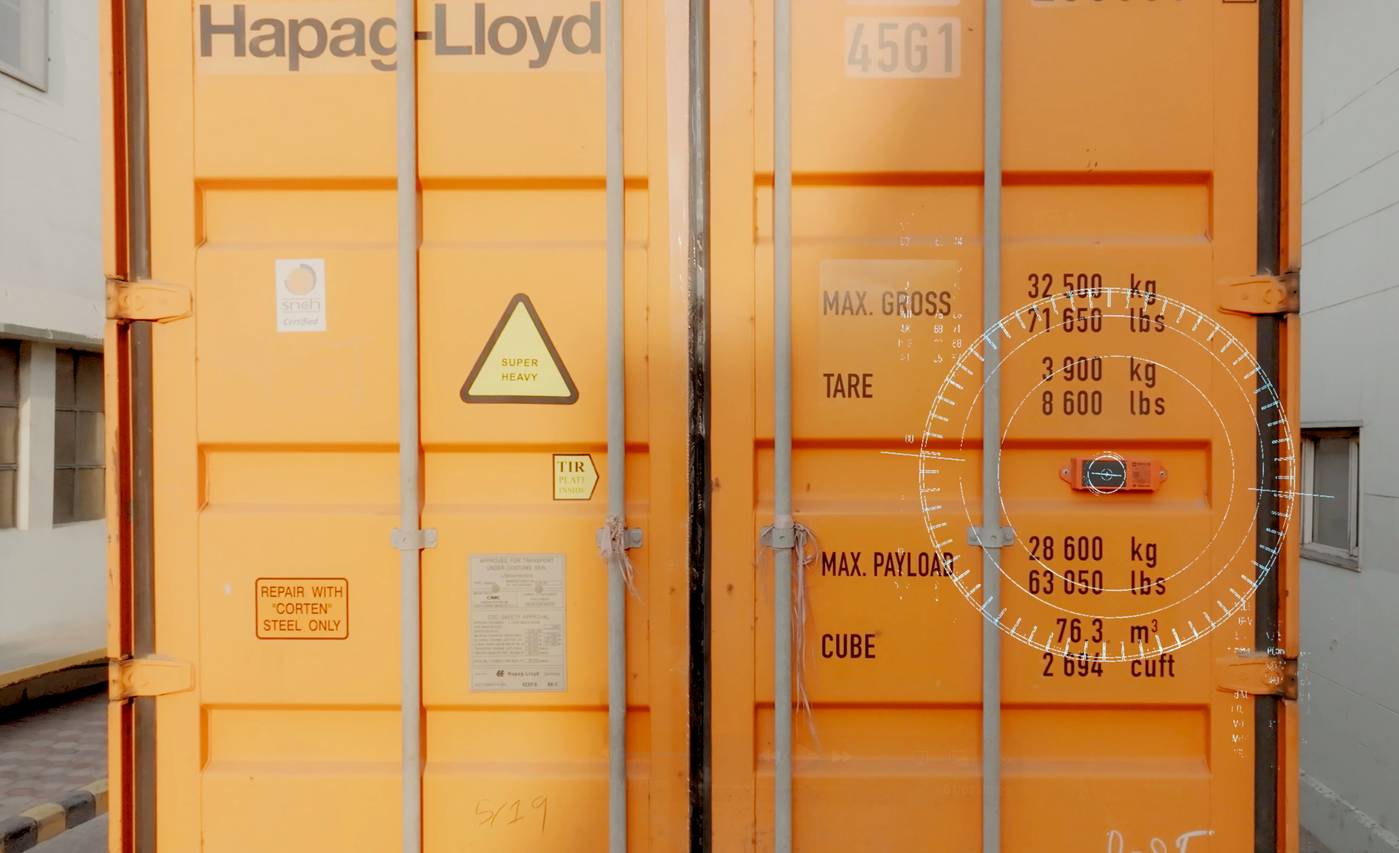
WiseTech Global announced a new partnership with Hapag-Lloyd to equip its 2 million container fleet with smart devices, to trial the integration of Internet of Things (IoT) technology for real-time global container visibility, tracking and data collection.
Through this initiative, Hapag-Lloyd’s fleet of 2 million containers are equipped with IoT devices that frequently transmit location updates directly to WiseTech’s ecosystem of platforms for the logistics, global trade and supply chain industry. This pilot specifically tests the ability to ingest and process millions of data points daily, applying advanced algorithms to transform the IoT data into meaningful milestones and products used to drive decision-making.
The collaboration aims to provide accurate, real-time insights on container positioning, transit conditions, and arrival predictions. Hapag-Lloyd’s customers will not only see where a container is, but also detect anomalies such as deviations or delays that might impact its arrival at the next critical handover point, delivering unprecedented accuracy for data-driven planning and execution.
KIMM Develops AI-Based System to Detect Microscopic Imbalance in Rotating Machinery
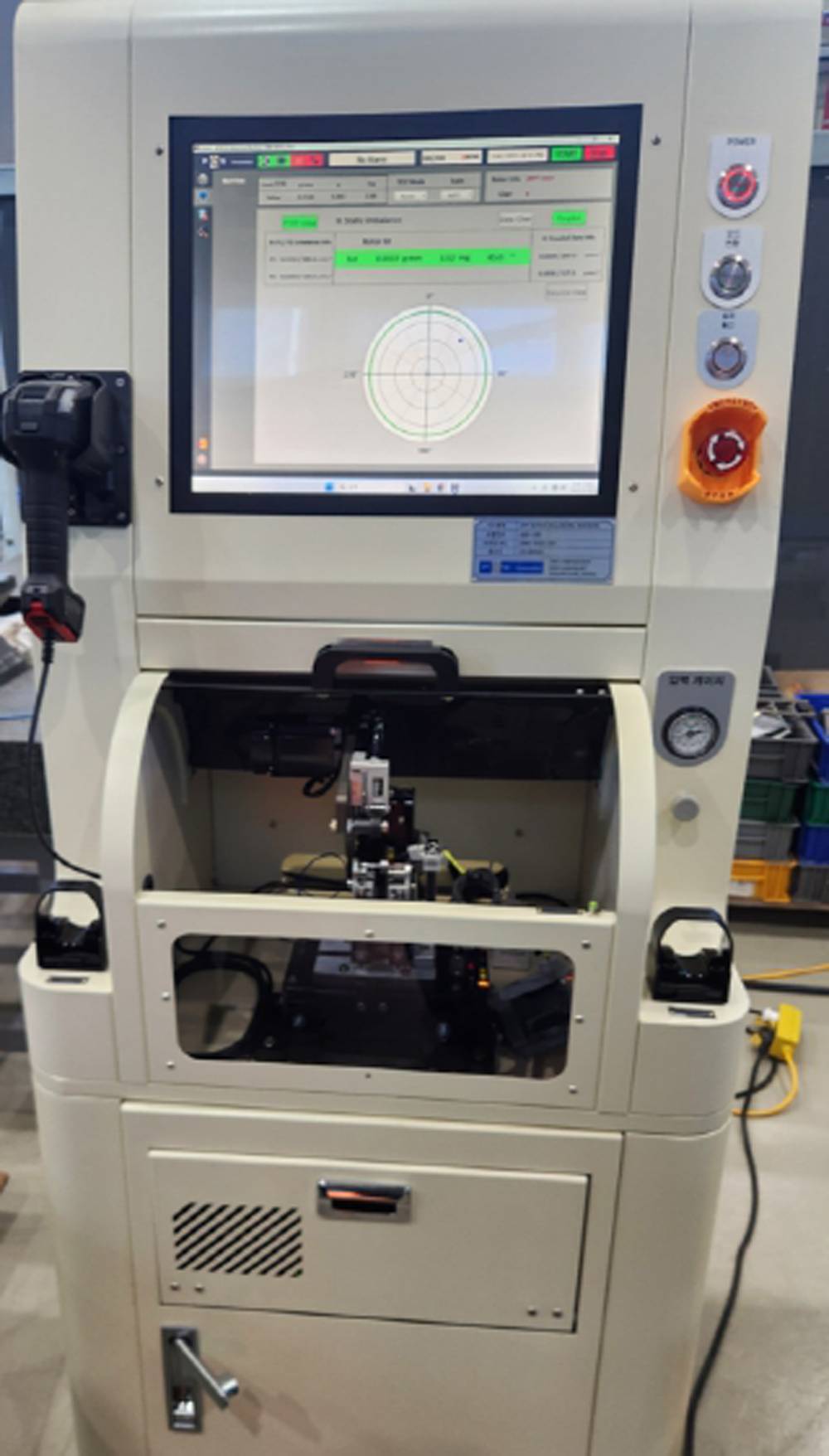
Researchers at the Korea Institute of Machinery and Materials (KIMM) have developed a high-precision automated balancing machine capable of detecting extremely small mass imbalances in rotating components, achieving measurement accuracy beyond the 0.1 micrometer threshold.
The system — developed in collaboration with PNS Co., Ltd. — uses vibration sensors, high-speed signal processing and AI-based algorithms to identify and correct minute imbalances at the milligram scale. The technology automatically filters noise and abnormal signals during measurements, improving reliability and repeatable precision in industrial production environments.
Balancing machines are used to detect and correct mass imbalance in rotating equipment such as motors, turbines and other precision mechanical components. According to KIMM, many conventional systems rely on manual or semi-automated processes, limiting accuracy and consistency.
The new system integrates a closed-loop correction algorithm that automatically determines optimal cutting conditions based on component geometry, material properties and rotational speed. It also includes self-calibration and diagnostic features that monitor sensor performance and operating conditions in real time.
The technology was commercialized in July 2025 with its first supply contract to a manufacturer of eco-friendly automotive components. Researchers say the development could reduce reliance on imported equipment and support precision manufacturing in industries including automotive, energy, aerospace and defense.
Enhanced Listings