Vessels
New Delivers, Orders, Designs & Concepts
NYK Invests to Preserve Historic Passenger Vessel
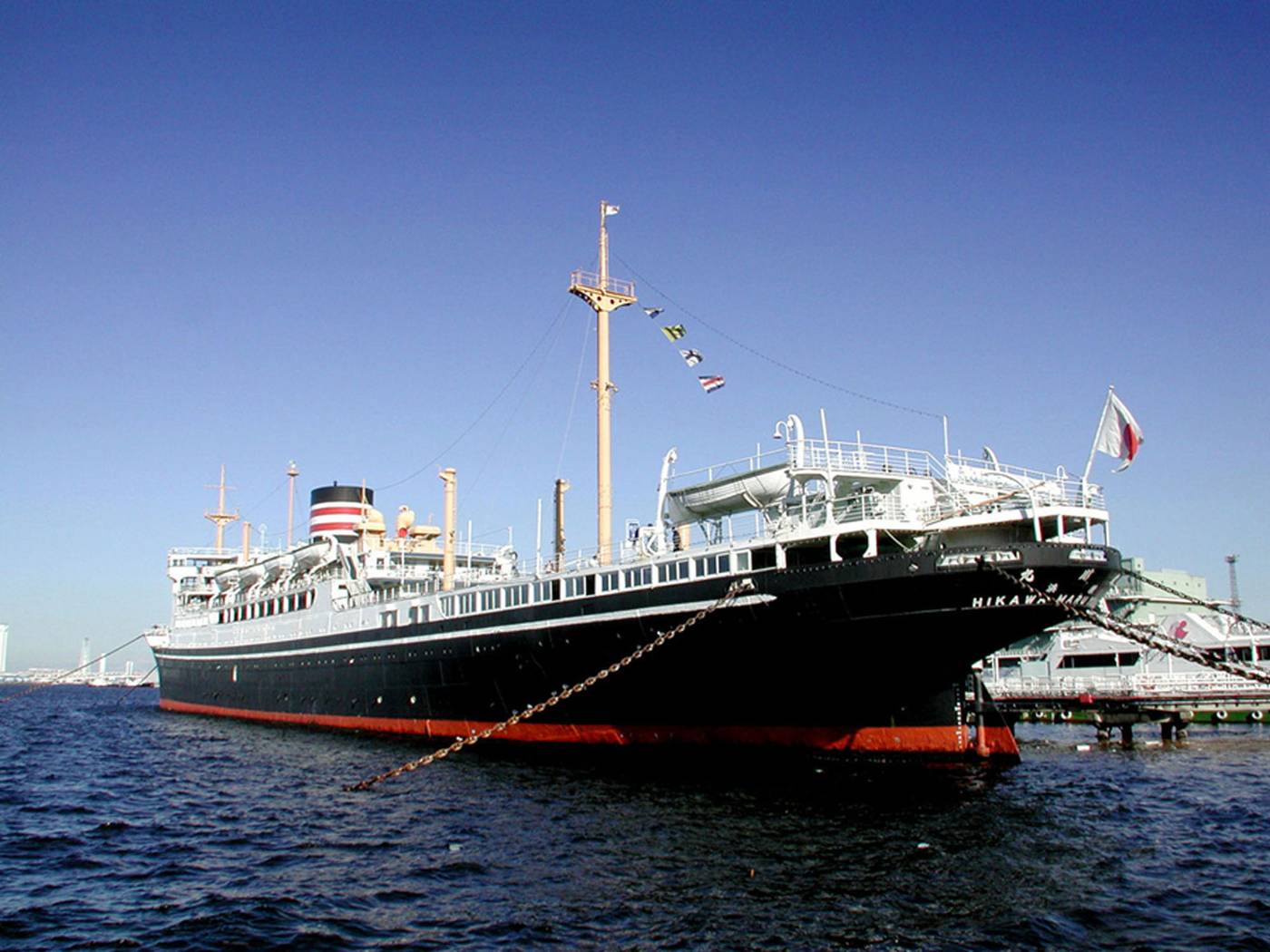
On January 8, 2026, NYK will launch an expert committee dedicated to the long-term preservation of Hikawa Maru, a national Important Cultural Property moored in front of Yokohama’s Yamashita Park.
Since 2024, NYK has been conducting surveys on the hull of Hikawa Maru to assess its safety and structural integrity in preparation for large-scale repairs. This long-term preservation project aims not only to ensure the ship’s structural soundness but also to enhance public engagement with the ship’s rich historical legacy.
Based on our findings, NYK will convene an expert committee specializing in ship preservation and architecture. This committee will establish technical and conservation policies for repairs, determine best practices for upkeep, and create exhibition strategies to help revitalize the Yokohama waterfront area.
Built in 1930 by NYK for the Japan–Seattle line, the 95-year-old Hikawa Maru remains the only extant passenger-cargo ship constructed in pre-war Japan.
According to a website dedicated to the ship and its history, Hikawa Maru was a state-of-the-art ship at the time it was built. During World War II, Hikawa Maru was set up as a navy hospital ship. The ship struck mines on three separate occasions before the war ended but avoided being sunk.
After the war, it was refitted as a cargo-passenger ship and resumed service on the Seattle Line in 1953. Having been in service for 30 years, Hikawa Maru made 254 voyages across the Pacific Ocean and carried more than 25,000 passengers in total during its lifetime.
Since 1961, the ship has been maintained and preserved at its mooring in front of Yamashita Park serving as an enduring symbol of Yokohama. It was designated a National Important Cultural Property in 2016. The ship needs preservation to remain safely accessible and educational.
Fincantieri Delivers Indonesian Navy Combat Ship

Fincantieri has delivered the PPA (Multipurpose Combat Ship) KRI Prabu Siliwangi-321 to the Indonesian Navy, marking the completion of a two-ship program that significantly upgrades Indonesia’s surface combatant fleet.
The delivery ceremony took place at Fincantieri’s Muggiano shipyard in La Spezia and follows the handover of sister ship KRI Brawijaya-320 in July. With the delivery of the second vessel, the two PPAs will form the largest and most technologically advanced frontline combat units currently operated by the Indonesian Navy.
Senior naval and government leaders from both countries attended the ceremony, underscoring the strategic importance of the program and the deepening defense cooperation between Italy and Indonesia. Fincantieri executives highlighted the delivery as a milestone in the long-term partnership with Indonesia’s Ministry of Defence and a demonstration of the company’s ability to export complex, high-end naval platforms.
Designed as highly flexible, multi-mission combatants, the PPA class is capable of conducting frontline combat operations, maritime patrol, search and rescue, and civil protection missions. The ships are also equipped to deploy RHIBs using side cranes or a stern launch and recovery ramp, supporting a wide range of operational profiles.
Measuring 143 meters in length and capable of speeds exceeding 31 knots, the vessels feature a CODAG propulsion system, combining diesel engines and a gas turbine, supplemented by electric propulsion. Each ship accommodates a crew of 171 personnel.
With their delivery, the two PPAs are expected to play a central role in Indonesia’s naval modernization efforts and contribute to regional stability across the Indo-Pacific.

ESG Launches First of Four Saltchuk Escort Tugs
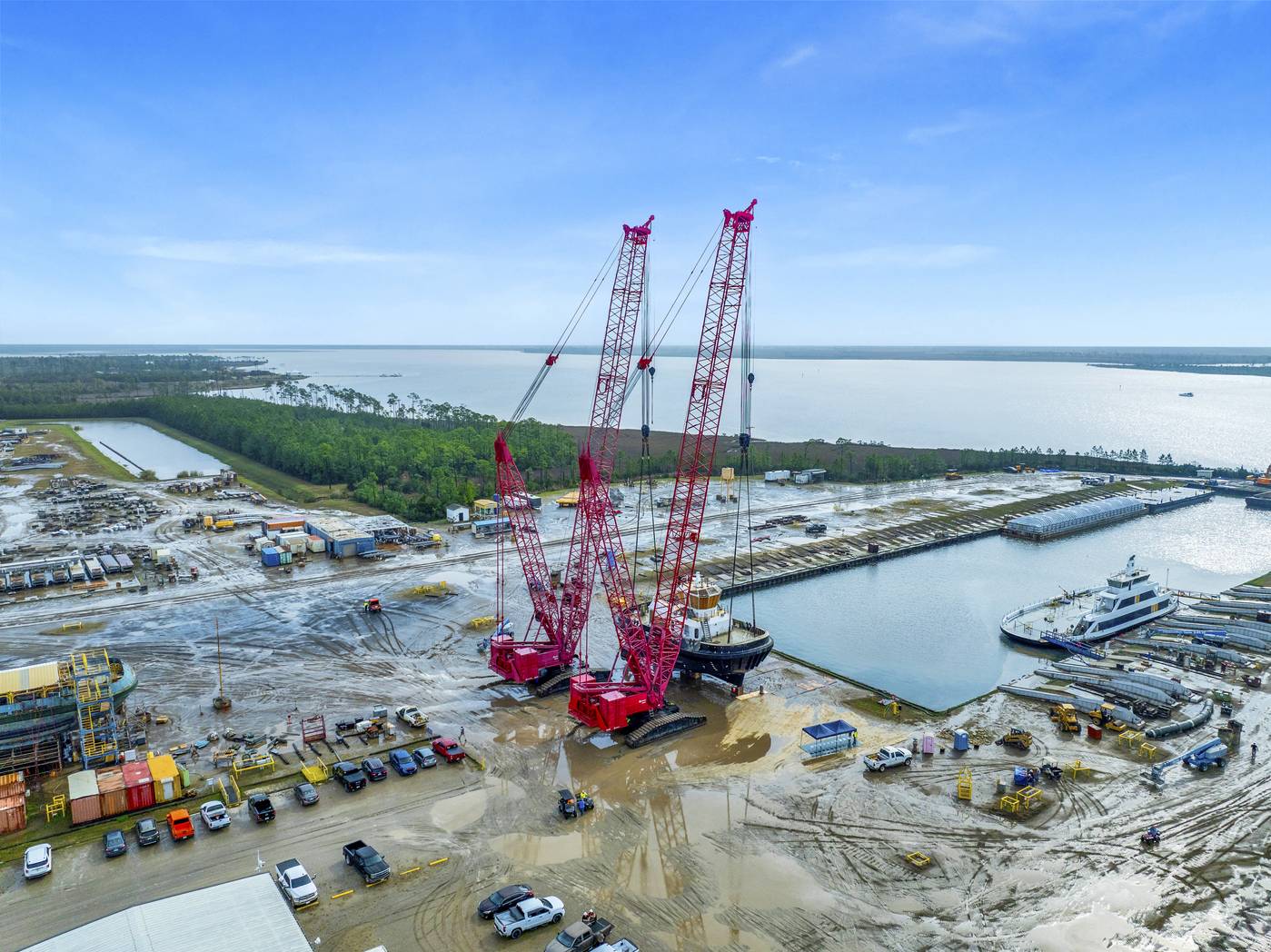
Eastern Shipbuilding Group (ESG) launched the first of the four Saltchuk escort tugs, marking substantial progress on this significant fleet renewal program. “We are proud to advance this important project for Saltchuk Marine and look forward to continued progress as we move toward delivering these high-quality escort tugs,” said Joey D’Isernia, CEO of Eastern Shipbuilding Group, Inc. “These four vessels set a new maritime standard that will positively impact the industry by meeting new rigorous environmental requirements.” said Jason Childs, Saltchuk Marine’s President and CEO.
The four escort tugs are part of a long-term fleet renewal initiative for Saltchuk Marine, to be built at ESG’s facilities in Allanton and Port St. Joe, Florida. Upon delivery, they will support critical ship assist and escort operations across the U.S. West Coast, Hawaii, and Alaska.

Main Particulars
| Owner | Saltchuk |
| Type | Ship Assist / Escort Tug |
| Length (o.a.) | 84′-0″ (excluding fenders) |
| Breadth (molded) | 42′-0″ |
| Depth (molded) | 14′-0″ |
| Draft, navigation | 18′-7″ |
| Accommodation | 8 persons |
| Speed, ahead | 12 knots |
| Bollard Pull (minimum) | 95 Short Tons (86.2 MT) |
| Main Engines | Caterpillar 3516E, EPA Tier 4, 3500 hp (2610 kW) @ 1,800 rpm |
| Thrusters | Schottel RudderPropeller SRP 510 |
| Hawser Winch | Markey Machine DEPGF-52, 75HP, Single Drum Class II Winch |
Spirit of Mulgumpin Enters Service

Spirit of Mulgumpin, a highly customized 22-m tour vessel Incat Crowther has designed for The Tour Collective’s See Moreton business, has entered service supporting See Moreton’s award-winning operations in the Moreton Bay Marine Park in Queensland, Australia.
Named in honor of the local Indigenous name for Moreton Island – ‘Mulgumpin’ – Spirit of Mulgumpin has been designed to support the unique schedule and operational requirements of See Moreton while providing a world class tourism experience for customers.
The new ferry measures 72 ft. 2 in. (21.99 m) in length overall and at the waterline, with a beam of 29 ft. 6 in. (9.0 m), a hull draft of 3 ft. 11 in. (1.2 m) and an overall depth of 9 ft. 3 in. (2.75 m). Constructed of marine-grade aluminum, the vessel is designed to carry up to 190 passengers with a crew of five. Tank capacities include 1,849 gallons (7,000 liters) of fuel oil, 792 gallons (3,000 liters) of fresh water and 528 gallons (2,000 liters) of black water. Propulsion is provided by twin MAN D2862 LE425 main engines, each rated at 749 kW at 2,100 rpm, driving twin propellers for a service speed of 25 knots and a maximum speed of 28 knots. Electrical power is supplied by two Zenith Isuzu generator sets. The ferry is flagged in Australia and classed to NSCV 1C standards.
The new vessel incorporates Incat Crowther’s proven stern swimming platform design which offers an unparalleled passenger experience for vessel-based snorkelling and recreation. The low-draft vessel is also fitted with a bespoke bow gangway to allow for beach landings.
The main deck features comfortable seating for 105 passengers, a large central bar, two large refreshment refrigeration units, three bathrooms and large windows to ensure every passenger can enjoy the iconic views while on board.
The mid deck features lounge-based seating for 28 passengers with the layout tailored to ensure passengers can enjoy the views whether standing or seated. The mid deck also boasts a second bar, two additional bathrooms, outdoor front-of-vessel seating for 40 passengers, the wheelhouse and a multifunctional platform that can act as a lifeguard station during snorkelling tours, as well as a DJ booth on dinner cruises.
The Tour Collective chose to work with Incat Crowther on the design of Spirit of Mulgumpin following the success of Spirit of Migaloo II, an Incat Crowther designed catamaran that has been in operation for The Tour Collective’s Seaworld Cruises brand since 2019.

Amon Bulk Orders Kamsarmax Vessel Trio

Amon Maritime was awarded investment grants of NOK 298 million ($29m) from Enova to support the construction of three new ammonia-fueled bulk carriers.
The vessels, each in the Kamsarmax segment with a capacity of approximately 80,000–85,000 DWT, are designed to combine high energy efficiency with carbon free fuel.
Fully aligned with the requirements of the EU Emissions Trading System (EU ETS) and the FuelEU Maritime regulation, they are designed for the future, delivering strong economics under the evolving regulatory regime while ensuring compliance with ambitious climate targets.
André Risholm, CEO of Amon Maritime, said: "This grant provides the foundation to move forward with three additional Kamsarmax vessels. It marks a significant milestone for Amon Bulk and for the shipping industry’s green transition.”
In total, Amon Bulk has now secured more than NOK 552 million ($55m) from Enova to build five ammonia-powered bulk carriers. The first two were announced earlier this year, with three more now added to the program.
All five ships are scheduled for delivery between 2029 and 2030, forming part of a new generation of zero-emission bulk carriers that will help transform global shipping.
Ocean Infinity Completes Armada Fleet Update
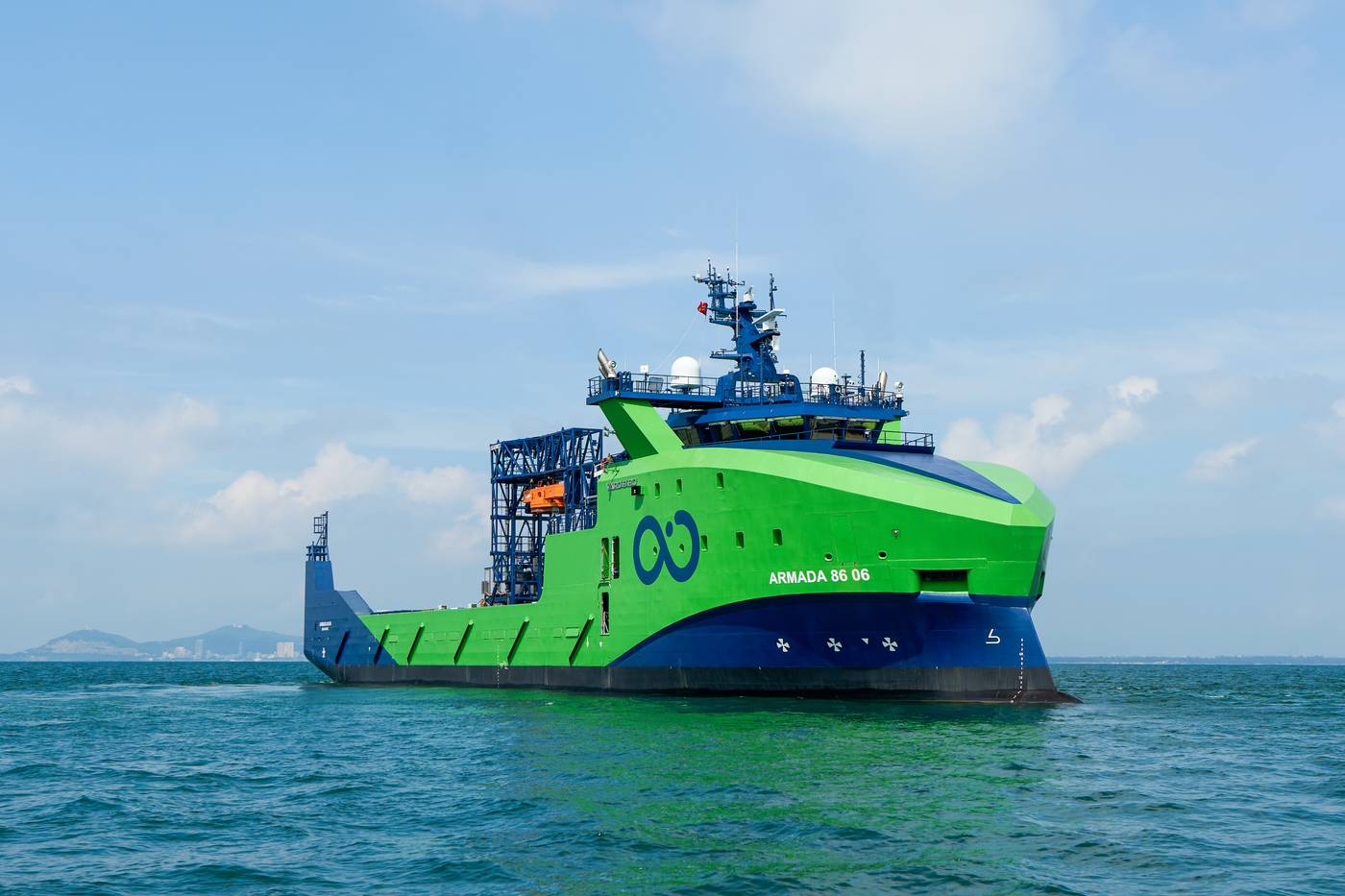
Ocean Infinity has reached a significant milestone with the delivery of the final vessel in its 14-vessel Armada fleet, featuring advanced underwater robotic systems capable of a wide range of data collection tasks.
Over the past five years, Ocean Infinity has built and deployed a fleet of cutting-edge lean crewed vessels unlike anything the industry has seen before.
This latest delivery completes the 86-meter class of Armada ships, following the successful introduction of the 78-meter class in 2023. Twelve vessels are now in live operation, with the remaining two following close behind, pushing the boundaries of robotics and technology at sea.
Each vessel is mobilized with a tailored suite of equipment, including advanced underwater robotic systems, enabling a wide range of data collection tasks. From geophysical surveys to geotechnical investigations, these capabilities support complex offshore projects globally from the United States to Europe and the Asia Pacific, delivering high quality data and driving innovation in subsea operations.
“Completing the Armada 86-metre class marks an extraordinary moment – five years ago we said we’d build a fleet of fourteen ships, designed unconventionally because speed to capability mattered – and we’ve done it, despite the many challenges along the way. What started out as a bold ambition is now a reality. These vessels are not a concept or an R&D project – they are operating today, transforming the way offshore work is done by focusing on software and technology first,” said Oliver Plunkett, Chief Executive Officer.
ESG Completes Service Operation Vessel Conversion for HOS

Eastern Shipbuilding Group (ESG) completed and redelivered HOS Rocinante, a first-of-its-kind U.S.-flagged Service Operation Vessel (SOV) converted for Hornbeck Offshore Services.
The vessel marks a milestone in the evolution of the U.S. offshore service fleet to be future-ready for both the offshore wind and petro-energy sector demands for broadly capable marine support vessels.
Originally built by ESG as an offshore supply vessel, HOS Rocinante unerwent extensive conversion at ESG’s Allanton and Port St Joe Shipyards in Panama City, Florida.
The project transformed the vessel into a next-gene SOV engineered to support technician accommodation, safe personnel transfer, and multi-day offshore operations, capable for both offshore wind and offshore oil and gas projects.
Key conversion elements include:
-
Installation of a walk-to-work motion-compensated gangway and other personnel transfer solutions
-
Enhanced dynamic positioning (DP) and propulsion capabilities for precise station-keeping
-
Upgraded accommodation and workspace capacity for offshore technicians with single person staterooms
-
Significant improvements to cargo handling and client warehousing/storage systems
-
Energy storage system for enhanced power reserve and improved failure mode operability
“This is a full circle moment for our team to be able to convert a vessel that we built more than ten years ago," said Joey D’Isernia, CEO of Eastern Shipbuilding Group. "The delivery of the HOS Rocinante demonstrates what American ingenuity and skilled labor can accomplish,” “This vessel is now one of the most capable multi-market offshore support assets in the U.S. fleet, built right here on the Gulf Coast by America’s best shipbuilders.”
The SOV is uniquely positioned to support both offshore wind development and petro-energy operations, offering Hornbeck Offshore Services unmatched flexibility to meet the evolving needs of domestic and international energy customers.
First Japan-made Crew Transfer Vessel: Alfonsino Arrow

On December 12, a naming and launching ceremony for the crew transfer vessel (CTV) ordered by NYK was held at Kosaba Shipbuilding Co., Ltd. in Kamaishi City, Iwate Prefecture.
The ceremony was attended by many stakeholders, including Masato Yamada, CEO of JERA Nex bp Japan LLC; Takuya Tasso, governor of Iwate Prefecture; and Kyo Ono, mayor of Kamaishi City. NYK President Takaya Soga officially named the vessel “Alfonsino Arrow.”
This vessel is the first CTV ordered by NYK from a Japanese shipyard and is scheduled to transport personnel involved in the construction and maintenance of offshore wind power facilities within Japan.
“We modified drawings independently designed by Northern Offshore Services, an NYK Group company in Europe, to meet domestic specifications and sourced aluminum steel and key equipment from domestic manufacturers,” said NYK President Takuya Soga. “This has allowed us to truly realize a “CTV made in Japan.” We extend our heartfelt gratitude to everyone who cooperated with us. We will continue striving alongside our stakeholders to solidify our role as a company essential to society. We are delighted to launch this vessel from Kamaishi City, Iwate Prefecture, marking a significant step forward.

LNG Bunker Vessel Christened
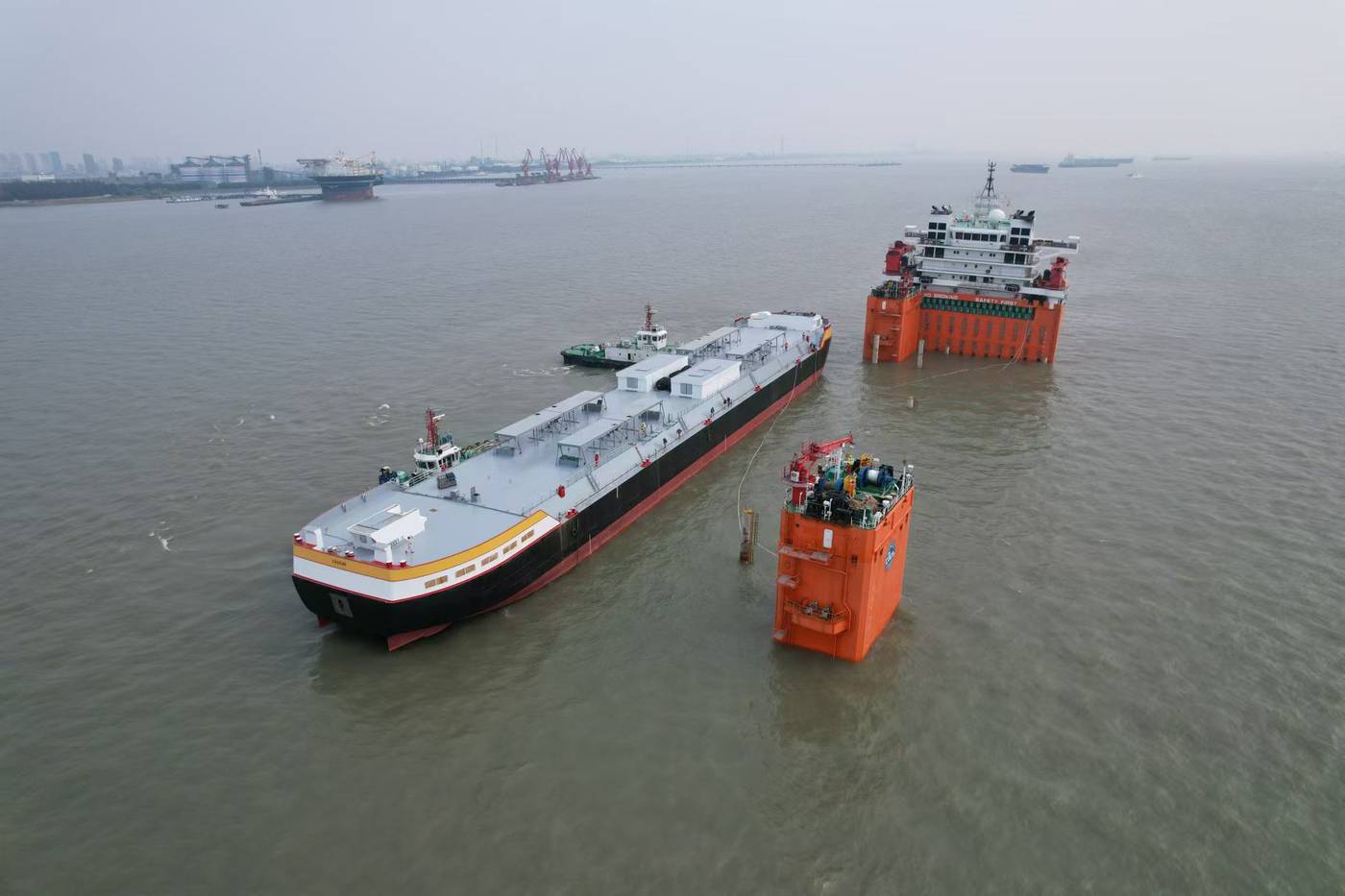
Bunker barge United LNG I was christened in the port of Antwerp, an important moment for shipping company Somtrans, main shipbuilding contractor RensenDriessen and outfitting partners TeamCo Shipyard and Gas & Heat.
The vessel will enter service in early 2026, reinforcing the growing role of LNG bunkering in the Belgian and Dutch seaports.
It is an estuary-class LNG bunker barge designed for both inland waterways and coastal service up to Zeebrugge. Measuring 135 x21.46 m, the barge carries eight cylindrical Type C cargo tanks of 1,000 cubic metres each, engineered to store LNG at –165 degrees Celsius. These cylindrical cryogenic tanks are central to the design and represent a significant technical step.
The hull was built in China and transported to the Netherlands. LNG tanks supplied by Gas & Heat in Italy were then installed in Rotterdam, before the vessel moved to TeamCo Shipyard for final outfitting. Shipbuilder RensenDriessen acted as the main contractor, coordinating every phase from hull construction to delivery, with TeamCo overseeing tank integration, engineering and yard execution.
For Somtrans, the christening reflects the company’s long-standing drive for innovation. CEO Caroline Somers explains: “We aim for depth. For vessels and technologies that anticipate the next chapter of sustainable shipping. LNG bunkering is a deliberate step in that direction. We choose solutions that matter over the long term, focusing on cleaner fuels and the vessels that support them. This project strengthens our role in the maritime energy transition.”
Her words echo the evolution of Somtrans: a family company with 39 vessels and a legacy of taking bold steps, from advanced tank technology to low-water concepts. The United LNG I marks the start of a new phase. A second sister vessel will follow soon, expanding Somtrans' LNG bunkering capacity in the region. This comes as LNG bunker demand in Northwest Europe continues to expand, driven by new dual-fuel tonnage in container, tanker, bulk, RoRo and cruise segments. The global fleet of LNG-fuelled vessels continues to grow by double digits each year, driven by owners seeking cleaner operations and reliable access to alternative fuels. By investing early, Somtrans positions itself at the forefront of this shift.
Managing Director Wim Driessen of RensenDriessen highlights the ambition and teamwork behind the project. “By combining efficient hull construction in China with local outfitting in Western Europe, we are now offering our hull building expertise more widely to the shortsea shipping segment. These cylindrical LNG tanks take this project into new territory. Integrating them at this scale is unique. It shows what is possible when a shipowner, contractor and yard work as one team.”