The Machinery That Doesn’t Ask for Attention
Why One Korean Manufacturer Built Its Reputation Where Failure Is Not an Option
By James Kim
There are two kinds of marine equipment. The kind that draws attention when it is new—and the kind that draws attention only when it fails. Most old sea dogs know which category matters more.
D-I Industrial Co., Ltd. has spent more than three decades designing equipment for the second category.
Founded in 1990, the Korean manufacturer specializes in marine power-transmission and control systems—gearboxes, steering gears, thrusters, and power take-off units that operate out of sight and, ideally, out of mind. Its products are not meant to impress at first glance. They are meant to endure load, vibration, saltwater, and neglect, year after year.
That philosophy has carried D-I Industrial from a small domestic supplier replacing imports in Korean fishing vessels to a globally distributed marine equipment manufacturer serving customers in more than 60 countries. The company’s rise has been neither rapid nor theatrical. It has been deliberate—and, in marine engineering, that may be the point.
Exports of DONG-I Industrial’s main product, the marine transmission, have been steadily increasing thanks to its compact and lightweight design, low noise, easy maintenance, wide range of options, and short delivery time. AAM Equipment in Europe evaluated the D‑I reduction gear as “compact and lightweight, easy to service, and highly durable.” Sole Iberia in Spain praised it for its “quiet operation, identical reduction ratio in forward and reverse, easy maintenance, and a design with no consumable parts.”
A Company Formed by Absence
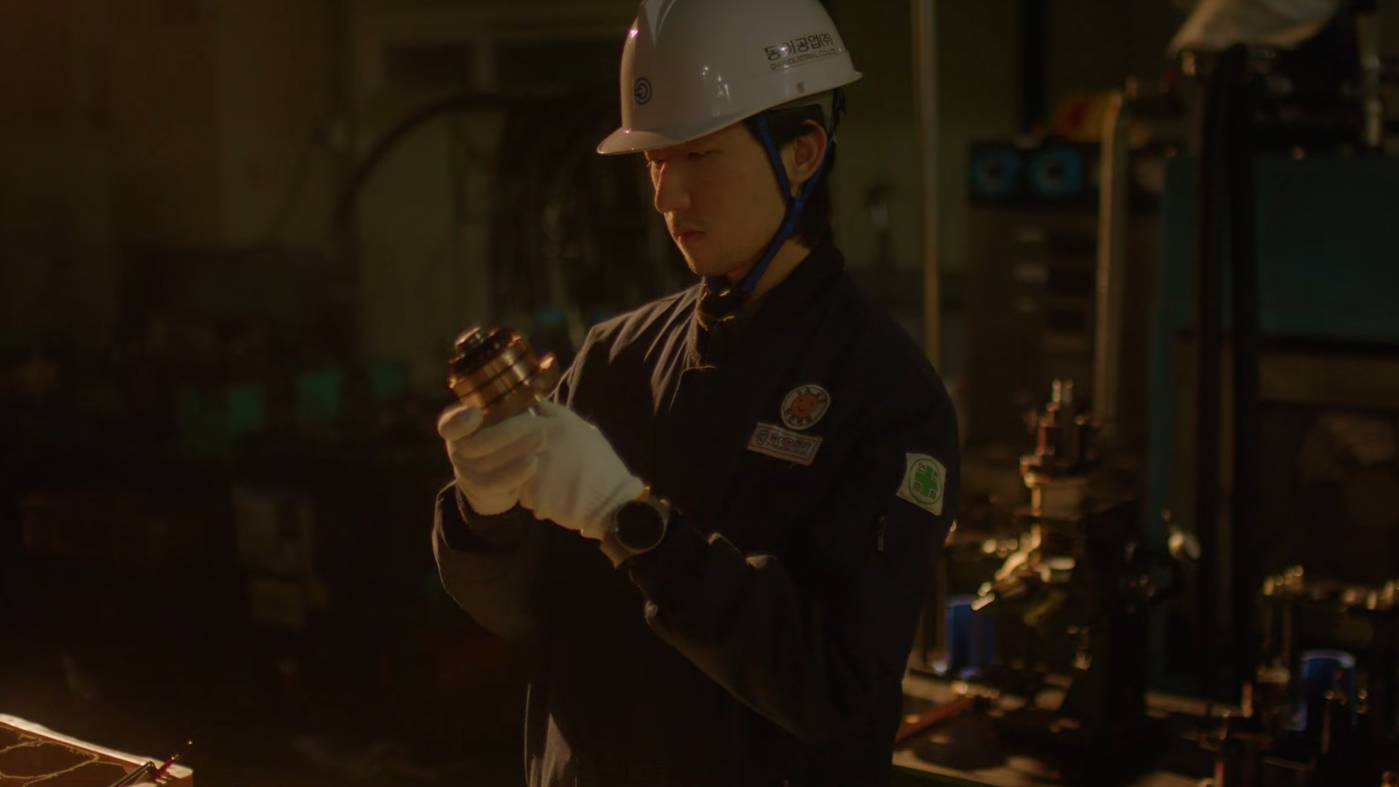
In the early 1990s, Korea’s shipbuilding industry was expanding quickly, but its supply chain was uneven. Engines could be sourced domestically. Hulls were built at scale. Yet many of the mechanical systems that transferred power from engine to propeller—particularly marine transmissions for small and mid-sized vessels—were still imported.
For vessel operators, this meant longer lead times, limited service flexibility, and dependence on overseas suppliers for parts that could immobilize a boat if they failed.
D-I Industrial was founded to address that gap.
Rather than chasing high-horsepower commercial ships, the company focused on sub-1,000-horsepower vessels—fishing boats, coastal workboats, and utility craft that operated continuously and often far from major service centers. The engineering challenge was not complexity, but reliability under sustained use.
Early products were refined through close feedback with operators and mechanics. Designs favored mechanical clarity, conservative tolerances, and ease of maintenance. Over time, domestic gearboxes began replacing Japanese imports—not through aggressive pricing, but through performance that earned repeat use.
This slow substitution laid the foundation for the company’s credibility.
Then came a quieter but more symbolic milestone: OEM supply to Japan’s NICO in 2000. For a Korean marine equipment manufacturer to supply a Japanese partner—rather than the reverse—was an indication that the company’s engineering standards were no longer considered regional.
The mid-2000s brought further consolidation. D-I Industrial converted into a corporate entity, established an in-house research institute, and received Korea’s $1 million and $3 million Export Trophies, reflecting sustained international demand rather than episodic success.
These were not marketing achievements. They were institutional validations.
From Components to Systems Thinking
Marine transmissions remain central to D-I Industrial’s identity, but the company’s product portfolio has expanded in response to a practical insight: vessels do not fail at the component level—they fail at the system level.
Today, D-I Industrial designs and manufactures:
-
Hydraulic marine transmissions using wet multi-disc clutch systems for smooth engagement and longevity
-
Steering gears engineered for redundancy and predictable response
-
Thrusters that improve maneuverability in restricted waters
-
Power Take-Off (PTO) units enabling engines to drive auxiliary systems efficiently
What connects these products is a shared engineering base: gear design, torque analysis, hydraulic actuation, and structural integrity. By maintaining this common foundation, the company reduces integration friction for shipbuilders and engine distributors—an advantage that is rarely advertised but frequently valued.
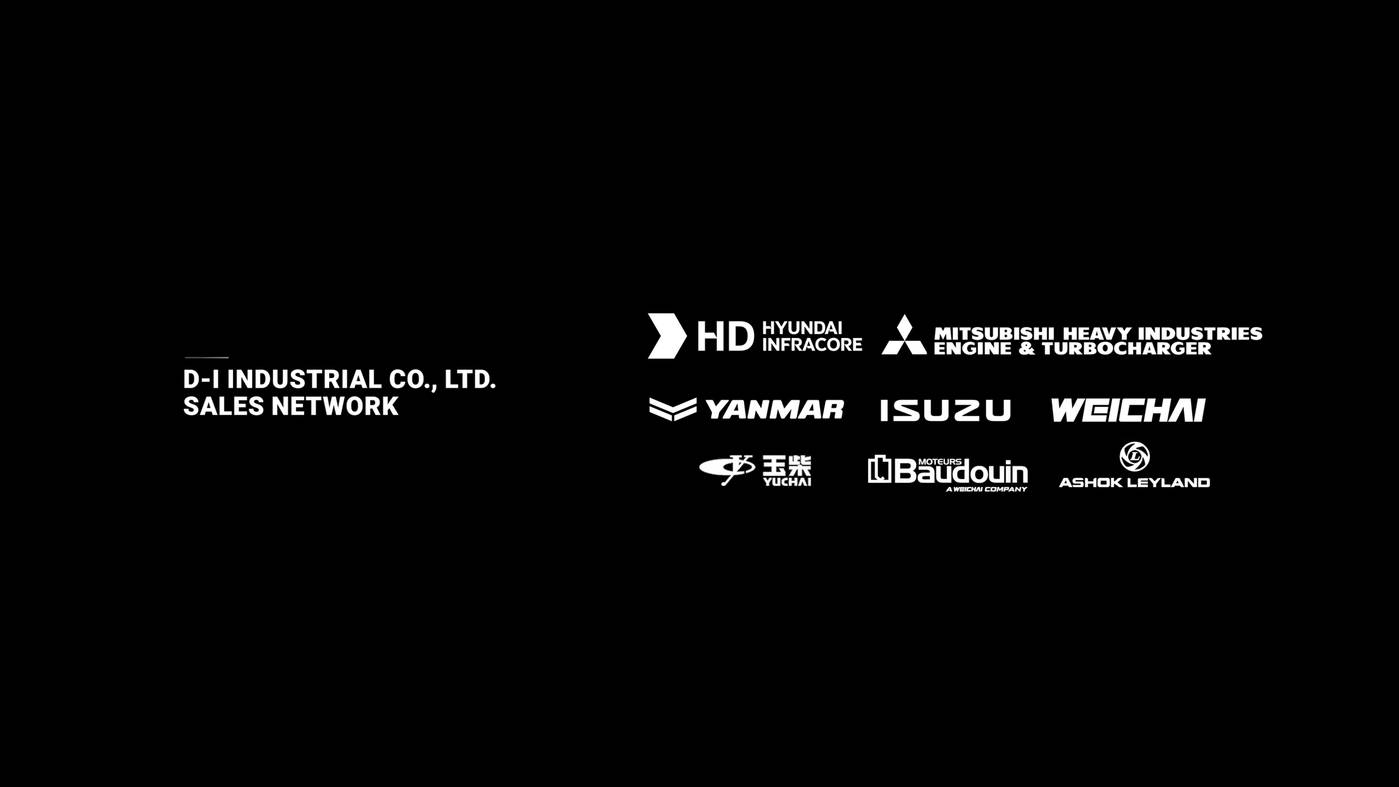
This systems-level approach explains why D-I Industrial products are often specified alongside engines from Cummins, Volvo Penta, Caterpillar, John Deere, Yamaha, and Isuzu. These relationships are not exclusive partnerships, but they reflect technical compatibility within established propulsion ecosystems.
Certification as a Condition of Participation
For marine equipment manufacturers, global reach is determined as much by paperwork as by performance. Classification approvals dictate where a product can be installed—and whether it can be insured.
D-I Industrial maintains certifications from major societies, including KR (Korean Register) and DNV, allowing its equipment to be installed on internationally classed vessels. These approvals are not static credentials. They require continuous compliance, documentation, and testing—commitments that often limit smaller manufacturers’ ability to scale globally.
By sustaining these certifications, D-I Industrial positioned itself not merely as a domestic alternative, but as a viable option for international operators navigating regulatory complexity.

Export Growth Without Losing Control
D-I Industrial’s expansion beyond Korea has followed a conservative pattern. Rather than pursuing overseas manufacturing or rapid market saturation, the company relies on regional distributors and long-term partners, prioritizing service continuity over volume.
As a result, its products are now installed on vessels operating across Asia, Europe, the Middle East, Africa, and the Americas, with distribution networks supporting more than 60 countries. This growth has been incremental, but it has preserved the company’s core advantage: engineering consistency.
In marine markets, where downtime is expensive and reputational risk travels quickly, this restraint has proved durable.
On Customers—and the Absence of Noise
Public testimonials are rare in the marine equipment sector. Operators and shipbuilders tend to avoid endorsements, preferring discretion over publicity. In this environment, customer satisfaction is measured less by quotations than by repetition.
D-I Industrial’s record is defined by continued specification, long-term OEM supply, and distributor relationships renewed over decades. In an industry where failure is immediately visible, sustained adoption functions as a quiet but meaningful endorsement.
Why This Kind of Company Still Matters
As the maritime industry focuses on decarbonization, digital monitoring, and automation, it is easy to overlook the mechanical systems that make those transitions possible. Engines evolve. Fuels change. But power must still be transmitted, controlled, and managed—reliably.
D-I Industrial’s history offers a reminder that industrial resilience is built at the component level, through design decisions that favor longevity over novelty and trust over visibility.
The company has never positioned itself as a disruptor. It has positioned itself as dependable. In marine engineering, that distinction often determines who remains in service when conditions are least forgiving.
Looking Forward, Without Noise
The demands placed on marine drivetrain systems will only increase—higher torque loads, tighter tolerances, and integration with hybrid and auxiliary systems. D-I Industrial’s future challenge is not reinvention, but application: extending decades of mechanical expertise into a changing operational landscape.
If its past is any indication, the company will meet that challenge the same way it always has—without spectacle, without exaggeration, and without asking for attention.
For equipment that is expected never to fail, that restraint may be the strongest signal of confidence.