Tech Feature
Motion Reference Units
Motion Data's Emerging Role in Vessel Performance Optimization
By Fredrik Dukan, Norwegian Subsea
The recent maritime trade shows in Rotterdam and Shanghai made it clear that the industry's appetite for smarter, data-enabled vessel operations is growing fast. At Europort 2025 and Marintec China, cloud-based analytics, and onboard sensors that enable more efficient, predictive operations were very much in the spotlight.
This focus on acquiring, analyzing and actioning data to reduce fuel consumption, lower emissions and support risk-based maintenance strategies demands inputs from a variety of sensors, with e.g., shaft power meters, ECDIS and weather forecasting all contributing to building a higher-level picture of a vessel’s operations and routes. Motion Reference Units (MRUs) are now also becoming part of the equation, with a growing number of operators and OEMs exploring how they can be integrated as a data feed into performance tools and digital twins.
The ongoing GASS (Green Autonomous and Smart Shipping) is an industry project looking at the with wide-ranging research into greener and smarter vessel operations, including exploring how motion data from MRUs can enhance vessel performance systems, particularly in dynamic routing and fuel use analytics.
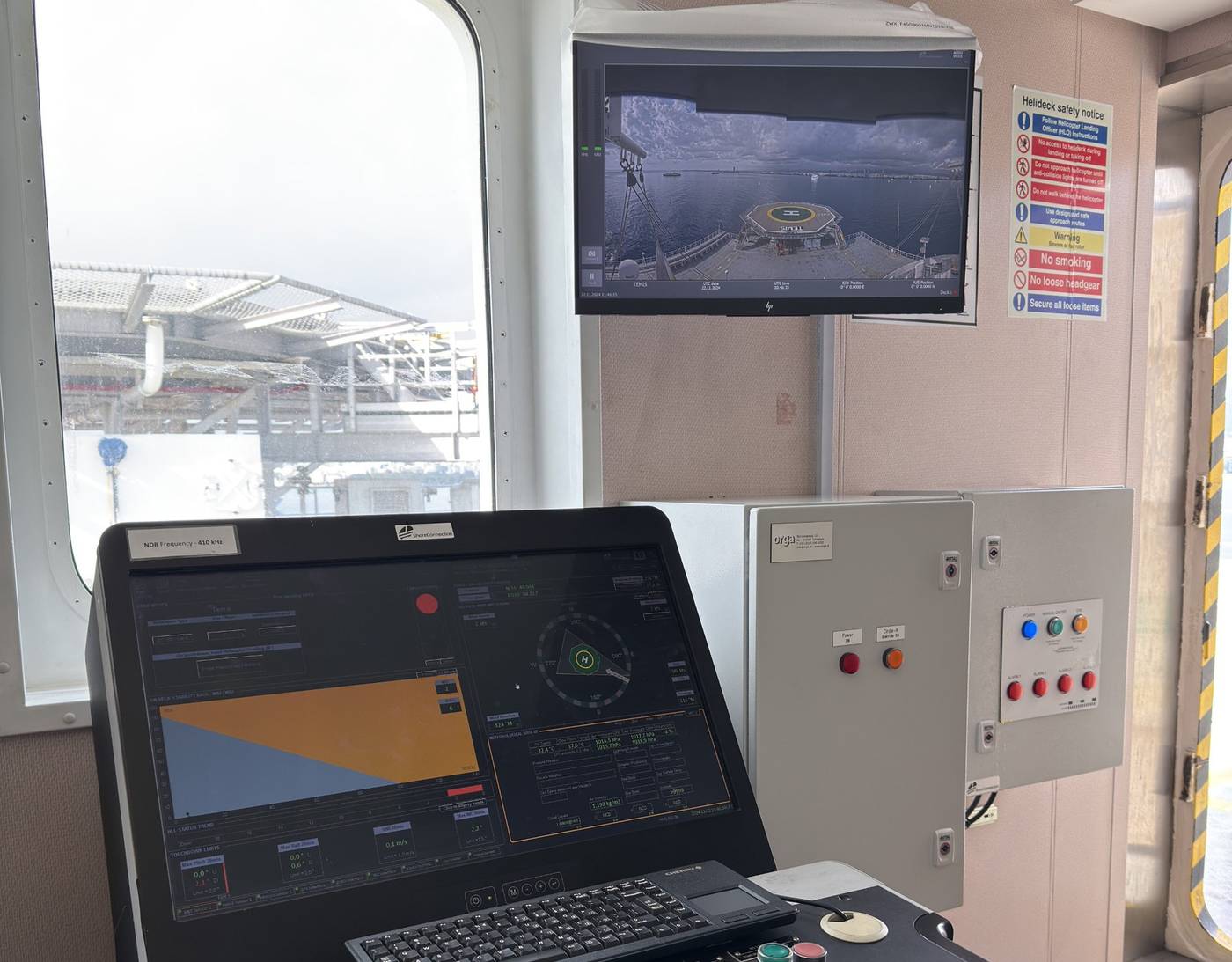
MRUs are typically installed on specialist vessels to deliver real-time measurements of roll, pitch, heave, and acceleration e.g., for wave radar, Launch and Recovery Systems (LARS) or Dynamic Positioning for drillships or anchor handlers. The data is used to stabilize active systems such as heave-compensated cranes or dynamic gangways that must stay aligned with moving vessels. Recent market moves suggest a strong engagement from shipyards and equipment manufacturers looking for motion inputs to support traditional applications, as well as vessel performance optimization.
Vessel Performance Optimization
The timing is no coincidence. As of late 2025, pressure to decarbonize shipping is intensifying, even as global frameworks remain uncertain. After the IMO's failure to ratify its Net Zero Framework (NZF), several member states announced plans to pursue national-level emissions legislation. Whether enforced globally or regionally, carbon intensity reduction is becoming non-negotiable.
Regardless of regulation, performance optimization already makes commercial sense. For most operators, bunkering remains the dominant operational cost, and any opportunity to reduce fuel consumption, whether through smarter routing, trim optimization, or real-time weather response, directly affects profitability. Increasingly, performance systems are being asked to do more, meaning the demand for data is only ever going up. Yet in most of these systems, vessel motion data is missing. Which represents a critical blind spot in how vessels are analysed, optimized, and understood.
Unlike GPS-based tracking or weather data, which infer a ship's condition from external variables, MRUs capture how the vessel moves in the moment. Heave, pitch, roll, and angular velocity data provide a live record of a ship’s behaviour in real sea states. That data can fill significant gaps in fuel modelling, voyage planning, and route optimisation systems. Motion affects engine load, structural stress, and onboard comfort, and incorporating reality into vessel models helps unlock more accurate predictions and better decisions.
And while many commercial vessels have an MRU onboard for specialist applications, most still operate without any motion sensor feeding into their performance stack. Today, many systems attempt to build a picture from knowing the speed over ground, fuel rate, and wind data. And while optimizations can be gained from such information, knowing how the ship is behaving according to its current environment can add a new dimension to the data analytics.
Data with Real-Time and Historical Value
Motion data can be applied both live and retrospectively. Feedback for motion control systems is the most important and critical real-time application for MRUs. In historical mode, the data also supports trend analysis, post-voyage review, and predictive maintenance. Linking actual motion data to fuel consumption can help operators refine models and detect performance degradation earlier. It can also help validate insurance claims or justify maintenance actions.
Digital twin models, virtual representations of vessels updated in real time, are also emerging as key tools for improving vessel efficiency. These systems can simulate responses to environmental or operational inputs, but their accuracy depends heavily on input quality. Motion data from MRUs ensures those models reflect real-world dynamics, particularly for systems like hull stress monitoring or seakeeping performance.
Feeding accurate roll and pitch data into voyage optimization engines can improve their recommendations and outcomes, especially for long transits where conditions vary widely. With this data, decision support can be much more granular: when standard vessel optimization has already collected all the low hanging fruit, it takes data from deeper sources to continue improving performance.
Classification Society Notations and MRUs
Early recognition for motion-integrated systems in shipping has come from classification societies. MRU-supported systems are now being used for applications in fuel use efficiency benchmarking, cargo loss prevention analytics, and structural health monitoring, including fatigue analysis. In particular, the SMART notation programs from ABS and DNV increasingly require integrated data inputs, including vessel motion. MRUs provide a reliable, standardised way to meet those data demands.
One illustrative case is the use of Norwegian Subsea MRUs as part of class-certified structural health monitoring systems. Without MRU input, stress anomalies on a vessel’s hull and superstructure can be difficult to diagnose. But when motion is included, operators gain a fuller picture. Was the ship slamming in heavy seas? Did an unusual roll pattern precede the anomaly? That insight can improve diagnostics, support class compliance, and reduce the risk of structural fatigue over time. It also makes it possible to streamline maintenance processes, resulting in reduced lifetime costs.
Structural health is just one application of many within the vessel performance optimisation arena, but the broader opportunity is clear. As shipping continues its digital evolution, the role of data in helping ships and fleets to operate more efficiently from a financial and environmental perspective is only set to grow. This means that MRUs can be used for a wider set of applications than ever before. Aside from stabilizing a crane, keeping a gangway level or informing wave radar and DP systems, they are emerging as part of the onboard sensor stack that supports smarter, safer, and more efficient voyaging and ship operations.
For now, awareness is still building. But the conversations at recent global maritime events suggest that motion data is gaining recognition as a valuable tool in the push for better performance.