Maritime Power
The OEMs
Maritime Power OEMs Prep a Platform for Change
Engine OEMs are anticipating shipowners’ future needs for new fuels and greater operational efficiency.
By Wendy Laursen
Everllence has unveiled its new, dual-fuel ME-LGIA (-Liquid Gas Injection Ammonia) 2-stroke engine.
Image courtesy EverllenceEngine design and maintenance philosophies have changed extensively over the past three years, and 2026 will be the year many of them are proven in the water. Their aim: the flexibility that ensures optimal operation of power systems over the lifetime of the vessel at a time when fuel efficiency and the potential for new fuels is increasingly important to shipowners.
While new ships can be designed from scratch to meet new emissions rules, existing vessels have legacy design and technology issues that may complicate the conversion to new fuels or efficiency measures. The right investments - or whether to invest at all - will be a ship-by-ship decision, but one pathway is the conversion of existing diesel engines to operate on cleaner fuels such as LNG, methanol, or ammonia, says engine designer WinGD.


In November, WinGD signed an agreement with systems integrator Panasia to cooperate on the upgrade of X DF dual-fuel LNG engines in service with the latest emissions abatement and fuel efficiency technology. All WinGD X and X-DF engines are designed with this adaptability in mind, making the conversion - including the replacement of cylinder heads, installation of fuel injectors and modification of control systems - relatively straightforward.
Methane slip from LNG combustion engines is a challenge that continues to be being tackled across the industry. A consortium consisting of Canadavia, Mitsui O.S.K. Lines, and Yanmar Power Solutions has spent the last few years reducing methane slip through oxidation catalyst and engine improvements. In May 2025, onboard testing began, and the project achieved a 98% reduction, significantly exceeding the target of 70%. Testing will continue until the end of 2026 with the aim of implementing the new technology in 2027.


New engine models are ready for uptake in 2026. In November, Everllence unveiled its new, dual-fuel ME-LGIA (-Liquid Gas Injection Ammonia) 2-stroke engine. The first ME-LGIA engine is due for delivery in 2026, and the engine technology is advancing along with the new fuel capability. The ME-LGIA enables a secure data flow from vessels to Everllence shore-based monitoring so that real-time engine and operational data can be used to improve performance.
Both Everllence and WinGD have recently announced the potential for burning ethanol in their 2-stroke dual-fuel methanol engines.
In 2023, Accelleron unveiled its ACCX300-L series of turbochargers which is now being rolled out. The series marks a shift in design approach that prioritizes the future needs of shipowners whilst still meeting the requirements of engine manufacturers. The new range has a platform-based design making it easy to adapt to lower vessel speeds, easy to service, and ready for carbon-neutral fuels. Technology qualification has been ongoing ahead of first deliveries at the end of 2026.
Caterpillar Marine is targeting the yacht and fishing market with its new Cat C2.2B marine genset that works seamlessly with additional generators, marine battery systems, and helm displays. The Cat C2.2B offers flexibility compared to conventional genset designs with its standard paralleling functionality, provided by a control link box. It means a vessel can operate seamlessly on one or both generator sets simultaneously.

The Caterpillar C32B for inland waterway applications increases time before overhaul (TBO) by up to 50%, specifically 15,000 hours for top-end and 30,000 hours for major overhauls compared to its predecessor. The C32B also offers a higher power density than the C32, providing operators more horsepower in the same package size as the previous C32 model. This makes the C32B ideal for repower applications with space constraints.
Distinct C32B configurations include:
-
For new vessel builds requiring maximum power and greenhouse gas (GHG) emissions compliance, the C32B EPA Tier 4 delivers ratings of 1,000, 1,200, 1,300 and 1,450 hp. This configuration meets the stringent requirements while providing robust performance.
-
The C32B EPA Tier 3, rated at 800 and 1,000 hp, is suited for existing vessel engine replacements and repowers. It allows operators to update towboats with the latest technology while maintaining Tier 3 compliance.

Deere & Company has unveiled JD14 and JD18 marine engines that offer heavier duty cycles than the John Deere 13.5L 6135SFM85 engine and a more comprehensive power range, from 298 up to 599 kW (400 up to 803 hp). Engine production is anticipated to begin in 2026. The 13.6L, 6-cylinder JD14 is designed for passenger vessels, pilot boats, and various workboat and pleasure craft. The 18L, JD18 is designed for commercial fishing and passenger vessels and tugs.
Both engines feature a high-pressure common-rail fuel system to optimize fluid consumption and help boost fuel and an overhead camshaft design and hydraulic lash adjusters to achieve better valve fit and eliminate valve lash maintenance.
Fairbanks Morse Defense has created a new blueprint to accelerate engine maintenance that is helping the U.S. Navy reduce deferred maintenance and increase operational availability. The defense supplier’s Pit Stop strategy has been successful on USS Gunston Hall, USS Ashland, USS Oak Hill, and USS Pearl Harbor. With advanced planning and effective use of resources, engine overhauls can be completed in 26 days.
2026 will see more alternative-fuel 4-stroke engines available. Cummins has already received DNV Approval in Principle for its methanol-ready QSK60 IMO II and IMO III engines, available from 2000 - 2700 hp (1491 - 2013 kW). Following extensive field testing, Cummins also plans to launch retrofit kits that will be particularly suited for diesel-electric systems.

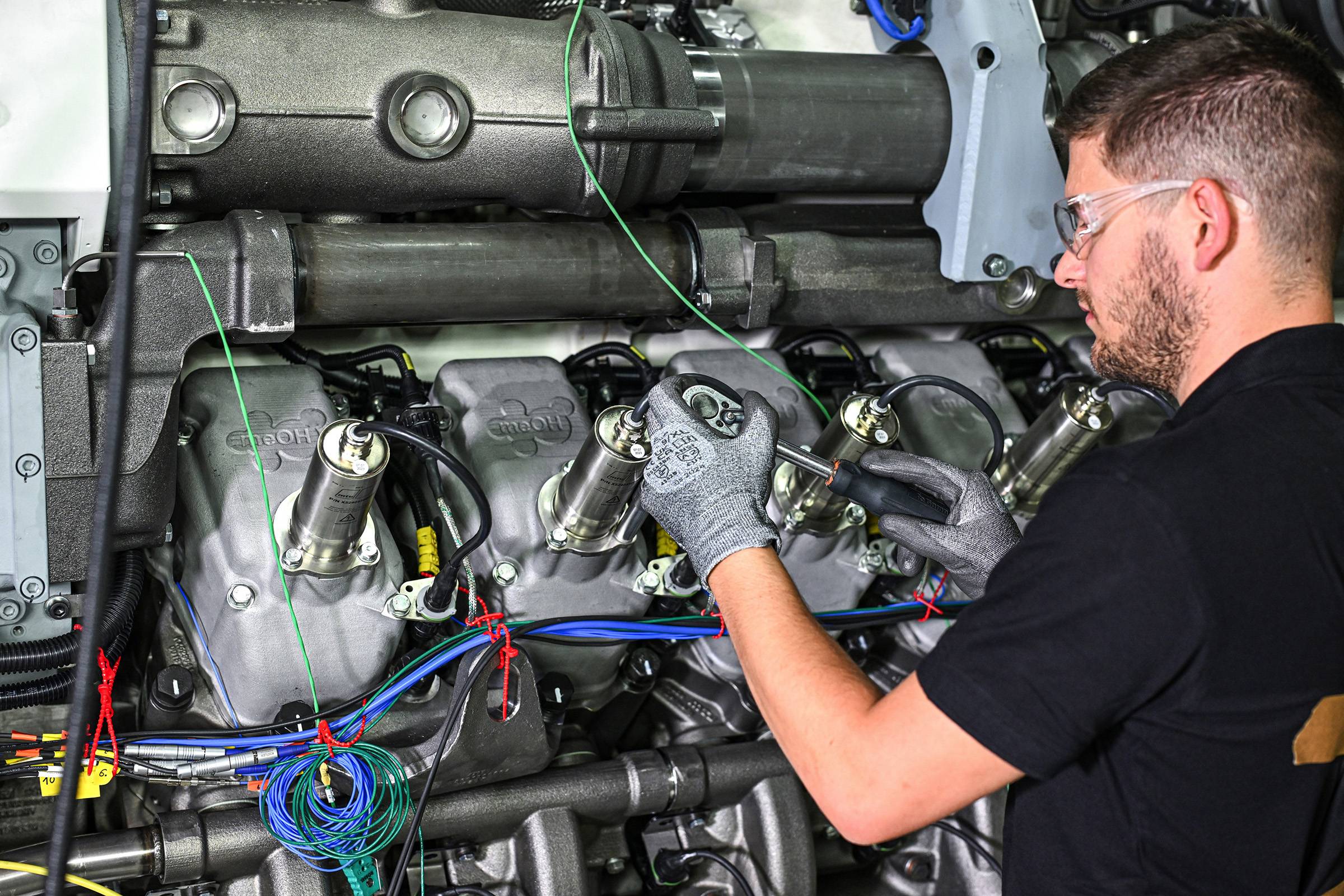
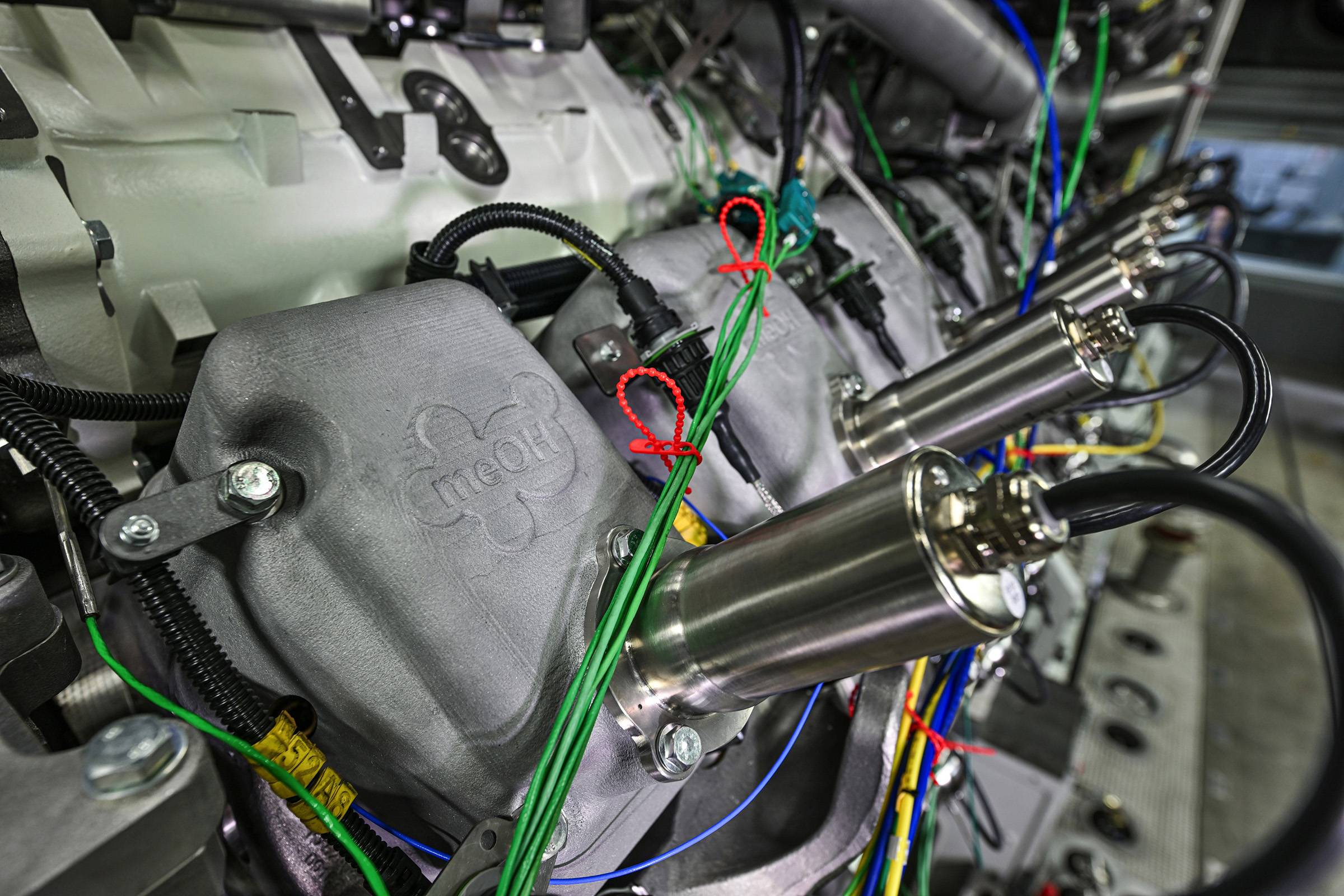

The first high-speed, pure methanol engine celebrated its premiere on the test bench at Rolls-Royce in 2025.
Image courtesy Rolls-Royce
The first high-speed, pure methanol engine celebrated its premiere on the test bench at Rolls-Royce in 2025.
Image courtesy Rolls-Royce
The first high-speed, pure methanol engine celebrated its premiere on the test bench at Rolls-Royce in 2025.
Image courtesy Rolls-RoyceThe first high-speed, pure methanol engine celebrated its premiere on the test bench at Rolls-Royce in 2025. With this, Rolls-Royce and its partners Woodward L’Orange and WTZ Roßlau have claimed a world first. To date, there is no other high-speed engine in this performance class that runs purely on methanol. The goal is to develop a comprehensive concept for a CO2-neutral marine engine based on green methanol by 2026.
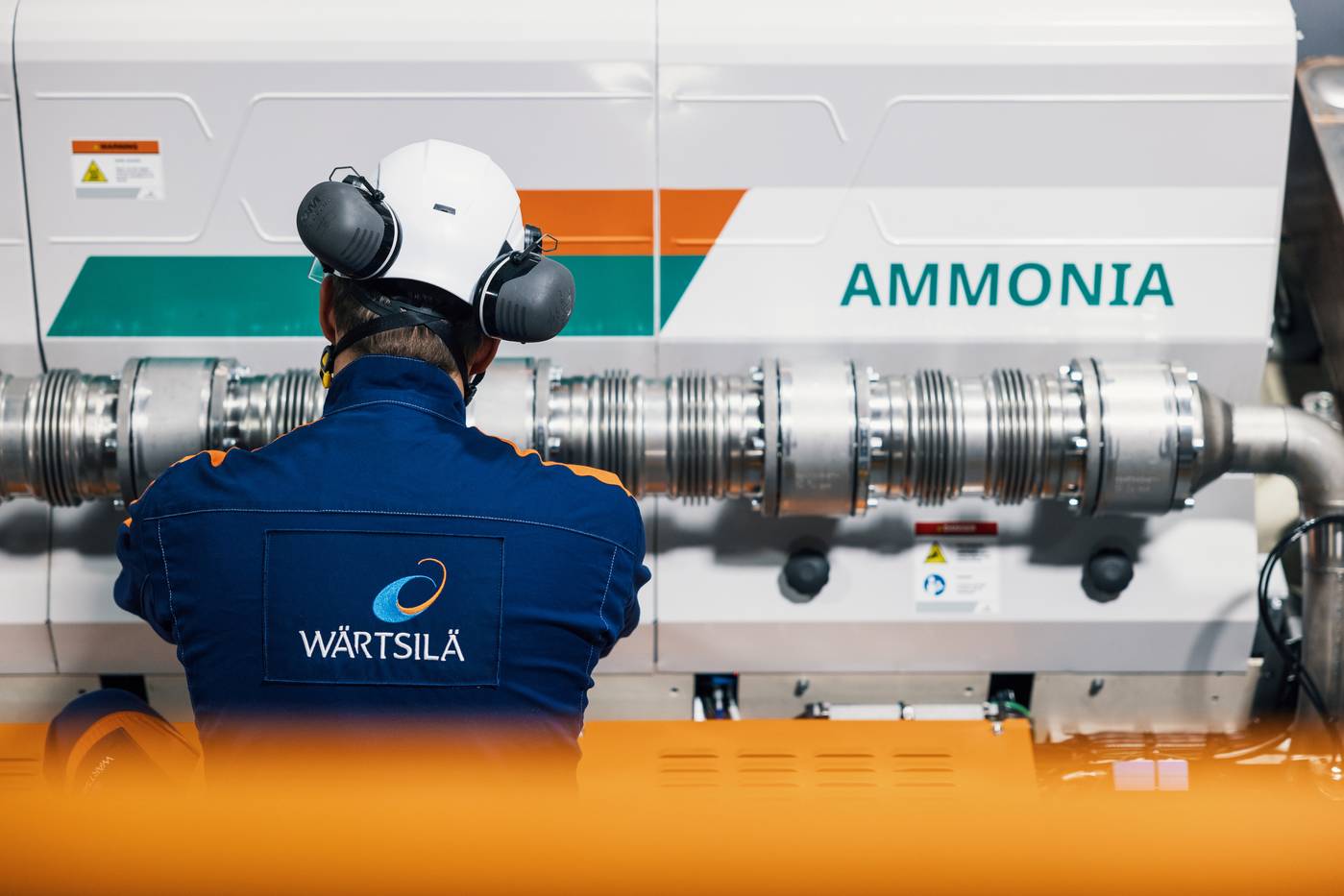
Wärtsilä’s 4-stroke ammonia engine has undergone extensive testing to optimize its performance. The latest results, assessed against the FuelEU Maritime reference and measured on both a well-to-wake and tank-to-wake basis, show that a 95% ammonia energy share now achieves up to a 90% reduction in greenhouse gas emissions compared to equivalent diesel engines.
And with the growing uptake of biofuels, 2026 will see Havila Voyages’ Polaris make history as the first cruise vessel in the world to complete a long-distance voyage powered entirely by battery and biogas. Equipped with 2 × Bergen C26:33L6A and 2 × Bergen C26:33L9A engines, Polaris has used hybrid propulsion since its launch in 2023, combining electric power with natural gas.
Looking beyond combustion technology, Viking and Fincantieri have announced that the Viking Libra, the world’s first hydrogen-powered cruise ship, is scheduled for delivery in 2026. Enabled by Isotta Fraschini Motori fuel cell technology, the ship’s propulsion system will be capable of producing up to six megawatts of power. The company inaugurated a new production line last year in anticipation of a shift towards the use of hydrogen in the maritime sector.

Wabtec Power for Dredgers

Wabtec is a long-tenured supplier of powerplants to the maritime, offshore and rail markets, and in recent years has found the U.S. dredging sector to be particularly vibrant.
A central tenant to the Wabtec value is the ability to achieve Tier 4 performance with no additional SCR system or urea.
Two recent successes include the dredgers Frederick Paup, a 15,000-cu. yd. hopper dredge for Manson Construction. Frederick Paup boasts 25,000 HP and volumetric capacity of over 15,000 cubic yards, sporting five Wabtec powerplants: three 16V250MDC and two 12V250MDC.
Another notable reference was Great Lakes Dredge & Dock Corporation (GLDD)’s Hopper Dredge Amelia Island, built by Conrad Shipyard
The vessel is approximately 346 feet in length, 69 feet in breadth, 23 feet in depth with 16,500 total horsepower installed courtesy Wabtec Marine L250/V250MDC Diesel Engines: 2 x 12V250MDC @ 1000 rpm (marine diesel engines), 2 x 6L250MDC @ 1000 rpm (dredge pumps).
The dredge features two 800mm trailing suction pipes capable of dredging depths up to 100 feet with a hopper capacity of 6,330 cu. yd. The main engines and generators are EPA Tier IV rated for low emissions.