Capital markets reshape port infrastructure: Energy demands reshape investment strategies
By Michael Vanderbeek, Maritime and Coastal Planning Lead at GHD; Victor Tirado, Maritime and Coastal Market Sector Lead at GHD; and Ron Heffron, Vice President of Future Fuels at GHD.
Port infrastructure financing has undergone a fundamental transformation as traditional debt-based models reach their limits, and federal funding tightens. Public-private partnerships and alternative financing structures are emerging as solutions for ports facing multi-billion-dollar modernization needs while managing aging infrastructure and unprecedented energy demands.
The convergence of decarbonization requirements, climate resiliency investments and deferred maintenance creates complex capital allocation challenges that require innovative financing approaches and strategic partnership models.
The evolution of port financing models
The traditional port development model is experiencing unprecedented pressure as capital requirements far exceed conventional funding capabilities. Historically, public port authorities established partnerships with marine terminal operators and ocean carriers through long-term lease or operating agreements.
Under this model, the public port authority leveraged its debt capacity to finance terminal construction, then recovered capital expenditures plus returns over the course of decades through a combination of minimum annual guarantees, tariff charges and revenue sharing.
As capital has gotten more expensive and projects themselves have become more costly due to increases in labor, material and energy costs, there has been an increased need for ports to obtain supplemental funding because they may no longer have the capacity to debt finance these large facilities. About 20 years ago,, state and federal grants became an important source for plugging funding holes for large port infrastructure projects, temporarily supplementing traditional financing. However, reduced federal support for local port projects has created long-term affordability gaps that traditional financing models will not be able to bridge.
Investment priorities shift toward energy and resilience
Current capital allocation reflects two dominant themes: energy transformation and climate adaptation. The rapid growth of LNG export capacity exemplifies this shift, with the US becoming the world's largest exporter since 2016 with plans to double export capacity by 2030.
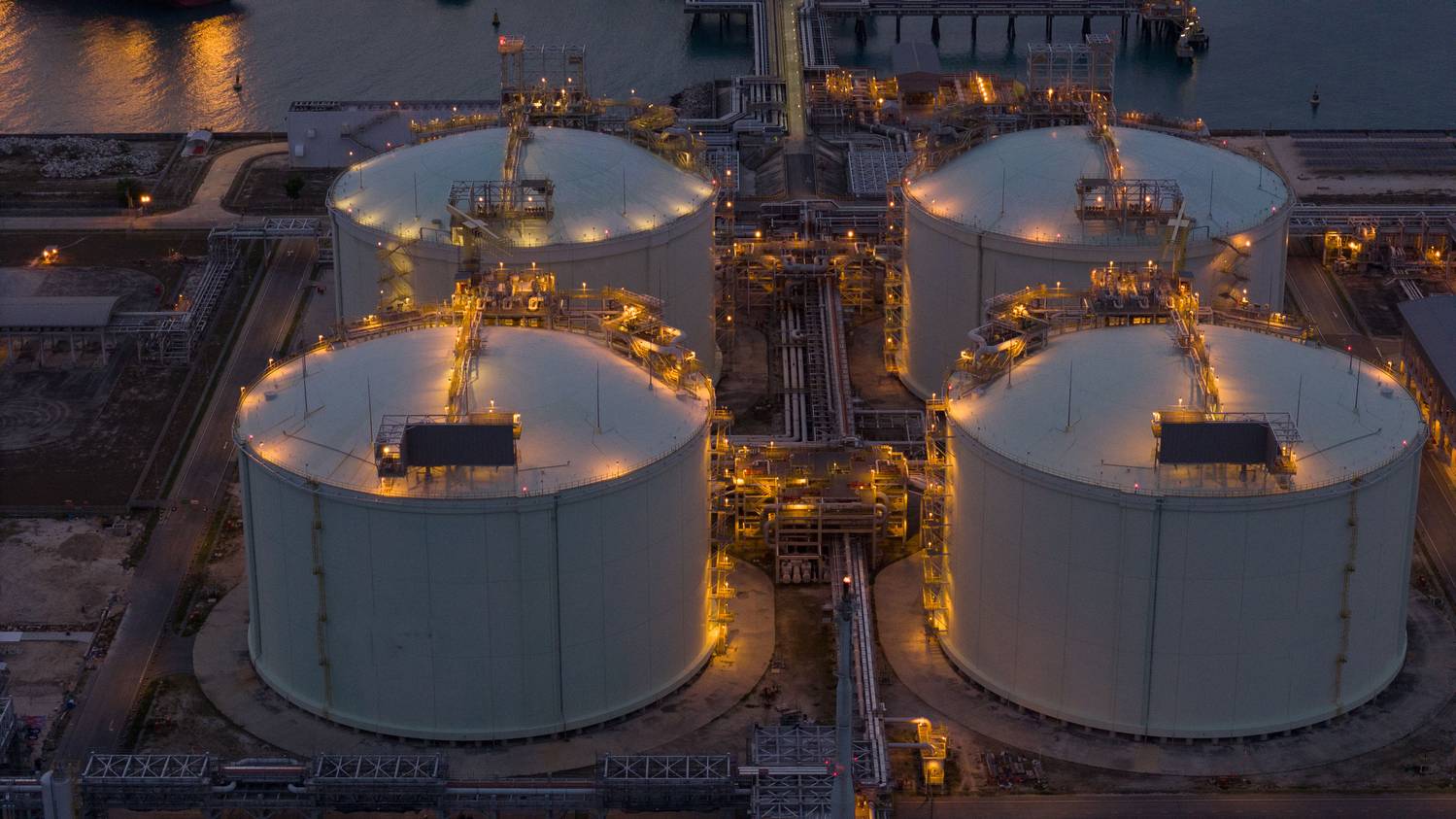
Most of this is driven by the Gulf Coast, and that's where we see the most activity in port infrastructures. All of these require significant marine terminal infrastructure to support the exports. In this sense, ports are increasingly viewed not only as intermodal gateways for cargo, but as energy hubs.
Ports nationwide are also investing heavily in decarbonization of operations. This includes transitioning from diesel-powered equipment to zero-emission equipment, upgrading electrical infrastructure and implementing alternative fuel and energy systems including microgrids, battery energy storage systems (BESS), fuel cells and other hydrogen applications.
The challenge extends beyond equipment replacement to fundamental power delivery challenges. Electrical demand resulting from zero-emission port operations is projected to increase five- to six-fold in the coming decade, yet the amount of electricity provided by regional utilities remains essentially static and lead times for new power production and transmission infrastructure far exceed current port decarbonization schedules. Growing industrial power needs and rising residential demand, including the shift to electric vehicles and energy-intensive users such as data centers, will further strain supply and increase energy costs for ports.
Climate resiliency drives capital reallocation
Coastal resiliency has emerged as a critical investment category, with programs like the $34 billion Texas Coastal Spine storm barrier project and similar initiatives in Charleston, Norfolk, New York and Boston addressing sea level rise and hurricane threats.
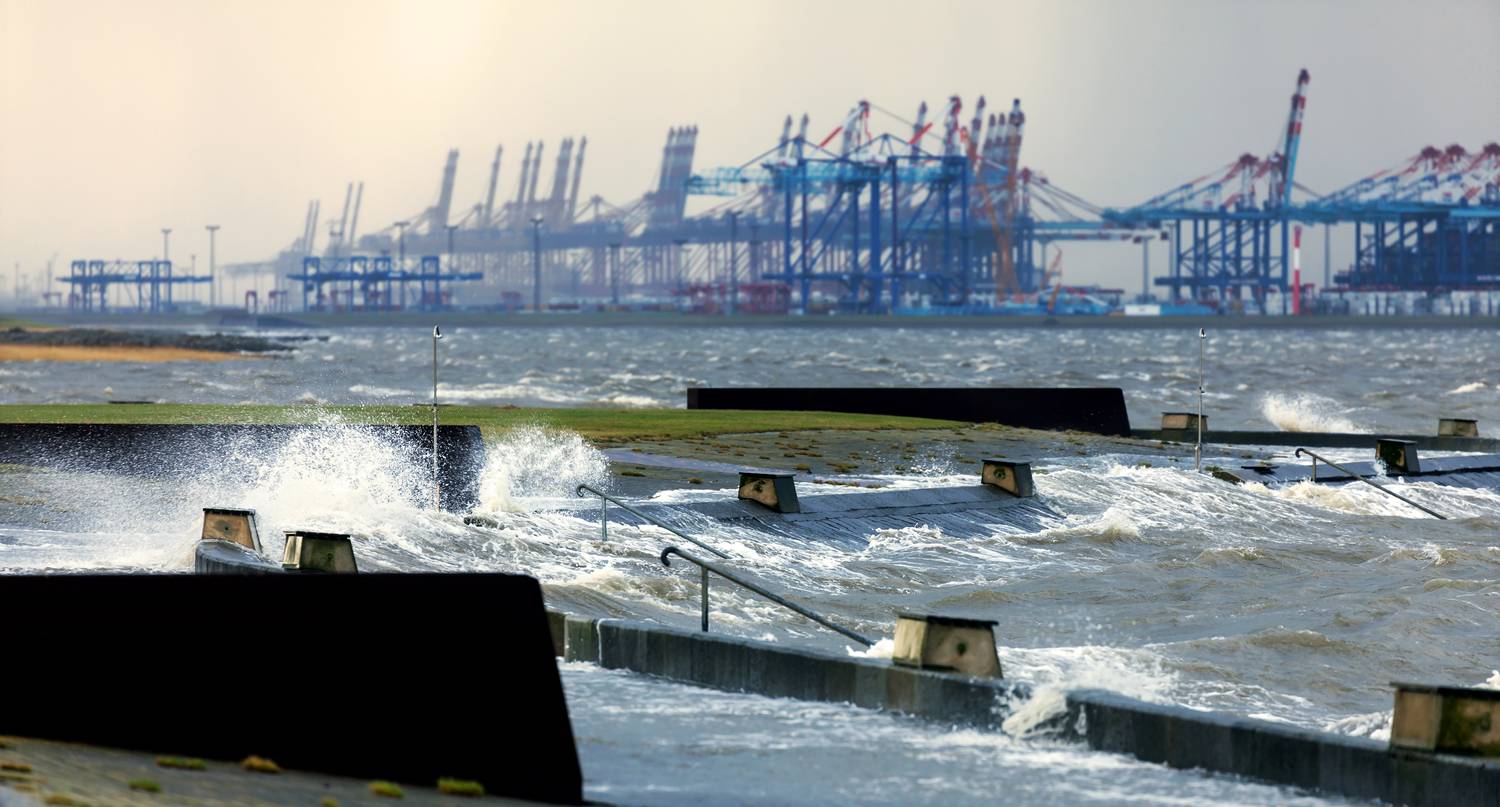
The intensity of storms has increased sufficiently that certain ports now flood during heavy rain events because they don't have the stormwater infrastructure to vacate so much water, highlighting how historical infrastructure assumptions no longer match current realities. At ports across North America, existing stormwater outfalls can be below sea level during certain tidal conditions, leaving nowhere for the water to go using traditional gravity-based drainage systems. As a result, water backs up onto platforms and puts other critical infrastructure at risk such as electrical infrastructure.
This emphasis on resiliency represents a fundamental shift in capital budget priorities from expansion-focused "grow" mentalities toward adaptation-focused "protect" strategies. Ports still want to grow, but many cannot afford to grow and protect at the same time, so they are having to evaluate capital deployment tradeoffs through an entirely new lens.
The deferred maintenance challenge
The consequences of deferred maintenance extend beyond operational inefficiencies to significant safety and financial risks. The marine environment is particularly harsh on built infrastructure, requiring continuous maintenance that many US ports have deferred to free up capital for other priorities. Corroding utilities, failing bulkheads and other infrastructure gaps create operational disruptions and potential catastrophic failures.
This reality has shifted capital budgets in mature ports away from new infrastructure toward replacement infrastructure, creating substantial operational impacts and maintenance burdens that ports are increasingly trying to transfer to tenants or other end users through revised lease/operating agreements.
Alternative financing models emerge
Many ports have maxed out their debt ratios and can no longer debt-finance large infrastructure projects, while reduced federal discretionary grants have eliminated a key source of supplemental funding. The most promising approaches involve reversing traditional capital flow models through infrastructure-as-a-service arrangements.
Under these models, private entities deploy capital to build terminal infrastructure while ports repay investment over time, effectively flipping the traditional financing script and enabling projects that exceed public debt capacity while maintaining operational control.
Public-private partnerships (P3s) are becoming more sophisticated, with design-build-finance-operate agreements providing comprehensive solutions. P3s are increasingly structured so financiers and contractors jointly fund projects with capital reimbursed by ports over time. The Port Miami north bulkhead project exemplifies this approach, bringing nearly $1billion in private capital with structured municipal repayment terms.
Eventually, ports will have to look at alternative models because they lack the ability to take on new debt, issue new bonds or cash-flow new projects; capital requirements are too significant to fund through traditional means alone
Strategic positioning for future investment cycles
The interconnected nature of these challenges creates opportunities for integrated solutions.
GHD supports clients through this transformation by providing strategic advisory services that balance immediate maintenance needs with modernization requirements. Our approach considers the full spectrum of financing options while ensuring infrastructure solutions meet evolving energy, environmental and operational demands.
The convergence of energy transition, climate adaptation, and infrastructure renewal create unprecedented capital requirements that exceed traditional financing capabilities. Success requires embracing innovative partnership models while maintaining focus on the fundamental infrastructure quality that underpins long-term port competitiveness.
GHD combines strategic planning advisory services with infrastructure engineering to help ports navigate complex challenges from energy transition to funding innovation. Discover how we're shaping the future of maritime infrastructure at
https://info.ghd.com/capital-market-article