Tech Feature
AI & Cognitive Maintenance
Why Predictive Maintenance Isn’t Enough
The Case for Cognitive Maintenance in Maritime
By Leon Lim
In the unforgiving world of maritime operations, where equipment failure can mean millions lost or missions compromised, maintenance isn’t just a department. It’s the backbone of everything. Whether you’re running a commercial fleet or safeguarding national waters, uptime is survival.
For years, Predictive Maintenance (PdM) has been the gold standard. It gave us foresight. It helped us avoid surprise breakdowns. And it moved us beyond the “fix-it-when-it-breaks” mindset that dominated legacy operations.
But today, the world has changed. Global trade is faster. Fuel prices are volatile. Sustainability is now mission-critical. And reliability? That’s non-negotiable.
To meet these new demands, maintenance needs to evolve again.
And this time, it needs to think. Welcome to Cognitive Maintenance.
This isn’t a buzzword. It’s the next evolution in how maritime leaders manage critical equipment, and it's already changing the game for forward-leaning organizations across the Middle East and Asia.
From Firefighting to Forecasting: Predictive Isn’t the Final Answer
Let’s zoom out for a second.
First, we had Reactive Maintenance. Run the machine until it breaks, then scramble to fix it. That era was expensive, dangerous, and wildly inefficient, especially when you're at sea, hours or days away from help.
Then came Preventive Maintenance. Swap parts on a schedule, reduce surprise failures. Better, but still a blunt instrument. You end up over-maintaining some assets, under-maintaining others, and missing hidden failures in between.
Then sensors and analytics brought us Predictive Maintenance (PdM), a major leap. Suddenly, we had data. We could spot anomalies early and schedule repairs before something catastrophic happened.
But here’s the truth no one likes to say out loud: even Predictive Maintenance is reactive.
PdM tells you something might go wrong. But the heavy lifting, figuring out the root cause, prioritizing the risk, choosing the right intervention, that is still on your team. That leads to alert fatigue, delayed responses, and human error. Not ideal when you’re dealing with high-pressure pumps or propulsion systems on a billion-dollar vessel.
And as ships get smarter and fleets get larger, PdM simply can’t scale fast or deep enough.
Enter Cognitive Maintenance
At Groundup.ai, we’re done with half-measures. We built a platform that doesn’t just predict failure. It prevents it.
Cognitive Maintenance combines proprietary IoT sensors, autonomous AI agents, and a growing anomaly library sourced across industries and OEMs. The result is a system that doesn't just spot issues early. It understands what's happening, why it's happening, and what to do next.
It's like moving from a weather app that tells you it might rain to a smart building that closes your windows, reroutes your power, and preps an umbrella in your hand before the first drop falls.
This is how maintenance gets proactive, intelligent, and insanely efficient.
Case in Point: The Republic of Singapore Navy
We’re not just theorizing. We’ve deployed this tech with some of the most demanding teams in the world, including the Republic of Singapore Navy (RSN). Now imagine this: you're responsible for a fleet of mission-critical vessels where 100% operational readiness isn’t a goal. It’s a requirement. If a coolant pump fails or a generator goes offline mid-patrol, you're risking mission failure, national security, and lives. RSN was facing the limits of traditional maintenance. Manual inspections took too much time. Predictive systems provided alerts, but not answers. They needed a way to scale maintenance intelligence across crews without relying on tribal knowledge or overburdening engineers.
So they partnered with us.
Cognitive Maintenance at Work
We started with a small deployment to prove the value.
Our GINA AI engine, powered by real-time sound data from proprietary IoT sensors, began listening to the subtle signatures of RSN’s onboard systems, Air Starter Motors, compressors, pumps, and more.
Within weeks, GINA had flagged anomalies that other systems didn’t catch.
-
Air Starter Motor: Detected a faint acoustic signal indicating pinion gear retraction failure. Engineers validated it, avoided a failure, and trained GINA to recognize the same issue fleet-wide.
-
Air Compressor: Unusual resonance led to the discovery of a choking issue. We converted the signal into a reusable diagnostic pattern. Now, every compressor in the fleet is protected from the same issue.
-
DG Coolant Pump: Detected mild resistance in a connected generator. The issue wasn’t critical, so instead of raising alarms, GINA learned to deprioritize it. No more noise. Just a signal.
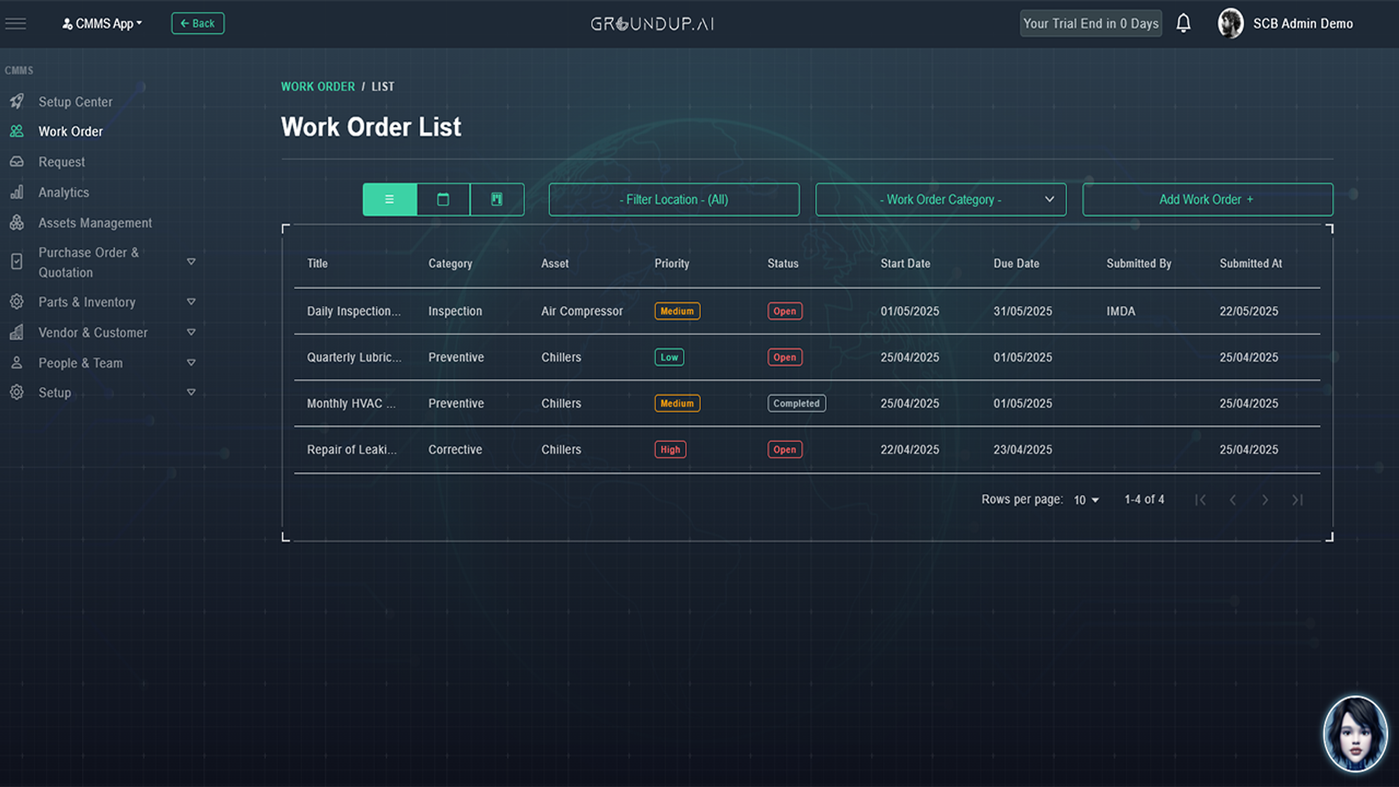
In each case, GINA didn’t just scream, “Something’s wrong!” She told us what, why, and what to do next, and remembered it for the future.
But the most important metric? Confidence. RSN now trusts their systems to alert them when it matters, and stay quiet when it doesn’t.
They’re no longer reacting to noise. They’re operating with clarity.
Why the Maritime Industry Needs to Pay Attention
Across the world, maritime operators are under pressure to deliver more uptime, greater efficiency, and lower emissions, often with fewer people and tighter budgets.
In this environment, traditional maintenance is like using a compass when you need GPS.
Cognitive Maintenance Gets Us to the Finish Line
It’s not about replacing engineers, it’s about augmenting them. Giving them a system that learns with every failure, automates diagnostics, and enables teams to act faster with confidence.
This isn’t just for navies. It’s for commercial fleets, offshore platforms, logistics vessels, and anyone else with rotating machinery that can’t afford to fail.

What Makes Groundup.ai Different?
Other platforms monitor vibration or temperature. We analyze sound, one of the richest, most underutilized data sources in machinery diagnostics.
Other systems trigger alerts. We deliver context, root causes, and tailored actions.
Others start from scratch. We have the Groundup.ai Asset Library™, a growing database of neutral, cross-industry anomaly patterns that helps our AI start smarter from day one.
We’ve deployed across industries, from manufacturing to infrastructure, defense, and maritime, and our systems adapt to complex, multi-OEM environments with ease.
We go live, deliver value fast, and scale what works.
Final Word: This Is More Than Maintenance. It’s a Movement.
We believe zero unplanned downtime should be the default, not the dream.
That starts by giving maintenance teams the intelligence, tools, and autonomy to solve problems before they start. No more waiting for breakdowns. No more post-mortems. Just precision, performance, and progress.
Cognitive Maintenance is how we get there.
It’s already transforming fleets across Southeast Asia and the Middle East. If you’re in maritime, now’s the time to lead, not follow. Let’s not just fix what’s broken. Let’s build machines and teams that stay one step ahead.
About the Author
Leon Lim
Leon Lim, CEO & Founder of Groundup.ai, is pioneering Cognitive Maintenance solutions. With more than 9 years in tech and entrepreneurship, he's revolutionizing industrial uptime with AI.