Marine Propulsion
Service & Repair
“One Man, One Wrench” Launched a Global Maritime Power Play
When Morten Vestergaard decided to leave Wärtsilä and start his own propulsion services company in 2001, little did he know that more than two decades later his VMS Group would mushroom into a leading maritime propulsion powerhouse with more than 400 employees and operations globally. Maritime Reporter TV recently spoke to Kris Larsen, Executive Vice President, VMS, for insights on the company’s colorful past, and its maintaining its core principle and mantra: “We are only as good as our last job!”
By Greg Trauthwein
When VMS Group was founded in Denmark in 2001, the company’s beginnings were as modest as they come: just one man and one wrench, as the story goes. Today, VMS is a global propulsion and power systems specialist employing nearly 400 people across five continents, trusted by shipowners and operators for everything from engine overhauls to complex propulsion retrofits and hybrid integration.
At the heart of this growth is a culture of problem-solving, accountability, and proximity to the customer, values that remain as relevant today as they were when founder Morten Westergaard first left a secure position at Wärtsilä to launch his own service firm. Recently, Maritime Reporter TV sat down with Kris Larsen, Executive Vice President of VMS, to discuss the company’s evolution, its current footprint, and the role it plays in helping owners meet the technical and environmental challenges reshaping the maritime sector.
From the Engine Room to the Executive Suite
Larsen’s own career reflects the blend of technical depth and leadership that has come to define VMS. A marine engineer by training, he has worked across mechanical and electrical systems in some of the world’s most demanding offshore and shipping environments.
He cut his teeth in the engine room before moving into project management roles, including overseeing the construction of four drillships at Hyundai Heavy Industries while at Noble Drilling. Later, as Technical Director at Pacific Drilling, he managed global technical operations from Houston.
“I joined VMS in 2015 to expand our international business and establish our Brazilian subsidiary,” Larsen says. “Today I oversee global sales, marketing, service purchasing, and I’m responsible for our subsidiaries in the U.S. and Brazil. My role is really about connecting technical excellence with commercial focus—making sure that wherever our customers are, VMS is within reach.”
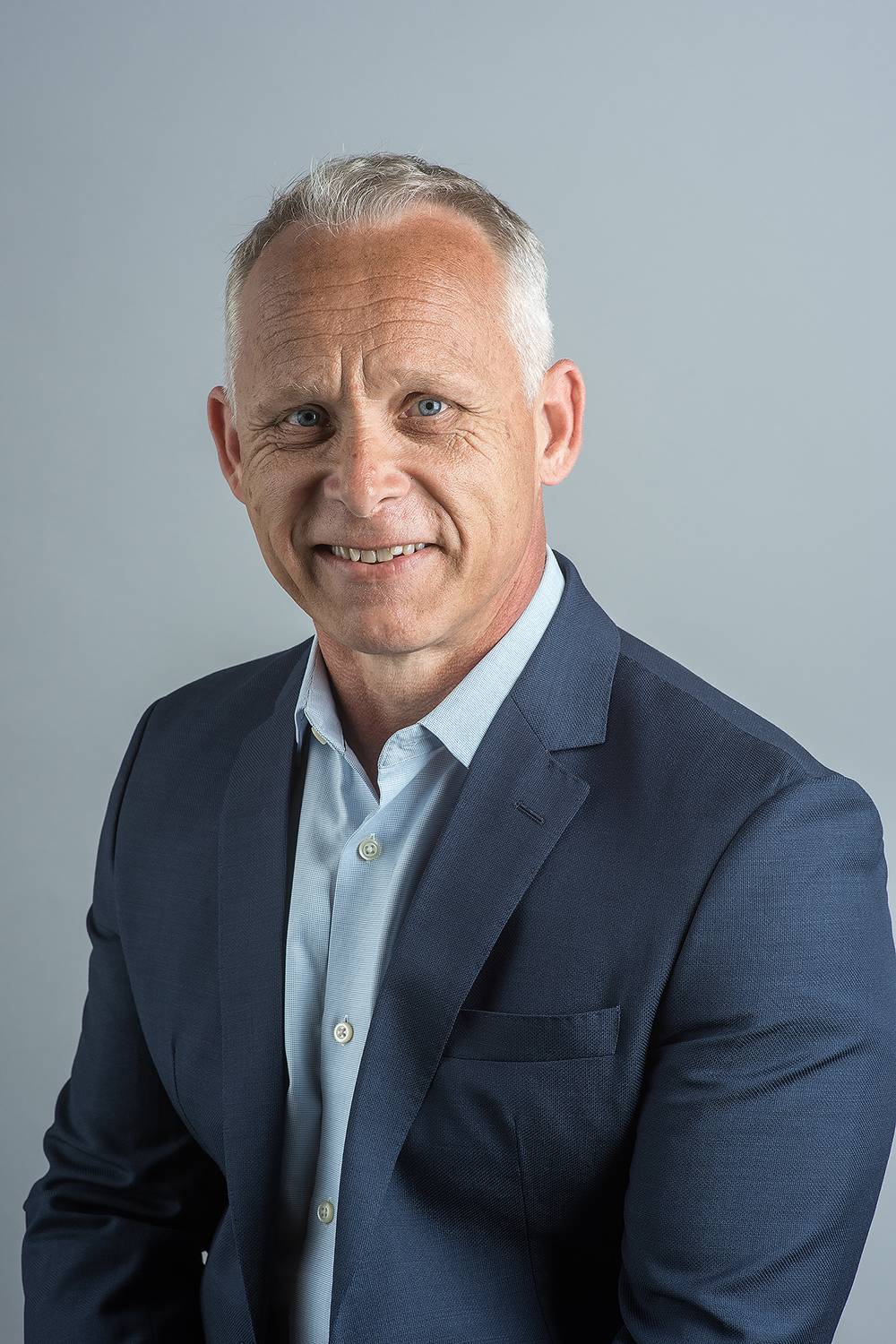
It did start with one man and one wrench. He had a relentless commitment to do things better. He didn't start with investors or a board, he simply started by solving customers' problems. We never lost the sight of our founding principle, which is actually we are only as good as our last job. And that line is still used internally in the company, not as a pressure, but as a standard. It drives our culture, accountability, quality, humility, and frankly, I believe that what makes VMS unique in this industry.”
- Kris Larsen,
Executive Vice President, VMS
VMS By the Numbers
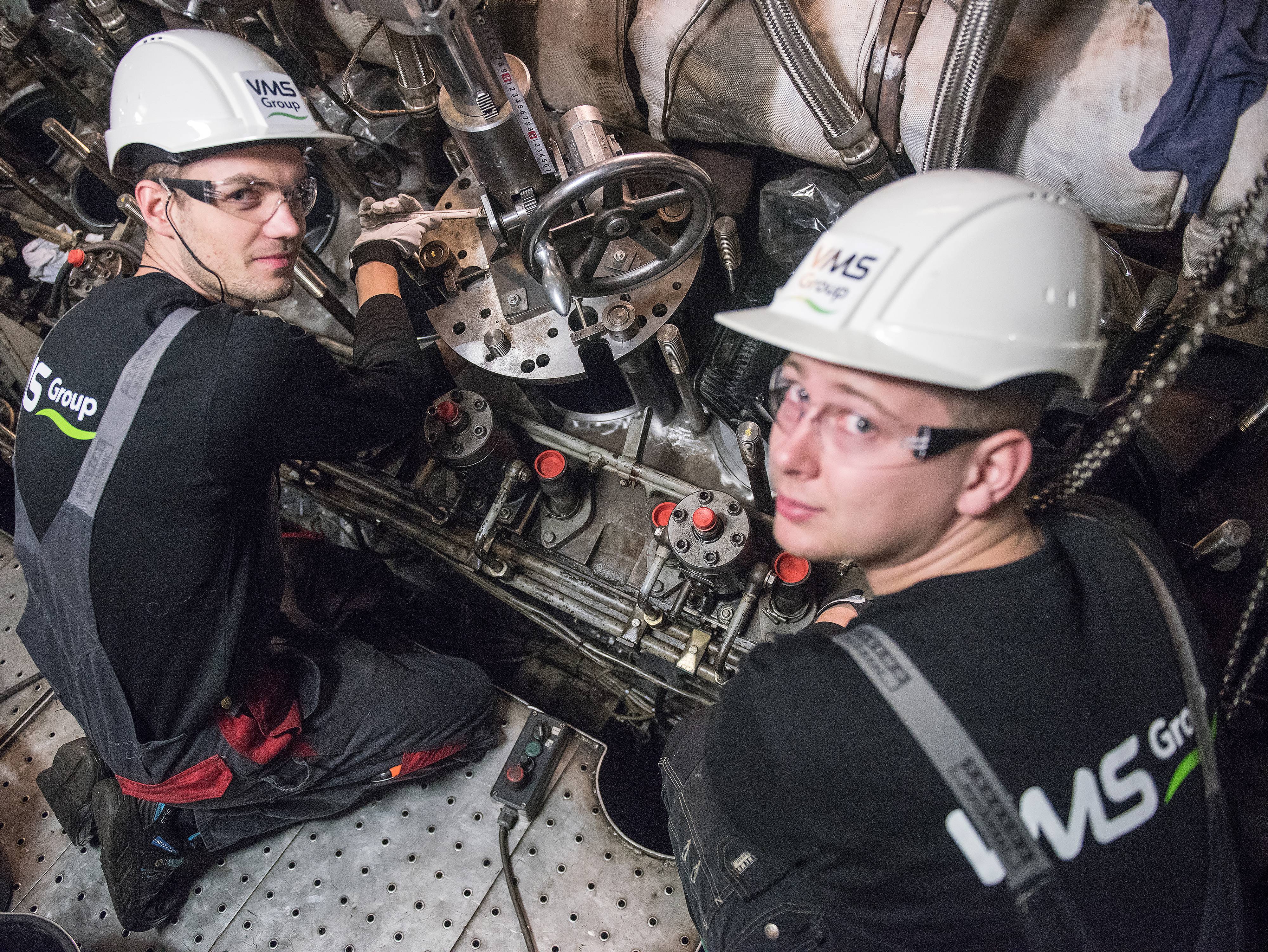
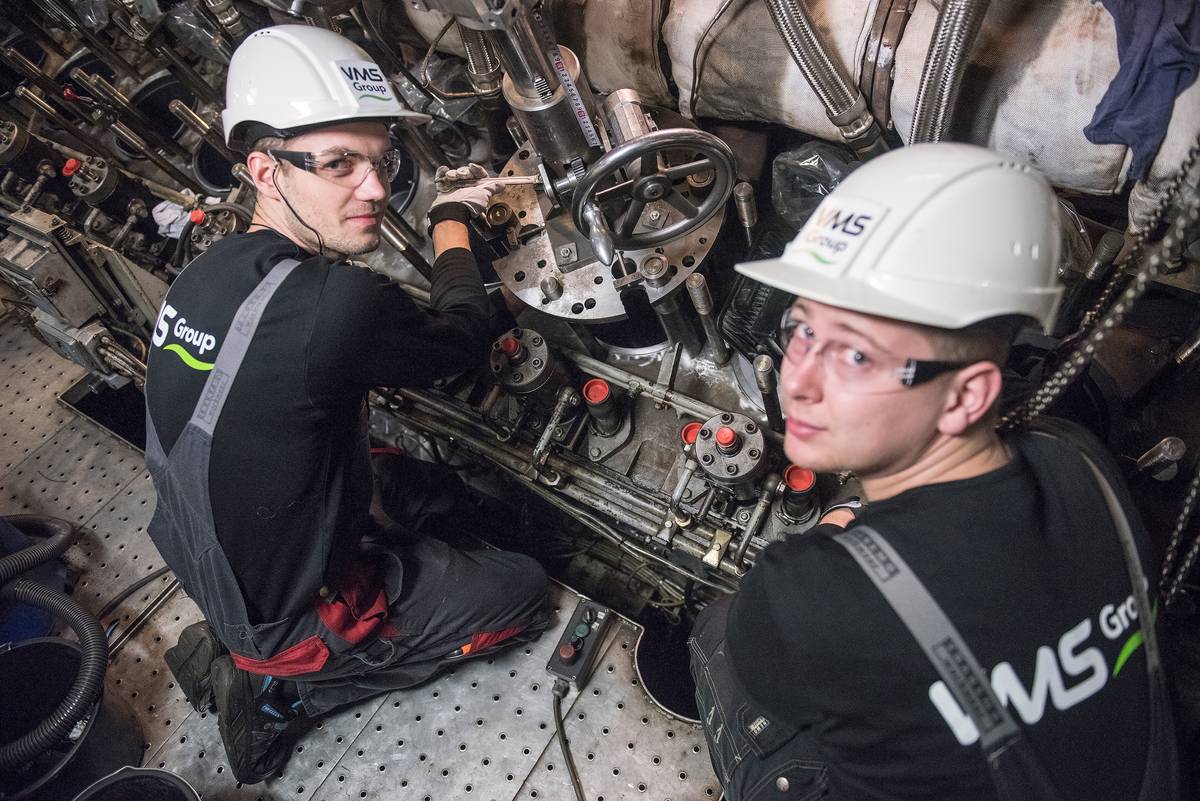
From its headquarters in Frederikshavn, Denmark, VMS has grown to include hubs in Brazil, Namibia, the United States, and most recently Saudi Arabia. Nearly 400 employees operate in these regions, supported by VMS’s “flying squads” — mobile, multidisciplinary teams dispatched directly to vessels and shipyards around the world.
Each year, VMS executes more than 1,000 service operations ranging from drydock overhauls to emergency offshore interventions. The Frederikshavn base remains the anchor point, handling technical planning, tooling, machining, and full-load testing, ensuring that every field job is backed by centralized engineering excellence.
“Our model is consistent: localized presence, mobile delivery, centralized expertise,” Larsen said. “It means reliability, transparency, and performance wherever the customer operates.”
From One Man, One Wrench
The company’s founding story remains central to its identity. “Morten didn’t start with investors or a board,” Larsen notes. “He started by solving one customer problem at a time, and that mindset, customer’s first, still drives us today.”
Growth came not by chasing volume, but by building long-term relationships and delivering consistent quality. In 2016, Westergaard transitioned to chairman, and the company rebranded as VMS Group to reflect its broader global scope. Yet one internal mantra has never changed: “We are only as good as our last job.”
“That’s not a pressure,” Larsen emphasizes. “It’s a standard of accountability and humility that sets us apart in this industry.”
“Morten didn’t start with investors or a board,” Larsen said. “He started by solving one customer problem at a time, and that mindset, customer’s first, still drives us today.”




Establishing Roots in the U.S.
One of the most significant milestones in recent years was VMS’s expansion into the United States, with a facility in New Orleans. “Many of our key customers in the Gulf of Mexico wanted us closer,” Larsen said. “But this wasn’t just about geography—it was about deepening relationships and strengthening response time.”
The facility, established in partnership with Kongsberg Maritime, provides integrated propulsion and thruster service, while serving as a platform for solutions across North and South America. For clients, the benefits are clear: faster turnaround, fewer handovers, and direct access to VMS engineers already trusted in other parts of the world.
Opportunities for Growth
Looking ahead, Larsen identifies four “strategic dimensions” of growth: geography, sector diversification, engineering depth, and sustainability.
-
Geographically, VMS is targeting expansion in the U.S. West Coast, the Caribbean, Asia, and the Middle East.
-
Sector-wise, while oil and gas remains important, growth is accelerating in renewables, particularly offshore wind, hybrid propulsion projects, and complex dredging operations.
-
On the engineering side, the company is scaling capabilities in 3D scanning, prefabrication, onboard installation, and genset manufacturing.
-
Sustainability, Larsen stresses, is not just a responsibility but a business driver. “We help customers reduce carbon footprints by extending equipment lifespans, modernizing propulsion, and integrating hybrid readiness. It’s practical decarbonization—real-world solutions with real cost and operational benefits.”
Brand Agnostic
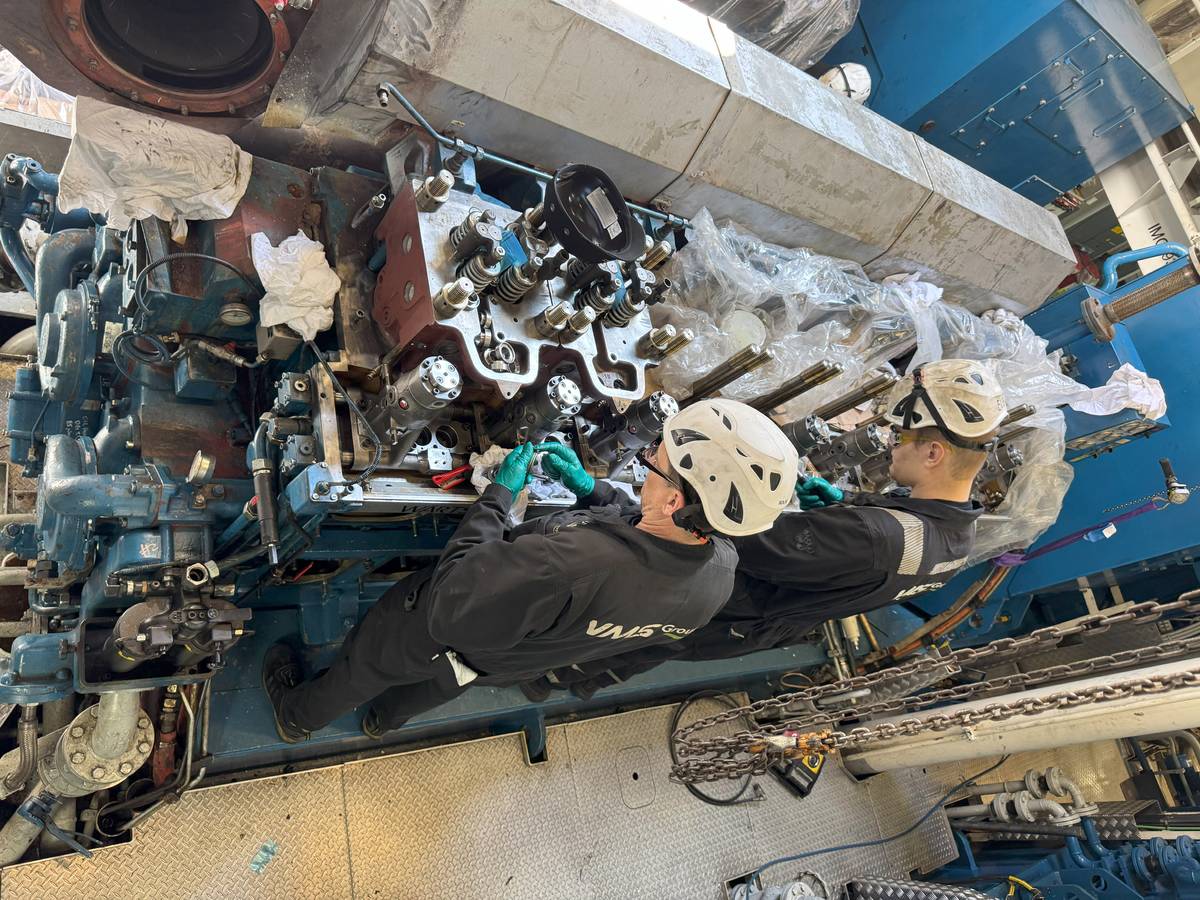
A key differentiator for VMS is its brand-agnostic approach. “We work across all major engine and propulsion brands: MAN, Wärtsilä, Caterpillar, Wabtec, Cummins, Scania, Volvo, and more,” says Larsen.
This independence allows VMS to focus on the customer’s best interests rather than a specific OEM agenda. At the same time, the company maintains formal service agreements with Wabtec, Bergen Engines, Yanmar, Himsen, Kongsberg, MAN, and others, as well as representation for Woodward L’Orange.
“The value is freedom and trust,” Larsen says. “Our clients know we have the experience, certifications, and relationships to deliver the right work to the right standard, anywhere in the world.”
A key differentiator for VMS is its brand-agnostic approach. “We work across all major engine and propulsion brands: MAN, Wärtsilä, Caterpillar, Wabtec, Cummins, Scania, Volvo, and more,” says Larsen.



Recent Projects
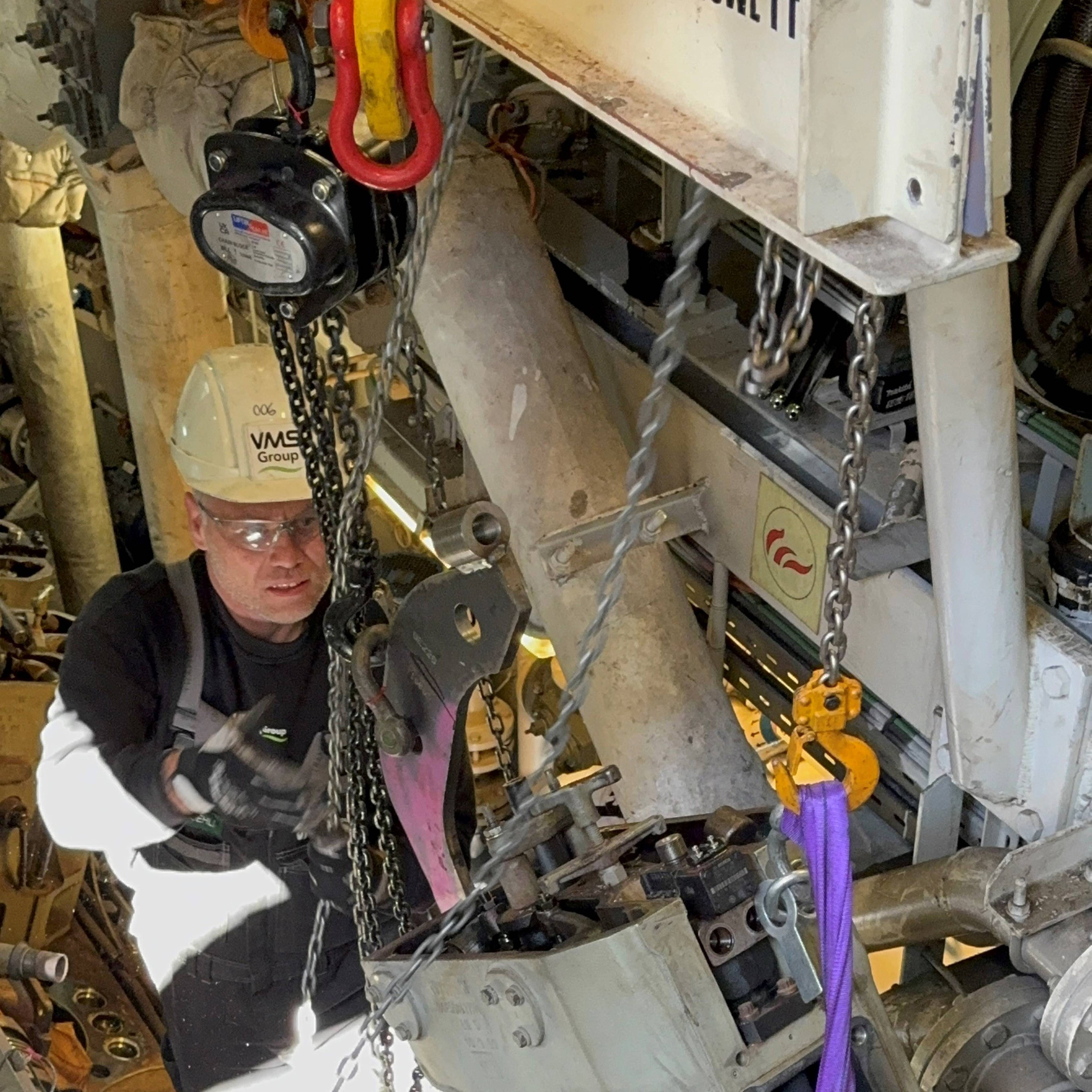
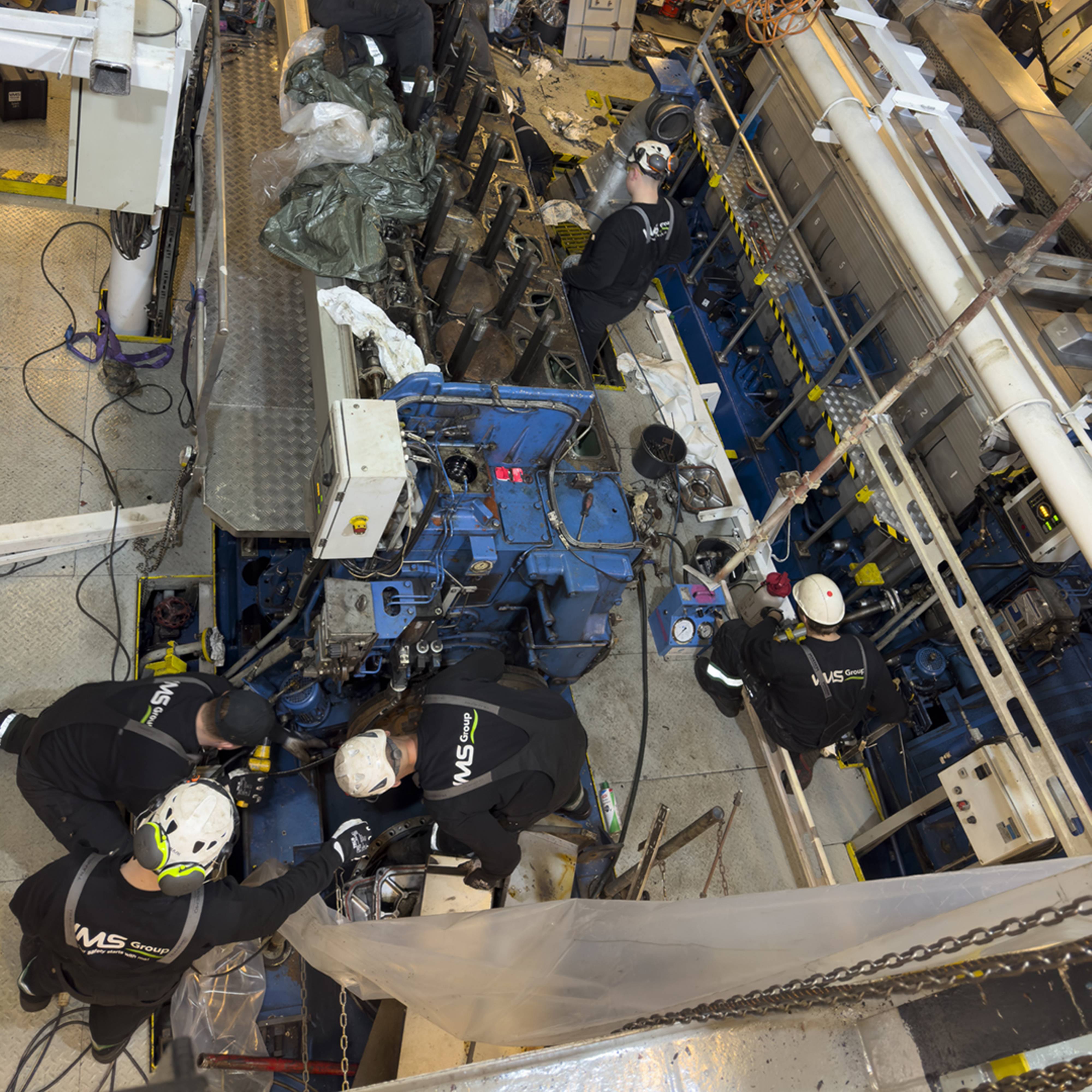
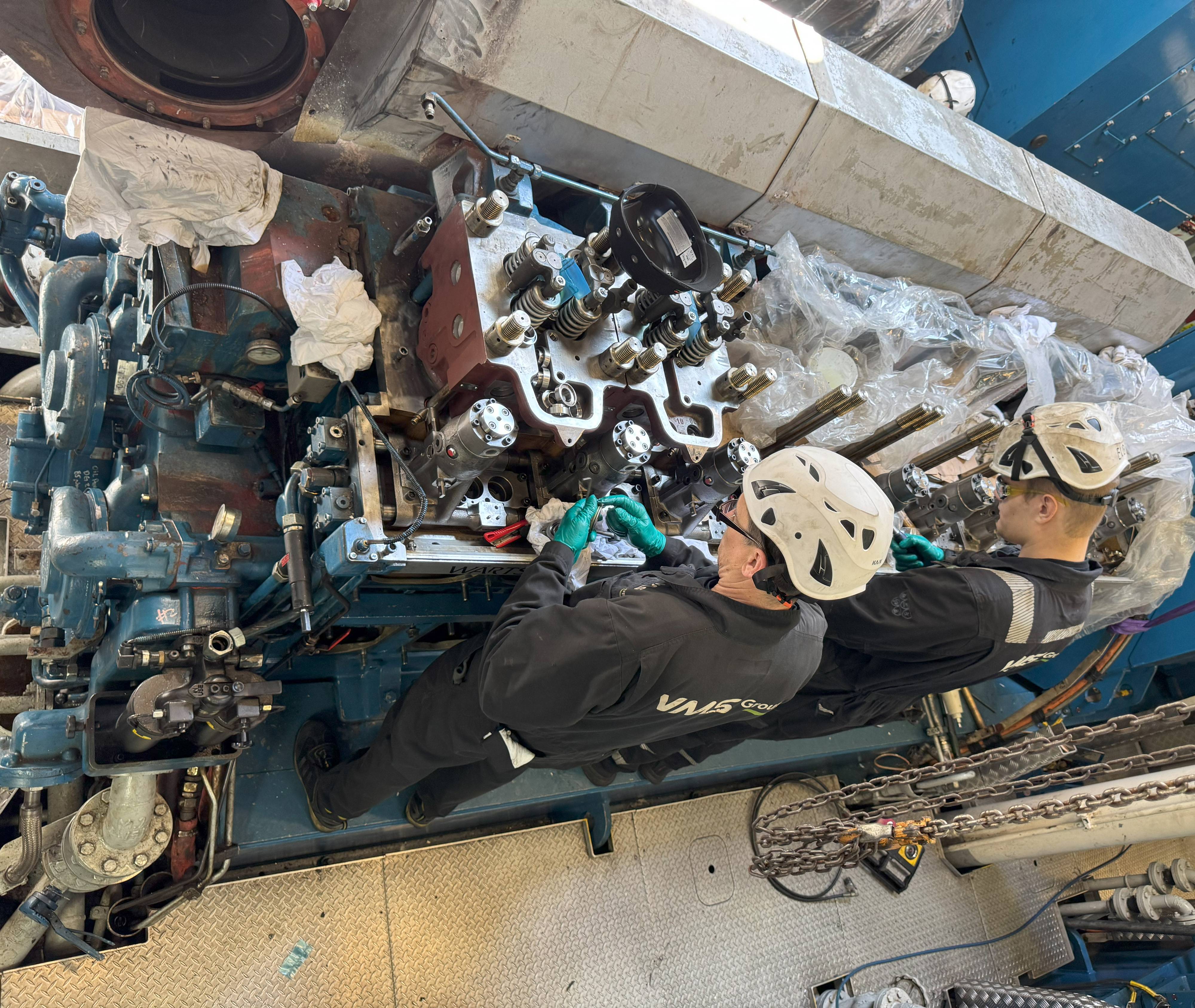
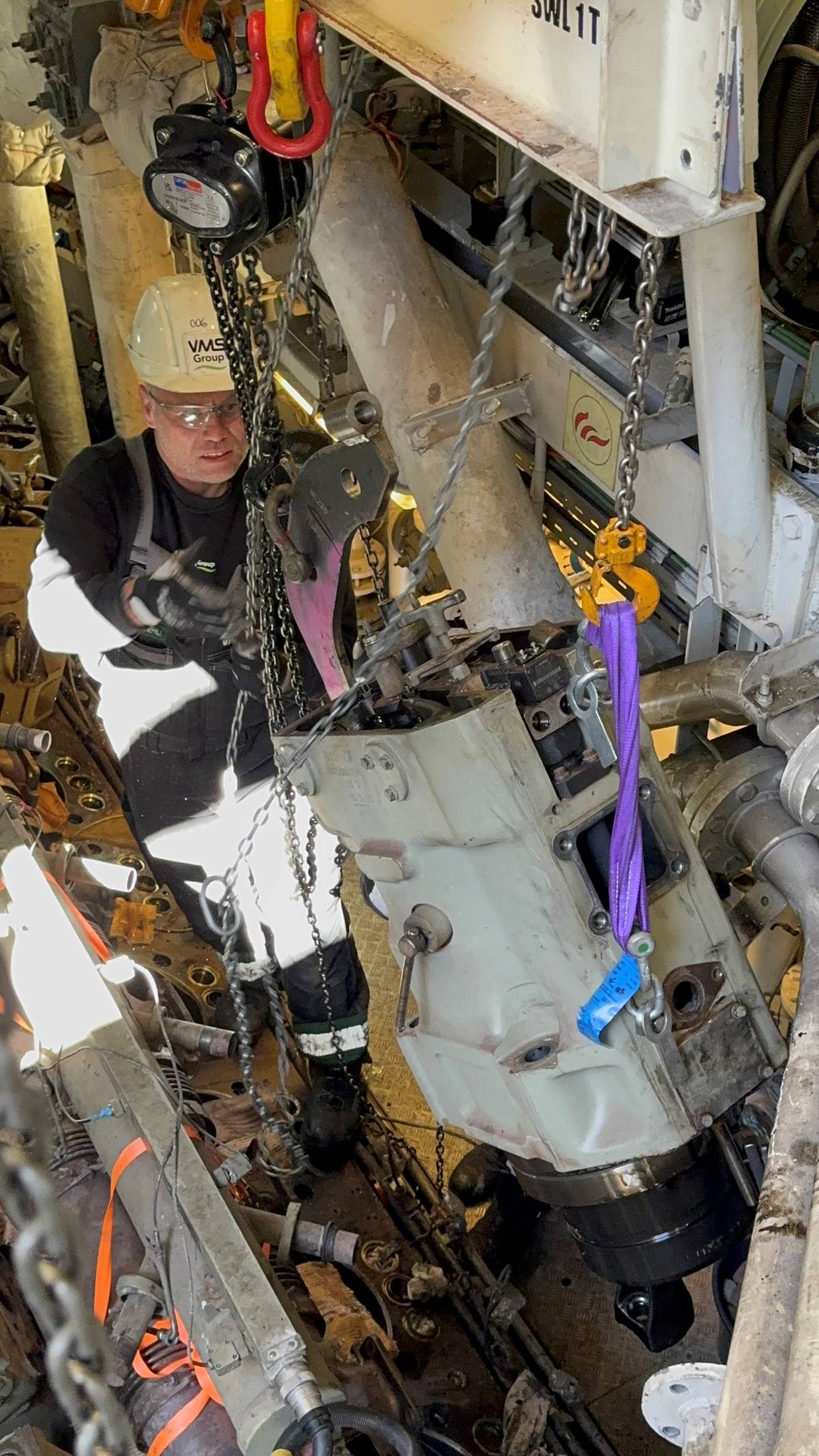
Two recent projects highlight the VMS value proposition. In Las Palmas, VMS managed a full propulsion and systems service on a diving support vessel, covering engines, turbochargers, thrusters, steering gear, firefighting systems, and more, all under one team, one contract. The drydock was completed on time, with zero rework.
In Brazil, VMS executed a thruster overhaul for a pipeline operator, removing and replacing azimuth and retractable thrusters with a team of more than 70 engineers, planners, and logistics specialists. The entire project was coordinated seamlessly under VMS management.
“In both cases,” Larsen notes, “we didn’t just send people, we sent ownership. That’s what our customers value: not just technical skills, but the peace of mind that comes with a partner who solves, simplifies, and stays accountable.”
The propulsion sector is in flux, with new technologies reshaping ship design and operation. For VMS, this represents both challenge and opportunity.
“The fastest way to greater sustainability today is hybrid propulsion,” Larsen observes. “Where ships used to have four engines, now they may have three plus a large battery package, all running diesel-electric. To support this, we’re expanding our electrical engineering department and constantly training our people.”
Partnerships with OEMs like Bergen, Wabtec, and Himsen help VMS stay ahead of technological shifts, while ongoing training ensures its workforce remains future-ready. “We embrace these changes,” Larsen says. “They’re not optional, they’re the reality of the industry.”
Ultimately, what sets VMS apart is not just technical expertise or global reach, but a culture rooted in service. “We live and breathe for the maritime industry,” Larsen says. “Not just in words, but in how we act, solve problems, and show up for our customers.”
From its one-wrench beginnings in Frederikshavn to its global presence today, VMS has grown by staying true to a simple principle: do the job right, every time. In an industry where downtime is costly and reliability is everything, that principle remains the company’s most powerful asset.
Watch the full interview with Kris Larsen, VMS, on Maritime Reporter TV: