Shipbuilding
Hybrid-Electric Tugboats
Curtin Maritime to Build Eight Hybrid Tugboats for $160m
While political winds in the U.S. have significantly tampered many ‘green’ projects, Curtin Maritime is domiciled in California, which is globally known for its strict environmental initiatives. To that end, Curtin Maritime inked a contract recently to invest $160m for eight new hybrid-electric tugboats, vessels being built by Snow & Co. and featuring vertically integrated electric powertrains from Arc with Schottel propulsion. Maritime Reporter TV interviewed Martin Curtin, CEO, Curtin Maritime & Mitch Lee, co-founder and CEO, Arc, on the eve of the announcement to discuss specifics.
By Greg Trauthwein
As shipbuilding continues to take centerstage in the U.S., Curtin Maritime announced a landmark $160 million order for eight hybrid-electric tugboats outfitted with powertrains from Los Angeles-based Arc. The vessels, to be built at Seattle’s Snow & Co. shipyard, mark the largest commercial deployment of electric workboats in industry history, and deliveries of the first tugs are committed before the end of 2026.
The project represents more than just new tugboat tonnage, a signal that the energy transition and move toward electric is gaining traction.
By the Numbers: Curtin Hybrid-Electric Tug Order
-
$160 million contract value
-
8 hybrid-electric tugboats to be built at Snow & Co.
-
Deliveries start in Q4 2026
-
4,000+ horsepower per tug
-
6 MWh battery capacity onboard
-
Curtin Maritime: 500 employees, ~50 vessels, founded 1997
-
Arc: ~200 employees, founded 2020, based in Los Angeles
Future Harbor Craft
Curtin Maritime, founded in 1997 and now operating nearly 50 vessels with 500 employees, is known for innovation in many maritime sectors. For CEO Martin Curtin, this tug order is the natural evolution. “Our journey into zero-emissions vessels started almost a decade ago, looking at pilot projects in Norway,” Curtin said. “Battery technology wasn’t there yet. But we always knew, especially being homeported in Long Beach, California, that regulations would only get tougher. Timing is finally right, and the need is real.”
Curtin notes that California Air Resources Board (CARB) rules on harbor craft have created both pressure and opportunity. Rather than wait for others to develop solutions, Curtin Maritime chose to act. “At Curtin, we don’t wait for someone else to build the future—we build it ourselves,” he said.
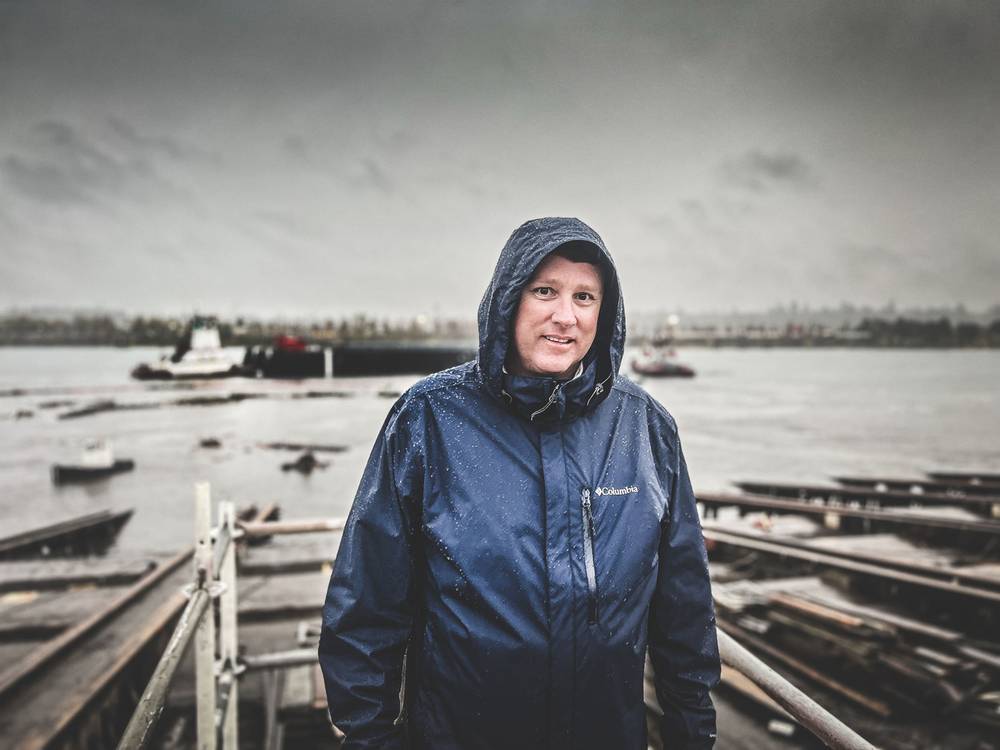
Our journey into zero-emissions vessels started almost a decade ago, looking at pilot projects in Norway. Battery technology wasn’t there yet. But we always knew, especially being homeported in Long Beach, California, that regulations would only get tougher. Timing is finally right, and the need is real.”
- Martin Curtin,
CEO, Curtin Maritime
A Partnership
To execute the vision, Curtin turned to two key partners: Snow & Co., a Seattle-based shipyard, and Arc, a rising force in electric propulsion, albeit primarily focused on the consumer boating sector to date. Curtin Maritime has a partial ownership stake in Snow & Co., ensuring deep vertical integration from design through construction. “Snow is, in my opinion, the finest boatbuilder in North America,” Curtin says. “Having them on board as part of this vertically integrated team was essential.”
The design effort, led by Snow’s naval architecture team under Jay Edgar, incorporates operational input from Curtin and electric integration from Arc. The result: a purpose-built tug designed for scalability, not just proof-of-concept.
Arc’s Commercial Leap
Arguably the most intriguing part of the announcement was the selection of Arc to fulfill the vertically integrated electric powertrains portion of the program, versus larger, more established players in the maritime electrification field. Arc, founded in 2020 and now employing nearly 200 people, has already made waves in the recreational market with its Arc One, Arc Sport, and Arc Coast models. The Curtin Maritime deal marks its largest commercial leap.
“We’ve seen a lot of pilot projects, often subsidized, that build a single prototype vessel,” said Mitch Lee, co-founder and CEO of Arc. “This deal is different. It’s cost-competitive with diesel and it makes business sense without grant funding. That’s a real inflection point for the marine industry.”
Arc will deliver the entire electric powertrain package: 6 megawatt-hour battery banks, propulsion motors, software, and high-voltage integration. All battery packs and control systems are manufactured in-house. “We handle the complex electrical and software stack, while leaning on Curtin and Snow for the naval architecture and shipbuilding expertise,” Lee says. The result is a hybrid-electric tug delivering over 4,000 horsepower, designed for real-world port operations.
Hybrid-Electric Tugs: The Business Case
Historically, cost has been the main barrier for electric harbor craft. But Curtin and Arc insist this order proves the economics now work. “Operating costs are lower, maintenance burdens drop, and vessel reliability increases,” Lee said. “Simpler powertrain architecture translates directly to the bottom line.”
Curtin emphasizes that vertical integration is the key. By bringing design, construction, and electric integration together under one roof, the project avoids the pitfalls of complexity and cost escalation that plagued earlier efforts. “We’re not just building a one-off. We’re building a scalable solution that can be replicated across ports nationwide,” he said.
While the tech is proven, both leaders acknowledge challenges remain. For Lee, charging infrastructure is a long-term hurdle. “Even without full charging networks, these vessels make sense as hybrids,” he said. “But to scale across the industry, we need robust portside infrastructure.”
Curtin points to cultural and operational inertia. “The biggest hurdle is the status quo. Crews are used to diesel tug profiles. Hybrid and electric tugs are different, they require new operating habits. Training and education will be key.”
Still, he sees a clear path forward. “We’ve applied proven technologies in new applications before. Our dredges are a perfect example. Tugboats are no different. Once operators see the reliability and performance, skepticism will fade.”
Watch the full interview with Martin Curtin, CEO, Curtin Maritime, and Mitch Lee, co-founder and CEO, Arc, on the rationale behind the order for eight new hybrid-electric tugboats for delivery starting in Q4 2026: