Vessels
HII Christens the Future USS Jeremiah Denton (DDG 129)
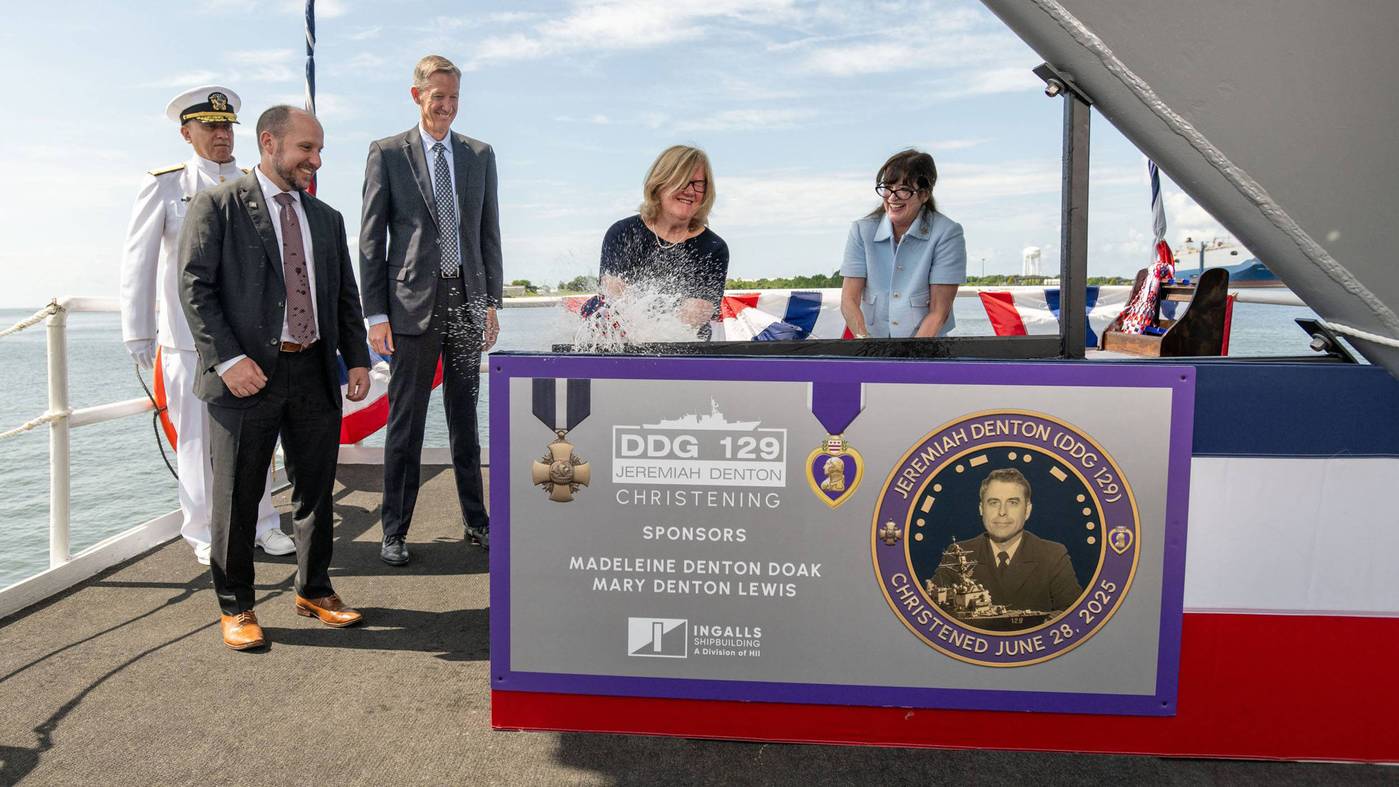
HII christened the future USS Jeremiah Denton (DDG 129), the third Flight III Arleigh Burke-class destroyer to be built at the company’s Ingalls Shipbuilding division. The ship’s name honors former U.S. Sen. Jeremiah Denton Jr., a Vietnam War veteran who was awarded the Navy Cross for his heroism as a prisoner of war. Denton spent 34 years as a naval aviator, including eight years as a prisoner of war in Vietnam. He is known for his act of genius during a televised broadcast in captivity, when Denton spelled out the word “torture” through Morse code using his eyes to blink the code. Following his Navy career, Denton was elected to the U.S. Senate representing his home state of Alabama in 1980. Acting Assistant Secretary of the Navy for Research Development and Acquisition Brett Seidle was the keynote speaker. He highlighted the importance of naval ships, the legacy of the ship’s namesake, and recognized the shipbuilding workforce as a vital national asset.
About Jeremiah Denton Jr.
July 18, 1965, Commander Jeremiah Denton Jr. stands aboard his A-6 Intruder, the aircraft he piloted during the Vietnam War. While leading a bombing mission over North Vietnam, his plane was shot down, leading to his capture and nearly eight years as a prisoner of war. Rear Admiral Jeremiah A. Denton Jr. was a decorated naval officer, statesman, and war hero whose legacy is defined by unwavering courage, leadership, and service to his country. Born in Mobile, Alabama, in 1924, Denton graduated from the U.S. Naval Academy in 1946 and went on to become a skilled naval aviator. During the Vietnam War, he served as a squadron commander and was shot down over North Vietnam in 1965. Captured and held as a prisoner of war for nearly eight years — including four in solitary confinement — Denton endured some of the harshest conditions imaginable.

He became a national symbol of resilience when, during a televised propaganda interview arranged by his captors, he famously blinked the word “TORTURE” in Morse code. This was the first confirmation that American POWs were being mistreated. His act of defiance exemplified his loyalty, strength, and strategic thinking under pressure.
Upon his release in 1973, Denton was promoted to Rear Admiral, having spent more time as a POW than any other U.S. Navy flag officer in history. He later continued his service as a U.S. Senator from Alabama, where he became the first Republican elected to the Senate from that state since Reconstruction. In public office, he remained a strong advocate for national security, defense, and family values.
SOV ECO Liberty Launched
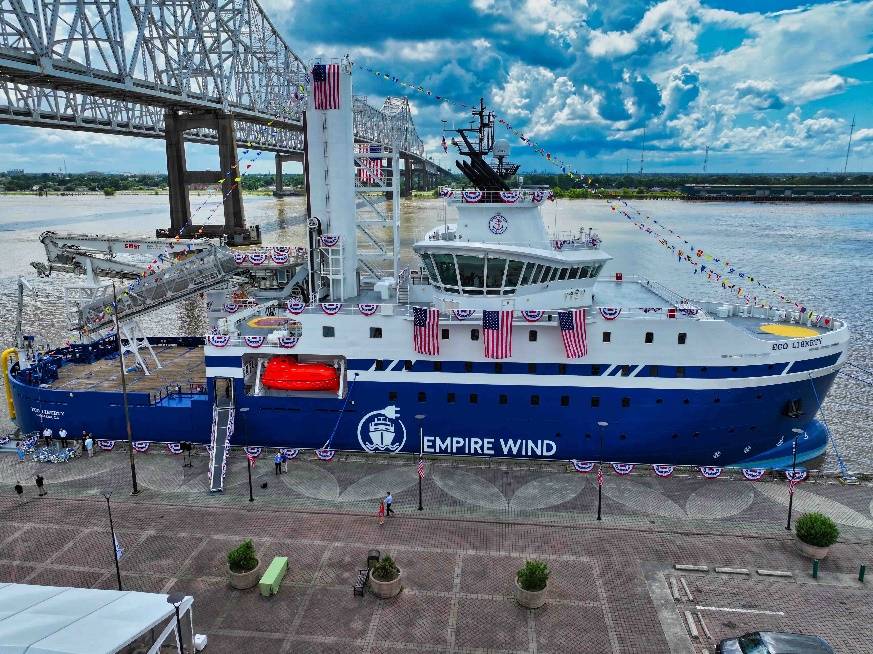
Equinor, the developer of Empire Wind, launched the Service Operations Vessel ECO Liberty on June 28 for deployment in its New York offshore wind project, marking the culmination of a major investment in the U.S. shipbuilding industry. Louisiana First Lady Sharon Landry served as the vessel’s “Godmother” during a christening ceremony on the Mississippi River at the Port of New Orleans.
The American-made ECO Liberty was built by Edison Chouest Offshore, built with American steel and including components from companies in several Gulf Coast states.
"The ECO Liberty showcases the positive impact Empire Wind is having on the American economy,” said Molly Morris, President of Equinor Renewables Americas. “Equinor is grateful for the opportunity to collaborate with Louisiana’s world-class shipbuilding industry as we support the Trump Administration’s efforts to expand U.S. vessel manufacturing. This vessel reflects how offshore wind can create durable, high-quality jobs while building out a homegrown energy supply chain.”
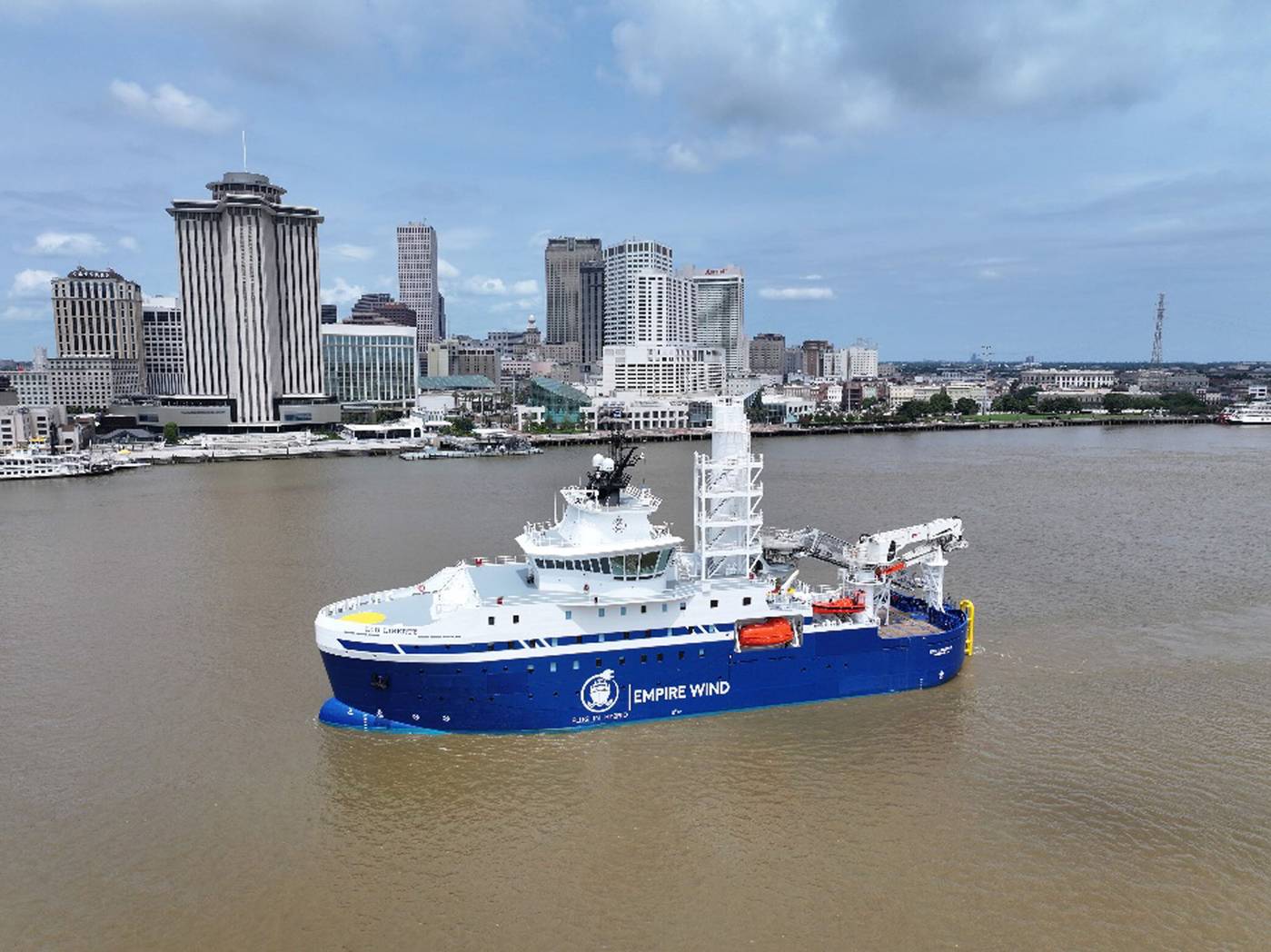
The 262-ft. hybrid-powered ECO Liberty will be homeported at New York’s South Brooklyn Marine Terminal, where more than 2,000 workers have been put to work constructing a next-generation staging facility, O&M base, and control center for Empire Wind.
Zamil Offshore's New 60m Fast Support Intervention Vessel
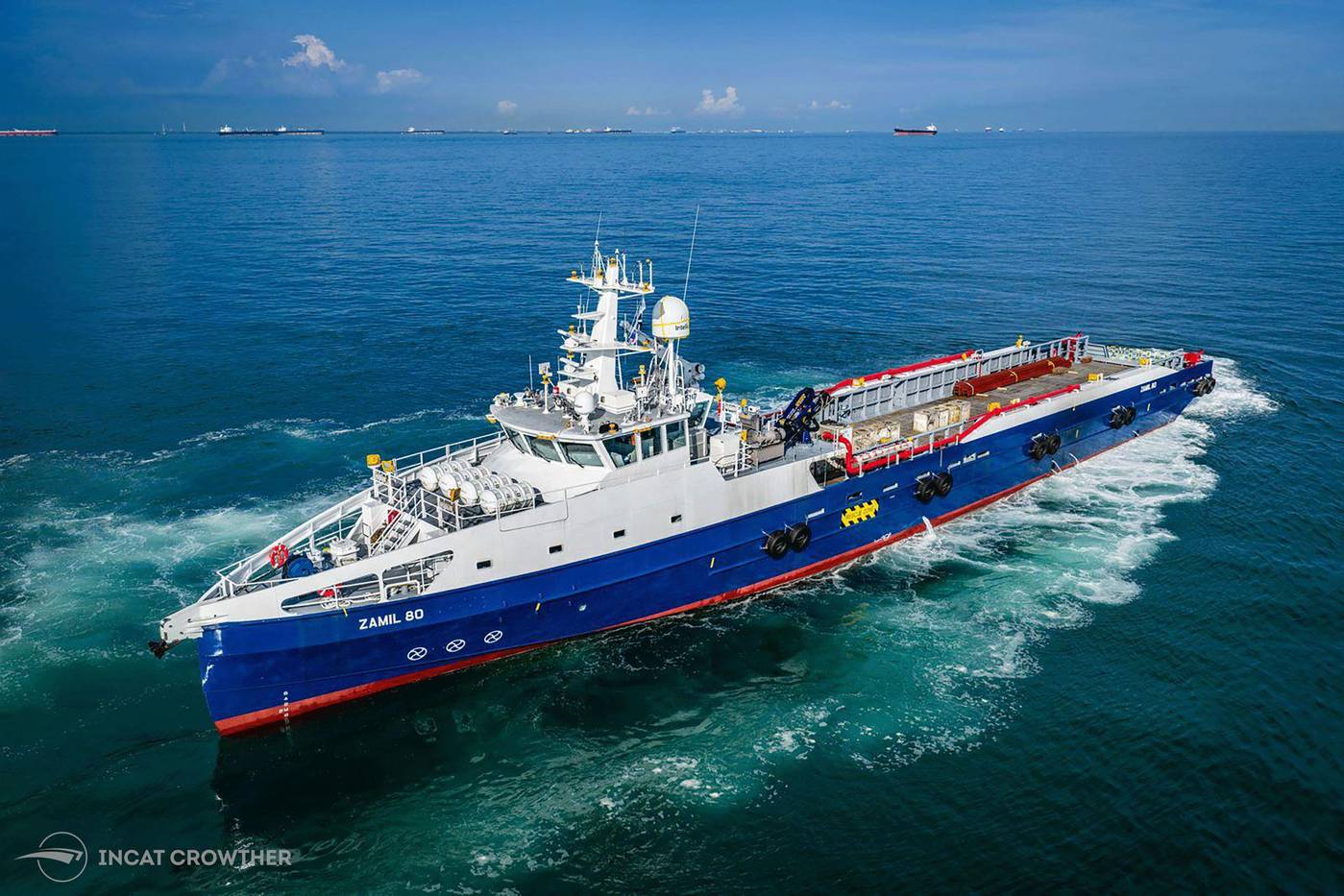
Zamil 80, the first of three new 60-meter Fast Support Intervention Vessels (FSIVs) designed by Incat Crowther for offshore marine services provider Zamil Offshore, has passed sea trials and will soon enter service.
The new vessel exceeded expectations, achieving a service speed of 28 knots with a 200-tonne payload, above the contracted required service speed of 25 knots, Incat Crowther said.
The three new ABS-Classed, low-draft monohull FSIVs are being constructed by Singaporean shipbuilder Lita Ocean and will assist Zamil Offshore with the safe transport of cargo, heavy maintenance equipment and personnel for Saudi Aramco’s operations in the Arabian Sea.
Construction on the remaining two contracted vessels is expected to be completed in 2025.
The new vessels are powered by four MTU 16V4000 diesel engines coupled to ZF gearboxes driving Hamilton HT810 waterjets.
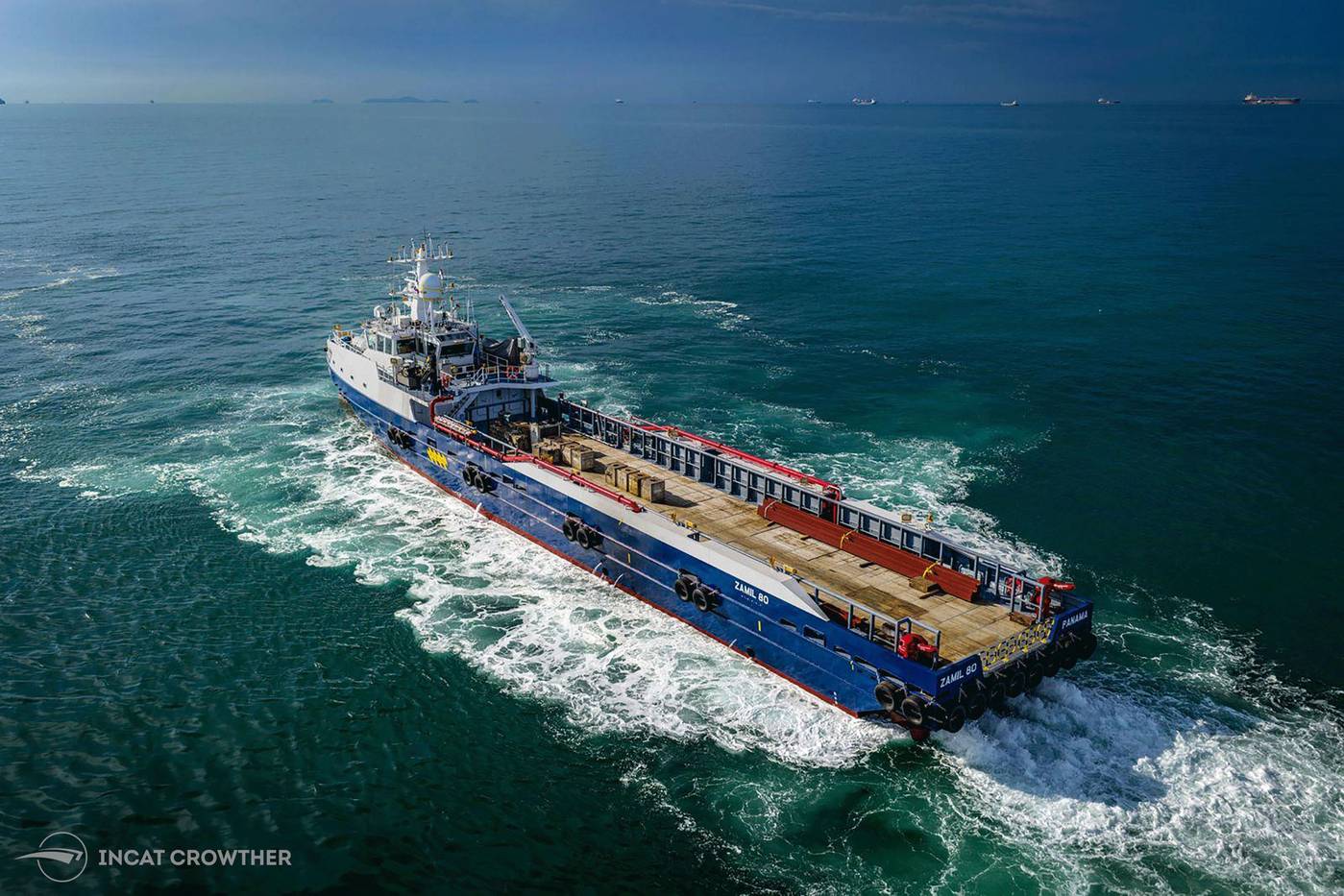
Manoeuvrability of the DP2-certified vessels is enhanced by three Hydromaster tunnel bow thrusters, allowing safe docking and superior station-keeping for transfer of cargo and personnel.
Two of the main engines are coupled to FFS firefighting pumps with paired 1200 m3 /hr water monitors and shipboard water spray protection offering FiFi-1 capability.
Three Scania 300kW diesel generators provide ship service power. The vessels’ main deck offers an expansive 250 m2 aft cargo deck rated at 2.5 t/ m2 and a climate-controlled forward cabin featuring business-class seating for 60 service personnel, as well as three bathrooms, an office, snack bar and a well-equipped medical bay.
Each vessel’s 18 crew are housed on the hull deck which features a large pantry, mess, three bathrooms and laundry.
The health of the crew is also prioritized with an isolation room located behind a sealed door. The vessels comply with the latest MCVSR requirements from Saudi Aramco, including ABS SMART and IDM-A notations.
“We are pleased that the vessel’s performance exceeded expectations during sea trials. This once again demonstrates our unmatched experience in the design of large high-speed offshore support vessels to stringent charterer requirements and to new and challenging Class notations.
"The successful delivery of the first vessel in the fleet of three is a major milestone for the project, and we look forward to finalizing construction and testing on the final two vessels later this year,” said Grant Pecoraro, Incat Crowther’s Managing Director, North America.
Incat Crowther 60 Main Particulars
-
Length, oa.: 196.1 ft.
-
Length, wl.: 184 ft.
-
Beam oa.: 29.5 ft.
-
Draft: 7 ft.
-
Depth: 14.5 ft.
-
Construction: Marine grade aluminium
-
Tonnage: 498 GT ITC
-
Fuel Oil: 44,909 gallons
-
Fresh Water: 8,453 gallons
-
Grey Water: 475 gallons
-
Black Water: 475 gallons
-
Lube Oil: 528 gallons
-
Waste Oil: 528 gallons
-
Bilge Oil: 528 gallons
-
Industrial personnel: 60
-
Crew: 18
-
Speed (Service): 28 knots
-
Speed (Max): 36 knots
-
Main Engines: 4 x MTU 16V4000M63L
-
Power: 4 x 2240kW @ 1800rpm
-
Propulsion: 4 x Hamilton HT810 waterjets
-
Bow Thrusters: 3 x Hydromaster 150 kw thrusters
-
Generators: 3 x Scania DI09 (300 kW each)
-
Flag: Panama
-
Class / Survey: ✠A1, Circle E, HSC Crewboat, ✠AMS, ✠DPS-2, FF Capable, SMART (INF, SHM, MHM), IDM-A, ENVIRO
Fincantieri Delivers Cruise Ship Viking Vesta
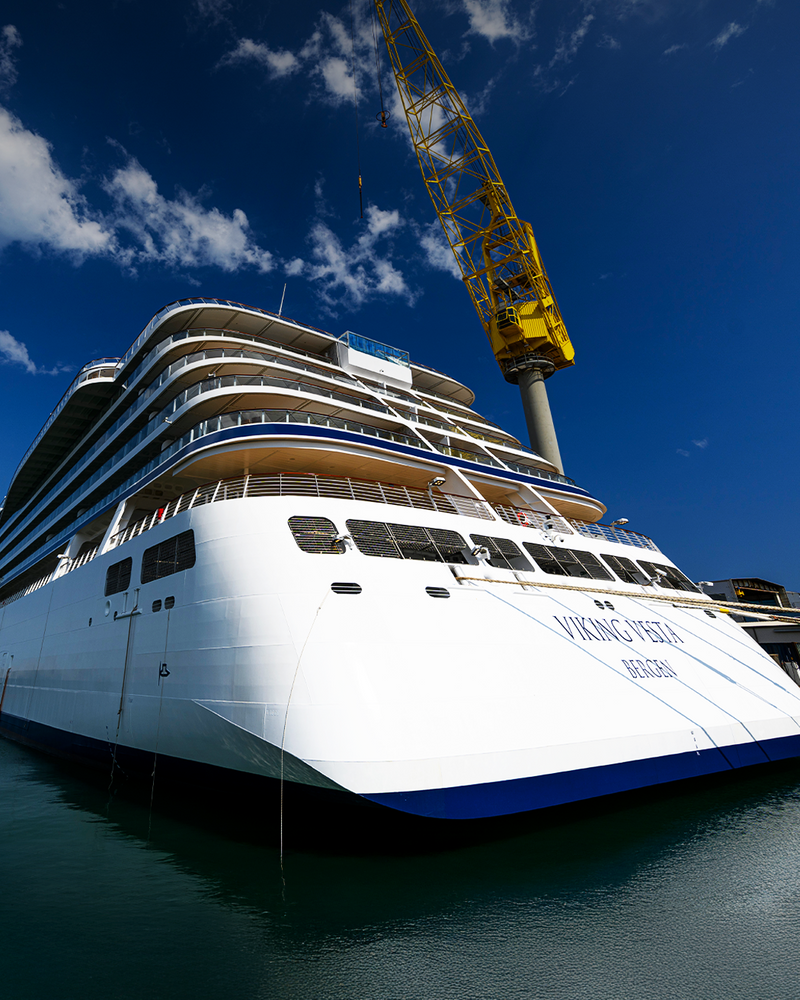
Viking Vesta, the second of a new series of cruise ships that Fincantieri is building for the shipowner Viking, was delivered today at the Ancona shipyard. The ceremony was attended by Torstein Hagen, Chairman and CEO of Viking, and Luigi Matarazzo, General Manager of the Merchant Ships Business Unit of Fincantieri.
The vessel belongs to the segment of small cruise ships. With a gross tonnage of approximately 54,300 tons, “Viking Vesta” has 499 cabins and can accommodate 998 passengers on board. The vessel is the 14th ship delivered by Fincantieri to Viking, including the two expedition units built by the Norwegian subsidiary Vard.
Considering the ships already ordered, the contracts signed and the option agreements signed in recent months – the finalization of which is subject to access to financing according to industry practice – the solid and long-lasting collaboration between Fincantieri and Viking, started in 2012, can today count on a total portfolio of 28 units.
The two companies recently announced the world’s first cruise ship powered by hydrogen stored on board, used for both propulsion and on-board electricity generation, the “Viking Libra”, to be delivered at the end of 2026. The vessel, currently under construction at the Ancona shipyard, will be able to sail and operate with zero emissions, allowing it to access even the most environmentally sensitive areas. The sister ship, “Viking Astrea”, under construction at the same shipyard for delivery in 2027, will also be equipped with the innovative hydrogen technology.
CSOV Pair Christened for Bernhard Schulte Offshore
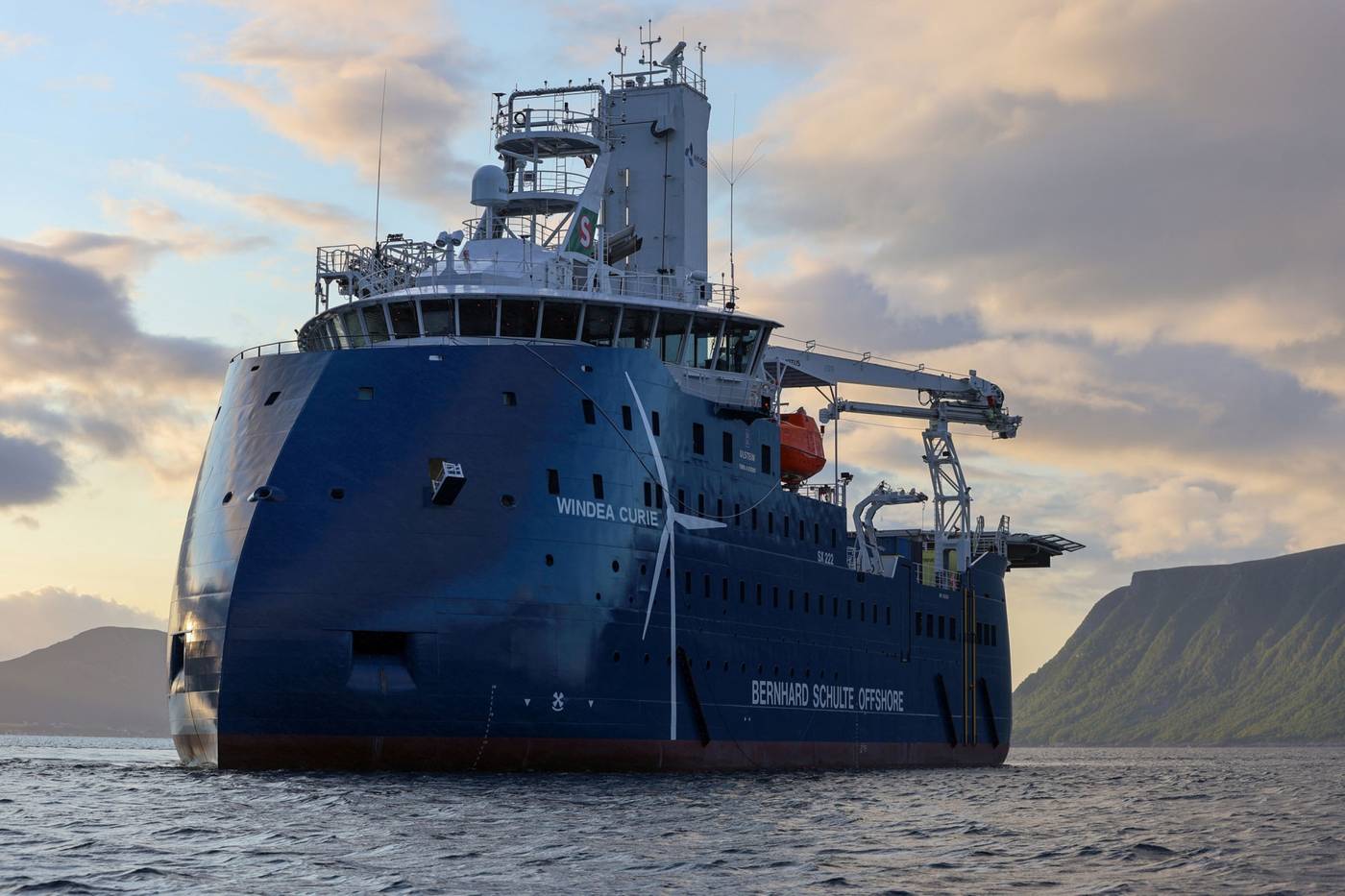
Bernhard Schulte Offshore announced the delivery of its latest Commissioning Service Operation Vessel (CSOV) from Ulstein Verft in Norway.
The newbuilding, which was christened ‘Windea Curie’ on June 26, is now being deployed for the charterer TenneT, an offshore transmission system operator in the European Union, to support its offshore grid connection facilities in the North Sea.
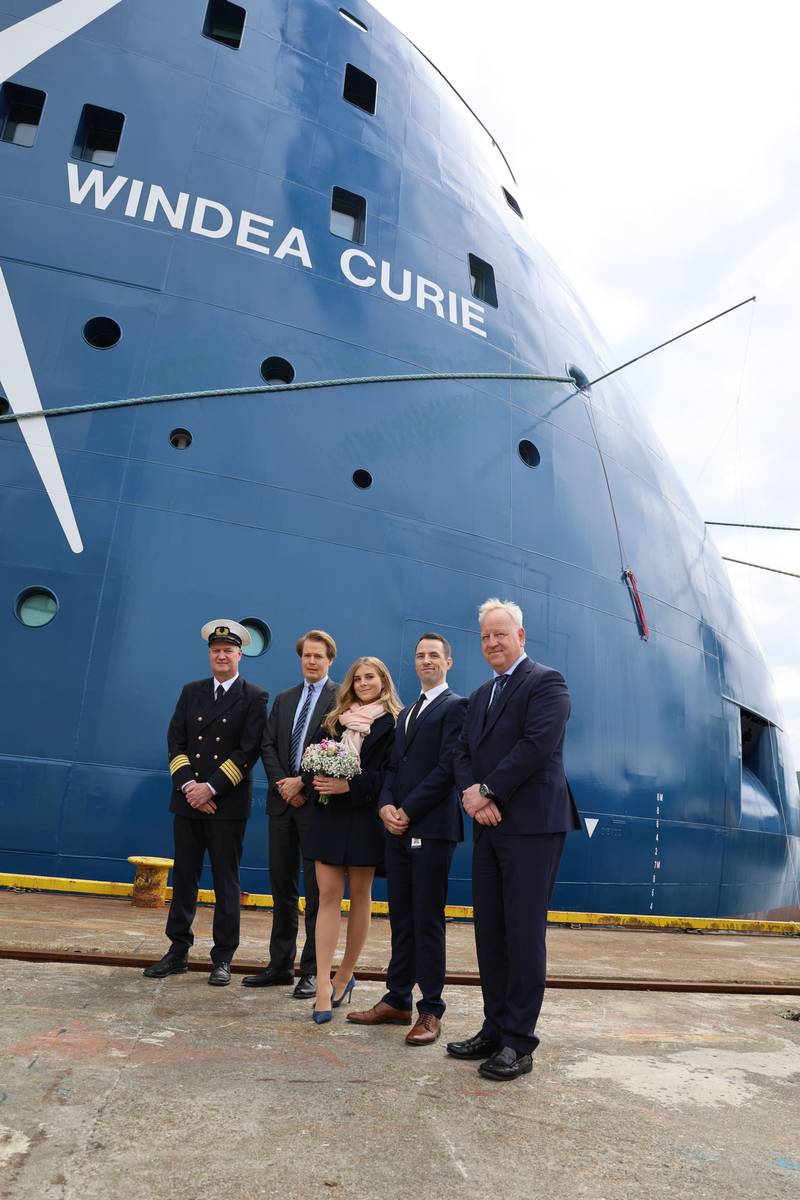
‘Windea Curie’, which utilizes Ulstein’s TWIN X-STERN design, features two sterns and azimuth propellers located at both fore and aft, making her an ideal choice for Dynamic Positioning (DP) operations and reducing the fuel consumption. Regardless of whether the vessel is facing towards or away from the weather, it maintains excellent operability and flexibility. With the TWIN X-STERN solution, the ship can achieve improved fuel efficiency while also minimising motion, the latter a crucial element for gangway operations and for safety as the technicians need high-quality rest to perform their duties.
The new offshore vessel has a large, height-adjustable, centrally positioned walk-to-work motion compensated gangway and elevator tower for personnel and cargo transfers. Furthermore, a 3D compensated crane capable of 5-ton offshore cargo lifts is installed, enhancing operational efficiency and versatility. The optimized on-board logistics include large storage capacities and stepless approach to the offshore installations.
‘Windea Curie’ has a length of 89.6 m and a beam of 19.2 m. The vessel offers up to 90 cabins with windows for charterers’ offshore personnel. In total, there are 111 cabins providing comfortable living conditions for up to 132 individuals. The ship is equipped with hybrid battery propulsion and prepared for methanol fuel to enable low-carbon operations. It is flexible and attractive for employment within areas such as O&M (Operation and Maintenance) or construction support, especially in challenging weather and sea conditions.
The newbuilding is named after the famous physicist and chemist Marie Curie, who was honored twice with the Nobel Prize for her achievements. This continues the tradition of naming BSO’s offshore vessels after outstanding personalities and scientists, as the ‘Windea La Cour’, ‘Windea Leibniz’ and ‘Windea Jules Verne’.
The sister ship of the ‘Windea Curie’ is currently under construction at Ulstein Verft in Norway with delivery planned in August 2025. It will expand the BSO fleet to five offshore service vessels, all highly flexible in operation to support the offshore wind energy market as well as the oil and gas segment.
Methanol-Ready RoRo Delivered to Wallenius Sol
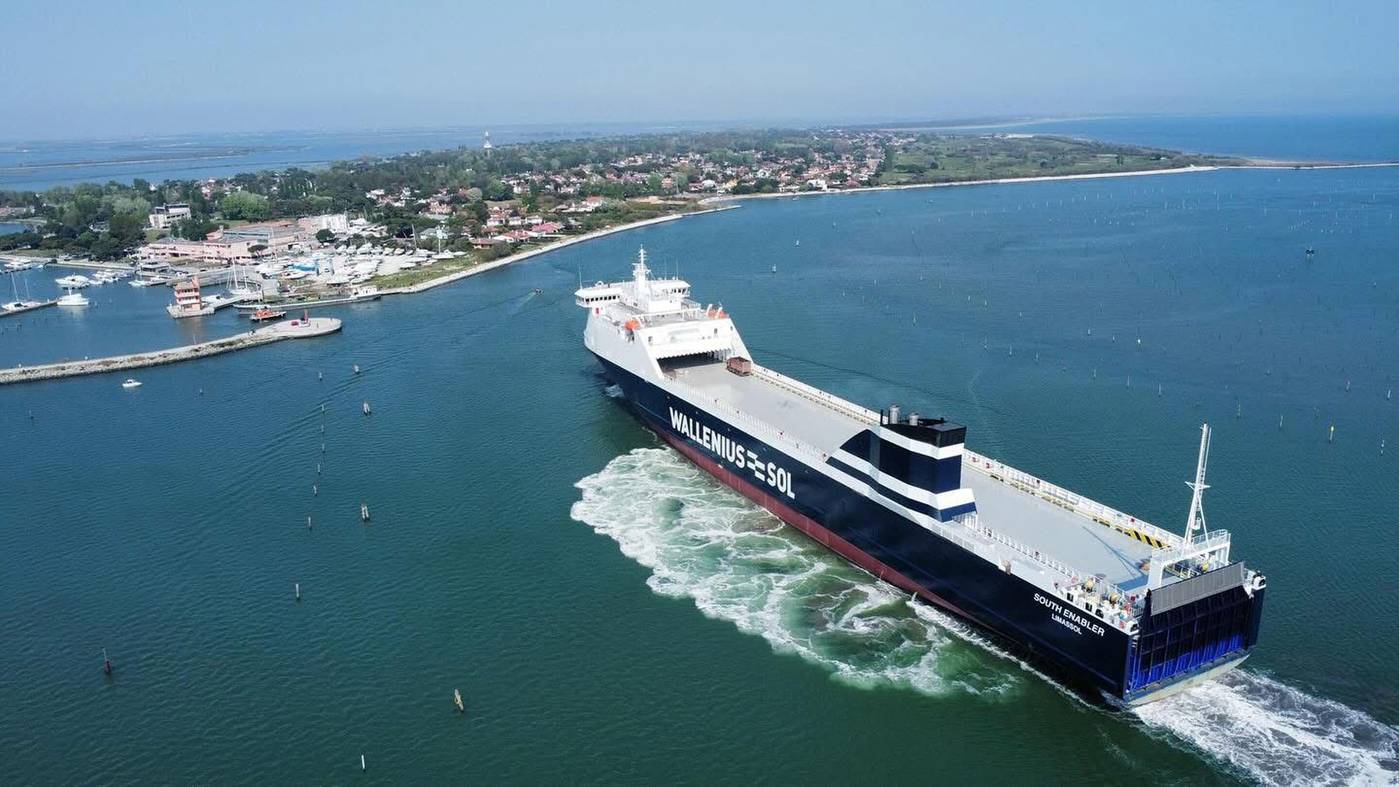
In February 2025, a new chapter began in European shipping as Wallenius Sol announced the acquisition of Mann Lines, significantly expanding the Swedish shipping line’s customer base and presence in key markets.
As part of the acquisition, a new vessel under construction was included. The new RoRo cargo vessel was officially delivered on 11 June, 2025, during her westbound passage past Gibraltar.
“She’ll be named South Enabler and is set to replace ML Freyja on the Tilbury-Cuxhaven–Turku–Paldiski–Bremerhaven–Tilbury route,” says Henrik Karle, Chief Operating Officer, Wallenius Sol.
Following delivery, she is heading to Zeebrugge to load cargoes, after which she will enter regular service for the first time. At the same time, ML Freyja will be redelivered to her owners.
South Enabler measures 203.4m long and is powered by two 7,200 kW Wärtsilä engines – methanol-ready and capable of reaching a top speed of 22 knots. The ship is RINA-classed and built to ice class 1A standards. It has two separate vehicle decks with capacity for a total of 197 vehicles and will handle a wide range of cargos, including LoLo, RoRo and high hand heavy cargo.
Built by Visentini Shipyard and designed by NAOS Ship and Boat Design, South Enabler will be flying the Italian flag. South Enabler will enter service under a 5-year TC contract.
Megamas Contracts for Cable-Laying Vessel Design
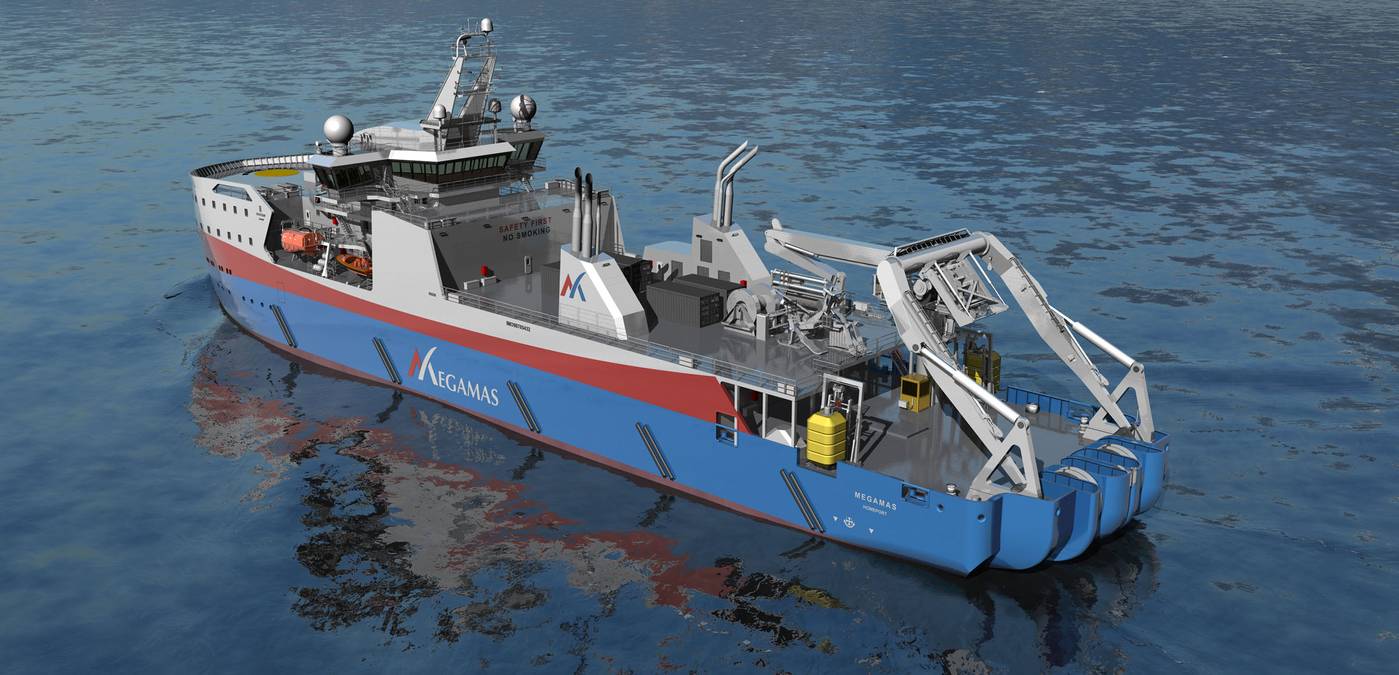
Megamas Resources announced a ship design contract with Norway-based Ulstein Design & Solutions AS to start the engineering phase on a fiber-optic cable-laying vessel (CLV) planned to be built at the Lloyd Werft Bremerhaven GmbH.
Capt. Tiew Sien Kheng, managing partner at Megamas, disclosed the contract at Ulstein's booth at the Nor-Shipping exhibition this week.
"Ulstein Design & Solutions AS, together with Lloyd Werft, will contribute its extensive expertise to deliver a high-specification, specialized vessel. Conceptual design work began in autumn 2023, centered on the ULSTEIN SX228—a next-generation fiber-optic cable laying vessel (CLV)," said Kheng.
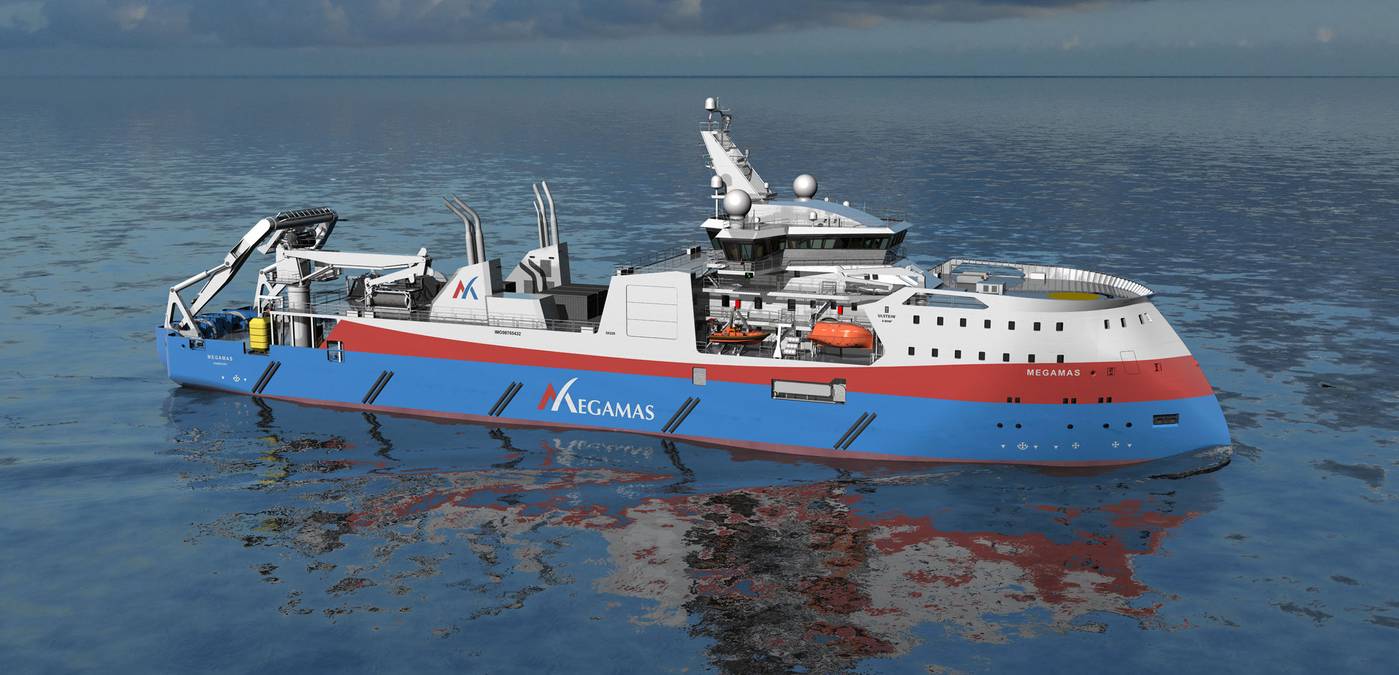
The ULSTEIN SX228 has a deadweight of 8,200 tons and a cable capacity of 5,500 tons. Measuring 121.7 meters in length with a 23-meter beam, the vessel has been specifically optimized for fiber-optic cable laying and is also prepared for future power cable operations. This includes an underdeck carousel integrated into the cable tanks.
Equipped with two firing lines and all necessary cable handling equipment within an enclosed working area, the vessel ensures safe and efficient operations in challenging offshore environments. Additional features include an ROV hangar for the cable trencher, a 50-ton A-frame, and a bollard pull capacity of up to 120 ton for subsea ploughing.