Insights
The Future U.S. Navy Hybrid Fleet
The Navy’s Science and Technology Board Accelerates the Journey to Achieve a “Hybrid Fleet”
By George Galdorisi
Royal Navy Archer Class P2000 patrol vessels HMS Archer (P264) conducts counter unmanned surface vessel operations with global autonomous reconnaissance crafts (GARC) attached to Commander, Task Force 66 during Baltic Operations (BALTOPS) 2025, June 12, 2025. BALTOPS 25, the premiere maritime-focused exercise in the Baltic Region, provides a unique training opportunity to strengthen combined response capabilities critical to preserving freedom of navigation and security in the Baltic Sea.
U.S. Navy video by Mass Communication Specialist 2nd Class Christine MontgomeryThe Navy-After-Next will be a “Hybrid Fleet.” This concept was first articulated by then-CNO Admiral Michael Gilday and embraced by his successor, Admiral Lisa Franchetti. The basics of this initiative were described in the Chief of Naval Operations Force Design 2045 which called for 350 crewed ships and 150 large uncrewed maritime vessels.
The concept of Hybrid Fleet evolved due the U.S. Navy’s ongoing challenge of building enough crewed ships to adequately meet the Navy’s global commitments. The Chief of Naval Operations Navigation Plan for America’s Warfighting Navy put it this way: “We cannot manifest a bigger traditional Navy in a few short years.” Indeed, the price of an Arleigh Burke-class destroyer has risen to $2.2B.
A recent report by the Department of the Navy Science and Technology Board entitled The Path Forward on Unmanned Systems, seeks to accelerate the goal of achieving a Hybrid Fleet by offering a path forward to design, develop and field uncrewed systems—especially uncrewed maritime systems—in order to achieve the Navigation Plan’s goal of: “Scaling robotic and autonomous systems to integrate more platforms at speed.”

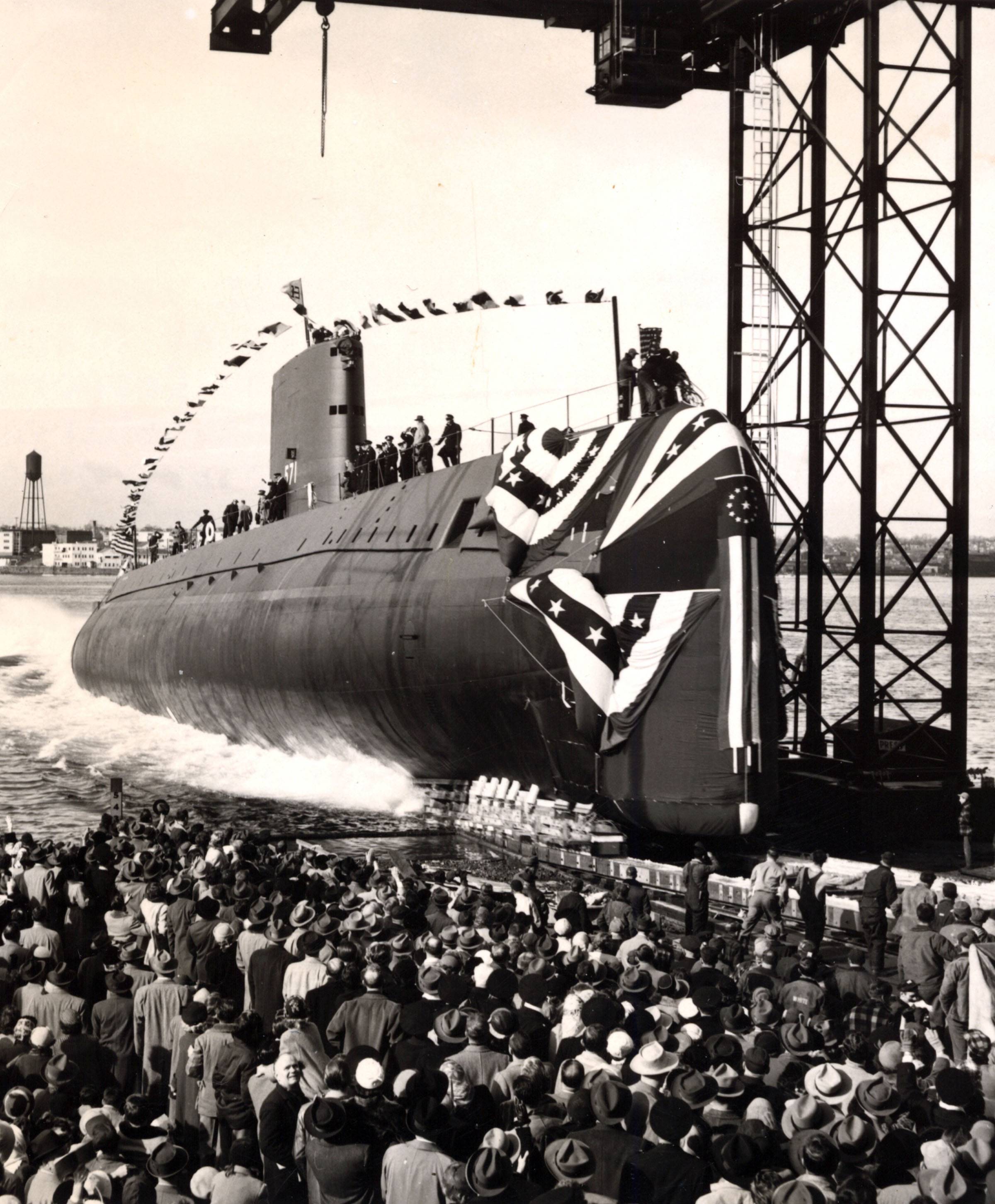
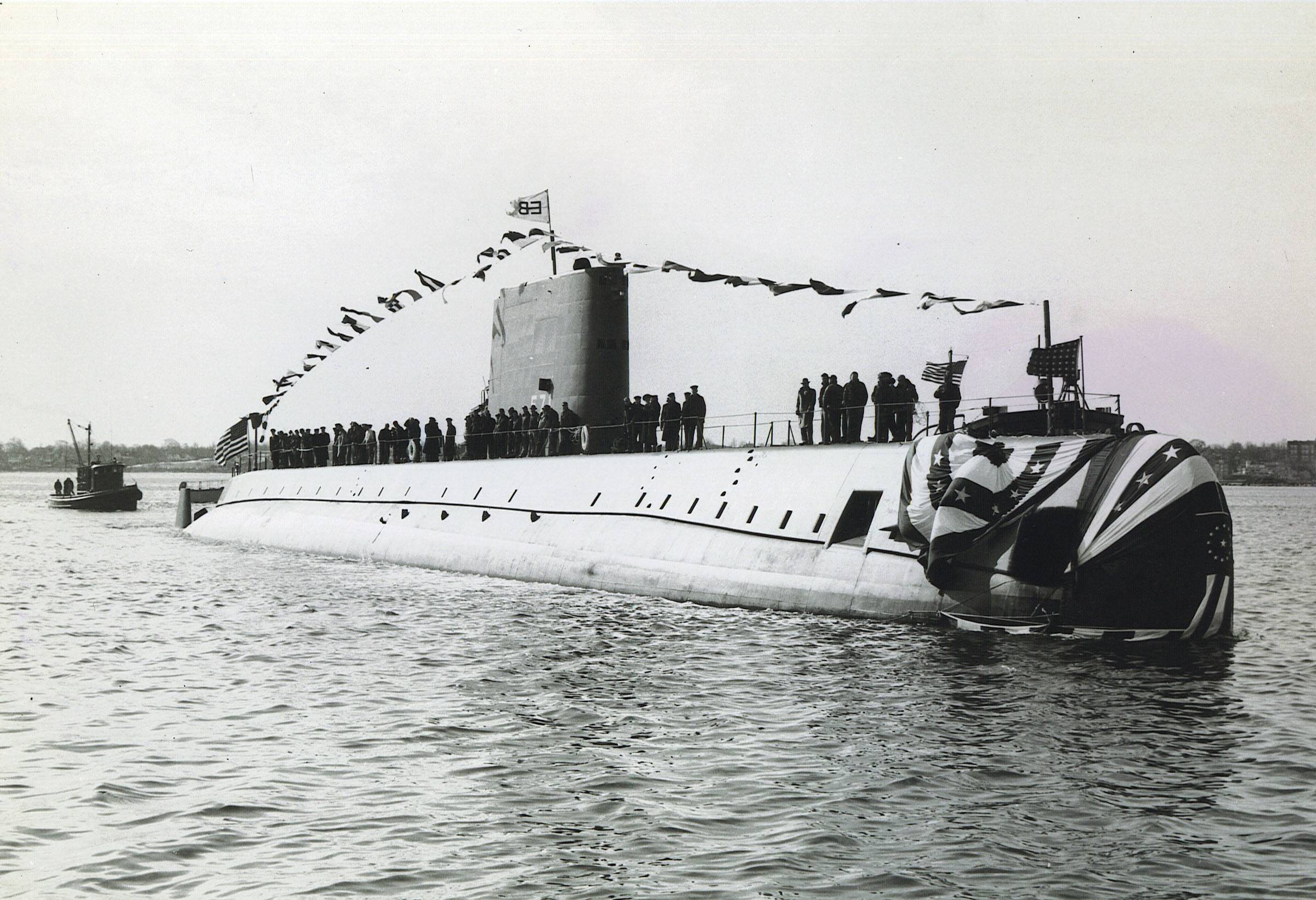
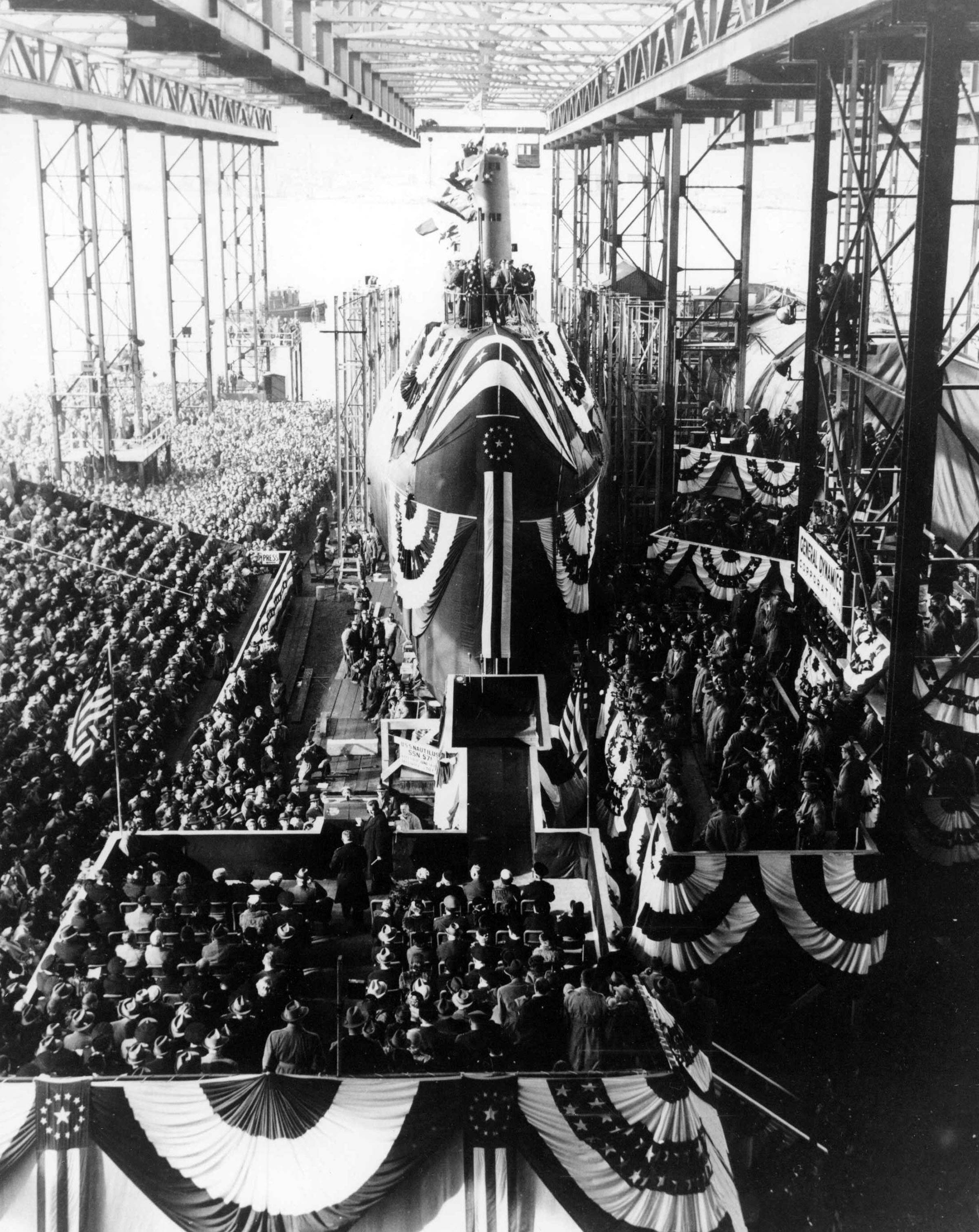

In this file photo taken Jan. 21, 1954, the nuclear-powered submarine USS Nautilus (SSN 571) slips into the Thames River.
Image courtesy US Navy.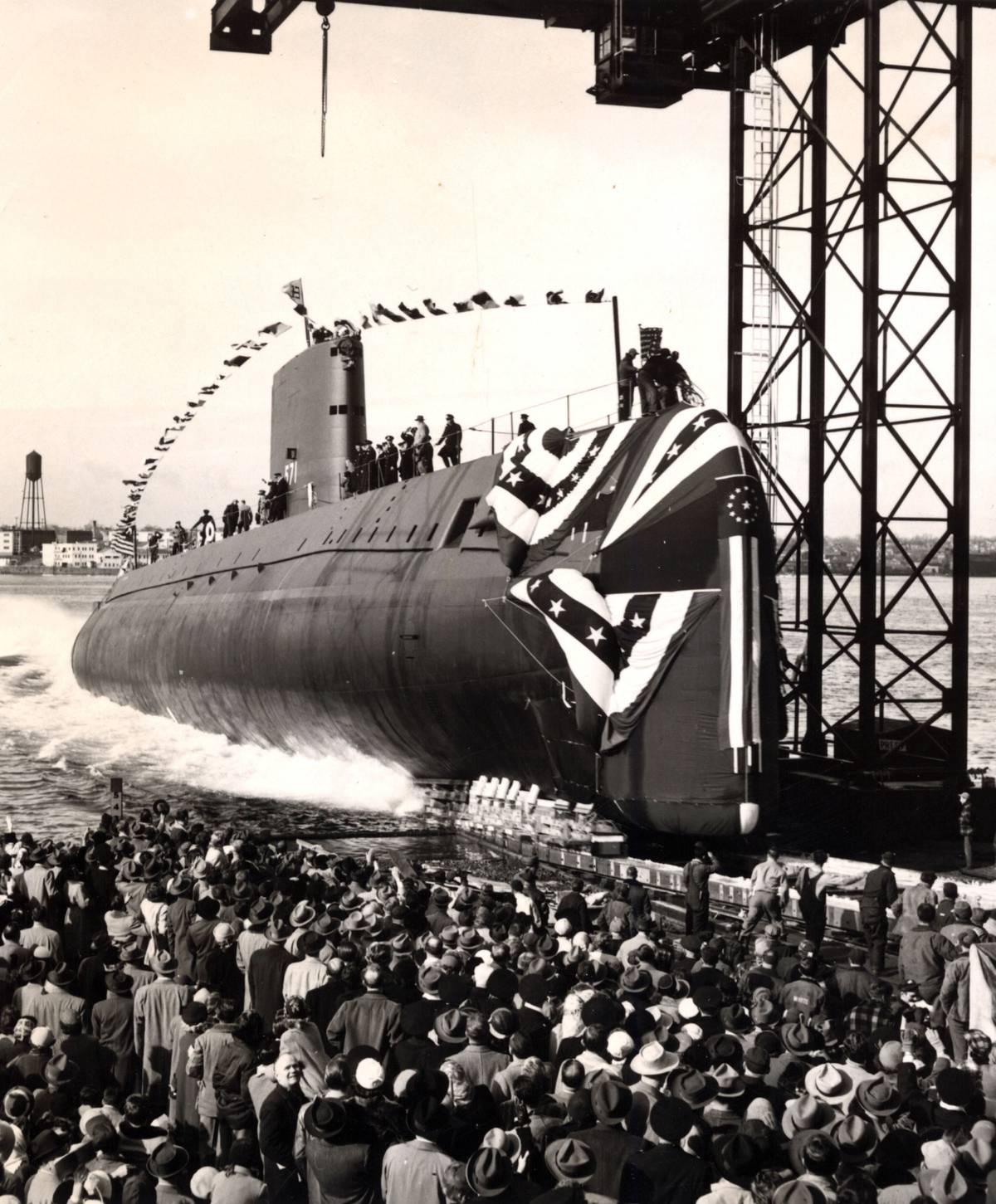
In this file photo taken Jan. 21, 1954, the nuclear-powered submarine USS Nautilus (SSN 571) slips into the Thames River.
Image courtesy US Navy.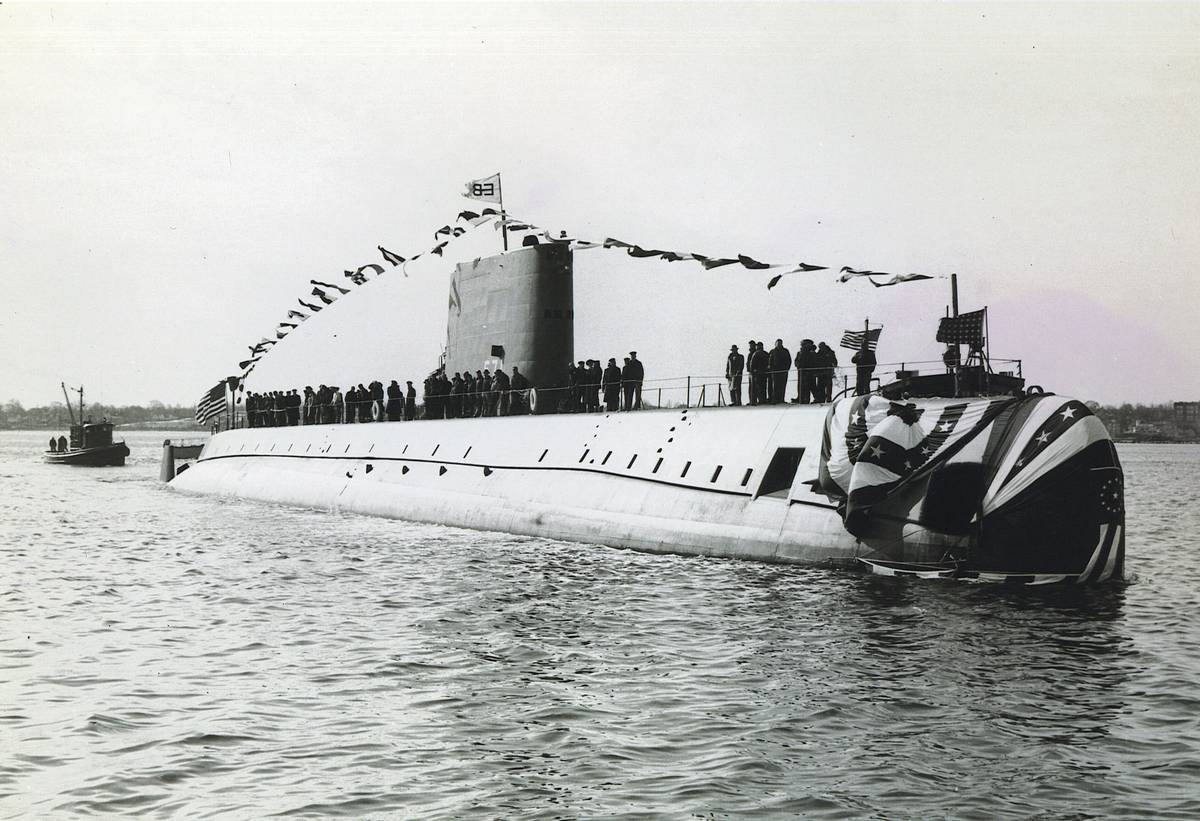
In this file photo taken Jan. 21, 1954, the nuclear-powered submarine USS Nautilus (SSN 571) slips into the Thames River.
Image courtesy US Navy.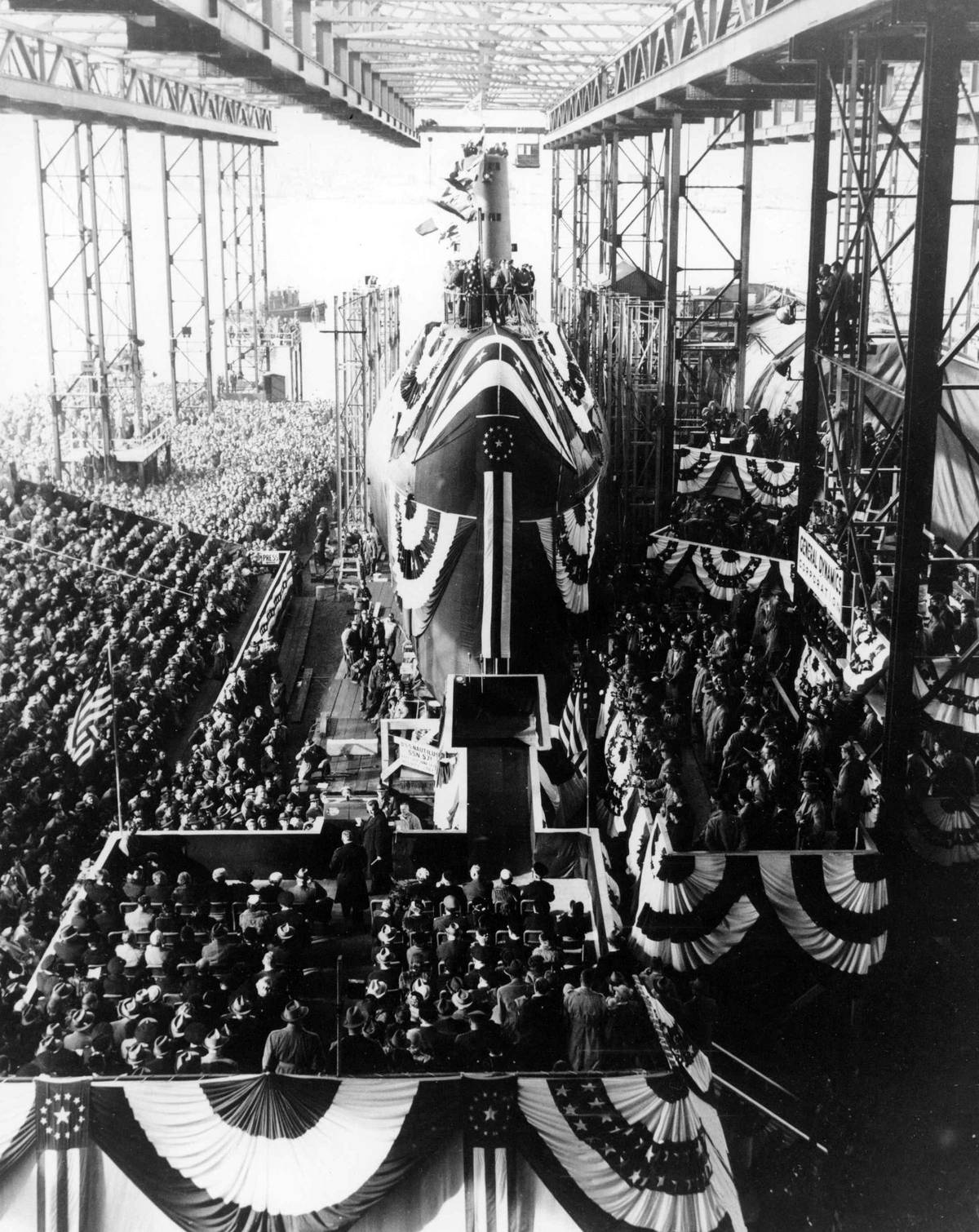
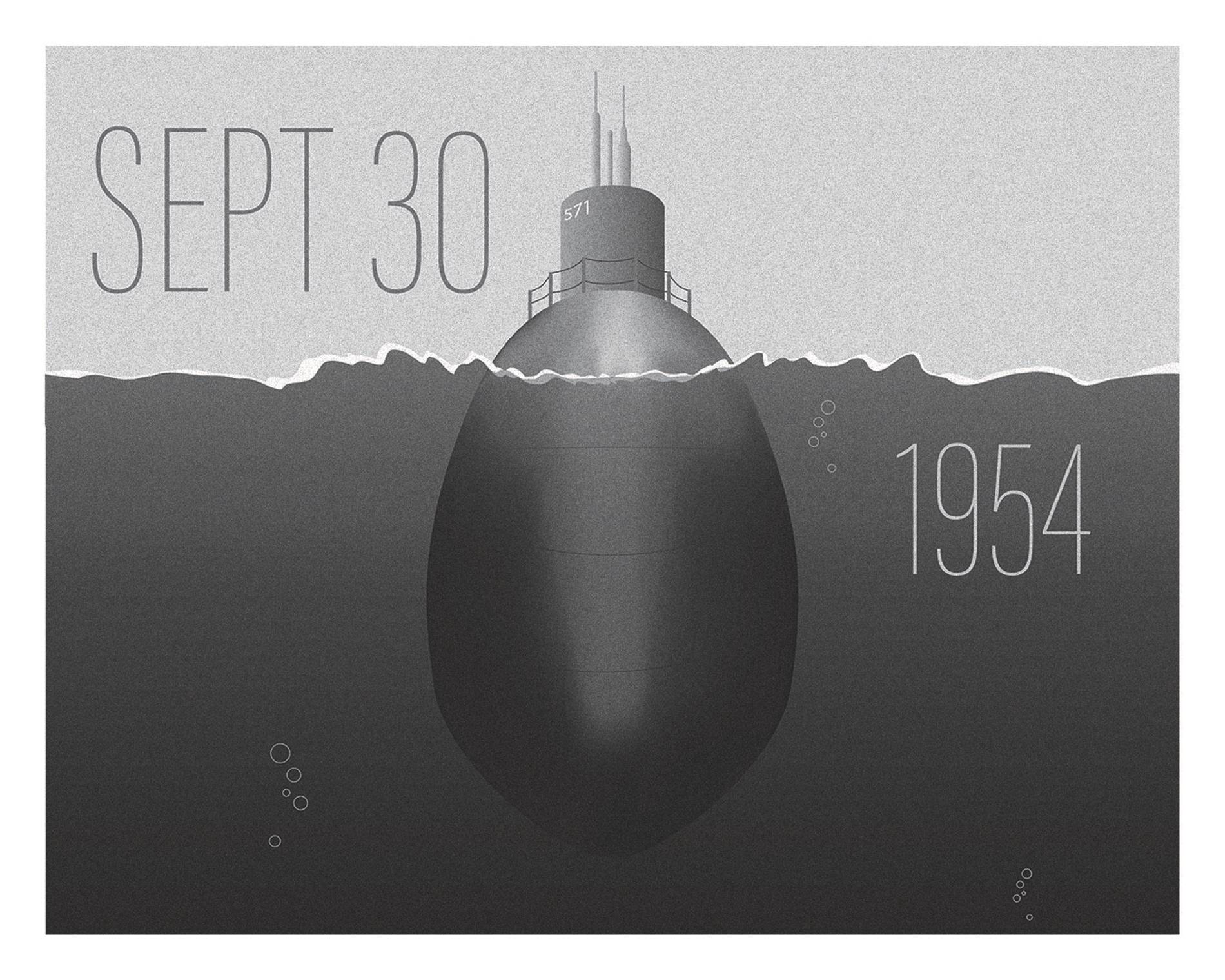
In this file photo taken Jan. 21, 1954, the nuclear-powered submarine USS Nautilus (SSN 571) slips into the Thames River.
Image courtesy US Navy.The U.S. Navy Accelerates Innovation
The U.S. Navy has been at the forefront of innovation throughout its history. Whether it was the transition from sail to steam, or the advent of steel warships to replace wooden ones, or the change from the battleship to the aircraft carrier to the centerpiece of the Navy fleet, these changes helped the U.S. Navy dominate at sea.
In the Cold War era, this innovative journey gathered momentum: from the introduction of the first nuclear submarine, USS Nautilus, in 1954; to the first of the Nimitz-class nuclear aircraft carriers in 1975; to the first Aegis-class warship, USS Ticonderoga, in 1983. These innovative technological developments kept the Navy at the forefront of warfighting prowess.
The quest to achieve a Hybrid Fleet will depend on the same level of innovation. That is why The Path Forward on Unmanned Systems will prove useful to help guide the Navy’s leadership to turn “aspiration” into concrete actions. This groundbreaking document is already gaining traction within the Department of the Navy.
Understanding The Path Forward on Unmanned Systems
The Path Forward on Unmanned Systems notes that the Navy can achieve a Hybrid Fleet with a strategy of focusing on experimentation, prototyping and learning during the current Future Years Defense Program (FYDP), working on building the infrastructure to support uncrewed systems in the next FYDP and procuring uncrewed systems in numbers during the following FYDP.
This report puts special emphasis on: “Ensuring the unmanned systems meet the needs of operational commanders.” There is little doubt that the nation’s combatant commanders are eager to add uncrewed systems to their warfighting assets.
Recognizing that the United States is in an “AI arms-race” with our peer adversaries, The Path Forward on Unmanned Systems urges the Navy to fully leverage AI-technologies, noting: “As they design, develop and acquire new systems, DON will want to take advantage of rapidly changing technology such as AI and autonomy.”
Providing Concrete and Achievable Recommendations
The Path Forward on Unmanned Systems injects a sense of urgency if the Navy is going to field a Hybrid Fleet in time to address aggressive moves by peer adversaries, noting: “We see these steps as critically important to a future hybrid fleet but believe they should be taken in parallel rather than in sequence.”
This report does not shy away from “naming names” regarding why the fielding of these systems is urgent. It states: “The development and integration of unmanned systems into war planning is particularly imperative because it offers the promise of relatively low-cost deterrence or, if necessary, warfighting in the event of conflict in the Taiwan Straits or South China Sea.”
In a presentation at a Center for Strategic and International Studies/U.S. Naval Institute forum, Vice Admiral Jimmy Pitts, deputy chief of naval operations for warfighting requirements and capabilities (N9), put the focus on uncrewed maritime systems in these terms: “Our goal is to get unmanned surface system solutions to the Fleet within the next two years.” He went on to ask the questions: “What will unmanned systems do operationally? How will they get to the war at sea and littoral operating areas? How will they stay in those areas and remain ready for conflict?”
Developing a Concept of Operations for Leveraging Uncrewed Systems
Admiral Pitts addressed important considerations. Juxtaposed against the Navy’s plans to accelerate its fielding of uncrewed maritime systems is the fact that the U.S. Congress has been reluctant to authorize the Navy’s planned investment of billions of dollars in USVs until the Service can come up with a concept of operations (CONOPS) for using them. Congress has a point. The Navy has announced plans to procure large numbers of uncrewed systems—especially large and medium uncrewed surface vessels—but a CONOPS has not yet emerged.
An evolving concept of operations is to marry various size uncrewed surface, subsurface and aerial uncrewed vehicles to perform missions that the U.S. Navy has—and will continue to have—as the Navy-After-Next evolves. The Navy can use a large, uncrewed surface vessel like the MARTAC T82 Leviathan as a “truck” to move smaller USVs, UUVs and UAVs into the battle space to perform several important Navy missions such as intelligence, surveillance and reconnaissance (ISR) and mine-countermeasures (MCM).
How would this CONOPS for a hybrid fleet evolve? Consider the case of an Expeditionary Strike Group comprised of several amphibious ships underway in the Western Pacific. This Strike Group includes three large, uncrewed surface vessels (LUSVs). Depending on the size that is ultimately procured, the LUSV can carry several medium uncrewed surface vessels (MUSVs) and deliver them to the intended area of operations.
These vessels can then be sent independently to perform the ISR mission, or alternatively, can launch one or more smaller USVs or UAVs to perform this mission. For the MCM mission, the LUSV can deliver several MUSVs equipped with mine-hunting and mine-clearing systems (all of which are commercial-off-the-shelf (COTS) platforms such as the MCM-USV, T38 Devil Ray, Shadow Fox and others tested extensively in Navy exercises). These vessels can then undertake the “dull, dirty and dangerous” work previously conducted by Sailors who had to operate in the minefield.
To be clear, this is not a platform-specific solution, but rather a concept to team the crewed ships of a Hybrid Fleet with capable uncrewed maritime vessels. When fleet operators see a capability with different size uncrewed COTS platforms in the water working together and successfully performing the missions presented in this article, they will likely press industry to produce even more-capable platforms to perform these missions and thereby accelerating the fielding of a hybrid fleet.
About the Author
George Galdorisi
Captain George Galdorisi (USN – retired) is a career naval aviator whose thirty years of active duty service included four command tours and five years as a carrier strike group chief of staff. He is the author of 15 books, including four New York Times best-sellers. The views presented are those of the author, and do not reflect the views of the Department of the Navy or the Department of Defense.