U.S. Navy
2025 Fleet Review
Inside the U.S. Navy: The Fleet has to get Bigger, and that’s a Big Challenge
By Edward H. Lundquist
Multinational ships sail in formation July 22, off the coast of Hawaii during Exercise Rim of the Pacific (RIMPAC) 2024, the world's largest international maritime exercise. Twenty-nine nations, 40 surface ships, three submarines, 14 national land forces, more than 150 aircraft and 25,000 personnel are participating in RIMPAC in and around the Hawaiian Islands, June 27 to Aug. 1. RIMPAC 2024 was the 29th exercise in the series that began in 1971.
VIDEO Credit: U.S. Air Force video by Master Sgt. Corban Lundborg, video production by Australian Army Cpl. Nicole DorrettThe Navy says, and rightfully so, that the fleet has to get bigger. The current administration has called for a revitalized shipbuilding industry with called “Restoring America’s Maritime Dominance,” and a major increase in the Navy’s fleet size.
The Department of Defense’s shipbuilding plan for fiscal year 2025 calls for a fleet of 390 ships by 2054, but to achieve that, America’s shipyards would need to produce substantially more naval tonnage than they have produced over the past 10 years. According to a report by the Congressional Budget Office, “the rate of production of nuclear-powered submarines, in particular, would need to increase significantly.”
But such changes are long-term propositions, and very expensive.
According to the Center for Maritime Strategy, “the process of rebuilding the United States’ commercial and military fleets will be lengthy and complicated.” First of all, the comparison with China’s People’s Liberation Army – Navy (PLAN) “currently has 400 ships in contrast to the U.S. Navy’s 295.,” and that their fleet is growing. It notes that China’s shipbuilding is subsidized, has many more yards capable of building large ships than the U.S., and also states that “China produces more ships than the rest of the world combined.”
To make matters worse, the number of skilled workers who can build complex warships for America is declining when it needs to grow to meet the goal.
That makes catching up to the Chinese difficult, and, should the need arise, quickly replacing our own wartime losses even more challenging.
Here are some of the major programs currently underway:
Aircraft Carriers
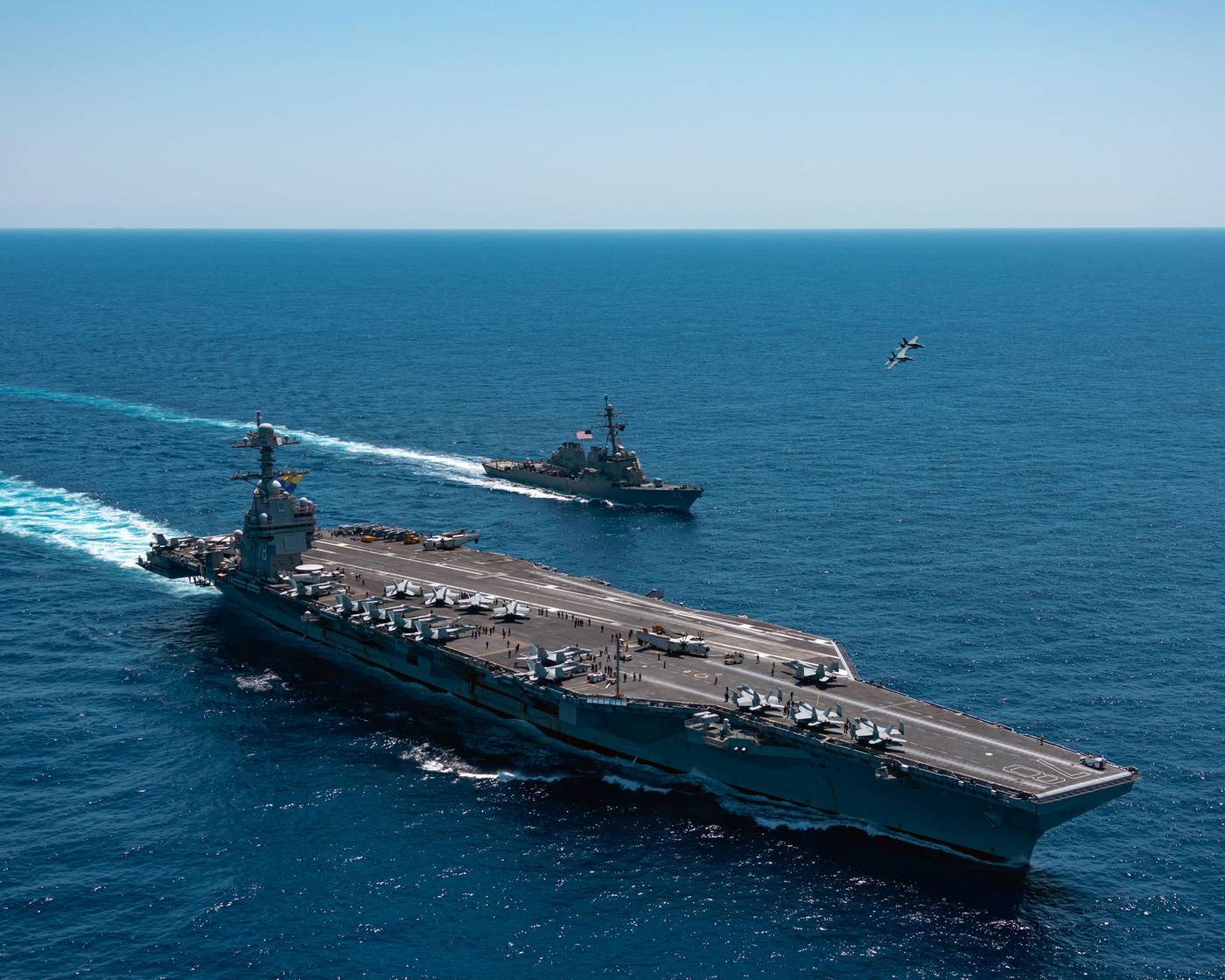
USS Gerald R. Ford (CVN 78), the lead ship in the new class of carriers (succeeding the Nimitz class), has finally worked through the kinks and is fully deployable. The Navy has several more aircraft carriers under construction at HII NNSB. The next in line, John F. Kennedy (CVN 79) is fitting out and will be commissioned later this year. Enterprise (CVN 80) is expected to be launched in November, followed by Doris Miller (CVN 81), William J. Clinton (CVN 82) and George W. Bush (CVN 83).
Newport News is the only yard able to build the carriers, but they need help. A March 31, 2025, report by the Congressional Research Service, discusses the concept of “federated shipbuilding” or “strategic outsourcing.”
“Under this approach, ship modules would be built at facilities that are some distance from the final assembly shipyard, and the modules would then be transported by truck, train, or barge to that shipyard for incorporation into the ship. The aim of this option would be to gain access to production facilities and (perhaps more important) regional labor markets in parts of the country that currently are not significantly involved in Navy shipbuilding,” the report said.
This concept is also being used for nuclear submarine construction. For example, Austal USA in Mobile, Ala., is building submarine modules for General Dynamics Electric Boat.
Nuclear Powered Attack Submarines
The mainstay of the attack submarine fleet is the Virginia class (SSN 774). There have been 24 built and placed in service, with the total class planned at 66. These boats are replacing the 62 Los Angeles (SSN 688) class built from 1972 to 1996. Many of are now out of service, but there are still 24 of the Los Angeles class in service. Despite their age, they still constitute the largest class of submarines in operation, and represent nearly half of the current U.S. SSN fleet. Soo 688s are getting life-extensions to keep them active until they can be replaced.
The 774s are being incrementally improved through blocks. The newest Block IV are entering service or are under construction.
The U.S. U.K. and Australia are working together on building submarines. The AUKUS program plans to deliver three Virginias to Australia as replacements for their conventionally-powered Collins class submarines. The U.S. and UK already have a close cooperation in building their respective new strategic missile submarines.
While the Virginia’s are still coming off the production line, the Navy is already looking ahead to the next generation attack submarine, currently referred to as SSN(X). The current budget calls for procuring the first SSN(X) in 2040.
Nuclear Powered Ballistic Missile Submarines
Of the 18 Ohio-class ballistic missile submarines (SSBNs), all remain in service, although the four oldest were converted to cruise-missile boats to comply with treaty limitations. The lead ship, USS Ohio (SSBN 726, now SSGN 726) was commissioned in 1981. The replacement for the Ohio-class is the Columbia class, with 12 boats planned to replace the 14 Ohio SSBNs. The lead ship, USS District of Columbia (SSBN 826), named for the nation’s capital, will be 561 feet long and displace 20,800 tons. She will have Blue-and-Gold crews of 155 personnel each and carry 16 Trident II D-5 submarine launched ballistic missiles.
Amphibious ships
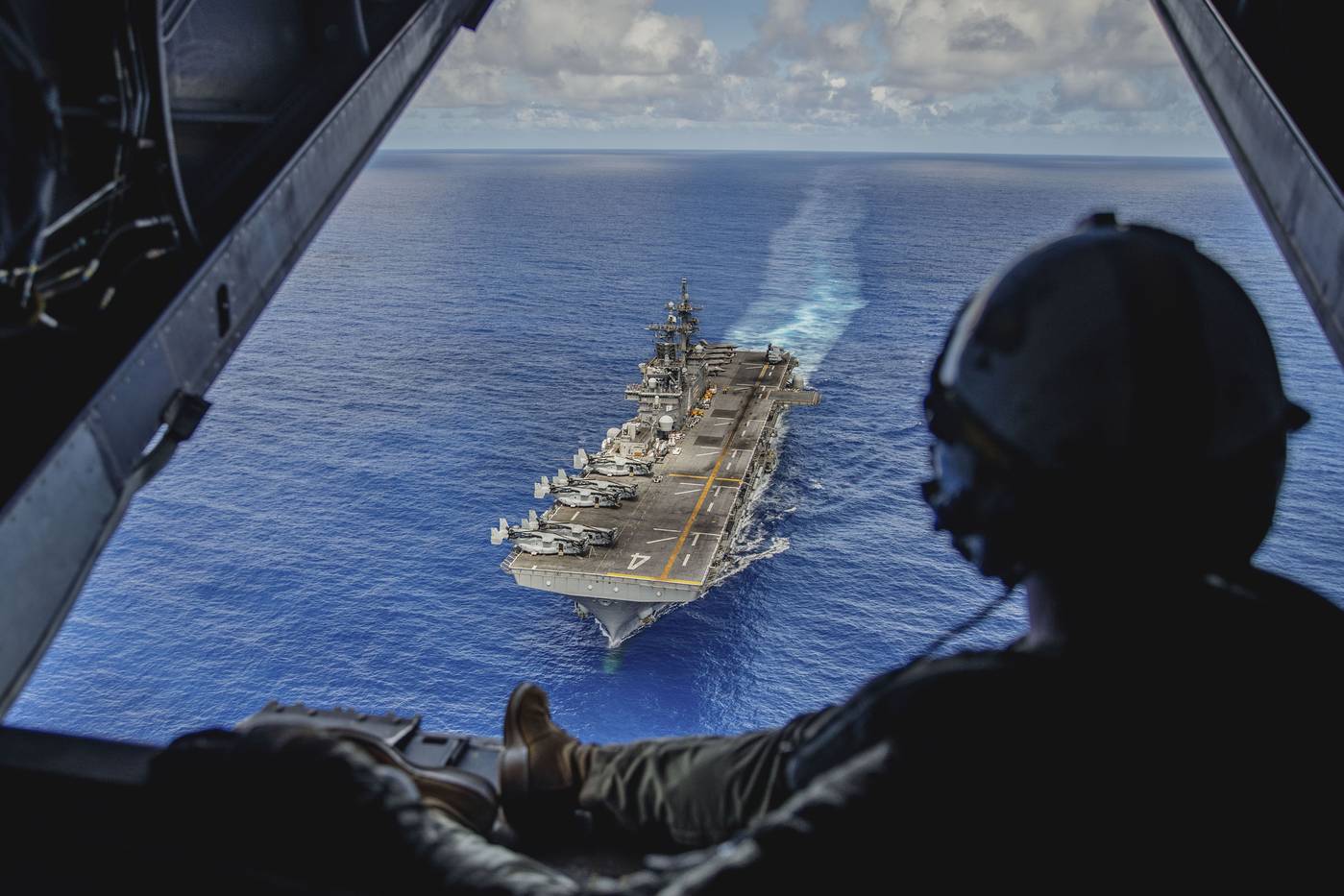
The Navy has two variants of large “big deck” amphibious assault ships. The Landing Helicopter Dock (LHD) has a well deck for landing craft, while the Landing Helicopter Assault (LHA) has a larger flight deck and aviation support facilities. Both are larger than 40,000 tons. As with all Navy amphibs today, they are built at HII/Ingalls of Pascagoula, Miss.
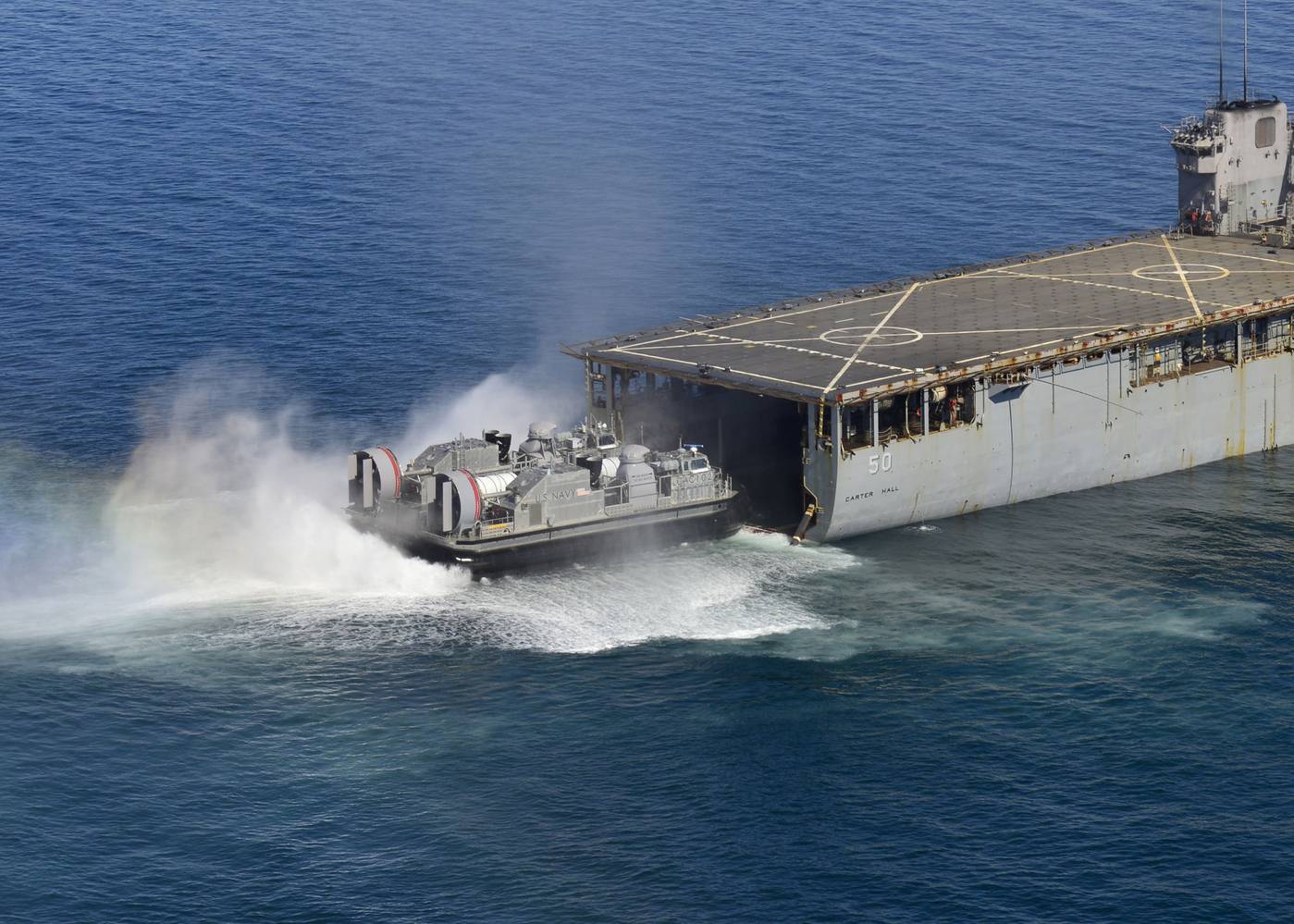
Amphibious transport docks (LPDs) and Landing ship docks (LSDs) can deploy elements of a landing force—including landing craft and aircraft--for various expeditionary warfare missions. The are thirteen LPD 17s in commission, with the last two considered “transitional” as production shifts to the Flight IIs, which are the replacements for the LSDs. 26 LPD 17s are planned, with 13 each for Flight I and II.
Last year the Navy was permitted by Congress to make a multi-ship buy with Huntington Ingalls to procure three San Antonio-class LPDs and one America-class Flight II LHA. The block-buy saves taxpayers $1 billion, and brings significant stability and predictability to what is usually a boom-or-bust industry.
The Navy’s Medium Landing Ship (LSM) program, previously called the Light Amphibious Warship (LAW) program, envisions procuring a class of 18 to 35 new amphibious ships to support the U.S. Marine Corps, particularly in implementing a new operational concept called Expeditionary Advanced Base Operations (EABO). These ships will deliver critical material to dispersed units of Marines on remote islands and coastlines.
The first vessel will be named USS McClung (LSM 1), while this class of ships will bear the name McClung class, honoring Marine Corps Major Megan M.L. McClung, who was killed in action while serving in Iraq in 2006.
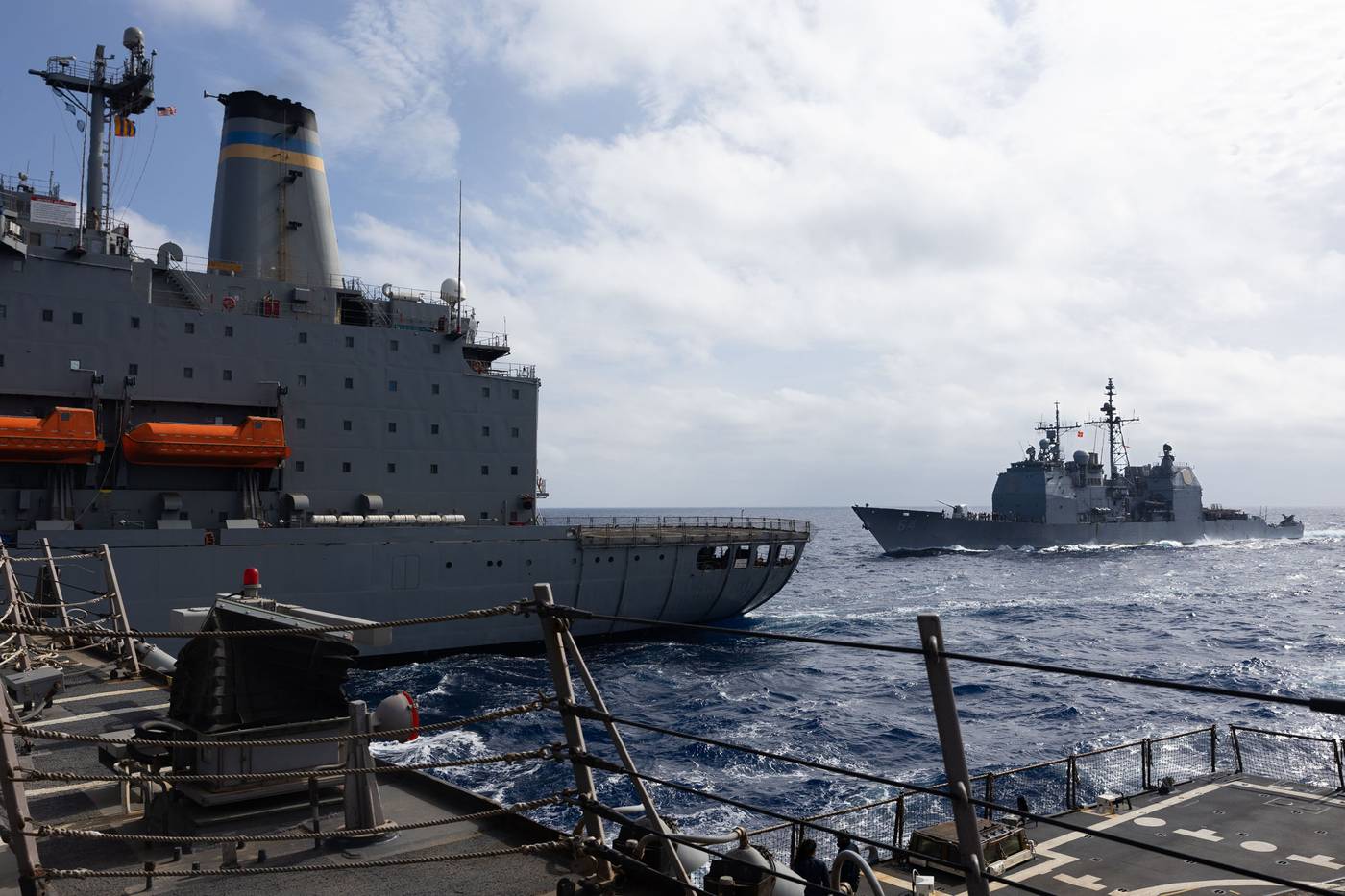
Cruisers and Destroyers
The Arleigh Burke class of guided missile destroyers is the most successful surface combatant program in naval history, with 74 ships delivered in the various variants, with 25 more on contract (12 of those have begun construction). But as successful as they are, there simply in no more room in the ship for bigger and better sensors and weapons. The newest variant, the Flight III, features an AMDR/SPY-6(V)1 Air and Missile Defense radar system with provides improved capability previous DDG 51s with combat systems centered on the SPY 1 radar.
The Navy is looking ahead to the next generation of guided missile destroyers (DDG), which it calls the DDG(X). It will have the proven combat system from the DDG 51 Flight III, but with a new propulsion system and space, weight, power and cooling margins to handle futuristic directed energy weapons like lasers and rail guns.
The Ticonderoga class guided missile cruisers are at the end of their service life. Modernization of these ships proved to be very expensive, and the Navy felt those resources would be better applied to new platforms. But three of them have been given a reprieve. According to a Navy statement, “The Department of the Navy plans to operate three Ticonderoga-class (CG 47) cruisers beyond their expected service life: USS Gettysburg (CG 64), USS Chosin (CG 65), and USS Cape St. George (CG 71). This decision adds 10 years of cumulative ship service life from fiscal year 2026 to 2029.”
The next generation guided missile destroyer is known as the DDG(X). It will feature an integrated electric power system, which will be tested at the Land Based Test Facility at Naval Surface Warfare Center in Philadelphia to reduce risk. Hydrodynamic testing of the hull design will be conducted at Surface Warfare Center (NSWC) Carderock.
DDG(X) will be the follow-on ship to the Ticonderoga-class of guided missile cruisers and the Arleigh Burke DDGs. The DDG(X)] is expected to have a displacement of 13,500 tons, which is considerable larger than the 9,700-ton DDG-51 Flight III.
The three Zumwalt-class DDG 1000 guided missile destroyers have or are having their advanced gun systems (AGS) guns removed and replaced with long-range hypersonic missiles. The conversions are being accomplished at HII in Pascagoula.
Frigates
Frigates are generally less capable than destroyers or cruisers, and are generally less expensive to acquire. Frigates such as the Knox and Oliver Hazard Perry class were built as escorts to accompany convoys destined for Europe supply our allies in the event of a crisis, yet not one of those ships ever performed that role in a real situation. But, although they were a little slower than the carrier and other ships in the strike group, frigates were assigned to virtually every carrier battle group until they were retired.
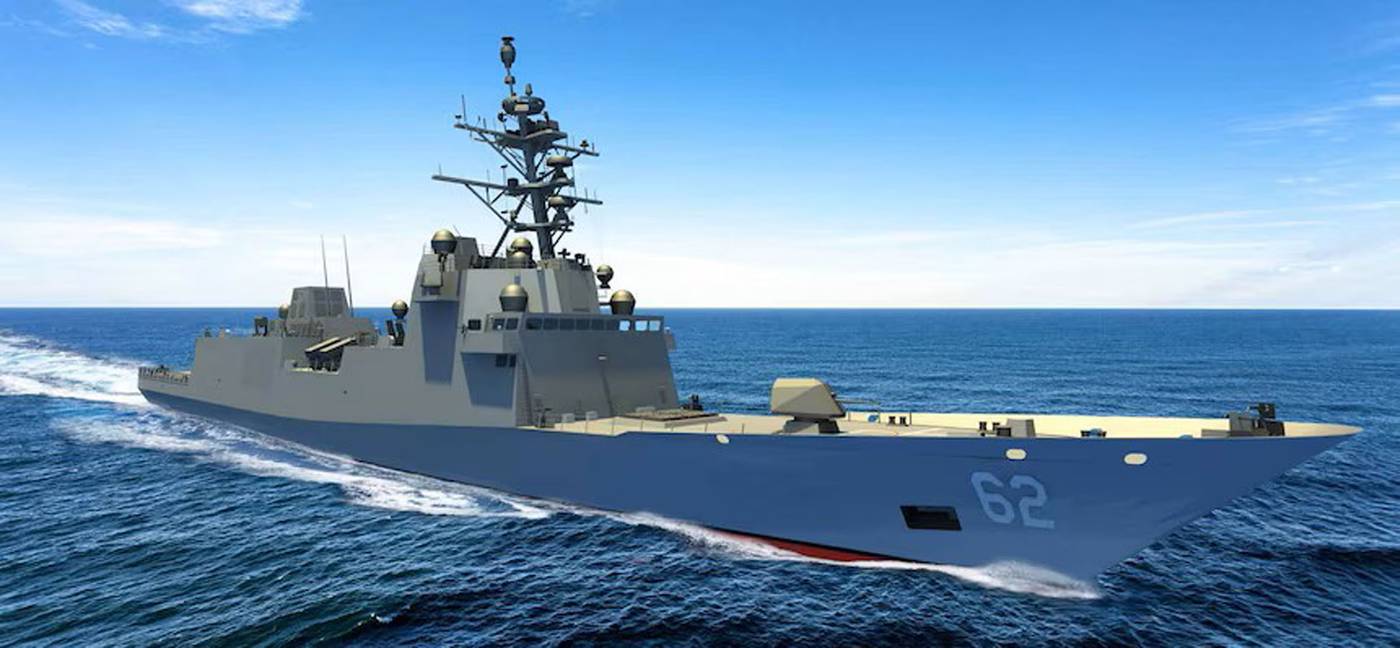
The Navy wanted to acquire a new small combatant based on an existing and proven design. It selected the French-Italian FREMM FFG design. This would reduce risk and enable the ships to be built quicker than a “clean-sheet” design. The Italian variant was built by Fincantieri, which owns the Marinette Marine shipyard in Wisconsin that was selected to build what is to be the Constellation (FFG 62) class. There would be some differences with the U.S. version--namely an American combat system; a modified hull design without a bow-mounted sonar; 23.5 feet longer and 500 tons heavier--but it was expected to be 85-percent common with the FREMM parent design.
The first eight ships in the class will be built at Marinette, which has upgraded and optimized its facility to build the FFGs efficiently. However, the Navy has the option to place subsequent orders at other shipyards such as bath Iron Works or Austal USA.
There have been schedule delays and cost overruns, partly attributable to the COVID disruptions and the declining availability of skilled shipyard workers—something that has affected all U.S. shipyards.
According to Naval Sea Systems Command spokesperson Jamie Koehler, “The program currently maintains a 36-month delivery delay, placing delivery in early 2029. Launch of the lead ship is projected for 2027, and commissioning will occur following delivery.”
Littoral Combat Ships
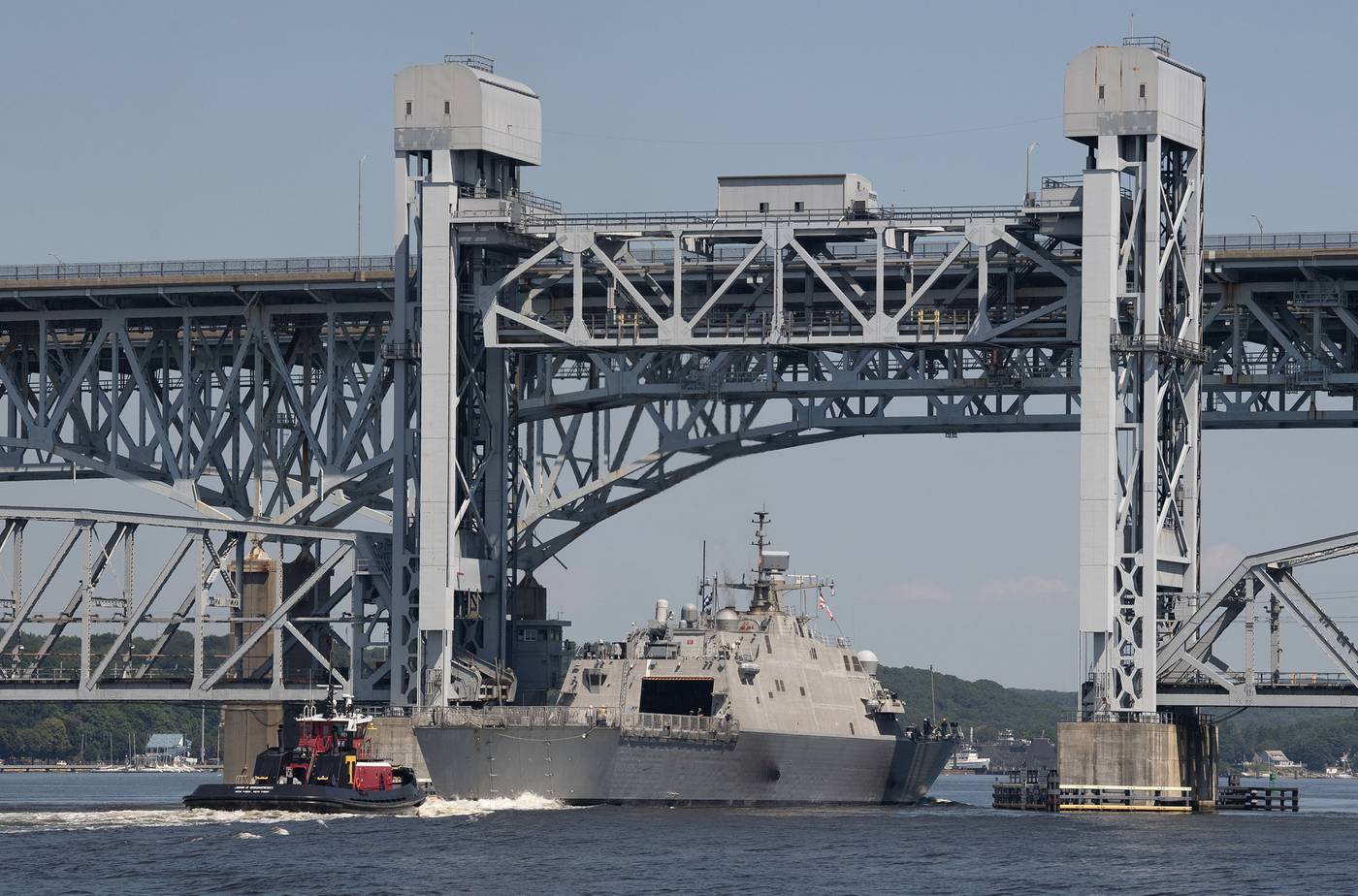
The Littoral Combat Ship (LCS) construction is drawing to its completion. The even numbered ships are “Freedom” monohull variants built at Fincantieri Marinette Marine in Wisconsin, with the odd-numbered “Independence” trimarans being built at Austal USA in Alabama. 33 ships have been commissioned, with the final two nearing completion at Marinette and Mobile respectively. Seven LCS have already been decommissioned.
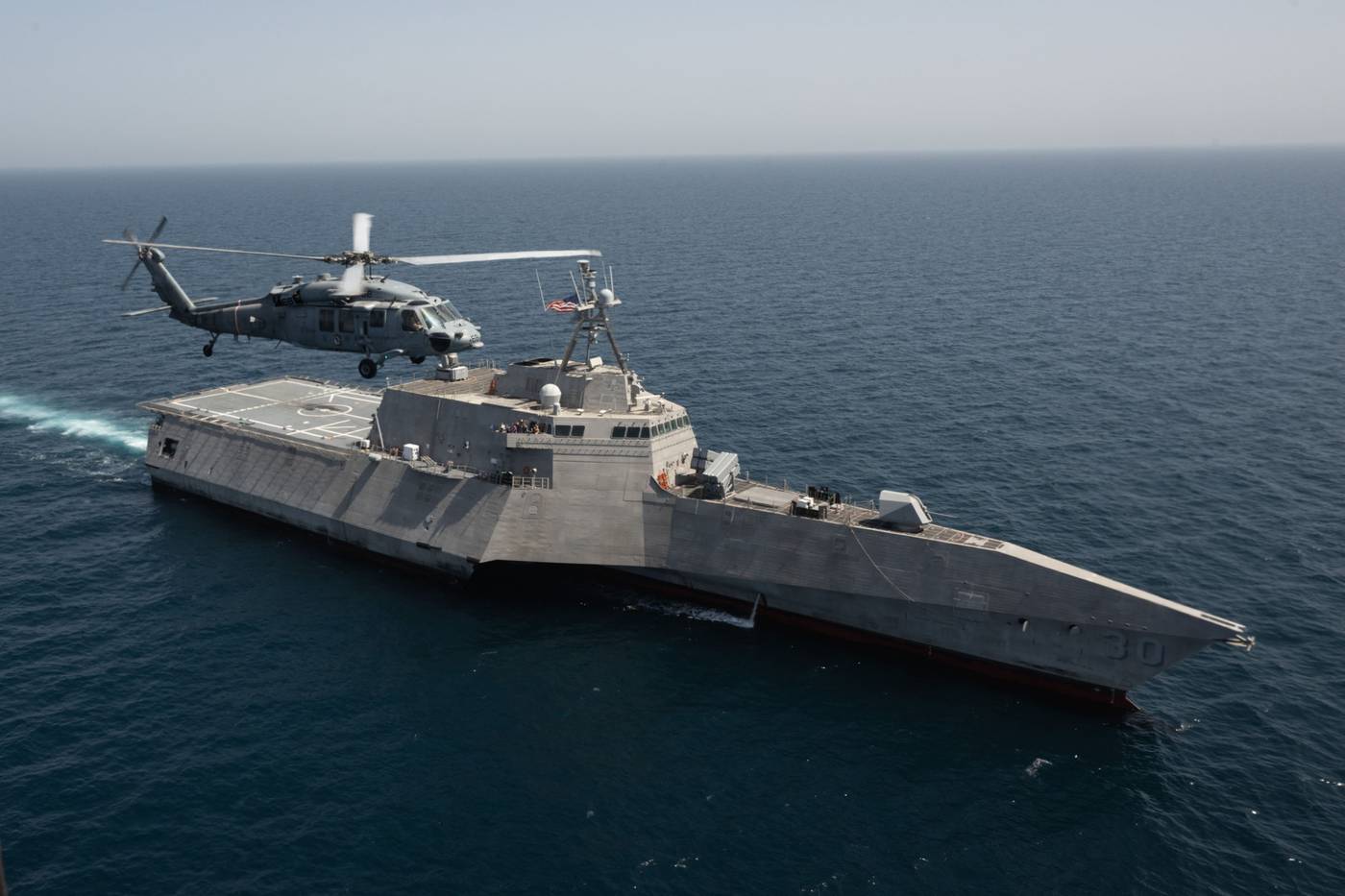
Submarine Tenders
The Navy has issued a contract to General Dynamics NASSCO in San Diego for the design development phase of the AS(X), the replacement for the service’s two aging Emory S. Land-class submarine tenders, USS Emory S. Land (AS 39) and USS Frank Cable (AS 40). The lead ship was commissioned in 1979 and is scheduled to be retired in 2029. The Navy currently bases both AS 39 and 40 at Guam to support submarines in the Indo-Pacific.
Large Unmanned Vessels
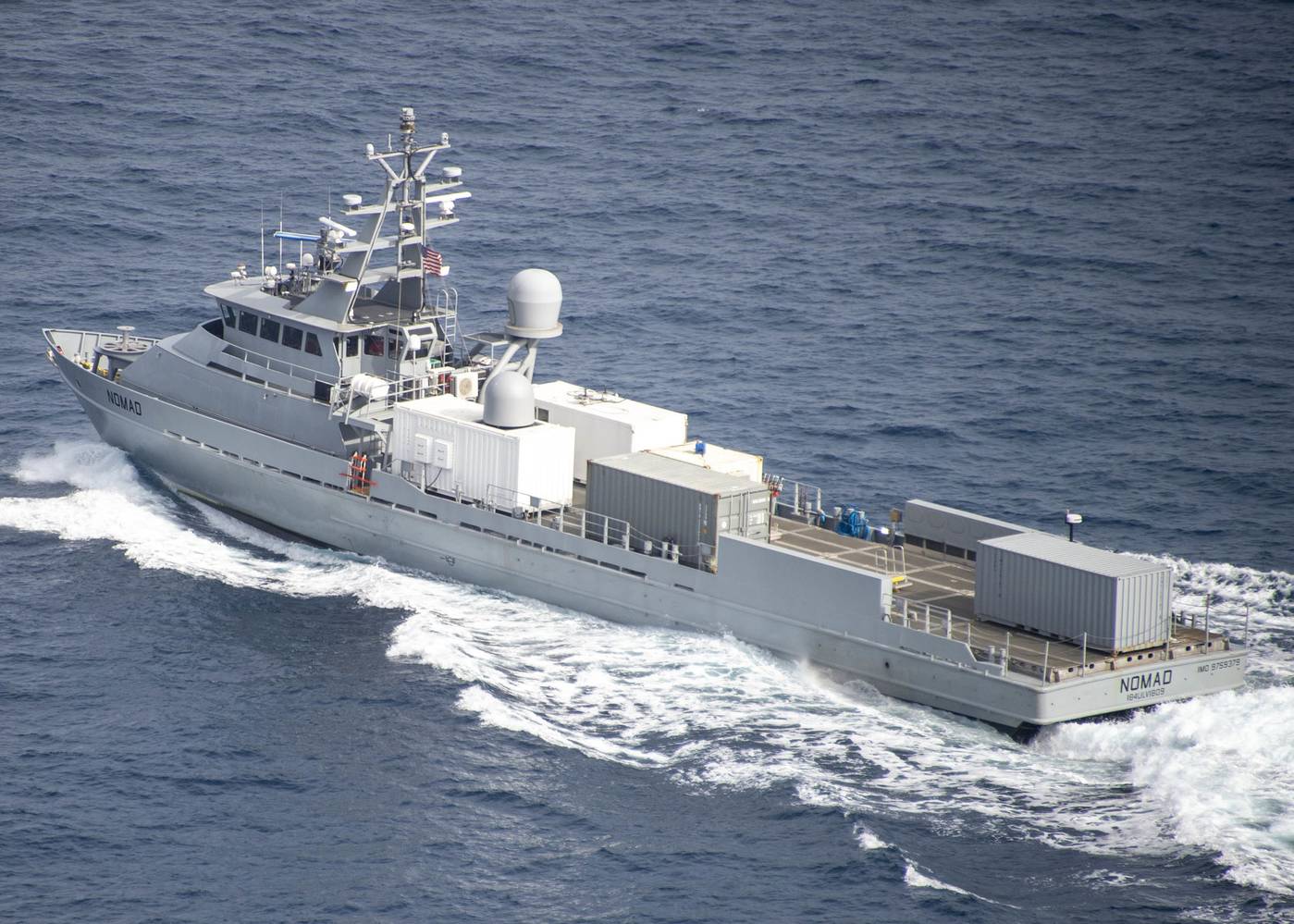
The U.S. Navy’s newest Overlord Unmanned Surface Vessel, Vanguard (OUSV3), built at Austal USA’s shipyard in Mobile, Ala., is the first USV for the Navy purpose-built for autonomous operations from the keel-up. Vanguard joins Ranger and Mariner, which were commercial offshore support vessels converted for unmanned autonomous operation. Although Vanguard was built for unmanned operations, as evident by the bridge windows, it does has accommodations for crewed operations. NOMARS does not.
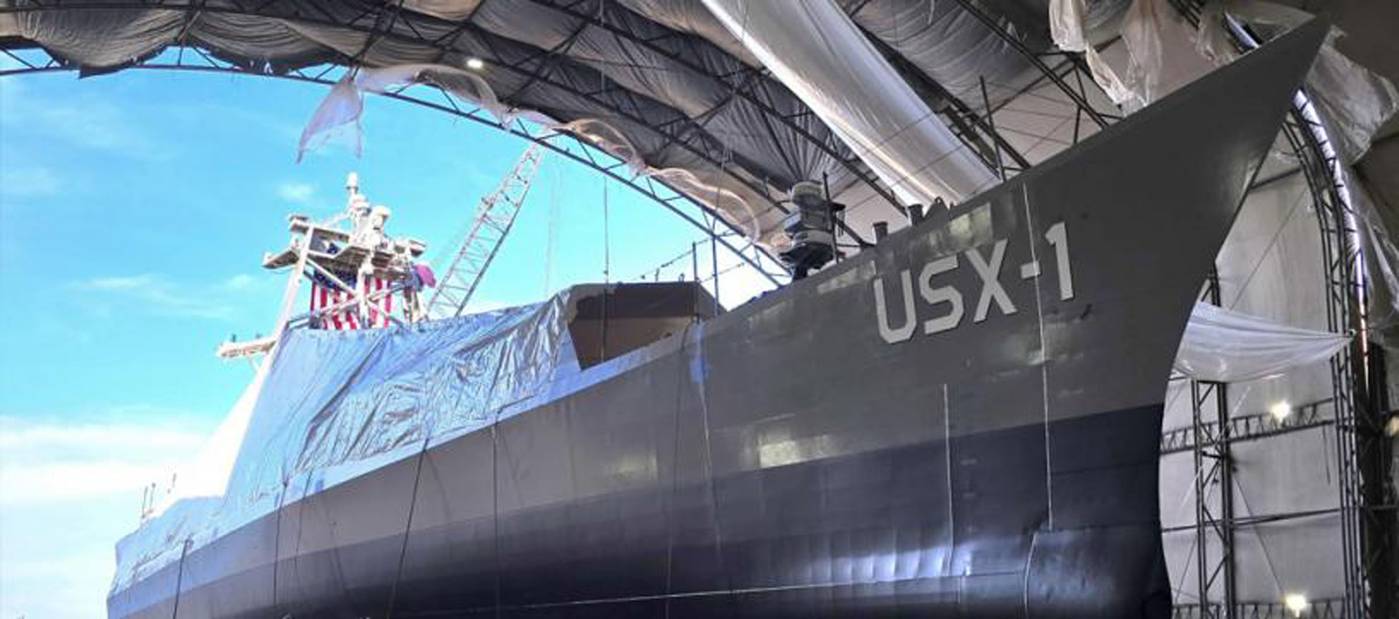
DARPA took on the challenge of designing and building a vessel that could remain at sea for a year without human intervention on board. The No Manning Required Ship (NOMARS) program has built a demonstration USV), USX-1 Defiant, completed in February 2025.
Boeing’s Orca Extra-Large Unmanned Underwater Vehicles can deploy for long periods of time and clandestinely place objects like sensors or mines. The 51-foot vessel has a range of 6,500 miles and carries a 34-foot payload module.