Tech Feature
Green Marine & Hybridization
Moving Today’s Fleets to a Lower-Carbon Future
The marine industry is currently facing one of the most stringent energy transitions of any industrial sector. Operators and engineers are faced with tightening emissions regulations, public pressure to reduce noise and air pollution, and the technical realities and capabilities of vessels that must operate reliably in harsh and corrosive environments. While fully electric propulsion attracts many headlines, the real momentum is shifting towards hybridization – a much more pragmatic, scalable approach that balances emissions goals with operational realities.
By Ana Arrizabalaga and Dennis Heine, Regal Rexnord
Hybrid systems provide a flexible balance between emissions reductions while competing for range and usable vessel space – making them ideal for ferries, tugboats, mid-sized commercial vessels, and even extending to personal and leisure boats.
Image courtesy Regal RexnordAcross the United States, hybrid solutions are increasingly defining new vessel designs and retrofit projects alike. Meanwhile, European markets continue to advance stricter environmental policies that are accelerating hybrid adoption, in turn, influencing propulsion strategies globally. This age of discovery and testing is pushing owners, builders, and suppliers to rethink how their powertrains are designed, integrated, and supported for an ever-changing future.
Why Hybridization Is Gaining Ground
Environmental regulations remain the strongest driver behind the advancement of marine electrification. Global targets and regional mandates aimed at reducing overall greenhouse gas emissions are forcing these changes, with targets set by a 2023 IMO Strategy Report, the International Maritime Organization is calling for an approximate 40% CO₂ reduction by 2030 and net-zero ambitions by 2050. Additionally, localized restrictions within ports, harbors, and environmentally sensitive areas are increasingly limiting noise and exhaust emissions during port operations.
Typically, Europe has led the charge in these regards. Scandinavian countries and regions such as Norway have pioneered low and zero-emission operating zones, compelling ferry operators and coastal fleets to adopt entirely new propulsion strategies. While regulations in the U.S. are currently less aggressive, there are still similar pressures in densely populated coastal and urban areas – particularly for city ferries and workboats operating closer to shores.
Though for vessel owners, environmental pushes alone rarely justify large-scale investment. Economics still rule basic decision-making in these regards. Batteries occupy valuable space, often displacing cargo or passengers that generate revenue, and as a result, many operators view hybridization as a tool to meet these regulatory requirements while also preserving operational flexibility and profitability.
Hybrid vs. Full Electric: Matching Technology to Reality
Despite growing interest in fully electric vessels, hybrid propulsion is quickly dominating today’s marine electrification landscape overall. Hybrid systems provide a flexible balance between emissions reductions while competing for range and usable vessel space – making them ideal for ferries, tugboats, mid-sized commercial vessels, and even extending to personal and leisure boats.
Fully electric propulsion, by contrast, tends to make sense only in very specific operating profiles. Short and repeatable routes with predictable load cycles – such as shuttles or ferries with easy access to charging infrastructure – are ideal candidates for this. In fact, one recent U.S. project illustrates this well: a newly constructed fully electric passenger ferry designed to carry hundreds of passengers on a defined route where charging logistics and operational patterns support full electrification. This is an ideal use case that demonstrates what is possible when route, infrastructure, and regulatory pressure all align.
For larger vessels and deep-sea shipping, this equation changes. Long distances, heavy payloads, and limited charging access heavily tip the scales back toward hybrid systems or alternative fuels aimed at chipping away towards these regulations. In these applications, electrification becomes part of a broader energy strategy as opposed to being the centerpiece.
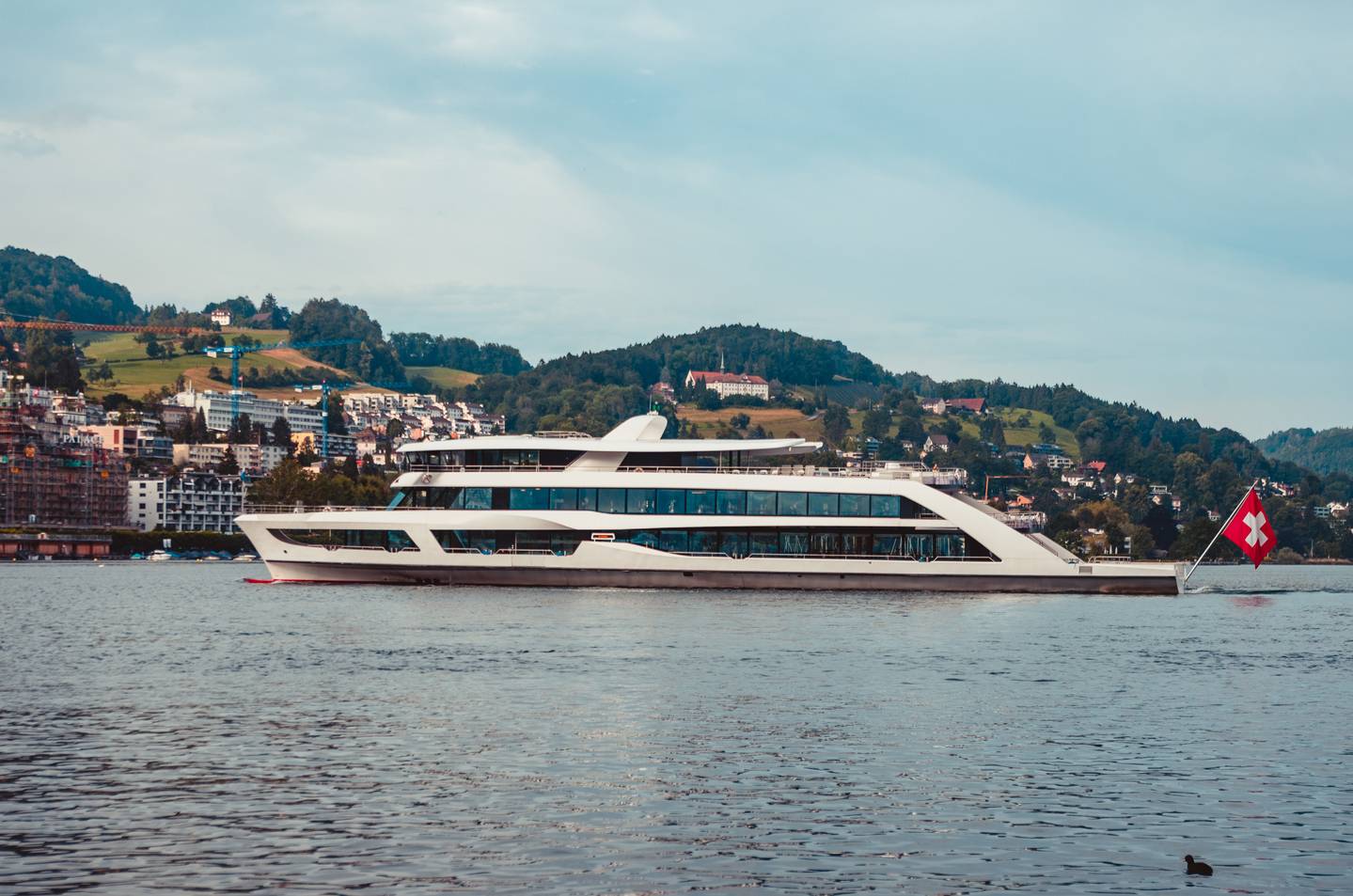
Engineering the Hybrid Powertrain
From a drivetrain perspective, hybridization is equal parts about smart integration as it is about incorporating newer technology. In many small to mid-size vessels, the underlying architecture is still familiar: an engine operating within an expected rpm range, a gearbox reducing speed, and a propeller optimized for thrust and efficiency.
Hybrid systems typically introduce an electric motor into this layout, rather than requiring a complete overhaul or redesign. This is where elastic couplings and clutches can play a vital role. Electric motors deliver high torque at lower speeds – an advantage for maneuverability and efficiency – but they also introduce new torsional dynamics that must be carefully managed to avoid damage to gearboxes, shafts, and generators.
These modern hybrid drivetrains often rely on elastic couplings combined with electrically actuated clutches, which allow operators to seamlessly switch between diesel, electric, or combined modes. Solutions that integrate these functions into a single assembly reduce system complexity, save space, and simplify the control which are key benefits when retrofitting existing vessels for hybridization.
Enabling Practical Hybridization
As hybrid adoption continues to grow within the industry, suppliers that can address drivetrain integration at a system level are becoming more in demand. Regal Rexnord, through its marine portfolio, is one of the leaders exemplifying this shift. Rather than focusing solely on individual components, their portfolio supports hybridization by combining electromagnetic clutch technology with highly flexible couplings – including shafting products from CENTA™ and Jaure™, and clutch and brake products from Stearns™, Stromag™, Svendborg Brakes™, Twiflex™, and Wichita Clutch™ – to enable smooth power transfer, vibration control, and flexible operating modes that are needed within hybridization efforts.
One specific approach with this in mind is the use of a Stromag “two-in-one” clutchcoupling solution, which can be positioned between the engine and electric motor, between the motor and gearbox, or on PTO/PTH lines driving generators. Because these systems are compatible with conventional drivetrain layouts, they are particularly wellsuited for retrofit applications where space is limited. Importantly, they allow the main engine to be declutched entirely, enabling silent, zero-emission operation in ports or environmentally restricted zones.
Retrofit, Service and the Road Ahead
Newbuilds alone will not be enough to hit emissions targets. The global shipbuilding industry lacks the capacity to replace existing fleets fast enough, making retrofit projects essential to industry progression. Hybridization offers one of the most viable retrofit paths, particularly when solutions can be integrated into existing propulsion lines with minimal changes to the current structure.
Service and aftermarket support are therefore becoming very important differentiators. Beyond supplying hardware, marine operators increasingly value partnerships that can assist with installation, commissioning, design, maintenance, and lifecycle optimization, to name a few. As hybrid systems grow to become more sophisticated, access to technical expertise before and after delivery will heavily influence purchasing decisions as much as individual component performance.
For vessel owners, designers, and builders, the reality towards hybridization no longer being a future concept is apparent. It is the practical bridge between today’s active fleets and tomorrow’s expectations – and those who engineer that bridge thoughtfully will be at the forefront of the next era of marine propulsion.
About the Author
Ana Arrizabalaga and Dennis Heine bring more than 35 years of combined experience in the marine market. Ana has held a variety of roles in marine sales and currently serves as a Senior Industry and Business Development Manager at Regal Rexnord. Dennis has spent his career specializing in commercial gearboxes, serving as both a design and regional sales manager, and now works as a Global Product Manager for hydraulic clutches and brakes at Regal Rexnord.