Offshore
Energy Transition
The role of FPSOs in the Maritime Energy Transition
By Philip Lewis, Research Director, Intelatus Global Partners
A new design from SBM Offshore of a floating production storage and offloading (FPSO) unit focused on the production of blue ammonia has earned approval in principle from ABS.
Image courtesy SBMIn its World Energy Outlook published in November last year, the International Energy Agency (IEA) forecast that, under current national policies, shipping’s global emissions will rise from ~847 million tonnes of CO2 in 2024 to ~1,060 million tonnes of CO2 by 2050. This is far from the IMO’s target net zero GHG on a full lifecycle well-to-wake basis by/around 2050.
The IEA’s report was published in the context of a changing relationship within the energy trilemma, where energy affordability and security are prioritized over the energy transition. In shipping terms, the framework to deliver net zero adopted (without the USA and objections from some Member States) within the IMOs Marine Environment Protection Committee (MEPC) were not adopted in October’s IMO meeting as a result of, among others, significant pressure from the USA and Saudi Arabia. The adoption discussion has been delayed for one year until October 2026.
While a significant setback to the net zero framework, energy transition in shipping continues and the search for low- and zero-emission fuels maintains momentum. Increasing interest in FPSOs to be part of the low and zero emission supply solution has increased.
Is there Demand for Low- and Zero-emission Fuels?
Demand for cost-competitive low and zero emission fuels is growing in the maritime sector. According to DNV Veracity, ~2,330 alternative fuel vessels are in operation or on order. Close to 65% of the vessels can run on LNG, ~19% methanol, ~13% LPG and ~2% each for hydrogen and ammonia. Most of the alternative fuel vessels feature dual fuel engines that continue to run on conventional carbon-based marine fuels. Cost-competitive low- and zero-carbon supply is needed.


The Color of Fuel
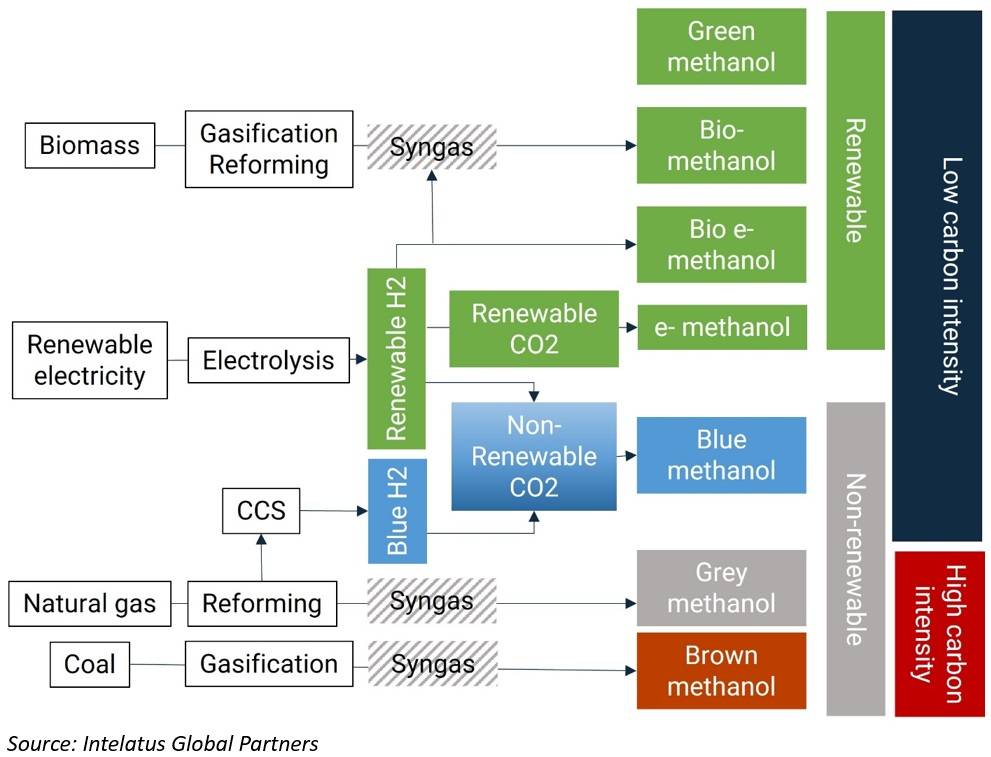
Using methanol as an example, there are many pathways to produce methanol, from non-renewable to renewable sources, resulting in low- to high- carbon intensity fuel. For low- and zero-emission fuels, we look to blue, green and pink (from nuclear power) methanol, ammonia and hydrogen. Blue fuels generally require natural gas to produce the hydrogen, that is the base of alternative methanol and ammonia. In the context of low and zero well-to-wake maritime fuels, the question of certification is still being addressed, and the certification of commercial scale alternative bunker supply is a complex question to address.
Where do FPSOs come into the Discussion?
The FLNG segment has been growing as operators seek to meet growing LNG demand from commercial natural gas discoveries.
But there is increasing interest in monetizing associated natural gas to existing offshore oil production infrastructure, that was routinely flared, used to power gas turbines for production platforms and/or injected into wells, or stranded gas by location, lack of pipelines and economics. Many FPSO operators are looking at ammonia FPSOs ahead of methanol FPSOs.
Blue ammonia FPSOs appear to be favored as they help monetize associated and stranded natural gas. In a blue ammonia FPSO, carbon capture technology is used to sequester carbon dioxide from the gas stream and reinject CO2 into the reservoir, reducing the carbon footprint of oil production. Hydrogen from the natural gas stream and direct air capture nitrogen are compressed and then synthesized in Haber-Bosch process units before being refrigerated for storage and offloading to liquid ammonia tankers. Companies securing Class Approval in Principles (AiPs) for blue ammonia FPSOs over the last year or so have multiplied, including:
-
Aragon (Seatrium investment): FPSO Bluebell secured an ABS AiP for a blue ammonia FPSO.
-
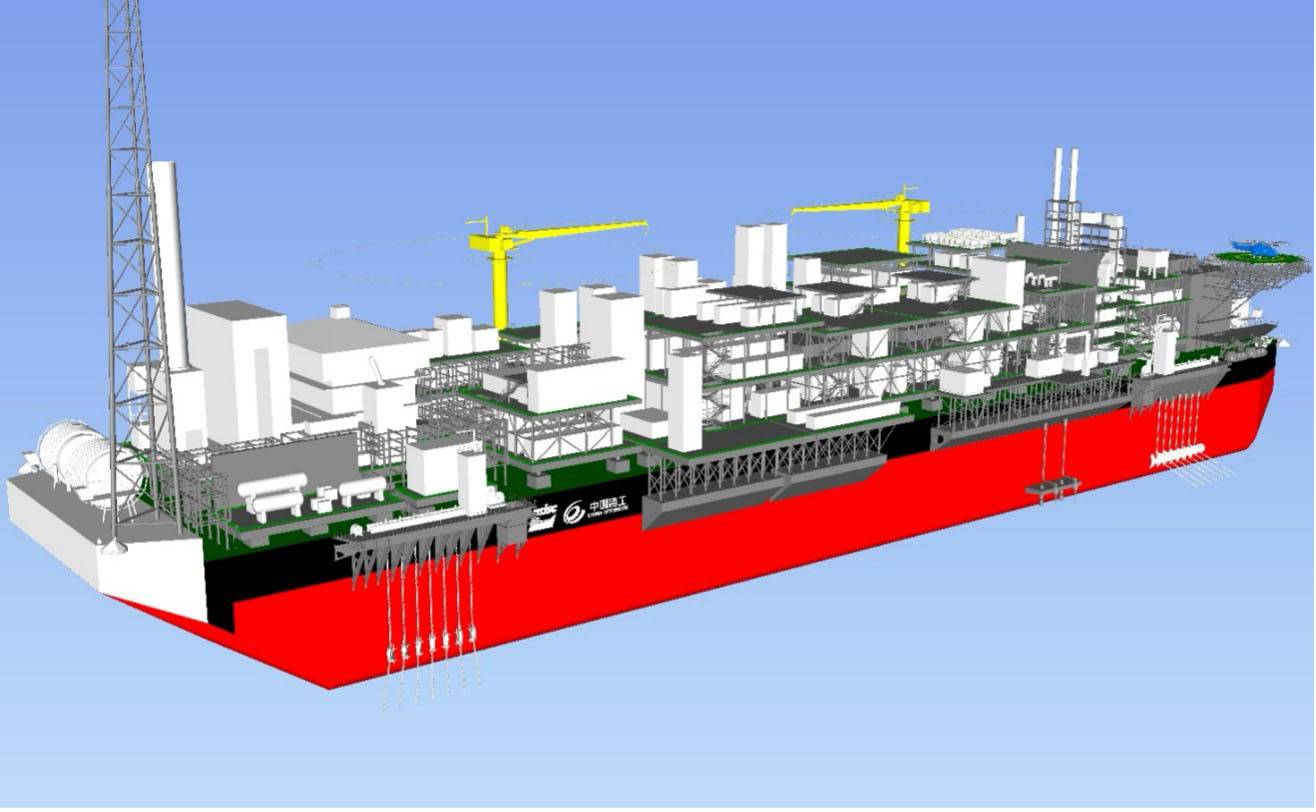
MISC: Working with China Offshore Engineering & Technology Company, MISC secured an AiP from AIS to monetize unutilized gas from nearby offshore facilities with 1 mtpa ammonia FPSO, featuring a new build hull. KBR is the ammonia technology licensor. Produced ammonia is stored in onboard LNT A-box refrigerated tanks at -33oc at atmospheric pressure
-
MODEC: Working with Mitsubishi Shipbuilding and Toyo, MODEC has secured an AiP from ABS to monetize associated gas & FPSO gas turbine exhaust
-
Samsung Heavy Industries: ABS AiP for Ammonia Blue 1.2mpta FPSO.
-
SBM Offshore: AiP from ABS to monetize associated gas.
In addition to blue ammonia FPSOs, several companies are looking at green ammonia FPSOs, where generally offshore onshore wind power is supplied to the FPSO which desalinates and splits hydrogen from seawater through electrolysis units to be compressed and synthesized with nitrogen to produce ammonia. Companies developing green ammonia concepts include:
-
Aragon (Seatrium investment): Developing the Amalia green ammonia FPSO.
-
BW Offshore: SwitchH2, BW Offshore and McDermott have secured a DNV AiP of green ammonia FPSO powered by offshore wind and using a converted VLCC.
-
Samsung Heavy Industries: working on a green ammonia FPSO with LR.
-
Wison New Energies: Working with H2 Carrier for a 500MW green ammonia FPSO using onshore wind power.
-
Yinson: 165ktpa P2A FPSO producing green ammonia using offshore wind
How close are we to Ammonia FPSO deployment?
Given the current state of development and the barriers to FPSO adoption, it is unlikely that an ammonia FPSO will be deployed until the middle of the next decade. The factors impacting ammonia FPSO adoption are addressed in the following chart.
Deployment of ammonia FPSOs in the next decade can support the development of ammonia fueled vessels that are zero emissions on a tank-to-wake basis for blue ammonia (low-carbon on a well-to-wake basis) and well-to-wake for green ammonia.

About the Author
Philip Lewis
Philip Lewis is Director Research at Intelatus Global Partners. He has extensive market analysis and strategic planning experience in the global energy, maritime and offshore oil and gas sectors.