Insights
Kurt Olsen, VP of Shipyard Ops, Stevens Towing
INSIGHTS: Kurt Olsen, Vice President of Shipyard Operations, Stevens Towing
On Yonges Island, South Carolina, just up the Wadmalaw River from Charleston, the fourth-generation maritime company Stevens Towing Company continues to rewrite its own history. Long known for its towing and barge work, its ship repair business is growing at light speed, transforming what began decades ago as an internal maintenance yard into a dynamic commercial shipyard serving tugs, barges, OSVs, and dredge vessels from Florida to Virginia. At the center of this evolution is Kurt Olsen, Vice President of Shipyard Operations, who has spent the past decade helping to turn Johnson Stevens’ vision into reality. Olsen’s path to shipyard leadership wasn’t linear—but like the vessels Stevens Towing hauls out, he’s found steady water in a business where hard work and family values still rule.
By Greg Trauthwein
Many in the maritime business know from an early age that a career with ‘salt in their veins’ is their destiny. Kurt Olsen is not one of them!
“I graduated from Kings Point in 2013 as a shipyard management major,” Olsen recalls. “At the time, nobody would’ve guessed I’d still be in the industry.”
Before Kings Point came onto his radar, Olsen envisioned a college career at a Division 1 school and centered on playing soccer. But at his father’s request, he checked out Kings Point, though his admits that “my mom literally had to kick me out of the car door; so I went. Ultimately coming to the conclusion that more structure was needed in his life, he started his career at USMMA, and admits “arguably, it’s the best decision I've ever made. I've made some of the best friends I've ever had; I learned what it means to work hard, and to be by yourself; and it set me up with a base and structure to be successful.
Always an athlete – earlier in 2025 completing his first Ironman Triathlon – while Olsen didn’t have the passion for maritime at an early stage, he’s always been a competitor.
After sailing with Tidewater Marine, Olsen came ashore thinking Stevens Towing would be a stopgap before a career in real estate. Instead, he found something rare in modern industry—a family-run company with deep roots and a forward-looking spirit.
“When I started working at Stevens Towing, I got very strong feelings about the family, the history behind the company,” said Olsen. “At most companies today, everything's big corporate and centered on climbing the ladder. At Stevens Towing, I saw the vision that Johnson had for the company and he gave me an opportunity. I saw the vision and now we're trying to execute that vision and take the shipyard to the next level.”


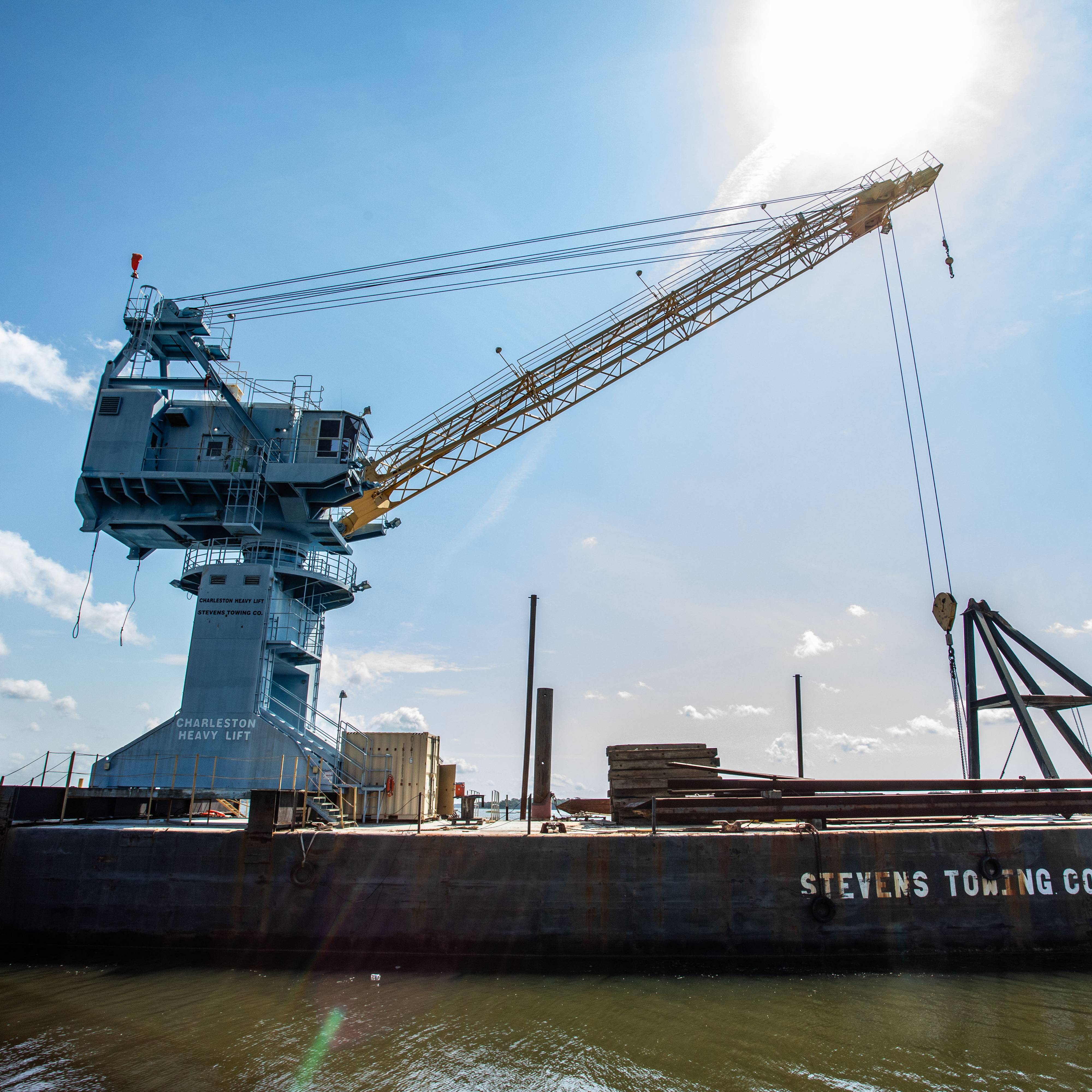


Stevens Towing has invested mightily in its ability to get vessels in and out, on time, on budget.
Image courtesy Stevens Towing Company
Stevens Towing has invested mightily in its ability to get vessels in and out, on time, on budget.
Image courtesy Stevens Towing Company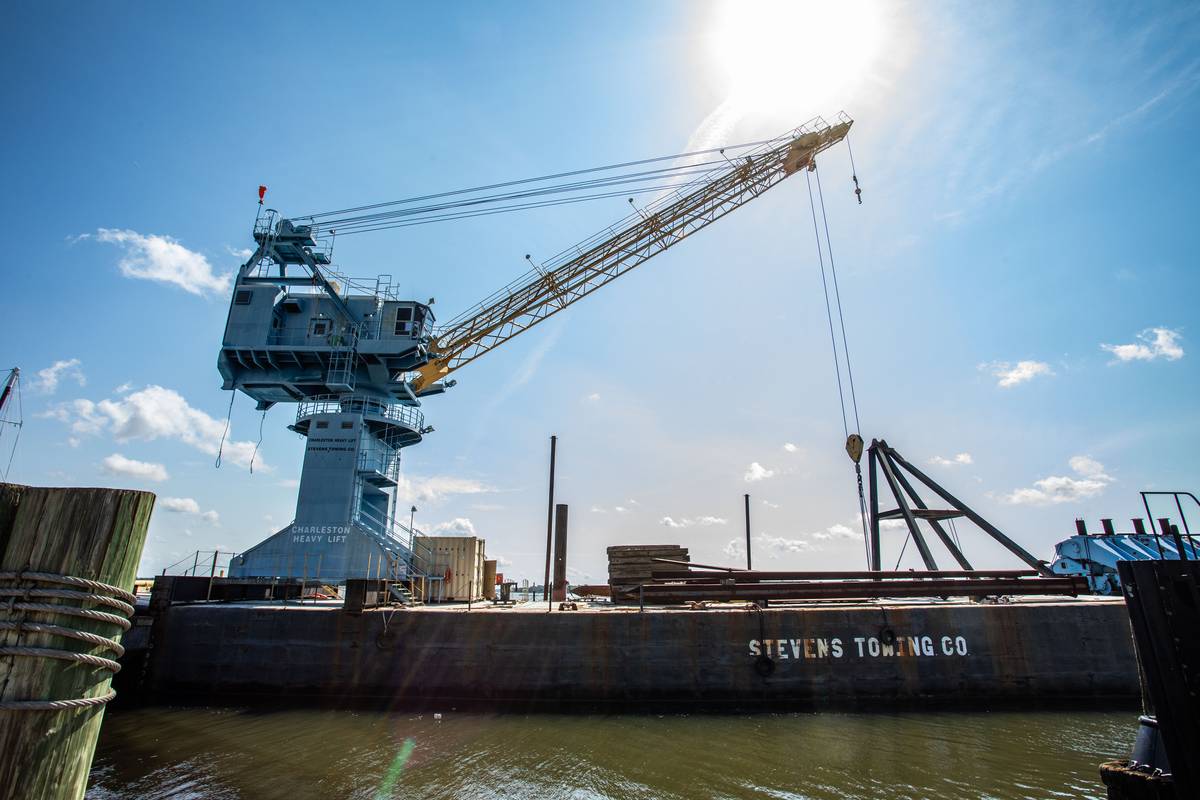
Stevens Towing has invested mightily in its ability to get vessels in and out, on time, on budget.
Image courtesy Stevens Towing Company
Stevens Towing has invested mightily in its ability to get vessels in and out, on time, on budget.
Image courtesy Stevens Towing Company
Stevens Towing has invested mightily in its ability to get vessels in and out, on time, on budget.
Image courtesy Stevens Towing CompanyA Shipyard with Muscle
That vision began taking physical shape about six years ago. The company had long repaired its own tugs and barges on-site, but the equipment and footprint limited its ability to take on outside work. Today, the transformation is unmistakable. Stevens Towing’s 820-ton Marine Travelift, commissioned three years ago, was the catalyst. “It’s increased our capacity by 500 to 600 percent,” Olsen said. “Before that, we had a small railway and a 150-ton Travelift. We could maybe have two or three projects going at a time. Now, with 15-plus workstations and the big lift, we can haul a vessel with 24 to 48 hours’ notice. It’s been a game-changer.”
The shipyard’s facilities include:
-
820-ton Marine Travelift
-
15–20 workstations equipped with utilities for plug-and-play repairs.
-
1,800-ton Railway Three, capable of handling larger steel-hull vessels.
-
800 feet of waterfront for topside repairs.
-
Downtown Charleston pier-side facility for afloat service work.
“Between the Travelift, the railway, and the waterfront, we can cover almost any repair scenario,” Olsen said. “If a customer just needs a prop swap or rudder job, we can do that in a day. If it’s a full blast, paint, and ABS inspection, we have the space and team to do it efficiently.”


The 820-ton Marine Travelift.
Image courtesy Stevens Towing Company
The 820-ton Marine Travelift.
Image courtesy Stevens Towing Company
The 820-ton Marine Travelift.
Image courtesy Stevens Towing Company
The 820-ton Marine Travelift.
Image courtesy Stevens Towing Company
The 820-ton Marine Travelift.
Image courtesy Stevens Towing CompanyExpanding Capabilities, Expanding the Team
Physical infrastructure and heavy lift equipment alone doesn’t build a shipyard, people do too. “When I first started, we had one project manager and a small, tight-knit team that maintained Stevens’ own fleet,” Olsen said. “That core workforce was extremely skilled, and we built outward from that base.”
Today, Stevens Towing has recruited ship repair specialists from across the maritime sector. “We’ve got guys who were port engineers, guys from offshore drill ships, tractor tugs, and shipyard apprentice programs,” he said. “We’ve added department heads with decades of experience, our new outside machinist lead has 20 years of shipyard work, and our electrical engineer came from port operations with 30 years under his belt.”
Technology investment has followed suit. “We’ve implemented Microsoft Business Central for project tracking and inventory control,” Olsen said. “It lets project managers see real-time costs, track progress, and communicate with customers instantly. Transparency is everything: you don’t want surprises at the end of a project. It’s helped eliminate those awkward closeout conversations.”


If You Build It, They Will Come
As the physical and organizational footprint grew, so did the customer base. Olsen recalls one defining moment: “Johnson and I were hunting for work, and we saw a photo online of a dredge we’d assembled, behind it was this OSV. We didn’t know who owned it, but we looked up the company, sent an introduction, and the next day I was on board talking with their port engineer.”
That chance encounter led to a major project for Oceaneering Asset Group (OAG)—blast and paint, ABS and Coast Guard inspections, running gear and cooler work, even some steel renewals. “They didn’t know who we were,” Olsen said. “But they gave us a shot. Three weeks later, the vessel was on our railway. Now they’re part of our growing customer family.”
Finding its Mid-Sized Niche
Stevens Towing shipyard business is thriving in a valuable middle ground, large enough to handle significant tonnage, small enough to stay nimble. “There aren’t many commercial yards left between Florida and Norfolk,” Olsen said. “That gives us a sweet spot in the market. We’re not chasing Navy overhaul contracts, but we can handle the full range of tug, barge, dredge, and OSV work.”
Tugs and barges remain the company’s “bread and butter,” reflecting the heritage of Stevens Towing’s own fleet. But diversification is well underway. “We’re expanding into tractor tugs, offshore support vessels and dredging markets,” Olsen said. “The dredge industry, especially, has been great for us. Those guys need quick turnaround: ‘get it up, fix it, get it back.’ We match that pace.”
People Power: Culture as a Retention Tool
In a time when many maritime companies face critical labor shortages, Stevens Towing stands out for its workforce stability. “Everywhere you look, you hear about labor shortages,” Olsen said. “We’ve gone through cycles like everyone else, but we’ve never struggled to hold onto our core people.”
The reason is cultural. “It’s family here, literally and figuratively,” he said. “A lot of our team are friends or relatives. We invest in them, send them to training, set them up with the tools they need. We treat them like part of the team, not a number.”
That sense of belonging extends from the management office to the yard floor. “Every morning when I walk in, I hear laughter,” Olsen said. “We enjoy what we do. When you show up to work with people you like and respect, it makes all the difference.”
Investing for the Next Generation
The yard’s evolution is far from over. Having expanded haul-out and project capacity, Stevens Towing is now investing in utilities, waterfront infrastructure, and material handling to sustain long-term growth.
“We’ve completed the first leg of utility installation in the north yard,” Olsen said. “Now we’re finishing the waterfront, then the mid-yard, and finally the south yard. When that’s done, we’ll have four distinct zones for vessel repair.”
The next step is improving the waterfront itself. “Right now, we have a floating dock, a concrete dock, and a crane barge on spuds,” Olsen says. “We’re designing an upgraded floating dock system to consolidate operations and improve efficiency.”
These investments, he emphasizes, are about positioning the shipyard for the long haul. “We’re not looking for a quick win,” Olsen says. “This is about building a sustainable repair business that will support Stevens Towing for the next 50 years.”
For all the new equipment, project management software, and infrastructure upgrades, Stevens Towing’s success still comes down to its people and principles: honest work, teamwork, and the satisfaction of a job well done.
“I think that’s what sets us apart,” Olsen concludes. “We’re not just another yard. We’re a fourth-generation family business that’s adapted, invested, and built something special. We’re proving that in this industry—if you build it right—they will come.”
Stevens Towing Shipyard by the Numbers
-
Location: Yonges Island, South Carolina
-
Haul-Out Capacity: 820-ton Marine Travelift
-
Railway: 1,800-ton capacity
-
Workstations: 15–20 with full utility hookups
-
Waterfront: ~800 feet
-
Core Markets: Tugs, barges, dredges, OSVs, topside repairs
-
Founded: 1913 (Fourth-generation family ownership)
Watch the full interview with Kurt Olsen on Maritime Reporter TV: