Maritime Voices
Tony Brandano, President, Lakes Pilots
Navigating the Great Lakes with Lakes Pilots
Every pilotage in and around the United States comes with its own unique challenges, and Lakes Pilots is certainly no exception. First and foremost, Lakes Pilots operates under the federal guise given its close proximity and shared waters with Canada. A massive amount of pleasure boat traffic combined with true fou-season operations – including the need for icebreaker assist and ice navigation in the winter months, keep Tony Brandano, President, Lakes Pilots, and his team on constant alert.
By Greg Trauthwein
For Captain Tony Brandano, president of the Lakes Pilots Association, navigating the complex waterways of the Great Lakes isn’t just a career, it’s a lifelong calling. From his earliest days boating with his family on Lake Ontario to leading one of North America’s most unique pilotage organizations, Brandano’s path reflects both passion and precision in one of the most challenging maritime environments in the world.
Born and raised in central New York, Brandano’s early years were steeped in water. “We always had a boat growing up,” he recalls. “My dad had a Sea Ray, then an old Hatteras, and we’d take that thing all over Lake Ontario and Lake Erie.” From Oswego to Sandusky, he spent every summer weekend on the water, captivated by the massive commercial vessels transiting the Great Lakes.
“I’ve known I wanted to be a pilot since I was about 13 or 14 years old,” he says. “I remember looking it up and saying, this is what I want to do.” That early clarity led him to the Great Lakes Maritime Academy in Traverse City, Michigan, where he graduated in 2007. After nearly a decade with Grand River Navigation, including five years as a captain, Brandano joined the Lakes Pilots Association in 2016. He completed his apprenticeship in 2018 and quickly rose through the ranks—vice president in 2023, and president in 2024.
Image courtesy Lakes Pilots
Larger ships mean deeper drafts and infrastructure that sometimes hasn’t caught up. We’re seeing wider ships coming into ports that weren’t built for them.
- Tony Brandano,
President, Lakes Pilots
A Unique, Federally Regulated Pilotage System
Unlike most U.S. pilot organizations, which are state-regulated, the Lakes Pilots operate under federal jurisdiction due to the international nature of the Great Lakes and shared borders with Canada. “A state can’t have a treaty with a foreign government,” Brandano explains. “Because we share waters with Canada, we’re federally regulated.”
The association’s District 2 jurisdiction stretches from Port Huron, Michigan, to Buffalo, New York, encompassing Lake Erie and the Detroit–St. Clair River system, an expansive and diverse environment requiring intense local knowledge. With 17 pilots, three pilot boats, and about 15 drivers, the Lakes Pilots oversee an estimated 15 million tons of cargo annually, from steel and petroleum to grain exports moving from the U.S. heartland.

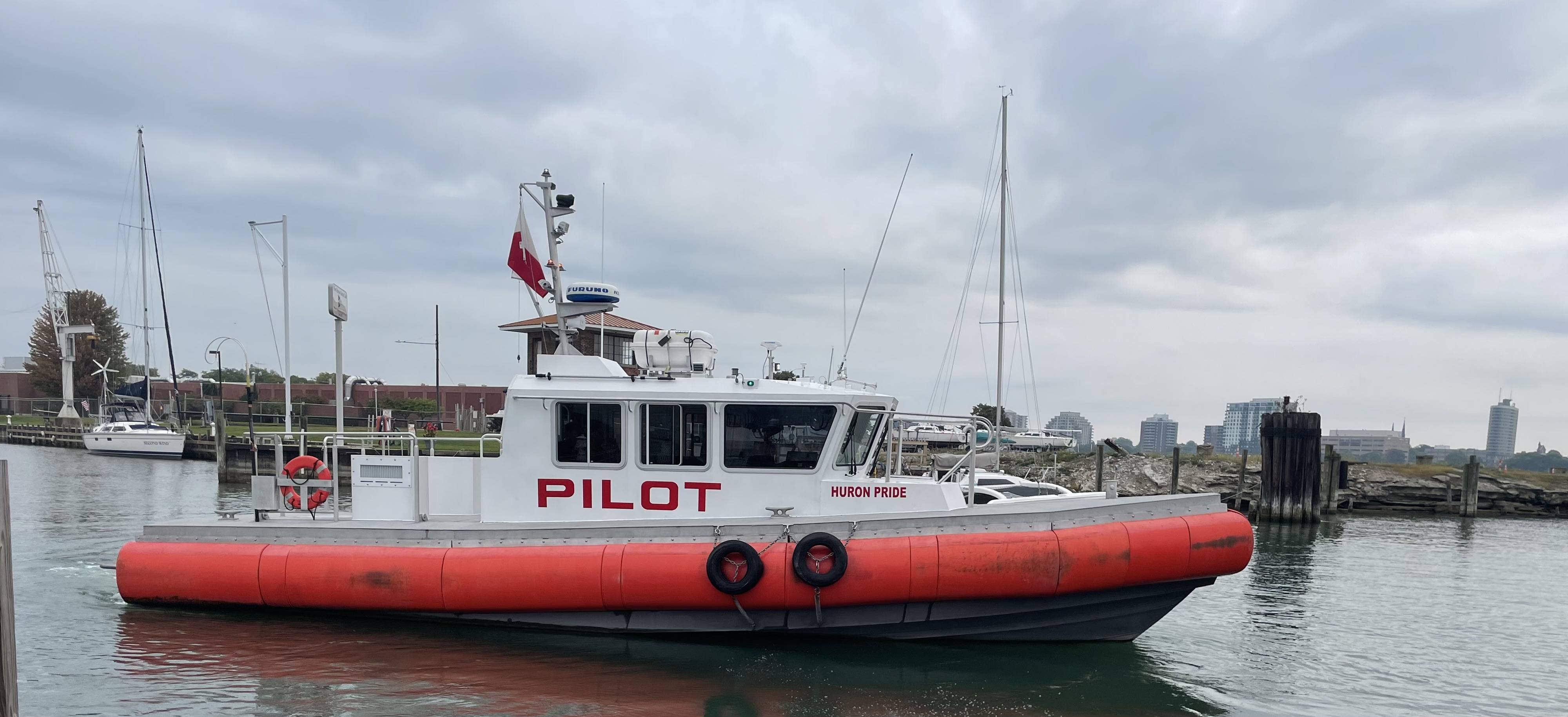


Operating in fresh water is no small detail when it comes to keeping the Lakes Pilot fleet, including the Huron Bell, a 1979 Gladding-Hearn steel-hull.
Image courtesy Lakes Pilots
Operating in fresh water is no small detail when it comes to keeping the Lakes Pilot fleet, including the Huron Bell, a 1979 Gladding-Hearn steel-hull.
Image courtesy Lakes Pilots
Operating in fresh water is no small detail when it comes to keeping the Lakes Pilot fleet, including the Huron Bell, a 1979 Gladding-Hearn steel-hull.
Image courtesy Lakes PilotsThe Fleet: Something Old, Something New …
To meet the demands of this sprawling operation, the Lakes Pilots maintain a fleet, much of it built by Gladding-Hearn Shipbuilding in Somerset, Massachusetts.
Its newest vessel, the Huron Pride, delivered in 2022, is a 40-ft. Resilient-class jet boat powered by twin 450-horsepower Cummins engines. “It’s our fair-weather boat,” says Brandano. “It’s quicker, more efficient, and ideal for calmer conditions.”
The Huron Spirit, delivered in 2016, is a 53-ft Chesapeake-class twin-screw boat, while the venerable Huron Bell, a 1979 Gladding-Hearn steel-hull, continues to serve thanks to the freshwater environment’s slower wear rate. “We get better life expectancy in freshwater,” Brandano notes, “but that doesn’t mean we don’t keep upgrading.”
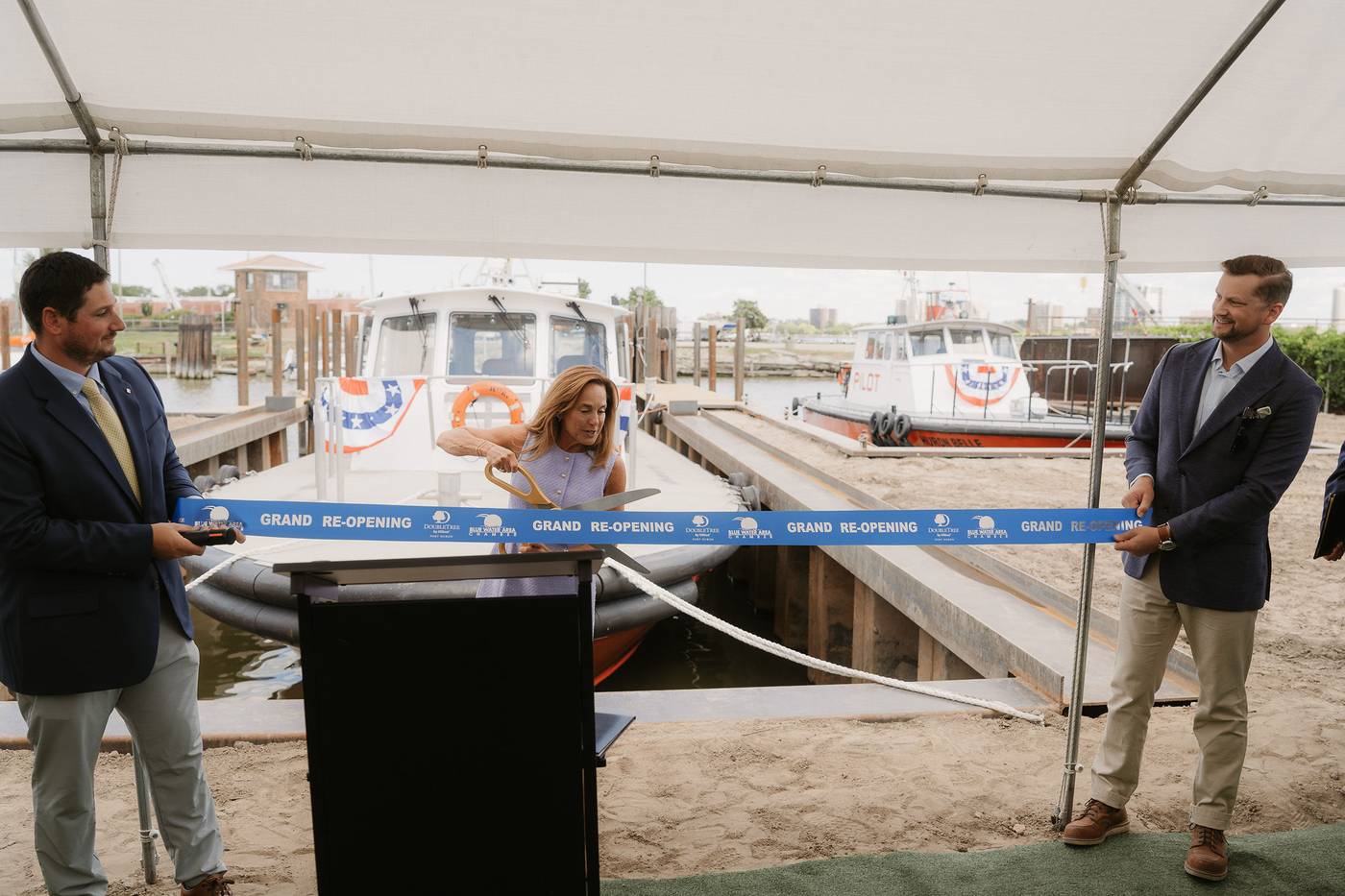
In 2025, the organization completed a $1 million dock infrastructure project at its Port Huron headquarters: new seawalls, docks, electrical, plumbing, and a fuel system upgrade. “We couldn’t be more proud,” Brandano says. “It was a big need, and we’re grateful for the support, including from Congresswoman Lisa McClain, who joined us for the ribbon cutting.”

Navigating the Lakes Region
The Lakes Pilots’ domain is a study in contrasts: vast open lakes punctuated by narrow, fast-moving rivers and busy industrial ports. “From three to five knots of current under the Blue Water Bridge in Port Huron, to the tight Livingston and Amherstburg channels in the Detroit River, every stretch requires precision,” Brandano said.
Add to that mix heavy recreational traffic, complex traffic patterns, and ever-changing weather. “We’ve got all four seasons here,” he says. “Winter brings ice navigation and icebreaker assistance, and each season brings its own set of challenges.”
Like pilots everywhere, Brandano’s team faces the ripple effects of global maritime trends: larger vessels, alternative fuels, changing cargo flows, and new traffic types in the region, such as cruise ships. “Larger ships mean deeper drafts and infrastructure that sometimes hasn’t caught up,” he says. “We’re seeing wider ships coming into ports that weren’t built for them.”
The rapid growth of the Great Lakes cruise sector has also transformed operations. “Cruise ships have changed the trade pattern,” Brandano explains. “They’re not unloading for long, they’re in and out within hours, or they’ll stop mid-route for sightseeing. It means pilots are on board longer and logistics become more complex.”
For Brandano, leadership means both honoring tradition and preparing for the future. The Lakes Pilots continue to adapt, through infrastructure investment, technology, and training, to ensure safety across one of the world’s most dynamic freshwater transportation systems.
“It’s a big area, a challenging one, but that’s what makes it special,” he says. “The Great Lakes are unique in every way, and so is the work we do here.”
By the Numbers: Lakes Pilots Association
-
Founded: Federal District 2 (Port Huron–Buffalo)
-
Pilots: 17
-
Employees: 9 full-time, ~15 drivers
-
Pilot Boats: 3 (latest: Huron Pride, 2022)
-
Annual Cargo: ~15 million tons
-
Ports Served: Detroit, Toledo, Cleveland, Ashtabula, Erie, Buffalo, Windsor
-
Recent Investment: $1M Port Huron dock and infrastructure upgrade